CURRENT AFFAIRS | 22 SEPTEMBER 2026
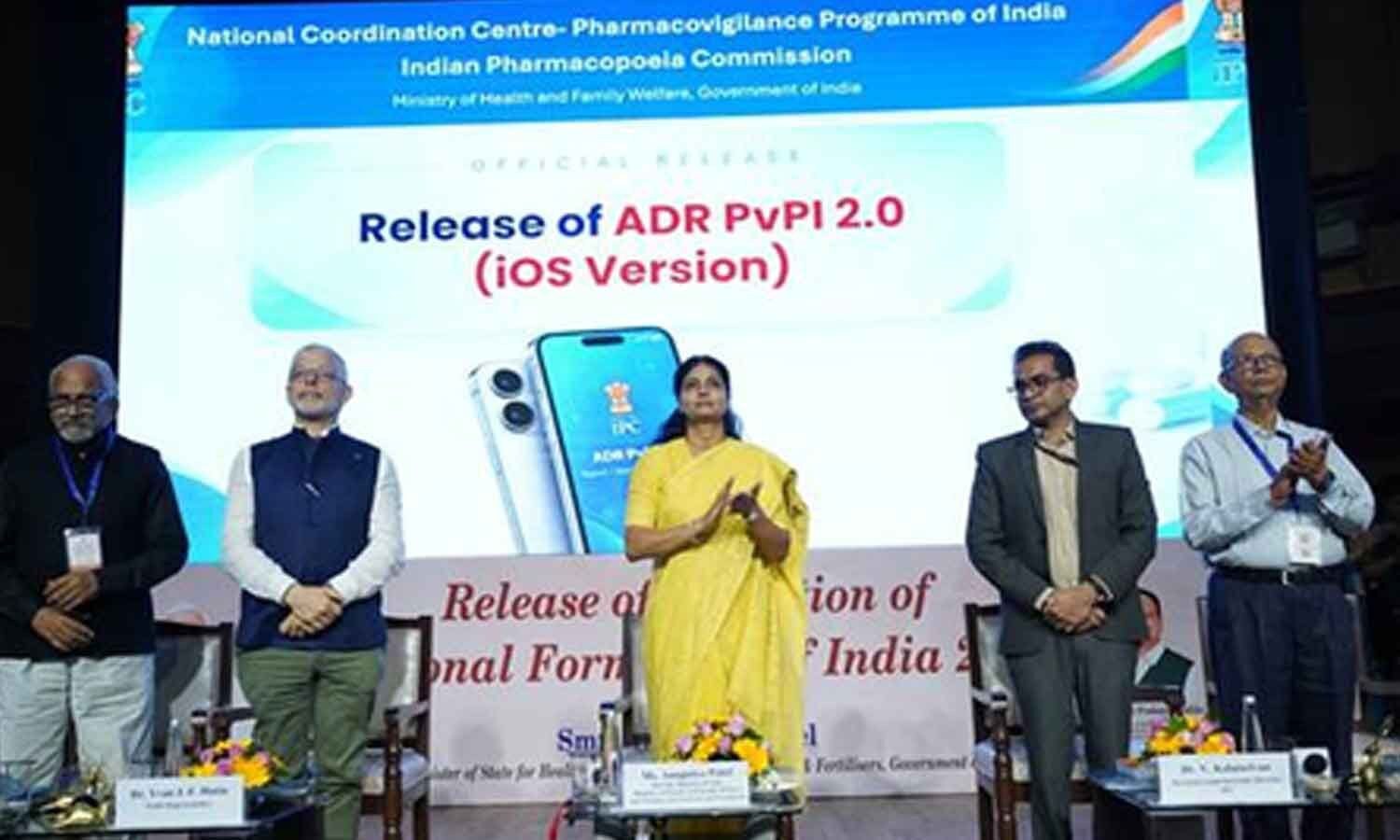
On 21 September 2026, the Union Minister of State for Health and Family Welfare and Chemicals and Fertilizers, Anupriya Patel, launched the 7th Edition of the National Formulary of India (NFI 2026). She also announced that the Government of India has approved a new Biovigilance Programme of India. According to the PIB release of the Health Ministry posted the same day, the launch took place at the 6th National Pharmacovigilance Week. The programme was organised by the Indian Pharmacopoeia Commission (IPC) at Dr. Ambedkar International Centre, New Delhi. Two more items were released alongside the formulary: a Guidance Document for Hospitals in India for Safety Monitoring and Reporting of Medical Device-Related Adverse Events, and the ADR-PvPI 2.0 Mobile App for iOS users.
For exam purposes, the story is about how India checks that its medicines are safe after they reach patients. A drug trial can show that a medicine works. Only large-scale monitoring after approval can show how it behaves across millions of people of different ages, conditions and combinations of medicines. That monitoring is called pharmacovigilance. With the new biovigilance programme, India’s patient-safety system now has three arms: medicines, medical devices, and biological products used in organ and tissue transplantation.
What was launched
NFI 2026. The PIB release describes the National Formulary of India as a guidance document for healthcare professionals that promotes the rational and safe use of medicines. IPC has published it periodically since 2009. The 7th Edition has 34 chapters, 20 appendices and 653 drugs, including 42 fixed-dose combinations and 30 immunologicals. Its drug monographs have been revised to match the National List of Essential Medicines (NLEM) and the National Health Programmes. The NFI also comes in digital form as NFI Online. That version links to National Health Programmes, immunisation schedules, Jan Aushadhi, and guidance on the safe disposal of unused or expired medicines.
Biovigilance Programme of India. Under the new programme, IPC will take the lead in strengthening the reporting, assessment, monitoring and prevention of adverse events linked to medicines and biological products used in organ and tissue transplantation. This includes products given to both donors and recipients. In the Minister’s words, pharmacovigilance, materiovigilance and biovigilance together will cover safety monitoring across medicines, medical devices and transplant procedures.
Digital reporting. The ADR-PvPI 2.0 app is now available on iOS. The release names it alongside NFI Online, IP Online and the Adverse Drug Reaction Monitoring System (ADRMS) as tools that make medicine-safety information and adverse-event reporting easier to reach. The Minister also pointed to a “missing link”: patients themselves report too few adverse events. She called for more patient reporting, and for wider use of artificial intelligence and data analytics.
The numbers the Ministry highlighted
According to the release, India has risen from 123rd position during 2009–2014 to 8th globally in contributions to the WHO patient safety database. About 1,150 Adverse Drug Reaction (ADR) reporting centres now operate in public and private hospitals and medical colleges. The government plans to extend these capabilities to the primary healthcare level. The Minister added that about 25 countries recognise and accept the Indian Pharmacopoeia, and that IPC became a member of the Pharmacopoeial Discussion Group in 2023, a step towards global regulatory convergence. The 6th National Pharmacovigilance Week runs from 17 to 23 September 2026. Its theme is “Promoting Rational Use of Medicines through Pharmacovigilance: A Step Towards Safer Healthcare”.
Background & Framework
Indian Pharmacopoeia Commission (IPC): an autonomous institution of the Ministry of Health and Family Welfare, based in Ghaziabad. It sets standards for drugs through the Indian Pharmacopoeia and publishes the NFI.
Pharmacovigilance Programme of India (PvPI): started by the Government of India on 14 July 2010, with AIIMS, New Delhi as the first National Coordination Centre (NCC). In April 2011 the NCC moved to IPC, Ghaziabad, which still coordinates the programme.
Materiovigilance Programme of India (MvPI): launched at IPC on 6 July 2015 to monitor the safety of medical devices, with IPC as its NCC.
Constitutional links: “Drugs and poisons” is Entry 19 of the Concurrent List, so both Parliament and the States can legislate on it. The central statute is the Drugs and Cosmetics Act, 1940. Under Article 47, a Directive Principle, the State must regard improving public health as among its primary duties. The Supreme Court has read the right to health into Article 21, notably in Paschim Banga Khet Mazdoor Samity v State of West Bengal (1996). Transplantation itself is governed by the Transplantation of Human Organs and Tissues Act, 1994.
Why vigilance matters: three words to keep apart
CLAT GK questions often test whether you can tell similar-sounding terms apart. Here is the distinction:
- Pharmacovigilance covers medicines: detecting, assessing, understanding and preventing adverse drug reactions (PvPI, 2010).
- Materiovigilance covers medical devices, such as implants, stents and diagnostic equipment (MvPI, 2015).
- Biovigilance, as the new programme defines it, covers medicines and biological products used in organ and tissue transplantation, for both donors and recipients (approved 2026).
A formulary is different again. It is not a monitoring system. It is a prescribing guide that tells doctors, pharmacists and nurses how a medicine should be used: indications, doses, contraindications and cautions. A pharmacopoeia sets quality standards for a drug, meaning what it must contain and how pure it must be. A formulary guides its clinical use. IPC publishes both, which is why the PIB release calls the NFI a “bridge between scientific standards and clinical practice”.
The CLAT Angle
GK questions could ask about the edition (7th), the number of drugs (653), the organisation that publishes the NFI (IPC), the dates and theme of the week, or India’s rank in contributions to the WHO safety database (8th, up from 123rd).
Legal reasoning: A passage might set out a principle like this: a manufacturer who knows of a serious adverse reaction and fails to report it is liable for later harm that reporting would have prevented. The facts could then test causation or knowledge. Another passage could use the Concurrent List to ask whether a State may add its own drug-safety rules to a central law. That turns on repugnancy under Article 254.
Reading comprehension / critical reasoning: The Minister’s point that India is moving from relying on safety data “generated elsewhere” to producing its own is a good argument to analyse. What assumption does it rest on? One answer is that drug responses may differ between populations, so locally generated evidence adds value.
Analysis: from “pharmacy of the world” to patient safety
India is often called the “pharmacy of the world” because of the scale of its generic-medicine manufacturing. The Minister used that phrase and argued that the next goal should be global leadership in pharmacovigilance science and patient safety. The reasoning is simple. A country that makes and consumes medicines on this scale produces a huge volume of real-world safety data, but only if adverse events are actually reported and analysed. The rise from 123rd to 8th in contributions to the WHO database suggests the reporting system has grown. The planned expansion to primary healthcare would take it closer to where most patients first get treatment.
The biovigilance programme fills a specific gap. Transplant patients receive immunosuppressants and other biological products, and donors may also be given medicines during the process. Adverse events in this group are serious but relatively rare. They are hard to spot unless someone gathers them in one place, which is what a dedicated national programme with IPC in the lead is meant to do. The hospital guidance on medical-device adverse events does the same job for materiovigilance: it gives hospitals a standard procedure where reporting was previously uneven.
Some limits should be noted. Pharmacovigilance depends on voluntary reporting by clinicians and patients, and the Minister herself admitted that patient reporting remains weak. A formulary guides rational prescribing but cannot enforce it. Its impact depends on whether doctors and pharmacies actually use it. These are exactly the kinds of qualifications a CLAT passage may add to test whether you can separate a policy’s stated aims from what it can guarantee.
Key Facts
- Event: 7th Edition of the National Formulary of India launched on 21 September 2026, New Delhi
- Launched by: MoS Health and Family Welfare Anupriya Patel; organised by IPC
- NFI 2026: 34 chapters, 20 appendices, 653 drugs (42 FDCs, 30 immunologicals)
- Alignment: monographs revised in line with NLEM and National Health Programmes
- New programme: Biovigilance Programme of India approved; covers transplant-related adverse events
- Also released: hospital guidance on medical-device adverse events; ADR-PvPI 2.0 app for iOS
- Ranking: India 8th globally in contributions to the WHO patient safety database (123rd in 2009–14)
- Network: about 1,150 ADR reporting centres; expansion to primary healthcare planned
- Week: 6th National Pharmacovigilance Week, 17–23 September 2026
- PvPI: started 14 July 2010; NCC moved from AIIMS to IPC Ghaziabad in April 2011
- MvPI: launched 6 July 2015 at IPC
- Global: Indian Pharmacopoeia accepted in about 25 countries; IPC joined the Pharmacopoeial Discussion Group in 2023
The takeaway
Approving a medicine is only the start of making sure it is safe. The 21 September launches (a revised formulary, device-safety guidance for hospitals, an easier reporting app and a new transplant-focused vigilance programme) all aim to make safety monitoring continuous, from manufacture to prescription to post-market follow-up. For CLAT, remember the institution (IPC), the numbers (653 drugs, 7th edition, 8th rank) and the three vigilance programmes with their years.
Memory Hook / Mnemonic
“Pills, Parts, Parts-of-People”: Pharmacovigilance for pills (2010), Materiovigilance for device parts (2015), Biovigilance for transplanted parts of people (2026). For the formulary, remember “7th book, 653 drugs, 34 chapters”. For the ranking, “123 to 8”. And one line to link the two IPC books: “The pharmacopoeia says what a drug is; the formulary says how to use it.”
Practice Quiz — 10 CLAT-Style Questions
Click an option to reveal the answer and explanation.