CURRENT AFFAIRS | 12 OCTOBER 2026
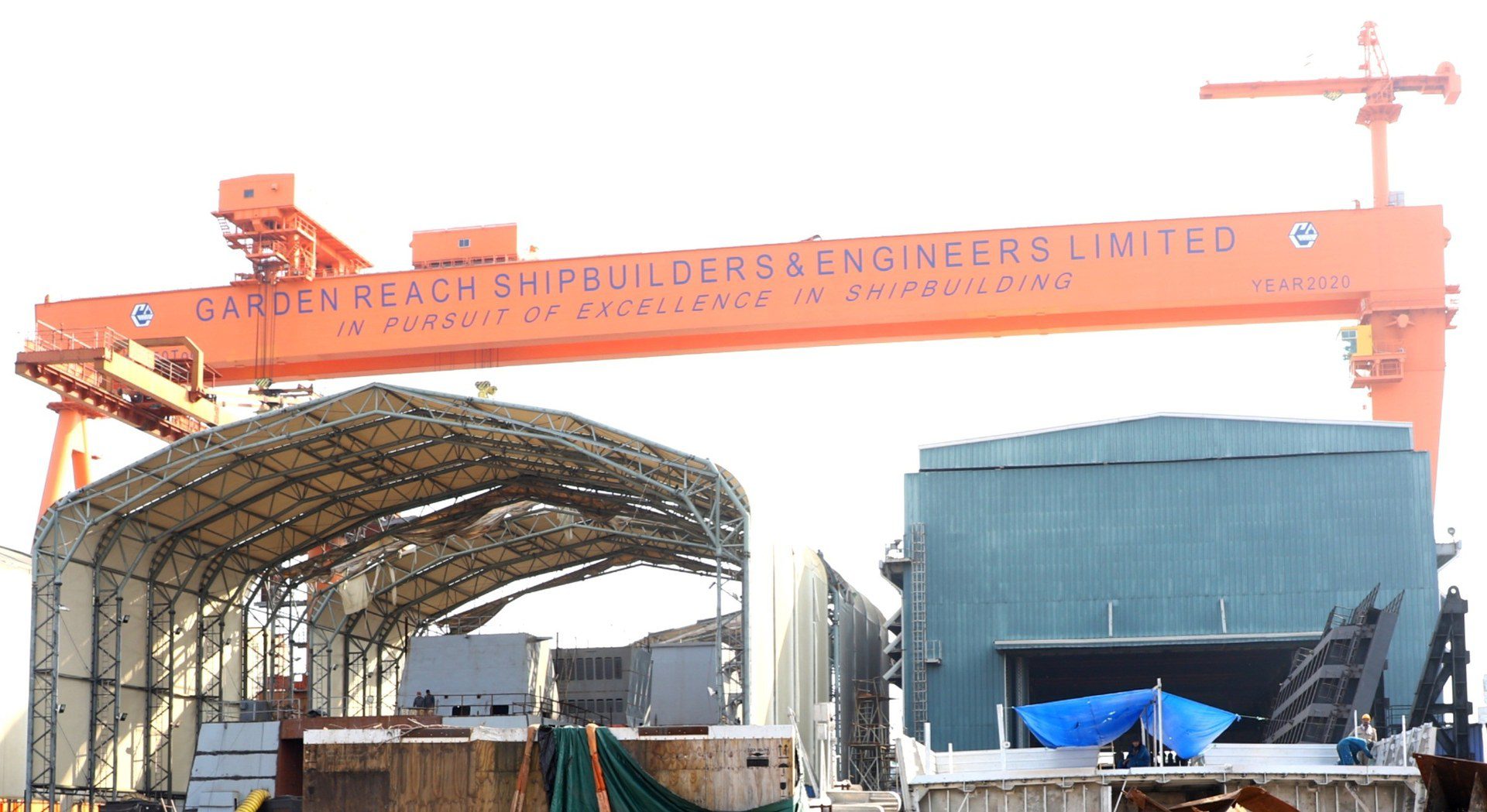
The Indian Navy’s Next Generation Offshore Patrol Vessel (NGOPV) ‘Shreyas’, designated Yard 3040, was launched at Garden Reach Shipbuilders and Engineers (GRSE) in Kolkata on Saturday, 10 October 2026. According to the report carried by DD News, the ceremony took place in the presence of Vice Admiral Ajay Kochhar, Vice Chief of the Naval Staff, with senior representatives of the Navy, the Ministry of Defence, GRSE and industry partners attending.
Shreyas is the third of four NGOPVs being built by GRSE for the Navy, according to a GRSE statement reported by PTI (published by The Economic Times on 10 October). It follows ‘Sanghmitra’, the first vessel of the series, launched on 20 May 2026, and ‘Shruti’, the second, launched less than two months before Shreyas — three launches in under five months. The name ‘Shreyas’ means “best” or “most excellent” in Sanskrit; DD News notes that the vessels of the series draw their names from India’s heritage.
What exactly happened on 10 October
A ship “launch” is often confused with a ship joining the fleet, so it is worth being precise. On 10 October the hull of Yard 3040 was formally launched — in naval tradition, the vessel is named and floated out of the building berth, and the ceremony is performed by a woman, here the wife of the Vice Chief of the Naval Staff, amid traditional rituals and the chanting of Vedic shlokas, as the PTI report records. Shreyas is not yet a commissioned warship: it will now go through outfitting, trials and delivery before it can be commissioned and carry the prefix “INS”.
DD News adds that the NGOPVs are being constructed concurrently at Goa Shipyard Limited (GSL), Goa, and at GRSE, Kolkata. This split-yard model — one design, two public-sector shipyards building in parallel — is how the Navy has been compressing timelines for several recent classes of ships.
Background & Framework
The life cycle of a warship moves through clearly separate milestones, each a favourite for confusion in GK questions:
- Steel cutting — the first plate of steel is cut; construction formally begins.
- Keel laying — the first structural block is placed on the building berth; traditionally the “birth” of the ship.
- Launch — the hull is floated and named; fitting-out of machinery, weapons and sensors continues afloat. Shreyas is at this stage.
- Sea trials and delivery — the builder tests the ship at sea and hands it over to the Navy.
- Commissioning — the ship formally enters naval service, the naval ensign is hoisted and the ship gets the “INS” prefix.
Who builds the ships: GRSE, Kolkata, and Goa Shipyard Limited are Defence Public Sector Undertakings (DPSUs) under the Ministry of Defence. The PTI report describes GRSE as a Navratna defence PSU. GRSE’s own website lists, among the ships it is presently building, three Project 17A advanced frigates, three large survey vessels, eight Anti-Submarine Warfare Shallow Water Craft and four Next Generation Offshore Patrol Vessels, along with export and commercial orders.
What an NGOPV is and why the Navy wants it
An offshore patrol vessel sits between small coastal patrol craft and large frontline warships such as destroyers and frigates. Its job is presence and policing at sea: patrolling India’s maritime zones, guarding offshore installations and responding to emergencies. According to the GRSE statement reported by PTI, the NGOPVs are “significantly larger and more capable” than similar vessels built earlier, offering greater endurance, firepower and operational versatility.
Size and performance (as stated by GRSE)
- Length of about 113 metres and width (beam) of 14.6 metres.
- Top speed of up to 23 knots.
- Endurance of 8,500 nautical miles at a cruising speed of 14 knots.
A knot is one nautical mile per hour, and one nautical mile is 1.852 km — so the stated endurance is roughly 15,700 km without refuelling at cruising speed, enough to range far across the Indian Ocean.
Roles
The two sources describe the intended missions in slightly different words, and together they give a full picture. DD News lists maritime surveillance, search and rescue, protection of offshore assets, humanitarian assistance and disaster relief (HADR) and anti-piracy missions as part of “multi-domain operations”. The GRSE statement adds coastal and offshore asset protection, maritime interdiction, surveillance, mine warfare and special operations. DD News also says the ships will augment the Navy’s existing offshore patrol vessels.
“Offshore assets” is a phrase worth noticing. India’s offshore oil and gas platforms, undersea infrastructure and island territories need constant watch, and a vessel with long endurance and a large deck can stay on station far longer than a small patrol craft.
The CLAT Angle
CLAT GK passages on defence rarely test hardware specifications; they test categories, builders, places and process. Expect questions such as: Which shipyard launched Shreyas? (GRSE, Kolkata); What type of vessel is it? (Next Generation Offshore Patrol Vessel); Has it been commissioned? (No — it has only been launched).
A passage could also be framed around self-reliance in defence production: DD News places the launch within the Aatmanirbhar Bharat and Make in India initiatives, and the ships are indigenously designed and built. A reasoning question might ask what follows from two public-sector yards building one class at the same time (faster induction, but dependence on parallel supply chains), or might test the distinction between a ship being launched and being inducted.
Trap to avoid: do not mix up this NGOPV with the anti-submarine shallow water craft or frigates in GRSE’s order book. Each is a different class with a different role.
The bigger static-GK picture
India’s maritime zones. Under the UN Convention on the Law of the Sea (UNCLOS), a coastal state has territorial waters up to 12 nautical miles and an Exclusive Economic Zone (EEZ) up to 200 nautical miles from its baselines, within which it has sovereign rights over resources. Patrolling this space — against poaching, smuggling and piracy, and to protect resource installations — is the core work of offshore patrol vessels. In India the Navy and the Indian Coast Guard both operate in this domain.
The shipbuilding ecosystem. India’s major warship builders in the public sector include Mazagon Dock Shipbuilders (Mumbai), GRSE (Kolkata), Goa Shipyard Limited (Goa) and Cochin Shipyard Limited (Kochi). GRSE’s current order book, as listed on its website, spans frontline frigates under Project 17A, survey vessels and anti-submarine craft — showing that a single DPSU now builds very different classes of ships side by side.
Analysis: patrol ships as the workhorses of the fleet
Public attention usually goes to aircraft carriers, destroyers and submarines. Yet much of a navy’s day-to-day work — showing presence, escorting, policing the EEZ, responding to cyclones and accidents at sea — is done by patrol vessels. A larger, longer-legged patrol ship frees frontline warships for high-intensity tasks, while giving the Navy a platform that can carry out humanitarian assistance and disaster relief at short notice.
The NGOPV programme also illustrates a policy choice: spreading orders across more than one public-sector yard. The benefit is speed and the preservation of shipbuilding skills in more than one region; the cost is the need to keep design standards and supply chains identical across yards. Both GRSE and Goa Shipyard building the class concurrently, as DD News reports, is a live test of that model.
Key Facts
- Vessel: ‘Shreyas’, Next Generation Offshore Patrol Vessel (NGOPV), Yard 3040.
- Launched: Saturday, 10 October 2026, at GRSE, Kolkata.
- Present: Vice Admiral Ajay Kochhar, Vice Chief of the Naval Staff.
- Position in series: third of four NGOPVs being built by GRSE.
- Sister vessels at GRSE: Sanghmitra (launched 20 May 2026) and Shruti (second; launched less than two months before Shreyas).
- Builders: NGOPVs are being built concurrently at Goa Shipyard Limited (Goa) and GRSE (Kolkata).
- Size: about 113 m long, 14.6 m wide (GRSE statement).
- Performance: up to 23 knots; endurance 8,500 nautical miles at 14 knots (GRSE statement).
- Roles: surveillance, search and rescue, offshore asset protection, HADR, anti-piracy, maritime interdiction.
- Meaning of name: ‘Shreyas’ = “best” or “most excellent” in Sanskrit.
- Stage: launched, not commissioned — it does not yet carry the “INS” prefix.
- Sources: DD News (11 October 2026); GRSE statement via PTI in The Economic Times (10 October 2026).
Conclusion
The launch of Shreyas is a modest event in isolation, but it captures the current direction of Indian naval shipbuilding: indigenously designed ships, built in parallel at more than one public-sector yard, arriving at a faster tempo. For an aspirant, the facts to lock in are the vessel type, the yard, the date and — above all — the stage reached. A ship that has been launched has not yet joined the fleet.
Memory Hook / Mnemonic
“S-S-S at GRSE” — Sanghmitra (first), Shruti (second), Shreyas (third): three launches at GRSE in under five months, with a fourth still to come. For the numbers, think “113 – 23 – 8,500”: about 113 metres long, 23 knots top speed, 8,500 nautical miles endurance. And the stage ladder: “Cut, Keel, Launch, Deliver, Commission” — Shreyas has reached step three.
Practice Quiz — 10 CLAT-Style Questions
Click an option to reveal the answer and explanation.