CURRENT AFFAIRS | 22 SEPTEMBER 2026
From 1 October 2026, a household that wants a subsidised domestic LPG cylinder will first have to complete Biometric Aadhaar Authentication (BAA). The Ministry of Petroleum and Natural Gas announced the rule in a PIB release posted on 19 September 2026. Under it, a refill can be booked at the regulated Retail Selling Price (RSP) with the applicable subsidy only after the consumer’s identity has been verified biometrically against Aadhaar. According to the release, 27.43 crore active domestic LPG consumers, or 89.9 per cent, had completed BAA as on 19 September. They do not need to do anything more. The remaining tenth must authenticate before 1 October if they want to keep the subsidy.
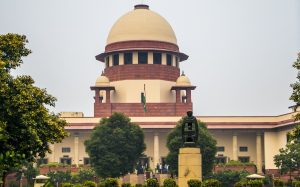
The announcement looks administrative, but it touches three things CLAT keeps coming back to. The first is targeted welfare delivery through Direct Benefit Transfer. The second is the Aadhaar Act, 2016 and the Supreme Court’s 2018 decision upholding it. The third is the balance between fiscal discipline and access to an essential good. This note covers what the rule says, why the government says it needs it, and how a legal or GK passage could frame it.
What the Ministry announced
According to the PIB release, BAA links each domestic connection to an Aadhaar-authenticated consumer. The Ministry says this stops subsidised domestic cylinders from being diverted to commercial and industrial use, removes duplicate and ineligible connections, and makes subsidy delivery transparent and targeted. It also says expressly that the process “is not meant to deny LPG to any genuine household”.
The release lists three ways to authenticate:
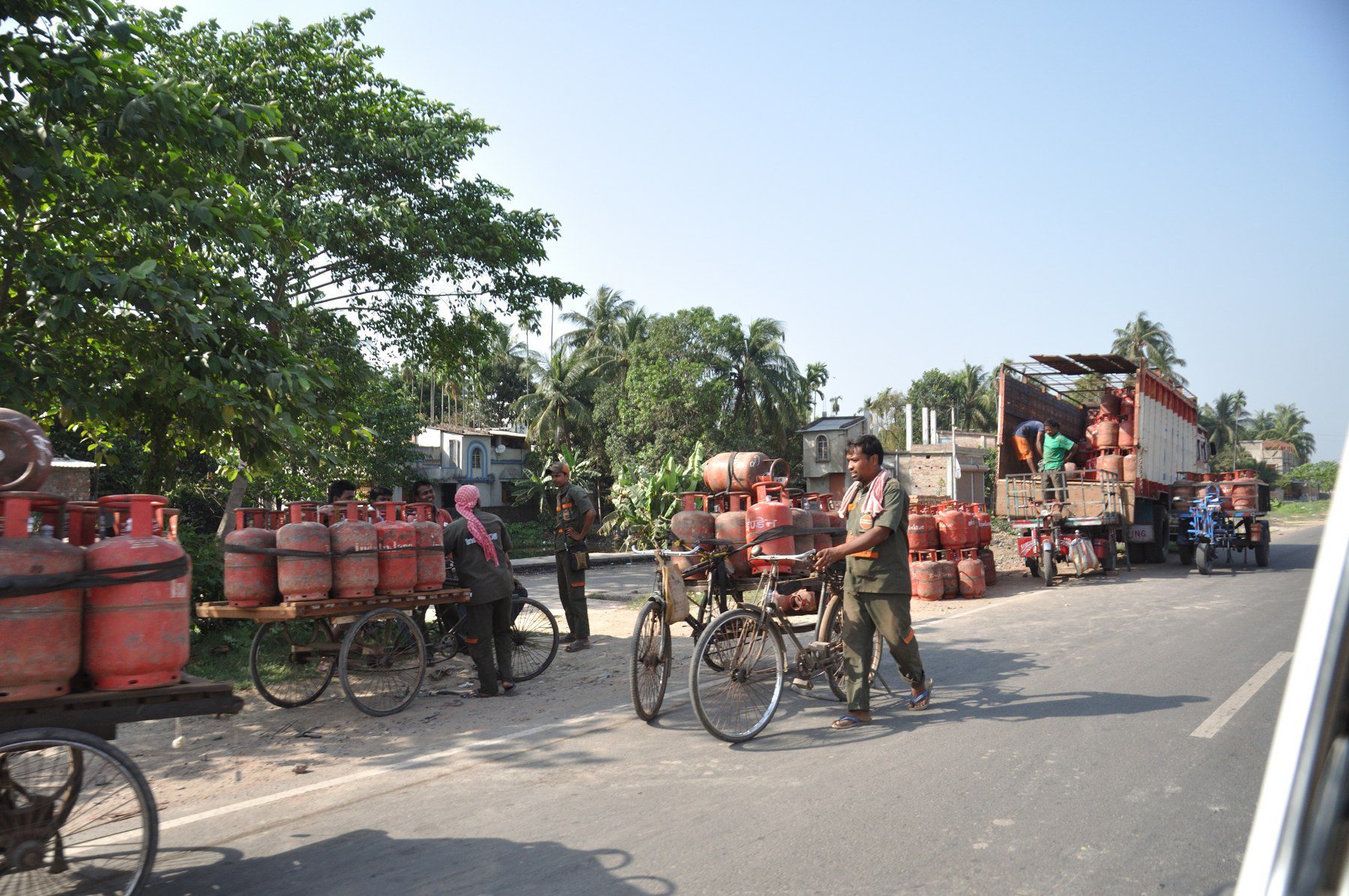
- At the doorstep: the delivery person can complete authentication on the spot, using the Oil Marketing Company (OMC) mobile application, when the cylinder is delivered.
- At the distributor’s showroom: consumers can go to their LPG distributor and authenticate there.
- Self e-KYC from home: through IndianOil ONE (Indane), HelloBPCL (Bharatgas) and HP PAY (HP Gas). Video tutorials are on the PMUY portal.
The rule also includes an opt-out. Consumers who are unwilling or unable to complete BAA can still get LPG. They must register that choice on their OMC’s digital channels: the web portal, mobile app, WhatsApp chatbot or IVRS. They will then be supplied LPG at the market price, without any subsidy, in 5 kg or 10 kg cylinders, subject to local availability. Put simply, Aadhaar authentication is a condition for the subsidy, not for the fuel.
A deadline extended seven times
The release also shows how long it took to get here. Consumers were first asked to complete BAA by 30 June 2026. The deadline was then pushed to 31 July, 7 August, 15 August, 23 August, 31 August, 7 September and finally 14 September 2026. The Ministry says the OMCs have run a nationwide outreach drive since October 2023. That drive included more than 12 crore SMS and WhatsApp messages, individual follow-ups by distributors and delivery staff, special camps at distributorships, busy public places and rural areas, IVRS prompts during booking, and newspaper and social-media campaigns. For consumer help, the Ministry has listed the toll-free helpline 1800 2333 555.
The fiscal logic: why the subsidy has to be targeted
The Ministry explains the rule mainly in terms of cost. Domestic LPG is sold below cost. The PIB release puts the implicit subsidy at about ₹210 per 14.2 kg cylinder in September 2026, down from ₹721 per cylinder in June 2026. To keep cooking gas affordable, the government paid the OMCs ₹22,000 crore in compensation in FY 2022-23 and is paying ₹30,000 crore across FY 2025-26 and FY 2026-27. Even so, the public-sector OMCs’ accumulated under-recoveries on domestic LPG were above ₹62,000 crore as on 31 August 2026. The Ministry concludes that sending the subsidy only to genuine consumers “is essential to sustaining it”.
An under-recovery is the gap between what it costs an oil company to supply a product and the lower regulated price it is allowed to charge. It is a useful term for economy passages. If domestic cylinders leak into restaurants, small factories or duplicate connections, the subsidy bill rises without helping the households it was meant for. Biometric authentication is the government’s tool for closing that gap.
Constitutional / Legal Framework
The Aadhaar (Targeted Delivery of Financial and Other Subsidies, Benefits and Services) Act, 2016 is the statute behind this kind of rule. Section 7 allows the government to require a person to undergo authentication, or to produce proof of an Aadhaar number, as a condition for receiving a subsidy, benefit or service paid for from the Consolidated Fund of India. A proviso says that a person who has not been assigned an Aadhaar number must be offered an alternate and viable means of identification. The Act was passed as a Money Bill under Article 110. The Unique Identification Authority of India (UIDAI) is the statutory body it set up to run the system.
Justice K.S. Puttaswamy (Retd) v Union of India has two landmark decisions. In 2017, a nine-judge Bench held that the right to privacy is a fundamental right protected under Article 21. In September 2018, a five-judge Bench (the “Aadhaar judgment”) upheld the Act by 4:1. It found that Section 7 passed the proportionality test, because targeted delivery of welfare is a legitimate state aim. It struck down the part of Section 57 that let private entities use Aadhaar for authentication. Justice D.Y. Chandrachud dissented, holding among other things that the Act should not have been passed as a Money Bill.
The scheme background: from PAHAL to Ujjwala
Aadhaar-linked LPG reform did not start in 2026. PAHAL (Pratyaksh Hanstantrit Labh), the Direct Benefit Transfer for LPG (DBTL) scheme, was relaunched in 54 districts on 15 November 2014 and extended to the rest of the country on 1 January 2015. Under PAHAL, consumers buy cylinders at the market price and the subsidy is credited directly to their bank accounts. This design aims to cut leakage without cutting the subsidy itself. The Pradhan Mantri Ujjwala Yojana (PMUY) followed on 1 May 2016, launched at Ballia, Uttar Pradesh, to give LPG connections to women from poor households. BAA adds a biometric check at the point of refill to this system of bank transfers and connection records.
The CLAT Angle
Legal reasoning: A passage could set out the principle behind Section 7 and its proviso: identity checks may be imposed as a condition for a subsidy, but a person without an Aadhaar number must be offered another way to prove identity. You might then be asked whether a person who has an Aadhaar number but chooses not to authenticate is covered by that principle. The answer depends on the exact wording the passage gives you, so read it carefully rather than relying on outside knowledge. Another likely question applies the proportionality test from Puttaswamy (legitimate aim, suitable means, necessity, balancing) to an opt-out that keeps the fuel available but withdraws the subsidy.
Current affairs / GK: Expect questions on the effective date (1 October 2026), coverage (27.43 crore, 89.9%), the ministry responsible, and the names of the schemes (PAHAL, PMUY).
Critical reasoning: The Ministry’s argument is that leakage makes the subsidy unsustainable, so targeting is “essential to sustaining it”. A good strengthen/weaken question could test whether falling implicit subsidy (₹721 to ₹210) weakens the urgency, or whether the ₹62,000 crore under-recovery strengthens it.
Analysis: inclusion, exclusion and design choices
Debates about Aadhaar-based welfare have always turned on two opposite risks. An inclusion error means benefits reach people who should not get them, through ghost, duplicate or commercially diverted connections. An exclusion error means genuine beneficiaries are shut out, whether by fingerprint mismatch, poor connectivity or simple unawareness. Biometric authentication is designed to reduce the first. The main challenge in carrying it out is to avoid creating the second.
The Ministry’s design answers the exclusion concern in several ways. It offers three authentication channels, including authentication at the doorstep. It extended the deadline repeatedly and ran a three-year outreach campaign. It also keeps a non-subsidised supply route open to those who do not authenticate. The remaining 10.1 per cent of consumers show how hard the “last mile” is. Some will be duplicate or inactive connections, which the rule is meant to weed out. Others may be elderly or remote households who have not yet been reached. What happens after 1 October will show which group is larger.
There is also a federal and fiscal angle. Domestic LPG pricing is set through the Union Ministry and the public-sector OMCs. The compensation paid to OMCs comes from the Union budget, and PMUY is a Central scheme. Unlike schemes delivered through States, this is a direct Centre-to-citizen transfer. Aadhaar-based DBT was built for exactly this kind of welfare.
Key Facts
- Rule: Biometric Aadhaar Authentication mandatory for subsidised domestic LPG refills
- Effective: 1 October 2026; announced by MoPNG via PIB on 19 September 2026
- Coverage so far: 27.43 crore active consumers, 89.9% (as on 19 Sep 2026)
- Deadline history: first 30 June 2026; extended to 14 September 2026 after seven revisions
- Channels: at delivery, at distributor, or self e-KYC on IndianOil ONE / HelloBPCL / HP PAY
- Opt-out: market price, no subsidy, 5 kg or 10 kg cylinders
- Implicit subsidy: about ₹210 per 14.2 kg cylinder (Sep 2026); ₹721 (June 2026)
- OMC compensation: ₹22,000 crore (FY23); ₹30,000 crore (FY26 and FY27)
- Under-recoveries: above ₹62,000 crore as on 31 August 2026
- Law: Section 7, Aadhaar Act 2016; upheld in Puttaswamy (2018), 4:1
- Schemes: PAHAL (DBTL) nationwide 1 Jan 2015; PMUY launched 1 May 2016, Ballia
The larger picture
The LPG rule is part of a wider shift in how the Indian state delivers support. Blanket price subsidies are giving way to identified, authenticated transfers to individuals. Supporters point to lower leakage and a sustainable subsidy bill. Critics point to the burden this puts on citizens who struggle with technology. Both arguments are legitimate, and CLAT passages often lay them side by side and ask you to assess the reasoning rather than pick a side. The facts to carry into the exam hall are the date, the coverage figure, the opt-out design and Section 7 with its proviso.
Memory Hook / Mnemonic
“No thumb, no subsidy — but still a cylinder.” Remember the numbers as “1-10, 89.9, 27.43”: 1 October, 89.9 per cent, 27.43 crore. For the law, “Seven sets the condition, the proviso saves the person”: Section 7 allows the Aadhaar condition, and its proviso requires an alternative for anyone without an Aadhaar number. For the timeline, “PAHAL 2015, Ujjwala 2016, Puttaswamy 2018, BAA 2026.”
Practice Quiz — 10 CLAT-Style Questions
Click an option to reveal the answer and explanation.