

VIDEO EXPLAINER | 12 OCTOBER 2026
Sharad Navratri 2026 began on 11 October: nine days dedicated to the nine forms of Goddess Durga, ending with Vijayadashami (Dussehra) on 20 October. The festival season is also a good moment to revise a GK topic that exams return to every year. Four traditions linked to this season (Ramlila, Durga Puja in Kolkata, Garba of Gujarat and Deepavali) are inscribed on UNESCO’s Representative List of the Intangible Cultural Heritage of Humanity. With Deepavali added in December 2025, India now has 16 elements on UNESCO’s lists. This explainer treats each inscription as a stamp in a heritage passport: the year, the session and the place.
1. What “intangible” heritage means
UNESCO is the United Nations Educational, Scientific and Cultural Organization. Intangible Cultural Heritage (ICH) is heritage that lives in practice rather than in buildings: performances, rituals, festive events, dance and song. The legal basis is the Convention for the Safeguarding of the Intangible Cultural Heritage, adopted by UNESCO’s General Conference at its 32nd session in Paris and done on 17 October 2003. India ratified the Convention on 9 September 2005.
Inscriptions are decided by the Convention’s Intergovernmental Committee, which meets in numbered sessions (written as “3.COM”, “16.COM” and so on). India has served on this Committee in 2006–2010, 2014–2018 and 2022–2026. At home, the Ministry of Culture declared the Sangeet Natak Akademi the nodal centre for coordinating India’s nominations to the UNESCO lists and for the National Inventory of ICH, by a letter dated 21 February 2011.
2. Stamp one: Ramlila (2008)
Ramlila, the traditional performance of the Ramayana, has the oldest stamp of the four. It was first proclaimed in 2005 and then inscribed on the Representative List in 2008 at the Committee’s third session (3.COM), held in Istanbul from 4 to 8 November 2008. For exams, 2008 is the inscription year to remember; 2005 is the earlier proclamation.
3. Stamp two: Durga Puja in Kolkata (2021)
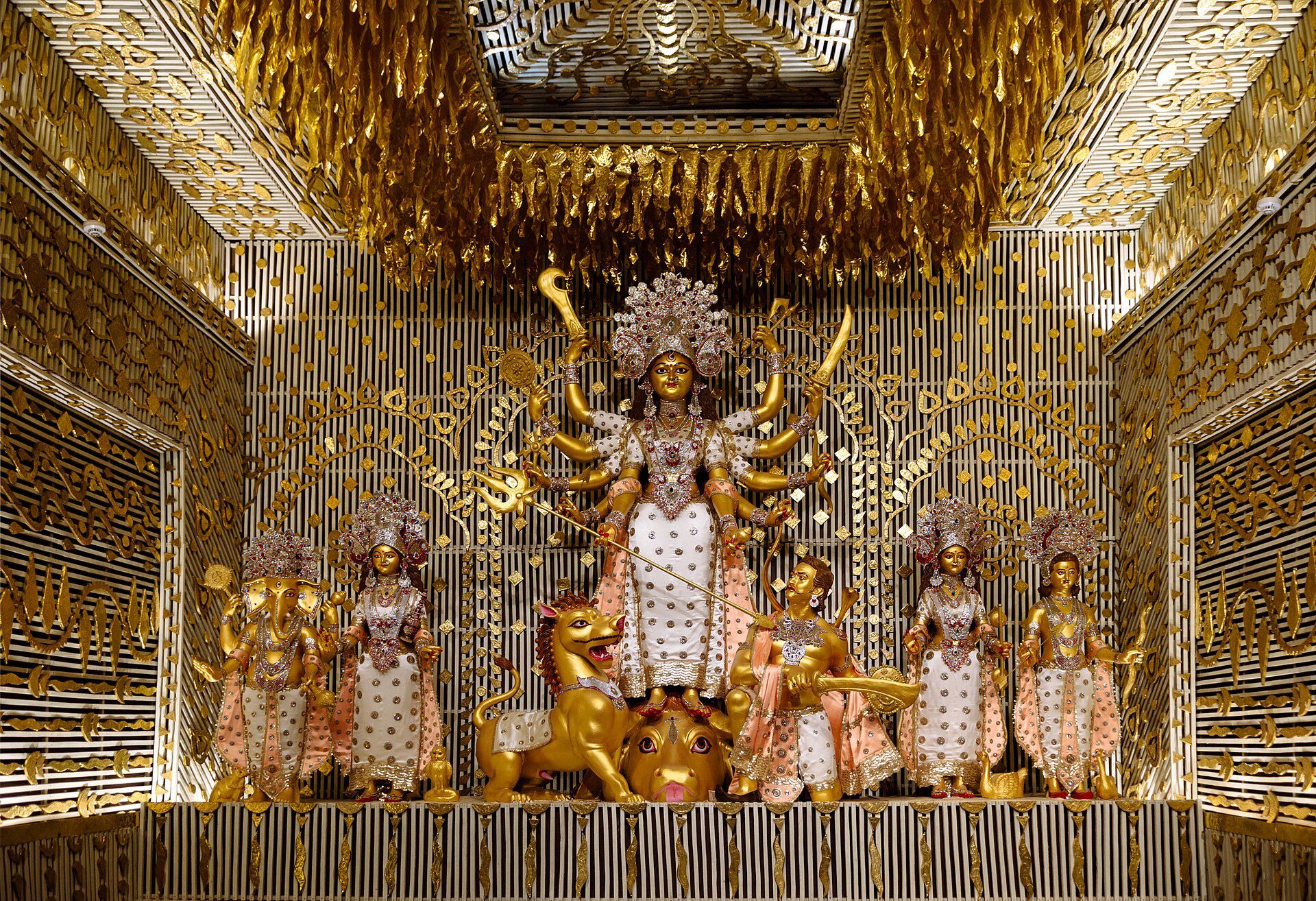
Durga Puja in Kolkata was inscribed in 2021 at the sixteenth session (16.COM), which was held fully online from 13 to 18 December 2021. In UNESCO’s description, the worship begins on Mahalaya, and as crowds admire the installations, “the divides of class, religion and ethnicities collapse”. UNESCO also notes that the festival is celebrated in other parts of India and by the Bengali diaspora. “In Kolkata” is part of the element’s official name.
4. Stamp three: Garba of Gujarat (2023)
Garba of Gujarat was inscribed in 2023 at the eighteenth session (18.COM), held in Kasane, Republic of Botswana, from 5 to 8 December 2023. UNESCO describes Garba as a dance performed on the occasion of Navaratri around a perforated earthenware pot lit with an oil lamp (or an image of the goddess Amba), with dancers moving counter-clockwise in a circle. Note the venue: Kasane, not the capital, Gaborone.
5. Stamp four: Deepavali (2025)
The newest stamp is Deepavali, inscribed in 2025 at the twentieth session (20.COM). That session was held in New Delhi, India, from 8 to 12 December 2025, so the Committee that inscribed Deepavali was meeting in India itself. UNESCO describes Deepavali as a festival of light celebrated by diverse communities across India, falling on the new moon in October or November.
6. India’s count: 16, and still moving
UNESCO’s India page lists 16 elements inscribed as of 11 October 2026. The count includes Yoga (2016), Kumbh Mela (2017) and Nawrouz (2024), a multinational element that India shares with other States. A further nomination, “Henna: rituals, aesthetic and social practices”, is listed as on-going for 2026, so the number can change when the Committee next inscribes elements. When a question asks for India’s total, check the date it refers to.
Institutional framework
- 2003 ICH Convention: adopted by UNESCO’s General Conference, 32nd session, Paris; done on 17 October 2003.
- India’s ratification: 9 September 2005.
- Intergovernmental Committee: inscribes elements in numbered sessions (3.COM, 16.COM, 18.COM, 20.COM); India a member 2006–2010, 2014–2018 and 2022–2026.
- Representative List of the ICH of Humanity: the list carrying all four elements in this explainer.
- Sangeet Natak Akademi: nodal centre for India’s nominations and the National Inventory of ICH (Ministry of Culture letter, 21 February 2011).
The CLAT angle
- GK questions pair an element with its year or venue: Ramlila 2008 (Istanbul), Durga Puja 2021 (online), Garba 2023 (Kasane), Deepavali 2025 (New Delhi).
- Watch the two Ramlila years: proclaimed 2005, inscribed on the Representative List 2008.
- Keep the two 2005s apart: Ramlila’s proclamation and India’s ratification of the 2003 Convention (9 September 2005).
- “Which body coordinates India’s nominations?” is a classic: the Sangeet Natak Akademi, under the Ministry of Culture.
- Totals move: India’s 16 includes the multinational Nawrouz and may change after the next Committee session.
Key facts
| Fact | Detail |
|---|---|
| Sharad Navratri 2026 | Began 11 October; Vijayadashami on 20 October |
| ICH Convention | 17 October 2003; UNESCO General Conference, 32nd session, Paris |
| India ratified | 9 September 2005 |
| Ramlila | Proclaimed 2005; inscribed 2008 at 3.COM, Istanbul (4–8 Nov 2008) |
| Durga Puja in Kolkata | Inscribed 2021 at 16.COM, held fully online (13–18 Dec 2021) |
| Garba of Gujarat | Inscribed 2023 at 18.COM, Kasane, Botswana (5–8 Dec 2023) |
| Deepavali | Inscribed 2025 at 20.COM, New Delhi (8–12 Dec 2025) |
| India’s total | 16 elements (as of 11 Oct 2026), incl. Yoga 2016, Kumbh Mela 2017, Nawrouz 2024 |
| Nodal body | Sangeet Natak Akademi (Ministry of Culture, 21 Feb 2011) |
Memory hook
“Ram in Istanbul, Durga online, Garba in Kasane, Deepa at home.” Read it in order for the years 2008, 2021, 2023 and 2025: Ramlila was inscribed in Istanbul, Durga Puja at an online session, Garba in Kasane (Botswana), and Deepavali at the New Delhi session. The frame around it: Convention 2003, India in 2005, total 16, nodal body SNA.
Sources
UNESCO Intangible Cultural Heritage website: the text of the 2003 Convention, the India country page, the element pages for Ramlila, Durga Puja in Kolkata, Garba of Gujarat and Deepavali, and the session pages for 3.COM, 16.COM, 18.COM and 20.COM; the Sangeet Natak Akademi’s ICH page; Business Today (11 Oct 2026) for the Navratri 2026 calendar.
Free in the CLAT Gurukul app
These notes (as a PDF lesson) and the 10-question CBT are in the app under Current Affairs → 12 Oct 2026. Get the app on Google Play or open app.clatgurukul.com.
Practice Quiz — 10 CLAT-Style Questions
Click an option to reveal the answer and explanation.






