

VIDEO EXPLAINER | 12 OCTOBER 2026
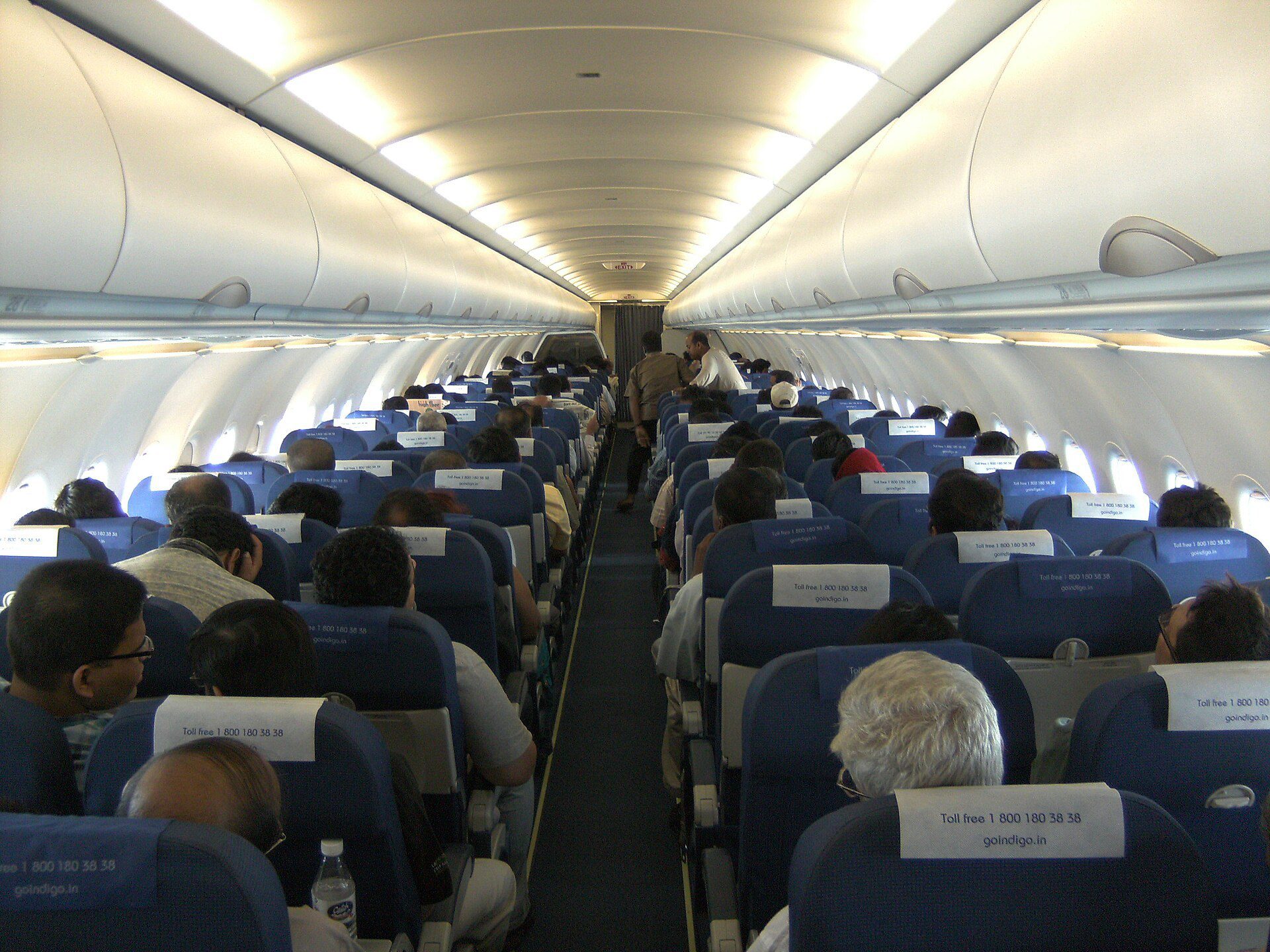
On 11 October 2026, IndiGo flight 6E 6115, operating from Delhi to Chennai, was diverted to Hyderabad. In the airline’s statement, the diversion followed after “smoke was detected from a customer’s personal electronic device”; the cabin crew “responded promptly”, and the pilots landed safely at Rajiv Gandhi International Airport, Hyderabad. Preliminary reports said a passenger’s power bank may have been the source, but IndiGo did not confirm this. A day earlier, on 10 October 2026, a power bank caught fire on a Jeju Air flight at Cheongju airport, South Korea, and all 168 people on board were evacuated. Here is why such batteries are dangerous goods, and what the rules say.
1. Two incidents, two days
On the IndiGo flight, the device was reportedly kept in an overhead bin, as PTI reported citing the airline. All passengers were reported safe, the crew used onboard safety equipment, and an alternate aircraft was arranged to take passengers on to Chennai.
In South Korea, according to SBS and the Seoul Economic Daily, a passenger’s power bank caught fire at about 7:30 p.m. on 10 October, before the Jeju-bound aircraft had moved to the runway. A nearby passenger covered it with clothing, and the crew placed it in a lithium-battery fire-containment pouch. Smoke filled the cabin, all 168 people were evacuated, and no injuries were reported.
2. The science: thermal runaway
A power bank is a pack of lithium-ion cells. The US Federal Aviation Administration (FAA) notes that all lithium-ion batteries can undergo thermal runaway, an uncontrolled heating, set off by damage, overheating, water, overcharging, improper packing or manufacturing defects. Fire-safety testing adds the dangerous part: when a single cell in a battery pack goes into thermal runaway, “its heat causes adjacent cells to do likewise”, so the failure spreads like falling dominoes. India’s regulator makes the same point, saying lithium battery fires “may be self-sustaining”.
3. Cabin, not hold: why not simply ban them?
The question students asked most under this story was simple: if a power bank can catch fire, why is it allowed in the cabin at all, and why not ban it? The rules answer by choosing a place, not a ban. A power bank may travel only where people can see it and act on it.
Under the FAA’s rules, spare lithium batteries and portable chargers are prohibited in checked baggage and go only in carry-on bags. The reason is practical: in the FAA’s words, smoke and fire incidents involving lithium batteries “can be mitigated by the cabin crew and passengers inside the aircraft cabin”. A checked bag, by contrast, travels in the cargo hold, where no one is watching it. That is also why the DGCA keeps power banks out of the overhead bin: even inside the cabin, a closed bin hides the first wisp of smoke.
4. India’s rule: the DGCA circular
In India, the Directorate General of Civil Aviation (DGCA) issued Dangerous Goods Advisory Circular, dated 11 November 2025, titled “Minimising risks of lithium batteries and devices carried by passenger and crew members”. It calls for cabin announcements telling passengers to carry power banks and spare batteries only in hand baggage, that using or charging power banks is not allowed during flight, and to tell the crew about any heat, smoke or unusual odour. It also states that power banks and spare batteries “shall not be placed in overhead bins”. The reason given: in bins or carry-on bags, batteries may be obscured and not readily monitored, which “may result in delayed detection of smoke or fire”.
5. Capacity: the watt-hour test
International rules measure battery size in watt-hours (Wh). The FAA formula is simple: voltage × amp-hours. A 20,000 mAh power bank is 20 Ah; at 3.7 V that is 74 Wh. Under the FAA’s rules, the limit for a lithium-ion battery is 100 Wh. Under IATA’s guidance on an ICAO addendum effective 27 March 2026, a power bank of up to 100 Wh may travel in carry-on baggage without operator approval, one above 160 Wh cannot travel as passenger baggage at all, power banks must not be recharged on board, and a passenger may carry at most two. The 100–160 Wh band is treated differently across these documents, so only the two stable ends are stated here.
Legal and institutional framework
- DGCA: an agency of the Ministry of Civil Aviation, Government of India; India’s aviation regulator.
- Bharatiya Vayuyan Vidheyak, 2024: passed by Parliament to replace the Aircraft Act, 1934; Lok Sabha passed it on 9 August 2024 and Rajya Sabha on 5 December 2024.
- DGCA Dangerous Goods Advisory Circular (11 November 2025): hand baggage only, no use or charging in flight, not in overhead bins.
- FAA (United States): carry-on only for spare lithium batteries; 100 Wh limit; Wh = V × Ah.
- ICAO addendum via IATA guidance (effective 27 March 2026): carry-on only, no recharging on board, maximum two power banks per person.
The CLAT angle
- A Legal Reasoning passage can set out the circular’s three rules and ask whether a passenger who charges a phone from a power bank mid-flight, or keeps one in an overhead bin, has complied.
- Quantitative questions can test the formula: Wh = V × Ah, after converting mAh to Ah.
- GK: DGCA and its parent ministry; the 2024 law that replaced the Aircraft Act, 1934.
- Reading skill: separate what an airline confirmed (“smoke”, “personal electronic device”) from what was reported (“power bank”).
Key facts
| Fact | Detail |
|---|---|
| IndiGo 6E 6115 | Delhi to Chennai, 11 Oct 2026; diverted to Hyderabad after smoke from a device |
| Jeju Air, Cheongju | 10 Oct 2026; power bank fire before take-off; all 168 evacuated |
| DGCA circular | Dangerous Goods Advisory Circular, dated 11 Nov 2025 |
| Circular’s rules | Hand baggage only; no use or charging in flight; not in overhead bins |
| Thermal runaway | Heat from one failing cell sets off adjacent cells (cell-to-cell propagation) |
| Wh formula | Volts × amp-hours; 20,000 mAh × 3.7 V = 74 Wh |
| Size limits | Up to 100 Wh in cabin without approval; above 160 Wh not as passenger baggage |
| ICAO addendum | Effective 27 Mar 2026; max two power banks per person |
| DGCA parent | Ministry of Civil Aviation |
Memory hook
“Cabin yes, hold no, bin no, plug no.” The power bank rides in the cabin, never in checked baggage, never in the overhead bin, and is never used or charged in flight. For size, remember 100 free, 160 never, and the formula V × Ah.
Sources
IndiGo’s statement as carried by ThePrint (PTI, 11 Oct 2026); Business Today and Deccan Chronicle (11 Oct 2026); SBS News and the Seoul Economic Daily (10–11 Oct 2026) on the Jeju Air incident; DGCA Dangerous Goods Advisory Circular (11 Nov 2025), as also reported by Business Standard (4 Jan 2026); FAA PackSafe, newsroom and Technical Center pages; IATA’s guidance document on power banks (31 Mar 2026); the DGCA portal; Bar & Bench (5 Dec 2024) on the Bharatiya Vayuyan Vidheyak, 2024.
Free in the CLAT Gurukul app
These notes (as a PDF lesson) and the 10-question CBT are in the app under Current Affairs → 12 Oct 2026. Get the app on Google Play or open app.clatgurukul.com.
Practice Quiz — 10 CLAT-Style Questions
Click an option to reveal the answer and explanation.






