CURRENT AFFAIRS | 11 OCTOBER 2026
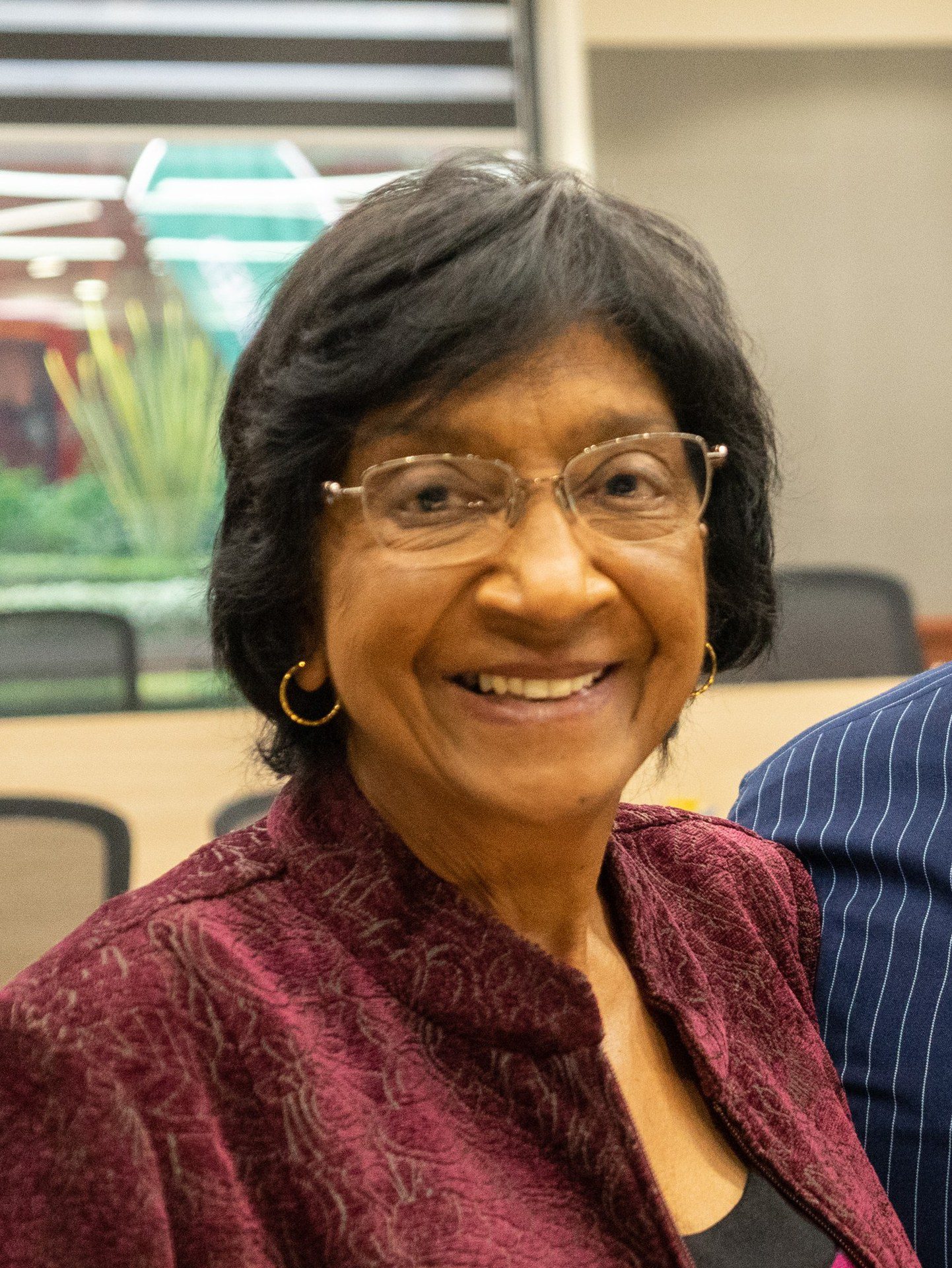
On Friday, 9 October 2026, the Norwegian Nobel Committee in Oslo announced that the Nobel Peace Prize 2026 goes to Navanethem “Navi” Pillay, the South African jurist and former United Nations High Commissioner for Human Rights, “for her efforts to promote peace and international law”. According to the official press release on nobelprize.org, the laureate “has led the way towards a more comprehensive global legal order” and has been “instrumental in ensuring that war crimes, crimes against humanity and genocide are prosecuted”.
The choice is unusual in one respect: it honours a judge rather than a negotiator, activist or organisation. The Committee’s message, in its own words, is that “peace requires justice” and that the rule of law — national and international — underpins the system the world has built to settle conflicts without violence. The Hindu reported the same citation on 9 October.
Who is Navi Pillay?
The press release records that Pillay was born into a family of Indian Tamil origin under apartheid in Durban, South Africa. She became a lawyer and “legal pioneer”, confronting structural discrimination and segregation, and in her early career defended Nelson Mandela and others who stood up against apartheid.
Her judicial career spans national and international courts. She has served as a judge of the High Court of South Africa, the International Criminal Tribunal for Rwanda (ICTR) and the International Criminal Court (ICC). She was the UN High Commissioner for Human Rights (2008–2014) and, until recently, chaired the UN Independent International Commission of Inquiry on the Occupied Palestinian Territory. The release adds that she is today a judge on the International Court of Justice (ICJ) in the case where Myanmar stands accused of genocide.
Why the Committee chose her
The release singles out her contribution to the law on mass atrocities. When the ICTR established that rape and sexual violence could constitute a crime against humanity — as well as genocide — “her influence was a significant factor”. In the same case, it says, she was instrumental in a second breakthrough: for the first time, a defendant faced charges of incitement to commit genocide purely on the basis of spreading propaganda.
The Committee also tied the award to Alfred Nobel’s will. By “systematically advancing the use of tribunals for peace and justice”, it said, Pillay strengthens fraternity between nations and gives substance to “peace conferences in their modern form” — two of the criteria Nobel himself named. It recalled that the first Peace Prize was awarded 125 years ago (in 1901), and that even then the Committee stressed resolving conflicts through international law.
The release is frank about the context. It notes that the rules-based order “has never been perfect”, that the greatest powers have often evaded responsibility, and that international law and its institutions are now “under tremendous pressure” — with judges themselves being sanctioned. Against that backdrop, it calls judges those “who guard the thin red line between order and chaos”.
Constitutional / Legal Framework
Nobel Peace Prize: under Alfred Nobel’s will, the Peace Prize alone is awarded by the Norwegian Nobel Committee in Oslo (the other prizes are decided in Sweden). The prizes are presented on 10 December, the anniversary of Nobel’s death. Each 2026 prize carries 12 million Swedish kronor (The Hindu).
OHCHR: the post of UN High Commissioner for Human Rights was created in 1993, after the Vienna World Conference on Human Rights; the Office (OHCHR) is based in Geneva.
ICTR: an ad hoc tribunal set up by the UN Security Council after the 1994 genocide in Rwanda, to try those responsible.
ICC vs ICJ: the ICC (Rome Statute, in force 1 July 2002, The Hague) tries individuals for genocide, crimes against humanity, war crimes and aggression; India is not a party. The ICJ (principal judicial organ of the UN, The Hague) decides disputes between States — such as the genocide case against Myanmar.
Indian link: India has no Rome Statute membership, but its domestic law protects similar values — Article 21 (life and personal liberty) and the Protection of Human Rights Act, 1993, which set up the National Human Rights Commission.
Reading the award as a CLAT aspirant
For law students, this prize is a ready-made revision of international criminal law. Pillay’s career touches almost every institution in the syllabus: a national High Court, an ad hoc UN tribunal (ICTR), the permanent criminal court (ICC), the UN human-rights machinery (OHCHR, a Commission of Inquiry) and the UN’s court for disputes between States (ICJ). If you can place her on that map, you can answer most questions on who tries whom.
The core legal ideas are also worth fixing. A crime against humanity is a widespread or systematic attack on a civilian population; genocide requires intent to destroy a national, ethnical, racial or religious group in whole or in part. The ICTR’s recognition that sexual violence can amount to both — and its treatment of propaganda as incitement to genocide — are frequently cited milestones.
The CLAT Angle
Direct GK: laureate, nationality (South Africa), motivation (“peace and international law”), awarding body (Norwegian Nobel Committee, Oslo) and ceremony date (10 December). The 2025 laureate, María Corina Machado of Venezuela, is a likely distractor.
Legal Reasoning: a passage could set out the ICC/ICJ distinction and ask which forum can hear a complaint against a State (ICJ) versus an individual (ICC). Another could define genocide and ask whether hate propaganda, without physical violence, can be punished as incitement.
Trap to avoid: she is a former High Commissioner for Human Rights — not the current one — and her ICJ role is in the Myanmar genocide case.
Analysis: a prize for institutions under strain
Peace prizes often reward a peace deal or a movement. This one rewards a method: settling the gravest wrongs through courts. Read neutrally, the Committee is making a structural argument — that durable peace depends on legal accountability, including for powerful actors, and that the people who staff international courts need public support at a time when those courts face pressure. Whether one agrees or not, the citation is a clear statement of the “rule of law” theory of peace, which is exactly the kind of argument a CLAT reading-comprehension passage likes to test for assumptions and inferences.
The Indian-origin angle — a Tamil-origin family in Durban — will interest Indian readers, but the substance of the award is legal: the growth of international criminal justice from Rwanda to The Hague.
Key Facts
- Prize: Nobel Peace Prize 2026, announced 9 October 2026 in Oslo.
- Laureate: Navanethem “Navi” Pillay, South African jurist.
- Motivation: “for her efforts to promote peace and international law”.
- Roots: family of Indian Tamil origin; born under apartheid in Durban.
- Courts: High Court of South Africa, ICTR, ICC; now an ICJ judge in the Myanmar genocide case.
- UN role: former UN High Commissioner for Human Rights (2008–2014).
- Recent role: chaired the UN Commission of Inquiry on the Occupied Palestinian Territory.
- Legal milestone: ICTR held rape and sexual violence can be a crime against humanity and genocide.
- Awarding body: Norwegian Nobel Committee; ceremony on 10 December.
- Prize money: 12 million Swedish kronor.
- History: first Peace Prize awarded 125 years ago (1901); 2025 laureate María Corina Machado.
Memory Hook / Mnemonic
“Peace through the gavel: H-R-C-J.” Trace her career as a ladder of courts: H-R-C-J — High Court (Durban/South Africa) → Rwanda tribunal (ICTR) → Criminal Court (ICC) → Justice court (ICJ, Myanmar case). Peace Prize = Oslo, the only Nobel decided in Norway.
Practice Quiz — 10 CLAT-Style Questions
Click an option to reveal the answer and explanation.