CURRENT AFFAIRS | 07 OCTOBER 2026
The first two awards of the Nobel Prize 2026 season have been announced in Stockholm. On Tuesday, 6 October 2026, the Royal Swedish Academy of Sciences awarded the Nobel Prize in Physics to Francis Halzen “for decisive contributions to the IceCube Neutrino Observatory and the discovery of high-energy neutrinos of astrophysical origin.” A day earlier, on Monday, 5 October 2026, the Nobel Assembly at Karolinska Institutet awarded the Nobel Prize in Physiology or Medicine to Karl Deisseroth, Georg Nagel and Peter Hegemann “for their discoveries concerning light-gated ion channels and optogenetics.”
According to NobelPrize.org and reports in The Hindu, Scientific American and STAT, each prize carries 12 million Swedish kronor. Halzen receives the physics award alone, while the medicine award is shared by three scientists, which is the maximum the Nobel rules allow for a single prize. Both prizes reward work that took decades to mature. One turned a cubic kilometre of Antarctic ice into a telescope. The other turned a light-sensitive protein from green algae into a switch that can turn brain cells on and off.
Physics: a telescope made of ice
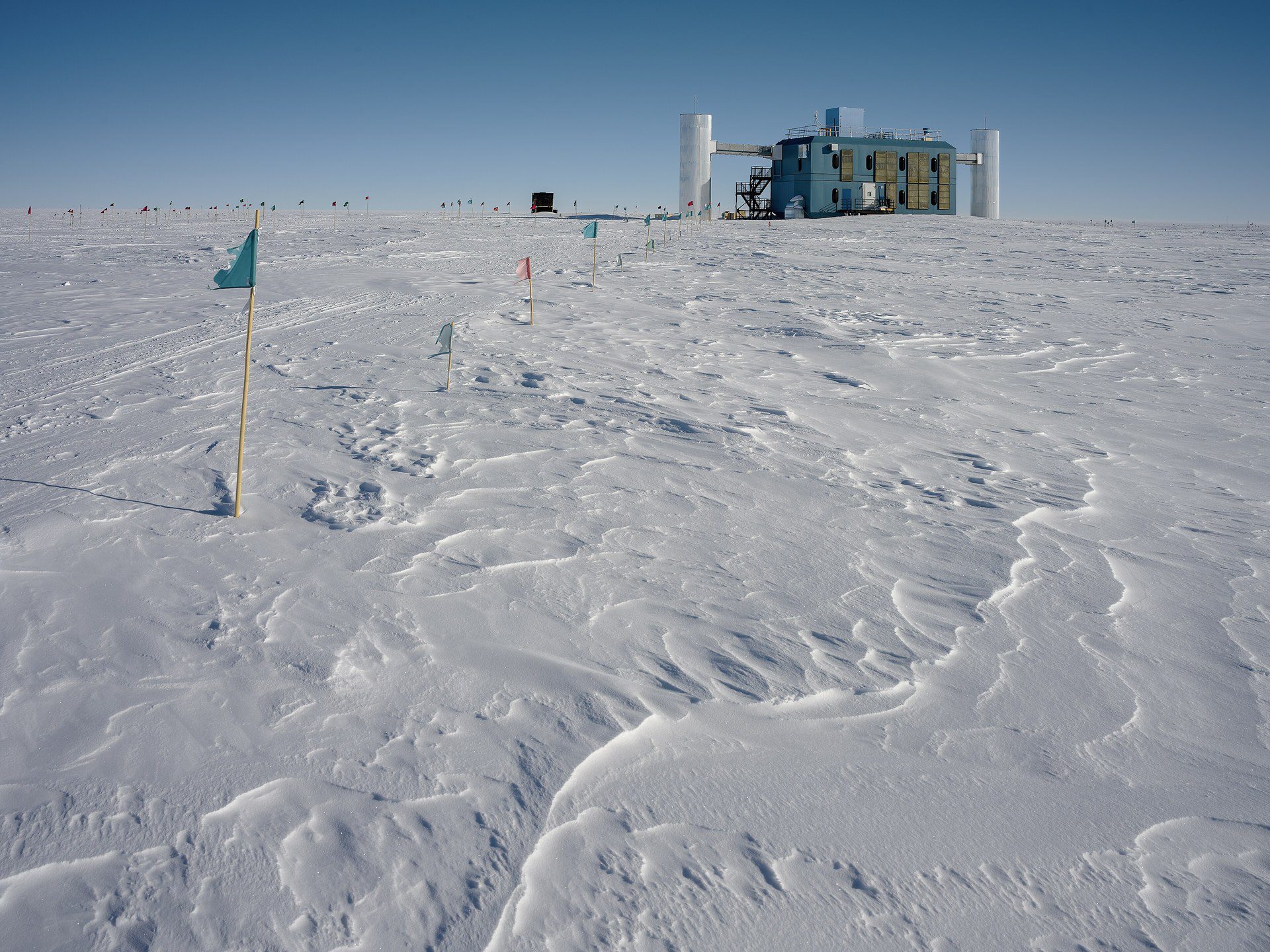
Francis Halzen is a Belgian-born physicist, a professor at the University of Wisconsin–Madison and the principal investigator of the IceCube Neutrino Observatory in Antarctica. According to the Nobel summary, he first presented his idea of catching neutrinos in the ice at the South Pole in 1988. Scientific American describes IceCube as the largest neutrino telescope in the world. It is a cubic kilometre of ice fitted with long strings of light sensors, buried as deep as about one mile below the surface, and it came online in 2010.
Neutrinos are among the most elusive particles in nature. They carry no electric charge, have almost no mass and pass through ordinary matter, including the whole Earth, nearly untouched. That makes them hard to detect, but it also makes them valuable messengers. A neutrino fired out of a distant galaxy travels in a straight line and arrives without being bent by magnetic fields or absorbed by dust. Every so often one collides with an atomic nucleus in the ice. The collision produces a faint flash of light, and IceCube’s sensors record it in the very clear glacial ice.
The Nobel committee rewarded the discovery of high-energy neutrinos of astrophysical origin, meaning neutrinos that come from beyond our solar system rather than from the Sun or from Earth’s atmosphere. That discovery opened a new branch of astronomy, often called neutrino astronomy, which observes the universe with particles instead of light. Scientific American notes that Halzen is the first person to win the physics prize alone since Georges Charpak in 1992.
Medicine: switching neurons on with light
The medicine prize goes back to a simple question about how green algae swim towards light. Peter Hegemann (Humboldt University of Berlin) and Georg Nagel (University of Würzburg) found the answer in a protein called channelrhodopsin. It is a light-gated ion channel in the cell membrane that opens quickly when light falls on it and lets charged particles flow into the cell.
Karl Deisseroth (Stanford University and the Howard Hughes Medical Institute) then took this algal protein into the nerve cells of mammals. According to STAT, his landmark paper using channelrhodopsin in nerve cells came out in 2005. Once neurons are made to carry the protein, a flash of light can make them fire on command. This method of combining genetics with light, called optogenetics, lets researchers activate or silence chosen groups of neurons in living animals with millisecond precision.
Optogenetics has become one of the most widely used tools in neuroscience. Reports on the award note that researchers now use it to trigger memories, drive behaviour and study the neurons involved in psychiatric and neurological disorders.
Background & Framework
The Nobel Prizes were created by the will of Alfred Nobel, the Swedish chemist who invented dynamite, and were first awarded in 1901. Different bodies choose different prizes. The Royal Swedish Academy of Sciences awards Physics and Chemistry, as well as the economics prize (the Sveriges Riksbank Prize in Economic Sciences, added in 1969). The Nobel Assembly at Karolinska Institutet awards Physiology or Medicine, the Swedish Academy awards Literature, and the Norwegian Nobel Committee awards the Peace prize in Oslo. A prize can be shared by at most three laureates. The prizes are presented on 10 December, the anniversary of Nobel’s death. The neutrino was first proposed by Wolfgang Pauli in 1930 to explain missing energy in radioactive beta decay.
Why these two prizes matter
The two awards follow the same pattern. Each rewards a tool as much as a result. IceCube is an instrument that lets physicists see a part of the universe that light cannot show. Optogenetics is a method that lets biologists test cause and effect in the brain rather than only observe what happens alongside a behaviour. In both cases a long gap separated the idea from the recognition. Halzen proposed the ice detector in 1988, the observatory came online in 2010, and the prize came in 2026. Hegemann and Nagel’s algal research dates to the 1990s and early 2000s.
The prizes also show how basic research pays off in ways no one predicts. A study of how single-celled algae find light led to a technique now used in brain laboratories worldwide. A plan to use polar ice as a particle detector produced a new way of observing distant galaxies.
For India, the physics prize connects to its own long-pending India-based Neutrino Observatory (INO) project. It also invites comparison with India’s Nobel history in science: C.V. Raman won the Physics prize in 1930 for the Raman effect, and Har Gobind Khorana shared the Medicine prize in 1968.
The CLAT Angle
Current Affairs & GK: Expect direct questions such as “Who won the Nobel Prize in Physics 2026?” or “The 2026 Medicine Nobel was awarded for discoveries related to which technique?” Matching questions (prize to awarding body) are common: Physics goes with the Royal Swedish Academy of Sciences, Medicine with Karolinska Institutet, Peace with the Norwegian Nobel Committee. Do not confuse Physics with Medicine, and remember that the Peace prize alone is presented in Oslo.
Reading Comprehension: A passage on these prizes could ask you to identify the author’s main claim, for example that basic research yields unexpected applications. It could also test an assumption, for example that a tool deserves the same credit as a discovery.
Logical Reasoning: Optogenetics is a lesson in causation versus correlation. Watching neurons fire during a behaviour shows only that the two occur together. Switching those neurons on with light and producing the behaviour comes much closer to showing cause. This is a classic way to frame a strengthen or weaken question.
Key Facts
- Physics 2026: Francis Halzen, announced on Tuesday, 6 October 2026, by the Royal Swedish Academy of Sciences.
- Physics motivation: “for decisive contributions to the IceCube Neutrino Observatory and the discovery of high-energy neutrinos of astrophysical origin.”
- Halzen: Belgian-born; professor at the University of Wisconsin–Madison; principal investigator of IceCube.
- IceCube: a cubic kilometre of ice at the South Pole, Antarctica, fitted with light sensors; came online in 2010; Halzen proposed the idea in 1988.
- Solo prize: the first single-recipient Physics Nobel since Georges Charpak in 1992.
- Medicine 2026: Karl Deisseroth, Georg Nagel and Peter Hegemann, announced on Monday, 5 October 2026, by the Nobel Assembly at Karolinska Institutet.
- Medicine motivation: “for their discoveries concerning light-gated ion channels and optogenetics.”
- Channelrhodopsin: a light-gated ion channel from green algae, identified by Hegemann and Nagel.
- Affiliations: Deisseroth at Stanford/HHMI (USA); Hegemann at Humboldt University of Berlin; Nagel at the University of Würzburg (Germany).
- Prize money: 12 million Swedish kronor per prize.
- Static GK: first Nobel Prizes awarded in 1901; at most three laureates per prize; prizes presented on 10 December.
Analysis: what to remember and what to avoid
Aspirants most often confuse which body awards which prize. Physics and Chemistry come from the Royal Swedish Academy of Sciences. Medicine comes from the Nobel Assembly at Karolinska Institutet. Literature comes from the Swedish Academy, which is a different body from the Academy of Sciences. A second trap is the word “origin” in the physics motivation. The prize is for neutrinos of astrophysical origin, meaning from deep space, not for discovering the neutrino itself, which was proposed decades earlier. A third trap is the medicine motivation. It names both light-gated ion channels (the protein biology) and optogenetics (the technique). An option that mentions only “gene therapy” or “brain imaging” is a distractor.
Read across the week, the announcements continue a pattern of recent years: many science Nobels now go to methods and instruments that open whole fields of research. For a CLAT candidate, the safest approach is to learn three things for each prize: the laureate, the awarding body and the key phrase of the motivation.
Memory Hook / Mnemonic
“ICE-HALZEN, ALGAE-LIGHT”: Physics = IceCube (Halzen, a lone winner at the South Pole); Medicine = Algae protein + Light = optogenetics (Deisseroth, Nagel, Hegemann).
Who awards what: “Royal for Physics, Karolinska for Medicine, Oslo for Peace.” Dates: Medicine Monday (5 Oct), Physics Tuesday (6 Oct).
Practice Quiz — 10 CLAT-Style Questions
Click an option to reveal the answer and explanation.