CURRENT AFFAIRS | 07 OCTOBER 2026
On Tuesday, 6 October 2026, the Union Cabinet, chaired by Prime Minister Narendra Modi, approved two institutional reforms aimed at the backbone of the economy — its transport networks and its small and medium businesses. The first is the creation of an Integrated Transport and Logistics Authority (ITLA), which will prepare a long-term Transport Plan across all modes. The second is a central commitment of ₹10,000 crore to an SME Growth Fund (SGF) that will provide equity capital to small and medium enterprises, with the majority of the allocation going to manufacturing-focused SMEs. According to The Hindu, the fund was approved on a proposal of the Ministry of Finance; the SME Growth Fund had been announced in the Union Budget 2026-27. Union Minister Ashwini Vaishnaw briefed the media on the decisions, as reported by PTI-based outlets including NewsDrum.
Taken together, the two decisions address two long-standing constraints on Indian growth: fragmented transport planning that raises the cost of moving goods, and the difficulty smaller firms face in raising long-term risk capital.
Decision 1: Integrated Transport and Logistics Authority
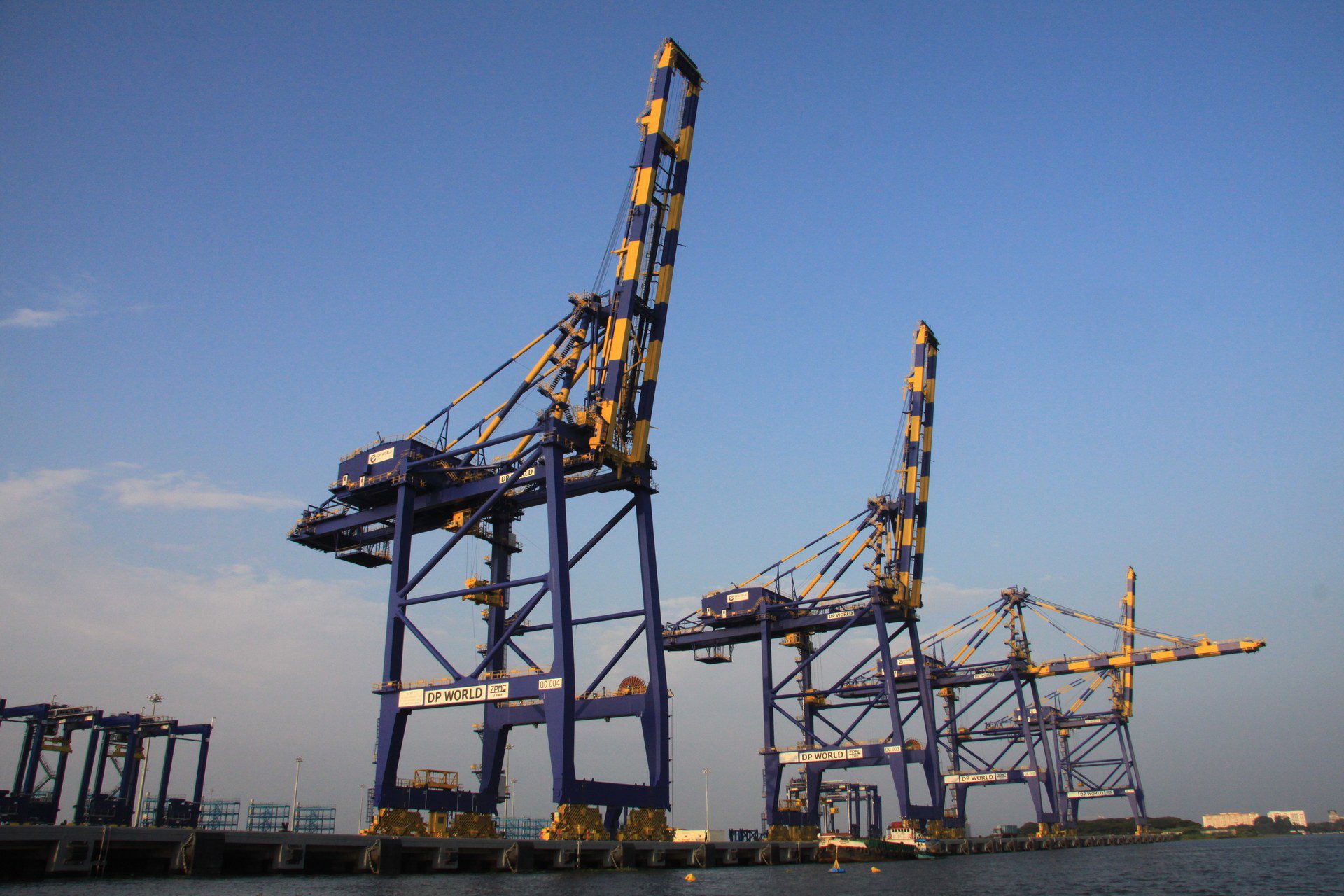
India’s transport sector has historically been planned ministry by ministry — roads, railways, ports and shipping, civil aviation and inland waterways each with its own agency, budget and project pipeline. The ITLA is designed to bring these under a single planning lens. As reported by The Hindu, India TV and Free Press Journal, the authority will:
- prepare a long-term Transport Plan — described as a National Transport Master Plan with a horizon of more than 10 years — covering roads, railways, ports and shipping, civil aviation, inland waterways, coastal shipping, urban mobility and logistics;
- carry out technical appraisal of central infrastructure projects costing ₹500 crore or more;
- monitor implementation and conduct post-implementation impact assessment; and
- build a National Transport Data Repository drawing on sources such as GSTN e-way bills, FASTag, Vahan, GPS systems and urban traffic management platforms.
Reports describe the ITLA as a special purpose vehicle for integrated transport planning. Details of its composition and leadership were not given in the reports available at the time of writing.
The logic is multimodal efficiency. A container moving from a factory to a port may use a road, a rail line and a terminal, each planned separately. Gaps between them — a missing last-mile road or a rail siding that does not reach a port — add time and cost. A single authority that plans across modes, and appraises large projects against a common plan, is meant to reduce such mismatches and to direct scarce capital to the links that matter most.
Background & Framework
PM Gati Shakti National Master Plan (launched in October 2021) is a GIS-based digital platform that brings infrastructure ministries onto one map for coordinated planning. The National Logistics Policy (2022) set out to lower logistics costs and improve India’s logistics performance. The ITLA can be read as the next institutional step: from a shared map and a policy to a dedicated planning and appraisal body.
MSMEs are governed by the Micro, Small and Medium Enterprises Development (MSMED) Act, 2006, under which enterprises are classified as micro, small or medium on the basis of investment and turnover thresholds notified by the Union. The SME Growth Fund targets the small and medium tiers specifically — the firms that have outgrown the micro stage and now need capital to scale.
Alternative Investment Funds (AIFs) are privately pooled investment vehicles regulated by SEBI under the SEBI (Alternative Investment Funds) Regulations, 2012.
Decision 2: the ₹10,000 crore SME Growth Fund
According to the reports, the Centre will provide an aggregate commitment of ₹10,000 crore to an Alternative Investment Fund set up under the SGF, which will make equity investments in growth-stage small and medium businesses. The stated aim is to help them increase capacity, adopt new technologies, expand overseas or undertake acquisitions — in the government’s words, to create “future champions”. The fund is to cover manufacturing, services, technology, innovation-driven sectors and strategic value chains, but the majority of the allocation is earmarked for small and medium manufacturing enterprises, with a focus on industrial clusters in Tier-II and Tier-III cities. The decision has been linked to the goal of Viksit Bharat 2047.
Why equity and not loans? Most government support to small businesses has historically come as credit — guarantees, interest subvention or priority-sector lending. Debt must be serviced from the first month, which is hard for a firm that is still building a plant or entering a new market. Equity is patient capital: the investor shares the risk and the upside, and the firm’s balance sheet becomes stronger, which in turn makes it easier to borrow later. The structural gap that the SGF targets is the so-called “missing middle” — firms too large for micro-credit schemes but too small or too early to attract mainstream private equity.
The CLAT Angle
GK: Expect direct questions — What does ITLA stand for? What is the size of the SME Growth Fund? Which Budget announced it? What is the project-cost threshold for ITLA’s technical appraisal? Which Act defines MSMEs?
Critical Reasoning: A passage might argue that “a single transport authority will cut logistics costs”. Identify the assumption (that fragmentation, not funding or land acquisition, is the main bottleneck) and what would weaken it (evidence that delays stem from land and clearances rather than planning).
Reading Comprehension: An economics passage on equity versus debt, or on the “missing middle” of Indian enterprise, can be built directly around the SGF.
Analysis: promise and open questions
Both reforms are institution-building rather than spending-heavy. The ITLA’s value will depend on whether its plan and appraisals actually bind the line ministries, or remain advisory. Its proposed data repository could become its most powerful tool: real-time freight data from e-way bills and FASTag would let planners see where goods actually move and where they get stuck.
For the SGF, the key tests will be governance and selection — who manages the fund, how investee firms are chosen, and whether public money crowds in private investors rather than replacing them. Equity investment by a government-backed fund also raises the question of exit: how and when the fund sells its stake to recycle capital. These details were not part of the initial announcement and will matter more than the headline figure.
Finally, the two measures are complementary. Manufacturing SMEs in Tier-II and Tier-III clusters depend heavily on affordable, reliable transport to reach ports and markets. Capital without connectivity limits growth; connectivity without capital limits who can use it. Approving both on the same day signals an attempt to address supply-side constraints together.
Key Facts
- Date: Union Cabinet decision on Tuesday, 6 October 2026, chaired by PM Narendra Modi.
- ITLA = Integrated Transport and Logistics Authority.
- ITLA prepares a long-term Transport Plan (10+ year horizon) across roads, railways, ports and shipping, civil aviation, inland waterways, coastal shipping, urban mobility and logistics.
- ITLA will technically appraise central projects of ₹500 crore or more.
- Proposed National Transport Data Repository using GSTN e-way bills, FASTag, Vahan and GPS data.
- SME Growth Fund: central commitment of ₹10,000 crore, proposed by the Ministry of Finance.
- Structured through an Alternative Investment Fund; provides equity capital.
- Majority of the allocation for manufacturing SMEs; focus on Tier-II and Tier-III clusters.
- The SME Growth Fund was announced in the Union Budget 2026-27.
- MSMEs are defined under the MSMED Act, 2006; AIFs are regulated by SEBI.
Memory Hook / Mnemonic
“ITLA plans the roads, SGF fuels the loads.” For the numbers: “10,000 to grow, 500 to appraise” — ₹10,000 crore for the fund, ₹500 crore as ITLA’s appraisal threshold. And for the modes, think “R-R-P-A-W”: Roads, Railways, Ports, Aviation, Waterways.
Practice Quiz — 10 CLAT-Style Questions
Click an option to reveal the answer and explanation.