CURRENT AFFAIRS | 07 OCTOBER 2026
On Monday, 5 October 2026, the Supreme Court refused the Union government’s request to stay proceedings before the Calcutta High Court in a public interest litigation (PIL) challenging the Great Nicobar Island Project. According to The Hindu and LiveLaw, a three-judge Bench of Chief Justice of India Surya Kant, Justice Joymalya Bagchi and Justice V Mohana declined to interfere with the High Court’s order that had upheld the maintainability of the PIL, and instead urged the High Court to hear the matter on the dates already fixed — 25 and 26 November 2026 — and decide it without delay.
The PIL was filed by Meena Gupta, a former Union Environment Secretary who has also served in the Ministry of Tribal Affairs. It alleges that the clearances for the project were obtained in violation of the Forest Rights Act, 2006, particularly in the way the consent of forest-dwelling communities was recorded. During the hearing, Justice Bagchi orally observed that “preservation of culture is a constitutionally protected fundamental right”, adding that tribal culture in the Nicobar ecology requires constitutional protection, and remarked that the Shompen are a unique tribe in need of preservation.
What the Union argued, and what the Court did
The Union was represented by Attorney General R Venkataramani and Additional Solicitor General Aishwarya Bhati; Senior Advocate Dr S Muralidhar appeared for the PIL petitioner. As reported by National Herald and LiveLaw, the Union stressed that the project costs over ₹72,000 crore and is of immense strategic and national importance; that it involves no loss of habitation for indigenous tribes, including the Shompen; and that the National Green Tribunal (NGT) had already examined the environmental concerns, upholding the environmental clearance with conditions and rejecting a later review in April 2023. Against the Union, the petitioner’s side has alleged diversion of over 130 sq km of tropical forest.
The Supreme Court did not decide any of these questions on merits. Its order was procedural but significant: the constitutional challenge stays alive in the High Court, which had earlier rejected the Union’s preliminary objections on the petitioner’s standing. The apex court chose to let the High Court, as the court of first instance, examine the evidence — and signalled urgency rather than a stay.
The project in brief
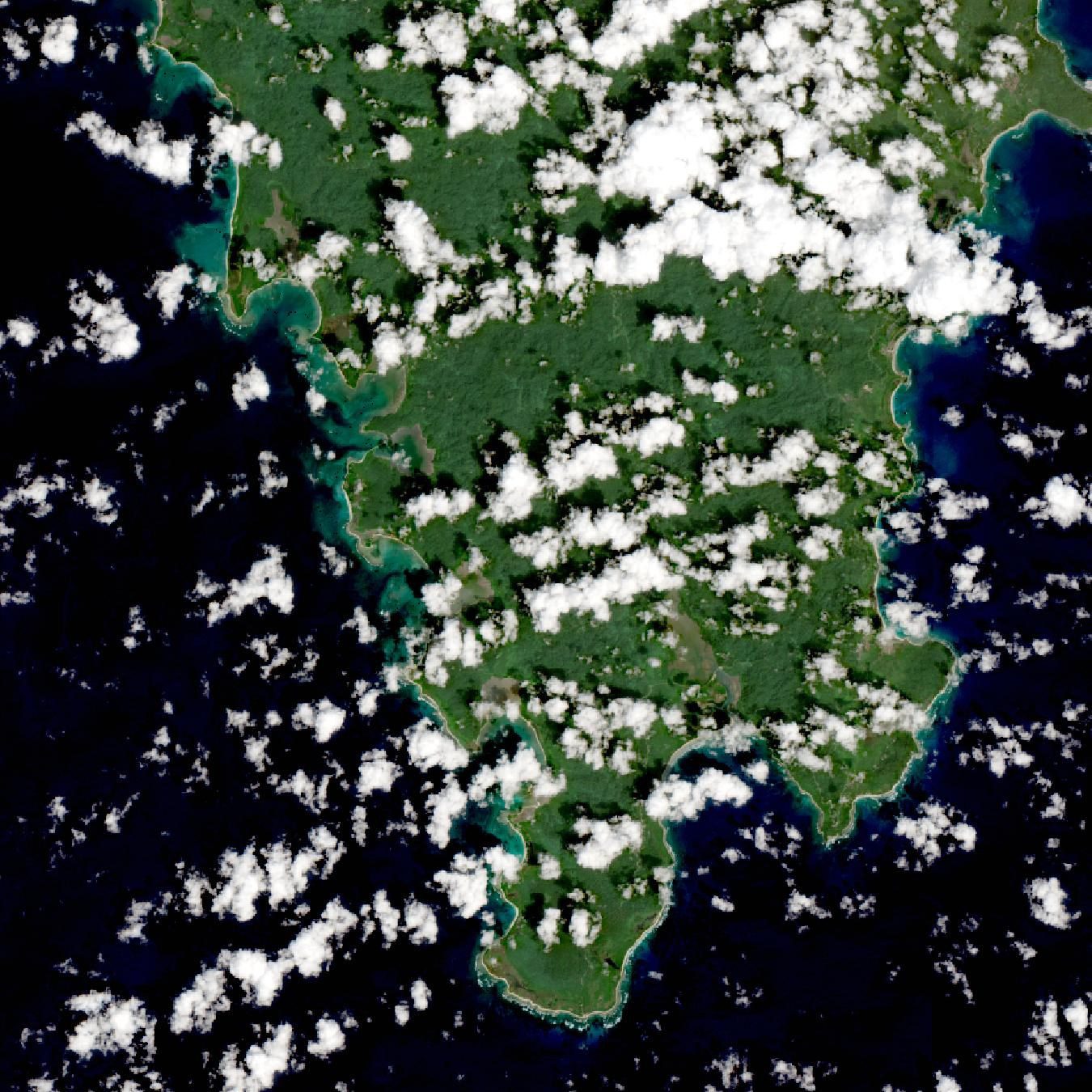
The Great Nicobar Island Project is a large infrastructure plan for India’s southernmost island. Its key components, as widely reported, are an international container transshipment port at Galathea Bay, an international airport, a township and a power plant. Supporters point to the island’s position near major east–west shipping lanes close to the Strait of Malacca and its strategic value in the Indian Ocean. Critics point to the island’s rainforest, its coral and turtle-nesting coasts (Galathea Bay is known as a nesting site for leatherback turtles), and the vulnerability of its indigenous communities. Great Nicobar is also home to Indira Point, the southernmost tip of India, and forms the Great Nicobar Biosphere Reserve, included in UNESCO’s Man and the Biosphere network in 2013.
Two indigenous communities are central to the litigation: the Shompen, a hunter-gatherer community classified as a Particularly Vulnerable Tribal Group (PVTG), and the Nicobarese.
Constitutional / Legal Framework
Forest Rights Act, 2006 — the Scheduled Tribes and Other Traditional Forest Dwellers (Recognition of Forest Rights) Act, 2006 — recognises the individual and community forest rights of forest-dwelling communities and makes the Gram Sabha the body that initiates the process of determining those rights. The Supreme Court’s Niyamgiri ruling (Orissa Mining Corporation v Ministry of Environment and Forests, 2013) left it to the Gram Sabhas to decide whether a mining project affected their religious and cultural rights.
Article 29(1) guarantees to any section of citizens having a distinct language, script or culture the right to conserve the same — the textual home of the “culture as a fundamental right” observation.
Jurisdiction: under Article 230, Parliament may by law extend a High Court’s jurisdiction to a Union Territory. The Andaman and Nicobar Islands fall under the Calcutta High Court, which has a circuit bench at Port Blair. PILs reach a High Court under Article 226; the Supreme Court hears appeals from such orders under Article 136.
The aboriginal tribes of the islands are also protected by the Andaman and Nicobar Islands (Protection of Aboriginal Tribes) Regulation, 1956.
Why the “culture” remark matters
Environmental litigation in India has usually been argued through Article 21 (a right to a healthy environment read into the right to life) and through statutes such as the Environment (Protection) Act, 1986 and the Forest (Conservation) Act, 1980. The Great Nicobar dispute adds a different axis: the claim that a community’s culture, tied to a particular forest and coast, is itself a protected interest. Article 29(1) speaks of conserving a distinct culture, and the Forest Rights Act gives that interest a procedural voice through the Gram Sabha. Read together, they suggest that the question is not only “will the forest be harmed?” but also “did the people whose way of life depends on it genuinely consent?”
It is important to read the observation accurately. It was an oral remark made during the hearing, not a holding on merits. The Supreme Court has not ruled that the project violates the Forest Rights Act; it has only refused to stop the High Court from deciding whether it does. For exam purposes, distinguish clearly between an obiter observation in court, an interim order, and a final judgment.
Development versus rights: the balancing problem
The case is a textbook illustration of competing public interests. On one side are national security, maritime trade and regional connectivity; on the other are the rights of a PVTG, forest cover and biodiversity in a biosphere reserve. Courts generally do not decide whether a project is wise — that is a policy choice for the executive. What courts examine is whether the procedure required by law was followed: whether consent was obtained as the statute demands, whether clearances considered relevant material, and whether fundamental rights were respected. That is why the Union’s argument that the NGT had already upheld the environmental clearance did not end the matter: the PIL raises a distinct statutory question under the Forest Rights Act and a constitutional question about tribal culture.
The CLAT Angle
Legal Reasoning: Expect a passage stating a principle such as “forest land cannot be diverted unless the rights of forest dwellers are first settled through the Gram Sabha”, followed by facts about a port project where only a district official certified consent. The correct answer will turn on whose consent the statute requires, not on how important the project is.
Procedure questions: Know the difference between refusing to stay proceedings and deciding a case on merits; between maintainability (can the court hear it?) and the merits (who is right?); and between Article 226 (High Court) and Article 32 (Supreme Court) writ jurisdiction.
GK: Which High Court has jurisdiction over Andaman and Nicobar? Which tribe is a PVTG on Great Nicobar? Where is Galathea Bay? What does Article 29 protect?
Static GK links
The Andaman and Nicobar Islands are a Union Territory; the Nicobar group lies south of the Ten Degree Channel, which separates Little Andaman from Car Nicobar. Great Nicobar is the largest island of the Nicobar group. The Calcutta High Court, established in 1862, is the oldest High Court in India and also has jurisdiction over the Andaman and Nicobar Islands. The National Green Tribunal was set up under the National Green Tribunal Act, 2010. PVTGs are a sub-category of Scheduled Tribes identified by the Union for focused development on the basis of features such as pre-agricultural technology, low literacy and a stagnant or declining population.
Key Facts
- Date of SC hearing: Monday, 5 October 2026.
- Bench: CJI Surya Kant, Justice Joymalya Bagchi, Justice V Mohana.
- SC refused to stay Calcutta HC proceedings; declined to interfere with HC order upholding maintainability of the PIL.
- HC hearing fixed for 25–26 November 2026.
- PIL petitioner: Meena Gupta, former Union Environment Secretary.
- Alleged violation: Forest Rights Act, 2006 (consent of forest dwellers).
- Oral remark (Justice Bagchi): preservation of culture is a constitutionally protected fundamental right.
- Union represented by AG R Venkataramani and ASG Aishwarya Bhati; project cost stated as over ₹72,000 crore.
- NGT upheld the environmental clearance with conditions; rejected a review in April 2023.
- Tribes: Shompen (PVTG) and Nicobarese.
- Key site: Galathea Bay (transshipment port); A&N falls under the Calcutta HC.
What to watch next
The next milestone is the Calcutta High Court hearing on 25–26 November 2026. The High Court will have to address the Forest Rights Act compliance and the constitutional questions concerning tribal rights. Whatever it decides is likely to be appealed, so the case could return to the Supreme Court — this time on merits. Aspirants should follow it as a live example of how courts weigh strategic infrastructure against statutory consent and cultural rights.
Memory Hook / Mnemonic
“Nicobar goes to Calcutta, culture goes to 29.” For the parties, remember “S-G-N”: Shompen (the PVTG), Galathea Bay (the port), November 25–26 (the next hearing). And the rule in one line: “No stay, no verdict — just a date.”
Practice Quiz — 10 CLAT-Style Questions
Click an option to reveal the answer and explanation.