CURRENT AFFAIRS | 24 SEPTEMBER 2026
On 21 September 2026 the Planetary Boundaries Science Lab at the Potsdam Institute for Climate Impact Research (PIK) published the Planetary Health Check 2026, the third annual edition of a scientific assessment of the state of the Earth system. Its central finding: seven of the nine Planetary Boundaries are now transgressed, all seven at their highest recorded levels. Ocean acidification is the newest to breach its boundary, crossing in 2025. The report is authored by more than 60 scientists; the lead author is Boris Sakschewski, and PIK Director Johan Rockström is a co-author.
A note on citation: the PIK news item carries the date 21.09.2026, and the release went out that day through EurekAlert, with press coverage following on 22 September. The correct formula is therefore released 21 September 2026 by PIK’s Planetary Boundaries Science initiative.
“The diagnosis is unambiguous,” Sakschewski said in the PIK release. “Pressure is rising across every Planetary Boundary already outside the safe operating space… the risk of large-scale, persistent and potentially irreversible change is increasing, while our margin for error in tackling these problems is shrinking.”
What the Planetary Boundaries framework actually is
This is the part most aspirants get half-right. The framework is not a treaty, a UN body or a legal standard. It is a scientific model, first set out by Johan Rockström and colleagues in 2009 in Ecology and Society and substantially revised by Will Steffen and colleagues in 2015. It identifies nine Earth-system processes that must stay within limits if the planet is to keep the stability it had through the Holocene, the steady ten-thousand-year interval in which agriculture and modern civilisation emerged. Staying inside all nine defines the Safe Operating Space for humanity.
The nine boundaries are: climate change; change in biosphere integrity; land system change; freshwater change; modification of biogeochemical flows (chiefly nitrogen and phosphorus); ocean acidification; increase in atmospheric aerosol loading; stratospheric ozone depletion; and introduction of novel entities (human-made substances such as plastics, synthetic chemicals and pesticides). The 2026 assessment measures them through 13 control variables — several boundaries have more than one indicator, and freshwater change, for instance, is tracked separately as blue water and green water.
Two design features are worth memorising, because they are exactly what a passage will test. The framework is precautionary: boundaries sit at the lower end of the range at which serious risk is expected, not at the point of collapse. And consequently crossing a boundary does not mean immediate catastrophe — it means entering a zone of rising risk where damage becomes likelier and potentially irreversible. The report is explicit on both.
Background & Framework
The Planetary Boundaries sit alongside, but are distinct from, the instruments of international environmental law. The UN Framework Convention on Climate Change (UNFCCC, 1992) and its Paris Agreement (2015) set the political temperature goal — holding warming well below 2°C above pre-industrial levels and pursuing efforts to limit it to 1.5°C. The Convention on Biological Diversity (1992) and its Kunming-Montreal Global Biodiversity Framework, adopted at COP15 in Montreal in December 2022, carry the biodiversity goals, including protecting 30 per cent of land and sea by 2030. The Vienna Convention (1985) and the Montreal Protocol (1987) govern ozone-depleting substances — and ozone depletion is one of only two boundaries the 2026 report finds improving, which is why the Protocol is so often called the most successful environmental treaty in force. In Indian constitutional law the mandate rests on Article 48A, a Directive Principle inserted by the 42nd Amendment, 1976, directing the State to protect and improve the environment and safeguard forests and wildlife, and on Article 51A(g), the Fundamental Duty of every citizen to do the same. The Supreme Court has read the right to a healthy environment into Article 21.
The seventh breach: what acidification is, and what the numbers say
When carbon dioxide dissolves in seawater it forms carbonic acid, lowering pH and reducing the carbonate ions that marine organisms use to build calcium carbonate shells and skeletons. The report measures the boundary using the global mean surface aragonite saturation state (Ωarag), aragonite being a form of calcium carbonate; a lower value means seawater is less favourable for calcifying organisms.
The figures are unusually clean for an exam. The pre-industrial baseline is 3.57; the boundary is 2.86, which the report defines as 80 per cent of pre-industrial levels; the 2026 assessment puts the best estimate at 2.85, just below the threshold and therefore transgressed; and a provisional High-Risk Line sits at 2.50. The Arctic and Southern Oceans show the strongest changes, and nearly all regions have become significantly more acidic between 1750 and 2024.
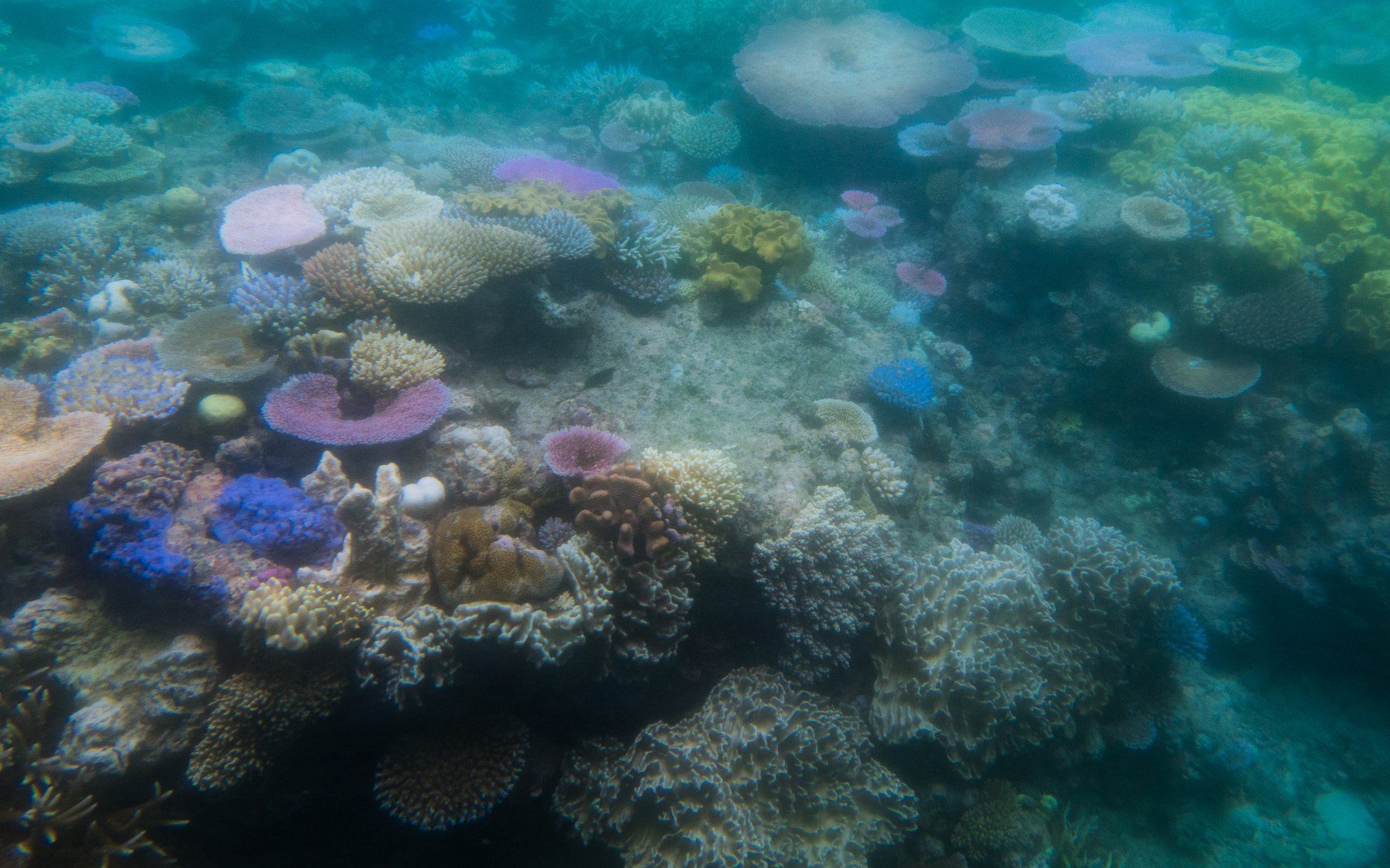
The biological consequences are already observable, the report says: pteropods (small swimming sea snails) show shell damage and dissolution; tropical reefs face reduced recovery capacity alongside warming-driven bleaching; and deep-water corals are increasingly exposed to corrosive conditions. Acidification also weakens the ocean carbon sink — a feedback that makes the climate boundary harder to manage.
The CLAT Angle
In GK, the reliable questions are: how many boundaries are there (nine), how many are transgressed (seven), which is newest (ocean acidification, 2025), which two have improved (stratospheric ozone depletion and atmospheric aerosol loading), who framed the concept (Rockström and colleagues, 2009), and which institute produces the annual check (PIK). In a Reading Comprehension or Current Affairs passage, the test is epistemic: the passage describes a model and asks what follows. Two traps. One: treating a transgressed boundary as a prediction of collapse — the framework says crossing means rising risk, not catastrophe. Two: treating a boundary as a legal limit — it is a scientific threshold with no binding force, unlike a Paris Agreement commitment or a domestic statute. A question that asks “which of the following would most weaken the author’s conclusion?” often turns on precisely this gap between a modelled threshold and a policy obligation.
The two that improved — with a caveat
Only stratospheric ozone depletion and atmospheric aerosol loading improved over the last decade, and both remain within their boundaries globally. Ozone is the cleaner success: the coordinated phase-out of ozone-depleting substances under the Montreal Protocol is the framework’s standing proof that a boundary can be walked back. Aerosols are messier — the report cautions that global improvement may mask unsafe levels persisting in some regions, a warning of direct relevance to South Asia.
A year of extremes, and a weakening land sink
The report sets the numbers in twelve months of observed extremes. Pakistan’s 2025 monsoon floods affected more than 6.9 million people. Global ocean heat content reached a new record in 2025, with Hurricane Melissa ramping up rapidly to Category 5 and striking Jamaica after passing over exceptionally warm seas. From January 2023 to September 2025, bleaching-level heat stress affected about 84.4 per cent of the world’s coral reef area — the largest global coral-bleaching event yet observed. In 2026 Western Europe recorded its hottest June-July period, with drought across France, Spain, Germany and the United Kingdom and major wildfires in Europe and Canada; record heat was also logged in Japan, South Korea and parts of West Asia.
This year’s report adds a specific worry: the land carbon sink. Vegetation and soils absorb a substantial share of human CO2 emissions, but repeated heat, drought, fire and degradation reduce that uptake and can flip ecosystems from sinks to sources. The report asks whether the models used to calculate the land sink overestimate its resilience. “Our path to net zero emissions relies on functioning carbon sinks,” Sakschewski said. On the Amazon, it warns that crossing the tipping point could see up to 70 per cent of the forest shift from rainforest to dry tropical savanna.
Key Facts
- Report: Planetary Health Check 2026, released 21 September 2026 by Planetary Boundaries Science at PIK, Potsdam — the third annual edition.
- Authors: more than 60 scientists; lead author Boris Sakschewski; co-author and PIK Director Johan Rockström.
- Headline finding: 7 of 9 Planetary Boundaries transgressed, all seven at their highest recorded levels of transgression.
- Newest breach: ocean acidification, crossed in 2025.
- Transgressed: climate change, biosphere integrity, land system change, freshwater change, biogeochemical flows, novel entities, ocean acidification.
- Still within boundaries: stratospheric ozone depletion and atmospheric aerosol loading — the only two that improved over the last decade.
- Acidification metric: surface aragonite saturation state — baseline 3.57, boundary 2.86 (80% of pre-industrial), 2026 value 2.85, provisional high-risk line 2.50.
- Climate metrics: CO2 boundary 350 ppm vs 2026 assessment 426 ppm; radiative forcing boundary +1.0 W/m² vs +3.10 W/m².
- Framework origin: Rockström et al., Ecology and Society, 2009; revised by Steffen et al., 2015; 13 control variables.
- Extremes cited: Pakistan 2025 floods affected 6.9 million+; record 2025 ocean heat; Hurricane Melissa (Cat 5, Jamaica); 84.4% of reef area under bleaching-level heat stress, Jan 2023–Sep 2025.
- Amazon risk: up to 70% of the forest could shift to dry tropical savanna if its tipping point is crossed.
Why this matters for India
India is not a bystander to any of the seven. Its reef systems — the Gulf of Mannar, the Gulf of Kachchh, the Andaman and Nicobar Islands and the coral atolls of Lakshadweep — face the same double pressure of warming and corrosive chemistry the report describes, and they underwrite fisheries, coastal protection and tourism. That makes acidification a Blue Economy question as much as a conservation one: the economic use of ocean resources depends on the ocean’s chemistry holding. India’s groundwater stress and heavy nitrogen and phosphorus fertiliser use place it inside two more transgressed boundaries, and the report’s caution about unsafe regional aerosol levels is a direct description of the Indo-Gangetic plain.
Read the report honestly, though — that is better teaching than alarm. The Planetary Boundaries are a model, built on precautionary thresholds that scientists themselves revise. The numbers are estimates with uncertainty ranges, and the report states that its assessment uses the latest available data, some of which predate 2026. None of that weakens a direction of travel consistent across seven independent indicators. But an argument that overstates a model’s certainty is easier to knock down than one that states it accurately — and in a critical-reasoning question, the accurate statement is the one that survives.
Memory Hook / Mnemonic
For the two that are still safe, remember “only the SKY is still inside” — stratospheric ozone and atmospheric aerosols, both atmospheric, both improving. The other seven are all at the surface: land, water, life, nutrients, chemicals, climate and the sea. For acidification, fix the ladder 3.57 → 2.86 → 2.85 → 2.50: baseline, boundary, today, high-risk line. And for the framework’s logic in one line: “A boundary is a smoke alarm, not a funeral.”
Practice Quiz — 10 CLAT-Style Questions
Click an option to reveal the answer and explanation.