
CURRENT AFFAIRS | 07 OCTOBER 2026
On Tuesday, 6 October 2026, Union Environment Minister Bhupender Yadav told the leaders’ plenary of the pre-COP31 meetings in Fiji that “adaptation, mitigation and means of implementation must receive equal attention, while the key principles of CBDR-RC must be upheld in letter and spirit.” The pre-COP meetings were co-hosted by Australia, Fiji and Tuvalu, ahead of COP31 — the 31st Conference of the Parties to the UN Framework Convention on Climate Change — to be held in Antalya, Türkiye, in November 2026, as reported by ThePrint and ANI on 6 October.
Yadav also argued that there can be no “one-size-fits-all” pathway to climate action, stressing that local studies and assessments are needed to identify solutions, and that “these solutions, in turn, indicate the mitigation and adaptation measures required and the commensurate resources required for the same.” He offered to share India’s expertise in coastal resilience, climate-risk assessment and space-based applications with Pacific partners, observing that India, “with its vast coastline and islands, fully understands the challenges faced by Pacific Island Countries.”
Why a pre-COP matters
A pre-COP is an informal ministerial meeting held a few weeks before the annual climate summit. It produces no binding decisions, but it is where negotiators test positions, identify the hardest issues and shape the agenda. What a country says at a pre-COP is therefore a preview of its negotiating line at the summit itself.
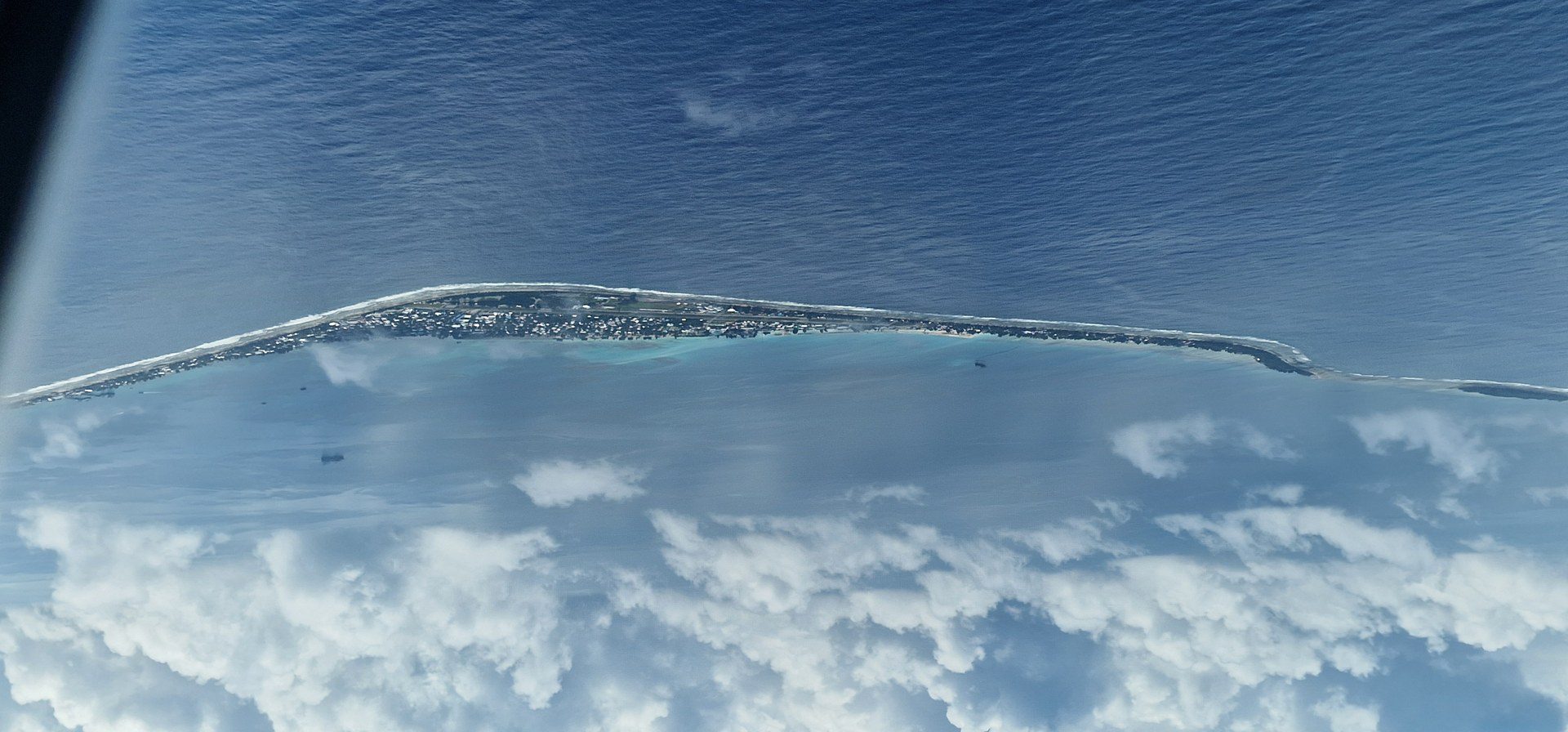
The choice of venue is itself a message. Pacific island states such as Tuvalu — a nation of low-lying atolls — face an existential threat from sea-level rise. COP31 follows an unusual arrangement: Türkiye hosts the summit, while Australia leads the negotiations, with the pre-COP held in the Pacific. Hosting the preparatory round in Fiji and Tuvalu puts the frontline of climate vulnerability at the centre of the conversation.
Decoding India’s three asks
1. Equal weight to adaptation. Climate talks have historically focused on mitigation — cutting greenhouse-gas emissions. Adaptation means coping with impacts that are already locked in: sea walls, drought-resistant crops, early-warning systems. Developing countries argue that adaptation has been the poor cousin in both attention and finance. India’s demand for “equal attention” aligns it with vulnerable nations, including the Pacific islands hosting the pre-COP.
2. Means of implementation. This is negotiation shorthand for finance, technology transfer and capacity-building — the resources developing countries need to act. India’s point is that ambition without money is a hollow promise. At COP29 in Baku (2024), countries agreed a New Collective Quantified Goal on climate finance of at least US$300 billion a year by 2035, which developing countries criticised as inadequate.
3. CBDR-RC. Common But Differentiated Responsibilities and Respective Capabilities is the bedrock equity principle of the climate regime: all countries share the duty to protect the climate, but developed countries, which emitted most historical greenhouse gases and have greater means, must lead. India has consistently resisted any move to dilute this principle into uniform obligations.
Background & Framework
UNFCCC (1992): adopted at the Rio Earth Summit in 1992 and in force from 1994. Its supreme body is the Conference of the Parties (COP), which meets annually. CBDR-RC is written into the Convention itself.
Kyoto Protocol (1997): imposed binding emission-reduction targets only on developed (Annex I) countries — the strongest expression of differentiation.
Paris Agreement (2015, COP21): aims to hold warming well below 2°C and pursue efforts to limit it to 1.5°C. Every country submits Nationally Determined Contributions (NDCs); the Agreement also establishes a global goal on adaptation. Differentiation survives, but in softer form — “in the light of different national circumstances”.
Recent COPs: COP26 Glasgow (2021) — India announced its net-zero target for 2070; COP28 Dubai (2023) — the loss and damage fund was operationalised; COP29 Baku (2024) — the NCQG; COP30 Belém, Brazil (2025); COP31 Antalya, Türkiye (2026).
India and the Pacific
India’s offer of coastal and space-based expertise is climate diplomacy with a strategic edge. According to the reports, India pointed to institutions such as ISRO, the National Centre for Sustainable Coastal Management (NCSCM) and the National Centre for Coastal Research (NCCR), and to capabilities in shoreline monitoring, inundation assessment and cyclone and extreme-weather early warning; the Tuvalu Coastal Adaptation Project was cited as an example of cooperation. India’s engagement with the region is institutionalised through the Forum for India–Pacific Islands Cooperation (FIPIC), launched in 2014. Offering satellite data and early-warning know-how lets India project itself as a partner of the Global South — a developing country that also has technology to share.
The CLAT Angle
Current Affairs/GK: Likely questions: Where will COP31 be held? (Antalya, Türkiye.) Which countries co-hosted the pre-COP31 meetings? (Australia, Fiji, Tuvalu.) What does CBDR-RC stand for? Where was the UNFCCC adopted? (Rio, 1992.) Which COP adopted the Paris Agreement? (COP21, 2015.)
Legal Reasoning: CBDR-RC is a principle of equity in international law. A passage could state the principle and ask whether a rule requiring all countries to cut emissions by the same percentage is consistent with it. The answer turns on differentiation: equal treatment of unequal parties can itself be unequal.
Critical Reasoning: “Since climate change is a global problem, every country should bear the same burden.” The flaw: the argument ignores historical responsibility and capacity — precisely what CBDR-RC captures. Identifying an unstated assumption of this kind is a standard CLAT question type.
Analysis
Yadav’s intervention signals continuity in India’s climate diplomacy. India positions itself as a voice of the developing world: it accepts the need for ambitious action but insists that responsibility must track historical emissions and capacity, and that finance must match ambition. The “no one-size-fits-all” formulation also defends national flexibility — the core logic of the bottom-up NDC model of the Paris Agreement.
The tension is real, however. Small island states want the fastest possible emission cuts from all major emitters, including large developing economies. India’s emphasis on adaptation and on sharing coastal and space-based expertise can be read as a bridge to these countries: it acknowledges their vulnerability while keeping its own development space intact. How that balance holds at Antalya in November will be one of the stories of COP31.
Key Facts
- Bhupender Yadav addressed the pre-COP31 leaders’ plenary in Fiji on 6 October 2026.
- Pre-COP31 meetings were co-hosted by Australia, Fiji and Tuvalu.
- COP31 will be held in Antalya, Türkiye, in November 2026.
- India’s line: equal attention to adaptation, mitigation and means of implementation.
- India called for CBDR-RC to be upheld “in letter and spirit”.
- Yadav: no “one-size-fits-all” pathway to climate action.
- India offered expertise in coastal resilience, climate-risk assessment and space-based applications.
- Institutions cited: ISRO, NCSCM and NCCR.
- UNFCCC adopted at the Rio Earth Summit, 1992; Paris Agreement at COP21, 2015.
- NCQG at COP29 Baku: at least US$300 billion a year by 2035.
Conclusion
A pre-COP speech rarely makes headlines, but it reveals the negotiating map. India went to the Pacific with three markers — equal weight for adaptation, money and technology to match ambition, and differentiation through CBDR-RC — and with an offer of practical help to island states. For aspirants, the story is a compact revision of the entire climate regime, from Rio to Antalya, and a ready-made example of how equity principles operate in international law.
Memory Hook / Mnemonic
“A-M-M under CBDR” — Adaptation, Mitigation, Means of implementation, all under CBDR-RC. Venue chain: “Rio 92 → Kyoto 97 → Paris 15 → Belém 25 → Antalya 26”, with the pre-COP in Fiji (AFT: Australia, Fiji, Tuvalu).
Practice Quiz — 10 CLAT-Style Questions
Click an option to reveal the answer and explanation.