CURRENT AFFAIRS | 07 OCTOBER 2026
On Tuesday, 6 October 2026, Kenya confirmed its first-ever case of Ebola disease. Announcing the case in Nairobi, Kenya’s Health Cabinet Secretary Aden Duale said the Ministry of Health had “confirmed the first imported case of Ebola Bundibugyo virus disease”. The patient, a Kenyan citizen who had lived and worked in the Democratic Republic of the Congo (DRC) for about seven years, had travelled by road from the DRC to Kampala, Uganda, and then flown to Nairobi. He was isolated and treated at Nairobi Hospital but died late on Monday, 5 October 2026. According to reports by Al Jazeera and Kenyan outlets on 6 October, the World Health Organization (WHO) was notified of the case.
The case is significant far beyond Kenya. It shows how an outbreak that began in Central Africa in May 2026 is now testing the cross-border machinery of global health law — the International Health Regulations (IHR), 2005 — and how a single traveller can carry a disease across three countries in a few days. For a CLAT aspirant, the story combines international organisations, public health governance and the tension between disease control and individual liberty.
What happened: the timeline
According to the Kenyan Health Ministry’s account, reported by Kenyans.co.ke and Al Jazeera, the patient had been unwell for roughly a month and had received treatment at several hospitals in the DRC before travelling. He crossed into Uganda by road and boarded a Jambojet flight from Kampala, which landed at Jomo Kenyatta International Airport in Nairobi on Saturday, 3 October 2026. The flight carried 23 passengers and four crew members, all of whom health authorities set out to trace.
The infection was confirmed by Kenya’s National Virology Reference Laboratory and the Kenya Medical Research Institute (KEMRI). Authorities identified 28 contacts — family members and health workers — and placed those at risk in quarantine. Al Jazeera reported that contacts would remain isolated for 21 days and be released if they tested negative; 21 days is the outer limit of Ebola’s incubation period, which is why that number recurs in every Ebola response. Kenya also put its border points on high alert. The ministry said 4,971 health workers had already been trained nationally and at county level in anticipation of such a case.
The outbreak behind the case
The Kenyan case is an offshoot of the epidemic of Ebola disease caused by Bundibugyo virus in the DRC and Uganda. The two countries’ health ministries declared the outbreak in mid-May 2026, and on 17 May 2026 the WHO announced that the Director-General had determined the epidemic to be a Public Health Emergency of International Concern (PHEIC) under the IHR. The WHO then convened an IHR Emergency Committee and issued temporary recommendations to States Parties.
By early October, reports cited more than 8,000 confirmed cases and over 4,000 deaths, overwhelmingly in the DRC. Al Jazeera reported that the WHO had warned the epidemic was “far from over” and could surpass the 2014–2016 West Africa outbreak, which killed more than 11,000 people. Notably, the WHO advised against travel or trade restrictions on Kenya, the DRC and Uganda — a position that flows directly from the IHR’s design.
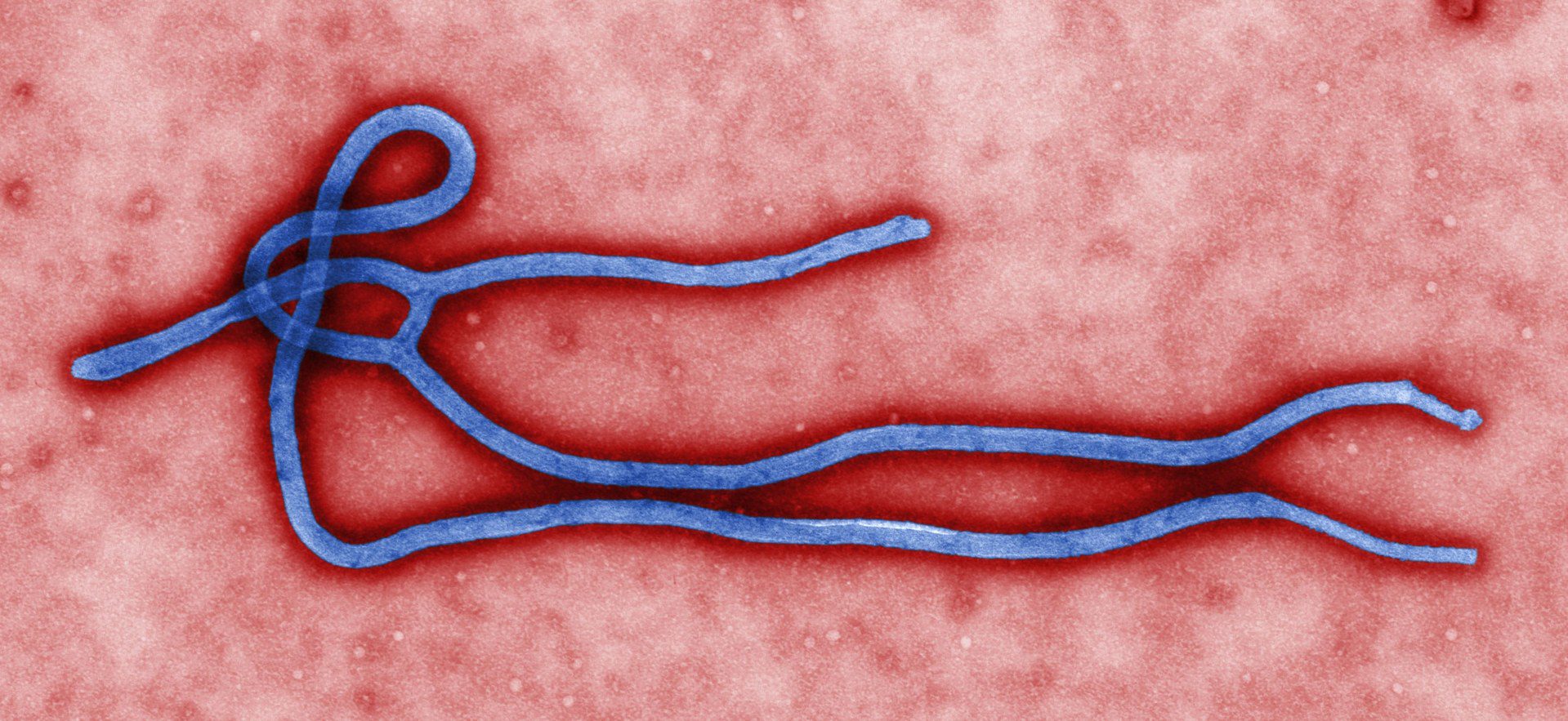
Why does the virus species matter? Ebola disease is caused by several related viruses. The licensed vaccine used in earlier outbreaks was developed against the Zaire species; the WHO has noted that existing vaccines and treatments target Zaire ebolavirus, not Bundibugyo. That gap is a major reason why this epidemic has been so hard to contain. The Bundibugyo virus takes its name from the Bundibugyo district of western Uganda, where it was first identified.
Background & Framework
World Health Organization: a specialised agency of the United Nations, headquartered in Geneva; its Constitution came into force on 7 April 1948, the date now marked as World Health Day. Its decision-making body is the World Health Assembly.
International Health Regulations (2005): a legally binding instrument for WHO Member States. They require countries to notify the WHO of events that may constitute a public health emergency of international concern, and empower the Director-General to determine a PHEIC, advised by an Emergency Committee. Recommendations issued under the IHR are temporary recommendations — not orders — and the Regulations discourage measures that unnecessarily interfere with international traffic and trade.
The Indian framework: “Public health and sanitation” is a State subject, while inter-State quarantine and port quarantine fall in the Union List; the Epidemic Diseases Act, 1897 and the Disaster Management Act, 2005 were the principal legal tools used during COVID-19.
Analysis: what the Kenyan case teaches
1. Borders are porous; surveillance is the real wall. The patient crossed two land and air borders while symptomatic. No travel ban stopped him — what worked was clinical suspicion at a hospital, rapid laboratory confirmation and immediate contact tracing. That is the logic behind the IHR’s preference for detection and reporting over border closures.
2. Why the WHO opposes travel bans. Travel and trade bans tend to punish countries for reporting outbreaks honestly, which can discourage early notification — the very thing global health security depends on. This is a classic policy trade-off: a measure that looks protective in the short term may weaken the system in the long term.
3. Quarantine and liberty. Holding 28 people in quarantine for 21 days restricts personal liberty on the basis of risk, not proof of illness. Every legal system has to answer the same question: when may the State confine a healthy person to protect others? In India the answer runs through Article 21 — any restriction must be backed by law and be fair, just and reasonable.
4. Vaccine gaps are a policy failure, not just a scientific one. When a vaccine exists for one Ebola species but not another, the world is effectively unprotected against a known threat. The Bundibugyo epidemic is a reminder of why global research and development priorities matter.
The CLAT Angle
Current Affairs/GK: Expect direct questions such as: Which virus species caused the 2026 epidemic? (Bundibugyo.) Under which instrument does the WHO declare a PHEIC? (IHR, 2005.) Where is the WHO headquartered? (Geneva.) Which country reported its first imported case on 6 October 2026? (Kenya.)
Legal Reasoning: A passage may set out a principle — “the State may restrict the movement of a person only where there is a reasonable apprehension of danger to public health, and only for so long as necessary” — and ask whether quarantining a passenger who sat on the same flight, but shows no symptoms, for 21 days is justified. Watch for proportionality: a 21-day period tied to the incubation window is defensible; an indefinite one is not.
Critical Reasoning: “Countries that impose travel bans see fewer imported cases; therefore travel bans work.” Identify the assumption — that the bans, and not under-reporting or lower traffic, caused the fall — and the weakener: bans may discourage honest reporting.
Static GK links
Ebola disease was first identified in 1976, and the name comes from the Ebola River in what is today the DRC. Ebola spreads through direct contact with the blood or body fluids of an infected person, which is why health workers and family caregivers are the most exposed — exactly the groups quarantined in Nairobi. The other PHEICs the WHO has declared include the 2009 H1N1 influenza pandemic, the 2014 West Africa Ebola epidemic, Zika (2016) and COVID-19 (2020). Kenya’s capital Nairobi also hosts the headquarters of the UN Environment Programme (UNEP) and UN-Habitat.
Key Facts
- Kenya confirmed its first-ever Ebola case on Tuesday, 6 October 2026.
- Announced by Health Cabinet Secretary Aden Duale; the virus was Bundibugyo.
- Patient: a Kenyan citizen resident in the DRC for about seven years.
- Route: DRC → Kampala, Uganda (by road) → Nairobi (Jambojet flight).
- Landed at Jomo Kenyatta International Airport on Saturday, 3 October 2026.
- Died at Nairobi Hospital late on Monday, 5 October 2026.
- Confirmed by the National Virology Reference Laboratory and KEMRI.
- 28 contacts identified; flight carried 23 passengers and 4 crew; 21-day isolation.
- WHO declared the DRC–Uganda Bundibugyo epidemic a PHEIC (announced 17 May 2026).
- Outbreak toll: over 8,000 confirmed cases and over 4,000 deaths, mostly in the DRC.
- WHO advised against travel or trade restrictions on Kenya, the DRC and Uganda.
Conclusion
The Kenyan case is a small number with a large message. One traveller, one flight and one hospital bed tested a country’s preparedness — and the outcome depended less on border walls than on laboratories, trained health workers and rapid tracing. For examiners, the story neatly links an international organisation (the WHO), a binding treaty instrument (the IHR, 2005), a named legal concept (PHEIC) and a perennial constitutional debate (liberty versus public health). Learn the facts, but also learn the reasoning: why the WHO prefers transparency to travel bans, and why quarantine must be lawful, necessary and time-bound.
Memory Hook / Mnemonic
“B-K-21” — Bundibugyo virus, Kenya’s first case (6 Oct 2026), 21 days of isolation. And for the law: “IHR 2005 → PHEIC → Geneva” — the treaty, the label, the headquarters.
Practice Quiz — 10 CLAT-Style Questions
Click an option to reveal the answer and explanation.