CURRENT AFFAIRS | 07 OCTOBER 2026
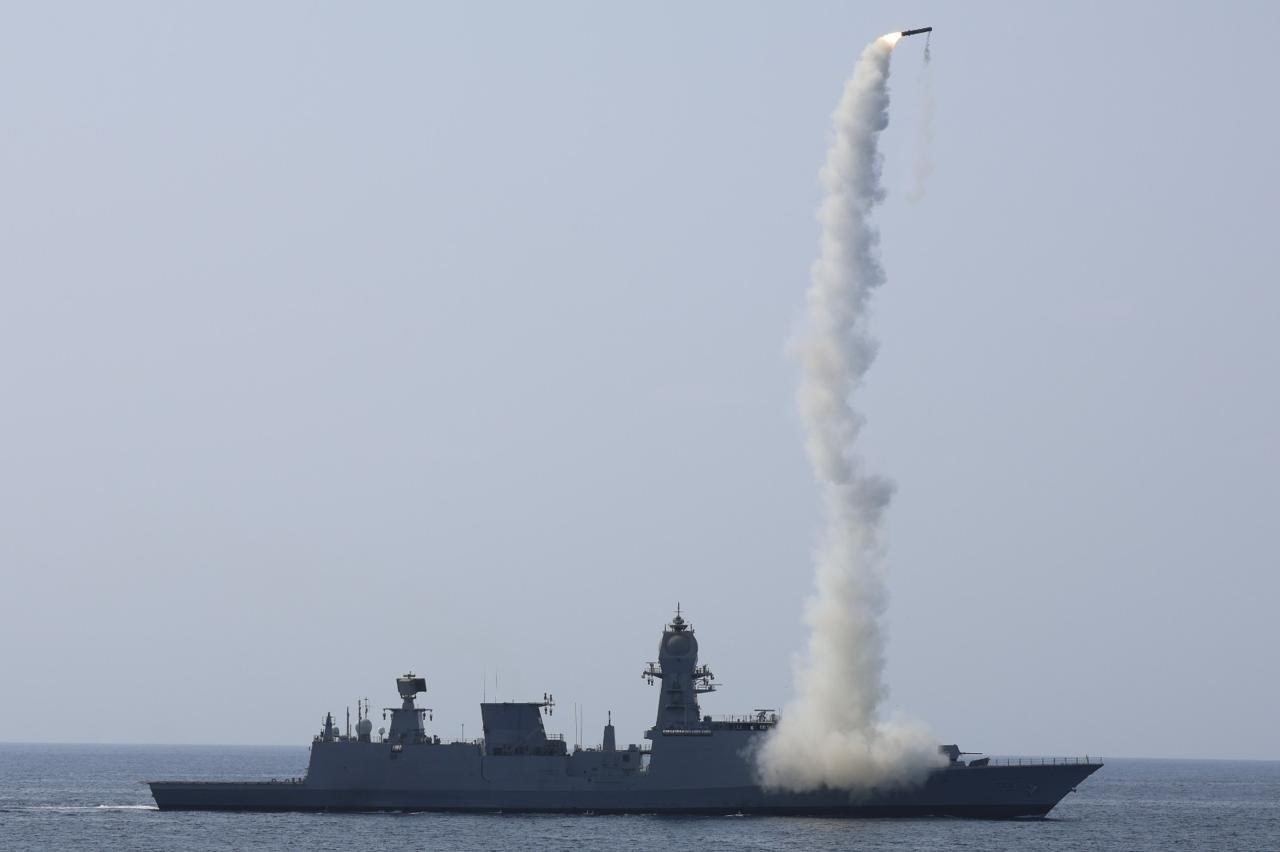
The Ministry of Defence on Tuesday, 6 October 2026 signed a contract worth ₹661.50 crore with BrahMos Aerospace Private Limited (BAPL) for the procurement of the BrahMos fire control system and launchers for Indian Navy ships. According to reports in The Hindu and Business Today based on the Ministry’s statement, the contract was signed in New Delhi in the presence of Defence Secretary Rajesh Kumar Singh and falls under the Buy (Indian-IDDM) category of defence procurement. The Ministry described the BrahMos system, fitted on board various frontline warships, as the Navy’s primary surface-to-surface missile (SSM) system for maritime strike operations.
The project carries a minimum of 68 per cent indigenous content and, according to the Ministry, is intended to encourage the participation of Indian industry, including micro, small and medium enterprises (MSMEs), in the supply chain, and to generate employment over a period of three years. The Ministry framed it as a contract that strengthens India’s maritime security architecture and as a milestone in the effort to indigenise advanced military technology. For CLAT aspirants, this is a compact defence-GK item that connects to three static areas: the BrahMos joint venture with Russia, the procurement categories of the Defence Acquisition Procedure (DAP) 2020, and the policy of self-reliance in defence.
What exactly is being bought
A missile is only one part of a weapon system. To be useful at sea, it needs launchers that hold and fire it from the ship, and a fire control system that receives target data, computes the firing solution and directs the launch. The 6 October contract concerns this ship-borne equipment — the fire control system and the launchers — rather than the missiles themselves. That distinction is worth noting in a question: the headline figure of ₹661.50 crore relates to the shipboard system that makes BrahMos usable on Navy vessels.
BrahMos is a supersonic cruise missile developed by India and Russia, operated in land, sea and air-launched configurations. In its naval role it is designed to strike sea and land targets from extended ranges at supersonic speed. Because the Navy treats it as its primary surface-to-surface strike weapon, the fire control systems and launchers that equip its warships are core combat equipment, not accessories.
Background & Framework
BrahMos Aerospace is an India–Russia joint venture between India’s Defence Research and Development Organisation (DRDO) and Russia’s NPO Mashinostroyeniya. The Inter-Governmental Agreement creating it was signed in Moscow on 12 February 1998; on the Indian side it was signed by Dr A P J Abdul Kalam, then Secretary of the Department of Defence R&D. The Indian side holds 50.5 per cent and the Russian side 49.5 per cent. The name is a blend of two rivers — the Brahmaputra of India and the Moskva of Russia. The first successful launch of the missile took place in 2001.
Defence purchases are governed by the Defence Acquisition Procedure (DAP) 2020. It lists capital acquisition categories in an order of preference, with Buy (Indian-IDDM) — Indigenously Designed, Developed and Manufactured — at the top. Other categories include Buy (Indian), Buy and Make (Indian), Buy and Make, Buy (Global–Manufacture in India) and Buy (Global). The 6 October contract was placed in the highest-preference Buy (Indian-IDDM) category.
Why the procurement category matters
The choice of category is not a technicality. DAP 2020 was designed to push the armed forces towards Indian suppliers, and the IDDM label signals that a system is designed, developed and manufactured in India. A contract with a minimum 68 per cent indigenous content, routed through an Indian-registered joint venture and drawing on domestic MSMEs, is the kind of procurement the policy was written to encourage. It links to the wider Atmanirbhar Bharat push in defence, under which the Ministry has sought to reduce dependence on imports.
There is also a strategic logic. A navy that depends on foreign sources for fire control systems and launchers is exposed to supply disruptions during a crisis. Building those systems domestically, with Indian firms in the supply chain, is meant to shorten repair and upgrade cycles and keep critical equipment available. The Ministry’s own framing — strengthening the maritime security architecture — reflects this concern.
The CLAT Angle
The likeliest questions are direct GK: the value of the contract (₹661.50 crore), the contracting party (BrahMos Aerospace), the service (Indian Navy), the procurement category (Buy (Indian-IDDM)) and the minimum indigenous content (68 per cent). Static questions will test the joint venture — DRDO and NPO Mashinostroyeniya, the 1998 agreement, the 50.5 : 49.5 shareholding and the Brahmaputra–Moskva name. In a passage, the item could anchor a discussion of self-reliance versus cost and speed in defence buying: an author may argue that domestic preference builds long-term capacity, and ask you to identify an assumption (that Indian suppliers can meet quality and timelines) or a weakening fact. Watch for the trap of confusing the missile with the fire control system and launchers that this contract actually covers.
Key Facts
- Date: Tuesday, 6 October 2026, New Delhi.
- Value: ₹661.50 crore (reported as about ₹661 crore).
- Parties: Ministry of Defence and BrahMos Aerospace Private Limited (BAPL).
- Items: BrahMos fire control system and launchers for Indian Navy ships.
- Category: Buy (Indian-IDDM) under DAP 2020.
- Indigenous content: minimum 68 per cent; MSMEs in the supply chain.
- Employment: expected to be generated over three years.
- Present: Defence Secretary Rajesh Kumar Singh.
- Role: BrahMos is the Navy’s primary surface-to-surface missile system.
- JV: DRDO (India) + NPO Mashinostroyeniya (Russia); agreement signed in Moscow, 12 February 1998.
- Shareholding: India 50.5 per cent, Russia 49.5 per cent.
- Name: Brahmaputra + Moskva; first successful launch in 2001.
Analysis: a small contract with a large signal
At ₹661.50 crore, this is a modest contract by the standards of defence spending. Its significance lies less in the amount than in what it shows about direction. First, it confirms BrahMos as the backbone of the Navy’s surface strike capability: new and existing warships need the shipboard systems to carry it. Second, it shows the IDDM category being used for a system that grew out of an international joint venture, with a high indigenous-content floor. Third, it ties defence procurement to domestic industry and employment, which is a recurring theme in government statements on defence.
Aspirants should keep a balanced view. Domestic preference can raise costs or lengthen timelines if the industrial base is not ready, and critics of any self-reliance policy ask how quality and delivery will be assured. Supporters respond that capacity is built only through orders. A good answer in an exam or interview recognises both arguments and anchors them in the facts of the contract — the value, the category, and the 68 per cent indigenous content.
Memory Hook / Mnemonic
Remember “661 — 68 — 3”: ₹661.50 crore, 68 per cent indigenous content, employment over 3 years. For the JV: “Brahmaputra + Moskva, 98 in Moscow, 50.5 to India.” For the category: IDDM = I Design, Develop, Manufacture — top of the DAP 2020 list.
Practice Quiz — 10 CLAT-Style Questions
Click an option to reveal the answer and explanation.