CURRENT AFFAIRS | 20 AUGUST 2026
On 18 August 2026 the Department of Defence Production (DDP), Ministry of Defence, notified the sixth Positive Indigenisation List (PIL), comprising 405 strategically important items with an estimated business potential of ₹3,070 crore. The list covers Line Replaceable Units, sub-systems, sub-assemblies, spares, components and raw materials. Of the 405 items, 16 belong to the Indian Coast Guard and 389 to Defence Public Sector Undertakings. Each item carries an indicative timeline for indigenisation, and on successful indigenous development these items will be procured from Indian industry.
For a CLAT aspirant, this release is a compact lesson in how industrial policy, constitutional competence and national security intersect. Defence is an exclusively Union subject; procurement is an exercise of executive power over public money; and self-reliance in arms is simultaneously a strategic imperative and an economic programme. Questions on Aatmanirbhar Bharat and defence indigenisation recur in the General Knowledge section, and the numbers in this release — 405, ₹3,070 crore, 16 and 389 — are the kind of precise data points that separate a prepared candidate from a vaguely aware one.
What is on the list
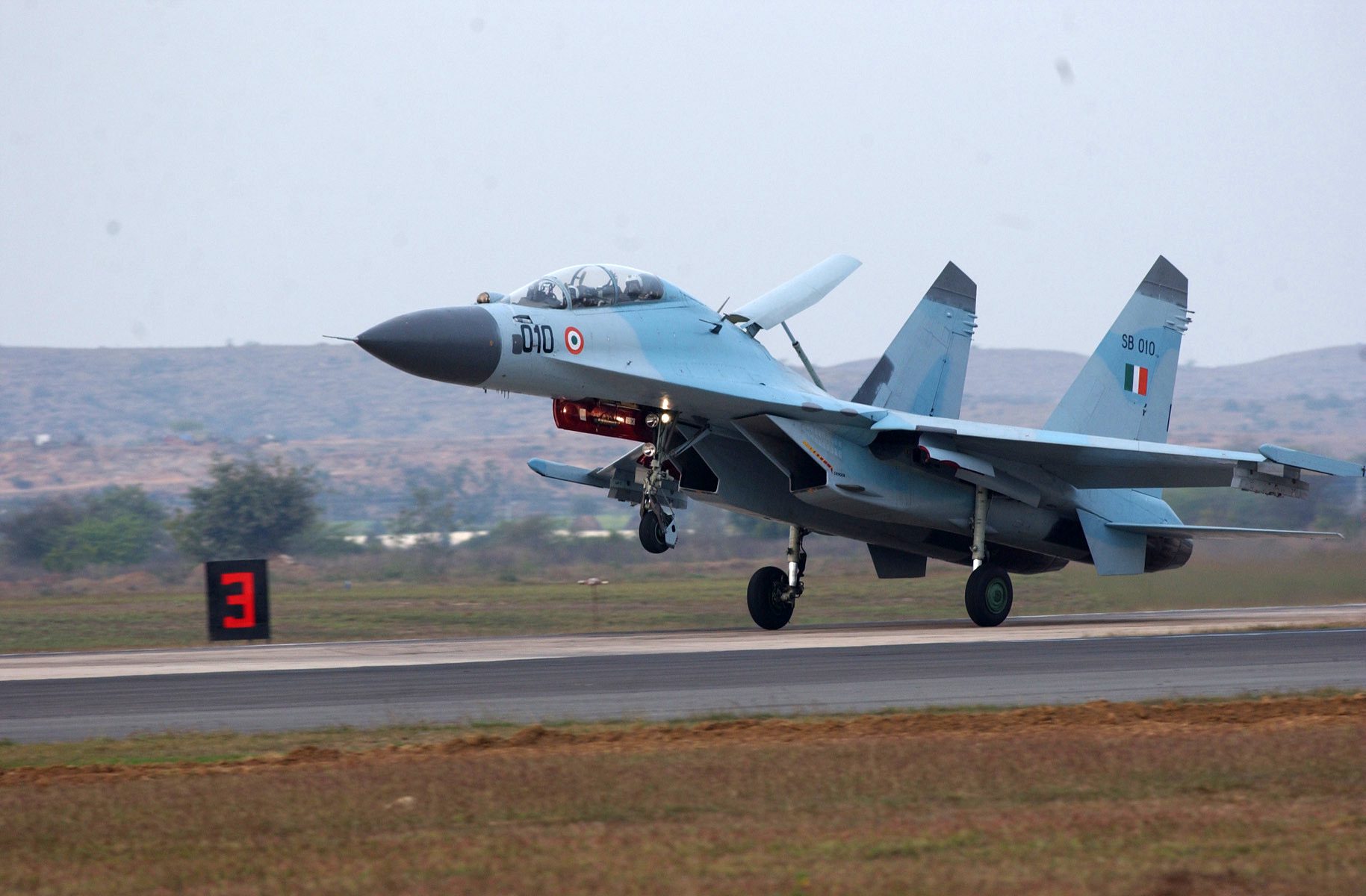
The 405 items span a broad range of platforms and systems. Among air platforms, the list covers items for the Advanced Light Helicopter, the Light Utility Helicopter, the Su-30MKI, the Light Combat Aircraft and the AL-31FP Engine. Among armoured platforms, it covers the T-72, the T-90 and the BMP-II. It extends to warships; to missile systems including Konkurs-M, Invar and MRSAM; to defence electronics such as radars, sonars, fire control systems and satellite communication systems; and to High Explosive Anti-Tank ammunition and other critical defence equipment.
Notice the pattern in that inventory. These are not new fighter jets or fresh warship designs. They are the components of platforms India already operates — spares, sub-assemblies and Line Replaceable Units, meaning modules designed to be swapped out at an operating base rather than sent back to a depot. Several of the named platforms are of foreign origin or built under licence, which is exactly why their spares chains matter: a fleet of aircraft is only as available as the supply of parts that keeps it flying. Indigenising the spare is less glamorous than indigenising the aircraft, and considerably more consequential for readiness.
Constitutional / Legal Framework
Defence is an exclusively Union subject. Under Article 246 read with the Seventh Schedule, Entry 1 of the Union List covers “Defence of India and every part thereof including preparation for defence and all such acts as may be conducive in times of war to its prosecution”; Entry 2 covers naval, military and air forces; and Entry 7 covers “industries declared by Parliament by law to be necessary for the purpose of defence or for the prosecution of war” — the specific hook on which a defence-production policy hangs. Article 53(2) vests the supreme command of the Defence Forces in the President, exercised in accordance with law. The Indian Coast Guard, whose 16 items appear on this list, is an armed force of the Union constituted under the Coast Guard Act, 1978 and functioning under the Ministry of Defence. Procurement itself is governed not by statute but by executive policy — the Defence Acquisition Procedure (DAP), 2020 — which ranks acquisition categories by indigenous content, placing Buy (Indian–IDDM), or Indigenously Designed, Developed and Manufactured, at the top of the priority hierarchy. Participation by smaller firms is framed by the MSMED Act, 2006.
How a “positive” list works
The nomenclature confuses many candidates, so it is worth being precise. A Positive Indigenisation List is not a list of banned goods; it is an affirmative commitment about what the domestic industry will be asked to supply. Each item carries an indicative timeline for indigenisation, and once an item has been successfully developed indigenously, it is to be procured from Indian industry. The list therefore functions as a demand signal: it tells manufacturers, well in advance, that a defined market exists for a defined component by a defined date.
That signalling function is the real policy instrument. A small manufacturer will not invest in tooling and certification for a defence sub-assembly on the speculative hope of an order. Published in advance with a timeline attached, the same component becomes a business case. This is why the release quantifies ₹3,070 crore of estimated business potential — the figure is addressed to industry, not to the exchequer.
Delivery runs through defined routes. The DPSUs and the Indian Coast Guard will undertake indigenisation through various routes including their ‘Make’ procedure and in-house development, with participation from industry and particularly MSMEs. The ‘Make’ procedure is the DAP’s design-and-development track, distinguishing projects funded by government from those funded by industry itself — a structure intended to share development risk with private firms rather than leave it entirely on either side.
Key Facts
| Notified by | Department of Defence Production, Ministry of Defence, 18 August 2026 |
| Items on 6th PIL | 405 (16 Indian Coast Guard + 389 DPSU) |
| Business potential | Estimated ₹3,070 crore |
| Platforms covered | ALH, LUH, Su-30MKI, LCA, AL-31FP engine; T-72, T-90, BMP-II; warships; Konkurs-M, Invar, MRSAM |
| Portal | SRIJAN Defence Portal (srijandefence.gov.in), launched August 2020 |
| Items offered via SRIJAN | More than 33,000 up to June 2026, including 5,012 under the first five PILs |
| Items indigenised | More than 15,700; import substitution value about ₹9,000 crore over five years |
| DPSU orders on domestic vendors | Approximately ₹10,000 crore up to March 2026 |
SRIJAN and the cumulative record
The detailed list is hosted on the SRIJAN Portal (srijandefence.gov.in), launched by the DDP in August 2020 as a dedicated platform through which DPSUs and Service Headquarters offer defence items to industry, including MSMEs and start-ups, for indigenous development and production.
The cumulative figures give this sixth list its context. Since launch, SRIJAN has facilitated the offer of more than 33,000 defence items for indigenisation up to June 2026, of which 5,012 items were notified under the first five Positive Indigenisation Lists. More than 15,700 defence items have been successfully indigenised, producing an estimated import substitution value of about ₹9,000 crore over the last five years. In addition, DPSUs have placed procurement orders, including in-house production, worth approximately ₹10,000 crore on domestic vendors up to March 2026.
Read those numbers together and a useful distinction emerges. The 33,000 figure is offered items — the size of the opportunity advertised. The 15,700 figure is indigenised items — what has actually been delivered. And 5,012 is the subset formally notified across the first five PILs. Confusing an offer with an achievement is the commonest error in reading indigenisation statistics, and a well-set question will test precisely that distinction.
The CLAT Angle
Memorise the quartet: 405 items, ₹3,070 crore, 16 ICG and 389 DPSU, notified by the DDP under the Ministry of Defence. Then the portal: SRIJAN, launched August 2020. For the constitutional layer, be ready to place defence in the Union List — a question asking whether a State legislature may legislate on defence production has one answer, and Entries 1, 2 and 7 supply it. Distinguish the two headline sums that look alike: ₹3,070 crore is the business potential of this sixth list, while ₹9,000 crore is the cumulative import substitution value over five years and ₹10,000 crore is the value of DPSU orders on domestic vendors up to March 2026. Options that swap these three figures are the likeliest distractors in the set.
The wider self-reliance push
The sixth PIL is described as another step in promoting self-reliance in defence manufacturing under the Aatmanirbhar Bharat initiative, expected to expand opportunities for Indian industry, strengthen the domestic manufacturing ecosystem, promote investment and innovation, and reduce dependence on imports. That programme sits within a longer arc that runs from Make in India to the corporatisation of the Ordnance Factory Board into seven new defence public sector undertakings, the liberalisation of foreign direct investment in defence, the iDEX initiative for start-up innovation, and the defence industrial corridors in Uttar Pradesh and Tamil Nadu.
The strategic rationale is worth stating plainly. Import dependence in defence is not merely an expense; it is a vulnerability. A supplier state can delay a spare, attach a condition, or decline a resupply at the moment of greatest need, and a fleet grounded for want of a component is as absent from the order of battle as one that was never bought. Indigenisation of spares therefore buys something that a headline procurement contract cannot: sovereign control over serviceability. It is also, incidentally, an employment and technology-diffusion programme, since the MSMEs drawn into these supply chains acquire precision-manufacturing capabilities with uses well beyond defence.
Memory Hook / Mnemonic
For the headline pair, drill “four-oh-five, three-oh-seven-oh” — 405 items, ₹3,070 crore; each number carries a zero in the middle, which is the hook. For the split, “16 guard the coast, 389 the PSUs”. For the cumulative trio, climb the ladder “5,012 notified → 15,700 indigenised → 33,000 offered”. And for the portal, SRIJAN means creation — created in August 2020, the same year as DAP 2020.
Why it matters
A sixth list in a series is easy to dismiss as routine. It is better read as evidence that indigenisation has become a standing administrative process rather than a one-off announcement — lists notified in sequence, timelines attached, a portal maintained, and cumulative outcomes reported against them. For the aspirant, the discipline is to hold the specific and the systemic together: know that this list has 405 items worth ₹3,070 crore, and understand why a state that cannot make its own spares does not fully control its own defence.
Practice Quiz — 10 CLAT-Style Questions
Click an option to reveal the answer and explanation.