CURRENT AFFAIRS | 20 AUGUST 2026
On 18 August 2026 the Ministry of Youth Affairs & Sports announced the National Sports Awards 2025, conferred every year to recognise and reward excellence in sport. The awards were decided on the recommendations of a Selection Committee chaired by a former Judge of the Supreme Court of India, Justice (Retd.) Arun Kumar Mishra, whose members included eminent sportspersons, persons with experience in sports journalism, and sports administrators. Applications were invited online, with sportspersons, coaches and entities permitted to self-apply through a dedicated online portal — a procedural point that matters more than it appears.
Awards lists are staple General Knowledge material, and this one is unusually rich for a law aspirant. It carries a retired Supreme Court judge chairing a selection body, a self-application procedure that raises questions of fairness and reasoned decision-making, and an entire constitutional doctrine sitting behind the very idea of a national honour. Learn the names for the GK section; learn the machinery behind them for the Legal Reasoning section.
Arjuna Awards 2025 — the seventeen names
The Arjuna Award for outstanding performance in Sports and Games is given for good performance over a period of the previous four years, together with qualities of leadership, sportsmanship and a sense of discipline. Note the composite standard: it is not a pure medal count. A selection committee is expressly asked to weigh conduct alongside results, which is what gives the award its discretionary character and makes it, in administrative-law terms, an exercise of judgment rather than arithmetic.
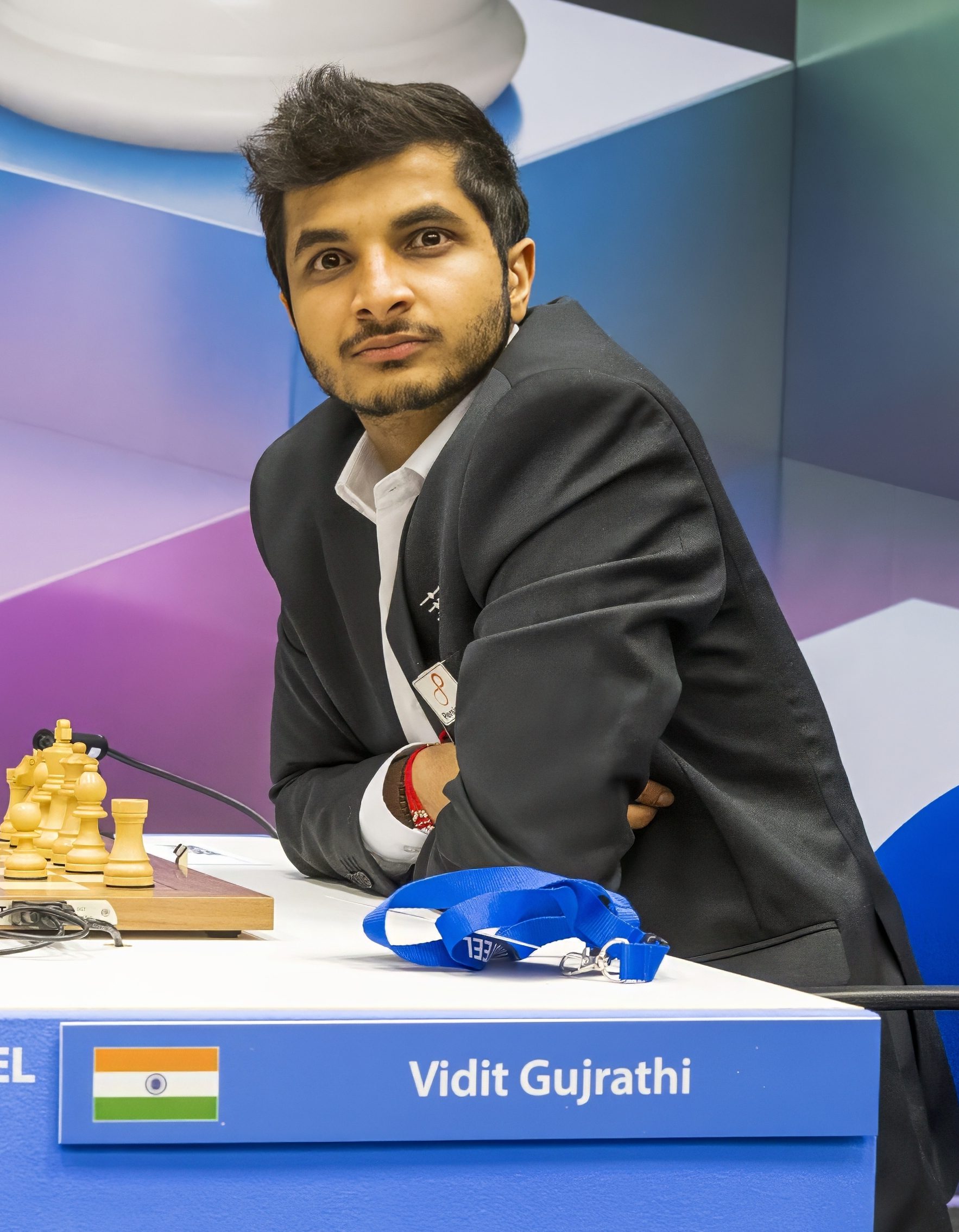
Seventeen sportspersons were named for the Arjuna Award 2025. In athletics: Tejaswin Shankar, Muhammed Ajmal V and Priyanka Goswami. In badminton: Treesa Jolly and Pullela Gayatri Gopichand. In boxing: Narender. In chess: Vidit Santosh Gujarathi and Divya Jitendra Deshmukh. In deaf shooting: Dhanush Srikanth. In hockey: Lalremsiami and Rajkumar Pal. In kabaddi: Surjeet and Pooja. In para-shooting: Rudransh Khandelwal. In para athletics: Ekta Bhyan. In rowing: Arvind Singh. And in shooting: Akhil Sheoran.
The composition of that list rewards a second look. Athletics leads with three awardees; badminton and chess contribute two each; kabaddi, a traditional Indian discipline, and hockey, the national sport in popular usage, take two each. Three of the seventeen come from para and deaf sport — para-shooting, para athletics and deaf shooting — recognised within the same award rather than a segregated category, which is itself a statement about how the honours system now understands sporting excellence.
Key Facts
| Announced by | Ministry of Youth Affairs & Sports, 18 August 2026 |
| Selection Committee chair | Justice (Retd.) Arun Kumar Mishra, former Judge of the Supreme Court |
| Arjuna Awards | 17 sportspersons across athletics, badminton, boxing, chess, deaf shooting, hockey, kabaddi, para-shooting, para athletics, rowing and shooting |
| Arjuna Award (Lifetime) | I Arumainayagam (Football) |
| Dronacharya (Regular) | Parveer Singh (Athletics), Chhote Lal Yadav (Boxing), Neha Nandkumar Chavan (Shooting) |
| Dronacharya (Lifetime) | Dharmendra Singh Yadav (Boxing), Virender Kumar (Wrestling) |
| Rashtriya Khel Protsahan Puraskar | Army Paralympic Node, Pune |
Lifetime, coaching and promotion categories
Alongside the regular Arjuna Awards, the release announced an Arjuna Award (Lifetime), given to honour and motivate sportspersons who have contributed to sport through their performance and who continue to contribute to its promotion even after retirement from active sporting careers. The 2025 recipient is I Arumainayagam in football.
The Dronacharya Award for outstanding coaches recognises coaches for outstanding and meritorious work on a consistent basis, and for enabling sportspersons to excel in international events. In the Regular Category, the 2025 awardees are Parveer Singh (Athletics), Chhote Lal Yadav (Boxing) and Neha Nandkumar Chavan (Shooting). In the Lifetime Category, they are Dharmendra Singh Yadav (Boxing) and Virender Kumar (Wrestling).
Finally, the Rashtriya Khel Protsahan Puraskar is given to corporate entities, whether public or private, and to non-governmental organisations that have played a visible role in the promotion and development of sport. The 2025 award goes to the Army Paralympic Node, Pune. That choice pairs naturally with the three para and deaf sport awardees on the Arjuna list, since the Node exists precisely to train para-athletes.
One point of accuracy is worth flagging. The categories set out above — Arjuna, Arjuna (Lifetime), Dronacharya in its Regular and Lifetime forms, and the Rashtriya Khel Protsahan Puraskar — are the categories carried in this announcement. Do not assume, and do not write in an exam, that any other category was announced alongside them unless you have seen it in the official release.
Constitutional / Legal Framework
The constitutional question behind every national honour is Article 18, which abolishes titles and forbids the State from conferring any title except a military or academic distinction. Do national awards violate it? The Supreme Court answered in Balaji Raghavan v. Union of India (1996), upholding the constitutional validity of the National Awards — the Bharat Ratna and the Padma awards — on the reasoning that they are recognitions of merit and not “titles” within the meaning of Article 18, provided recipients do not use them as prefixes or suffixes to their names. The aspirational basis for honouring sporting achievement is the Fundamental Duty in Article 51A(j), “to strive towards excellence in all spheres of individual and collective activity so that the nation constantly rises to higher levels of endeavour and achievement”. On legislative competence, sports falls within Entry 33 of the State List, which is why the Union acts here largely through schemes, funding and the National Sports Development Code of India, 2011 rather than through a general regulatory statute. And because the awards are conferred by an authority of the State on the recommendation of a committee, the selection is in principle amenable to judicial review for arbitrariness under Article 14 — though courts extend considerable deference to the judgment of an expert body.
Why a retired Supreme Court judge chairs the committee
The chairing of the Selection Committee by Justice (Retd.) Arun Kumar Mishra is not decorative. Awards decided by discretion invite exactly the complaints that dog every honours system: favouritism, federation politics, regional or disciplinary bias. Placing a former judge at the head of a committee that also contains eminent sportspersons, sports journalists and administrators is an institutional answer to that risk — it imports the habits of reasoned, on-record decision-making into a process that is otherwise evaluative.
The self-application mechanism cuts in two directions, and a good answer notices both. On one hand it democratises access: an athlete from a small federation need not wait to be nominated by an association that may not champion her. On the other, it advantages the informed and the well-advised, since an award you must apply for is an award that the unaware do not receive. This is a genuine tension in administrative design — open application versus active identification — and precisely the sort of trade-off a Legal Reasoning passage will ask you to evaluate rather than merely describe.
The CLAT Angle
Fix the numbers first: 17 Arjuna awardees, 1 Arjuna (Lifetime), 3 Dronacharya (Regular), 2 Dronacharya (Lifetime), 1 Rashtriya Khel Protsahan Puraskar. Then the pairings most likely to be tested: Vidit Santosh Gujarathi and Divya Jitendra Deshmukh → chess; Treesa Jolly and Pullela Gayatri Gopichand → badminton; Lalremsiami and Rajkumar Pal → hockey; I Arumainayagam → football (Lifetime); Army Paralympic Node, Pune → the entity award. Remember the ministry (Youth Affairs & Sports) and the committee chair (Justice (Retd.) Arun Kumar Mishra). For legal crossover, Article 18 with Balaji Raghavan (1996) is the highest-value link in this entire topic, and Article 51A(j) the natural companion.
The wider sports-governance picture
These awards sit at the top of a broader architecture. The Sports Authority of India is the Union’s principal delivery agency for sports promotion and training infrastructure. Khelo India works at the base of the pyramid, on school and university competition and talent identification, while the Target Olympic Podium Scheme works at the apex, funding a small pool of elite athletes towards specific international podiums. The National Sports Development Code of India, 2011 supplies the governance rules for National Sports Federations, covering matters such as tenure and age limits for office-bearers — the provisions that have generated much of the litigation in Indian sports administration.
Read against that background, an awards list is a downstream indicator. The presence of two chess players reflects a discipline in which India has become a genuine world force; the presence of kabaddi reflects deliberate investment in indigenous sport; and the presence of three para and deaf athletes reflects a pipeline that barely existed a generation ago. An awards announcement, read carefully, is a report card on the system that produced the awardees.
Memory Hook / Mnemonic
For the tally, chant “17–1–3–2–1”: seventeen Arjuna, one Arjuna Lifetime, three Dronacharya Regular, two Dronacharya Lifetime, one Khel Protsahan. For the doubles on the Arjuna list, remember “two on the board, two on the court, two on the turf” — two in chess, two in badminton, two in hockey (and two in kabaddi). For the constitutional point, “Article 18 abolishes titles, but Balaji Raghavan saved the awards” — so long as no one signs their name with them.
Why it matters
National honours are one of the few instruments by which a state can say publicly what it values, at no cost to anyone and with considerable effect on the young. That is why the procedure by which they are awarded — who sits on the committee, what standard is applied, whether an athlete must apply or is sought out — deserves as much attention as the list itself. For the CLAT aspirant, the discipline is to read an awards announcement as a document rather than a headline: note the categories actually declared, note the stated criteria, note who decided and how, and resist the temptation to fill gaps from memory. That habit will serve you far beyond this one release.
Practice Quiz — 10 CLAT-Style Questions
Click an option to reveal the answer and explanation.