CURRENT AFFAIRS | 21 SEPTEMBER 2026
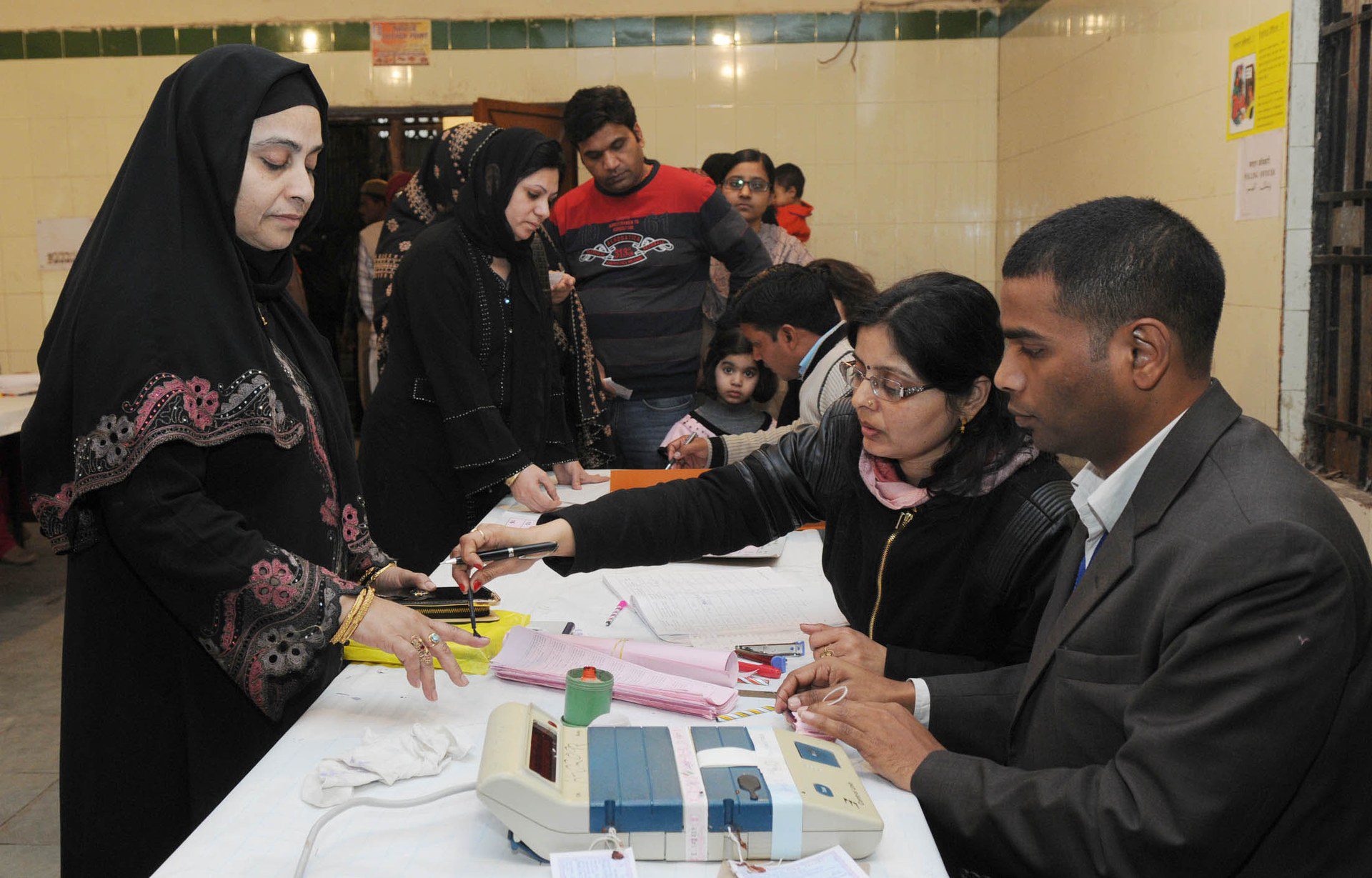
The Special Intensive Revision (SIR) of the electoral roll of the National Capital Territory of Delhi entered its most contested phase this weekend. According to the Office of the Chief Electoral Officer (CEO), Delhi, 31,63,930 notices had been generated by Saturday, 19 September 2026, for electors who either could not be linked to the roll of the last intensive revision (the category the system labels “unmapped with last SIR”) or whose details showed “logical discrepancies” between the current and the earlier roll. On Friday, 18 September, the Election Commission of India (ECI) uploaded the booth-wise lists of such electors.
As The Indian Express reported on 21 September, the lists include some of the most senior office-holders in the Republic. Election Commissioner Dr Sukhbir Singh Sandhu — one of the three members of the Commission itself — was flagged for a “self name mismatch”. The details of CBI Director Praveen Sood could not be mapped with the previous SIR roll. External Affairs Minister S Jaishankar and his wife, and former Deputy Prime Minister L K Advani and two members of his family, were listed in the New Delhi Assembly constituency for not having a link to the 2002 roll. Several serving Secretaries to the Government of India, the Comptroller and Auditor General (for “parent name mismatch”), the Foreign Secretary and the SEBI Chairman also appear. At two polling booths in New Moti Bagh, under the Delhi Cantt constituency, 594 electors were issued notices.
The story is newsworthy not because prominent people received letters, but because it shows, in the clearest possible way, how a system-driven verification works: software compares two rolls, flags every mismatch, and the burden then shifts to the elector to clear it. That design choice raises exactly the questions of adult suffrage, natural justice and the burden of proof that CLAT’s legal and GK sections love.
What the Delhi CEO and the ERO said
Responding to reports about “VIP” electors, the Delhi CEO issued a statement on Sunday, 20 September: “issue of notice does not mean that their names will be deleted from the electoral rolls of NCT of Delhi. System generated notices are being issued to the above said categories to correct their data in ECINET. No name can be deleted without giving an opportunity to being heard and a proper, speaking, and appealable order.” ECINET is the Commission’s centralised electoral data platform, which began generating notices after the draft roll was published.
The office of the Electoral Registration Officer (ERO) of Delhi Cantt confirmed that Dr Sandhu had been flagged for a discrepancy in name, and said that the documents he furnished had been verified and that his entry had “already been validated and kept in the list for inclusion in the final electoral roll.”
The Delhi SIR timeline
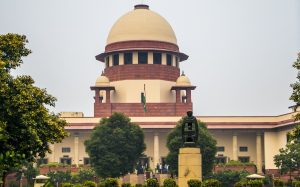
Door-to-door enumeration for the Delhi SIR began on 30 June 2026. The schedule was revised more than once; the Commission linked the last extension to the rationalisation of polling stations, capping each station at a maximum of 1,200 electors. The draft roll was published on 31 August 2026 with 1,45,10,299 electors; 47,56,722 electors were left out because enumeration forms were not collected from them — they were recorded as absent, shifted, dead or duplicate. Under the revised schedule, claims and objections run from 31 August to 30 September, their disposal (including the hearing of notices) is to be completed by 29 October, and the final roll is due on 4 November 2026. The Supreme Court is also scheduled to hear, on 22 September, a plea challenging aspects of the Delhi exercise.
Put the numbers side by side and the scale is striking: roughly one in five electors on the draft roll has been issued a notice, on top of the 47.56 lakh names already outside the draft.
Constitutional / Legal Framework
Article 324 vests the superintendence, direction and control of the preparation of electoral rolls and the conduct of elections in the Election Commission. Article 325 mandates one general electoral roll for every territorial constituency and forbids exclusion on grounds only of religion, race, caste or sex. Article 326 guarantees adult suffrage: every citizen who is at least 18 years of age on the qualifying date and is not otherwise disqualified (for non-residence, unsoundness of mind, crime, or corrupt or illegal practice) is entitled to be registered. The voting age was lowered from 21 to 18 by the 61st Constitutional Amendment Act, 1988.
The statutory machinery is the Representation of the People Act, 1950. Section 16 disqualifies from registration a person who is not a citizen of India, is of unsound mind and so declared by a competent court, or is disqualified from voting under election-offence law. Section 19 requires that the person be 18 on the qualifying date and ordinarily resident in the constituency. Section 21 governs preparation and revision of rolls; Section 21(3) empowers the Commission, for reasons to be recorded, to direct a special revision of the roll for any constituency “in such manner as it may think fit” — the legal hook for an SIR. Section 22 deals with correction of entries, Section 23 with inclusion, and Section 24 with appeals against ERO orders. The Registration of Electors Rules, 1960 supply the forms: Form 6 (inclusion), Form 7 (objection/deletion) and Form 8 (correction).
Why “mapping” matters
An SIR is different from the routine summary revision that happens every year. In a summary revision, the existing roll is the starting point and changes are made at the margins. In an intensive revision the roll is, in effect, prepared afresh through house-to-house enumeration, and each elector is expected to be traced back to a reference roll. For Delhi, the reference is the roll of the last intensive revision, carried out in the early 2000s (the 2002 roll). If the software cannot match a current entry with an entry in that roll — because the person moved in later, because a name was spelt differently, or because the old record is incomplete — a notice is generated.
Two things follow. First, a notice is a data-quality flag, not a finding of ineligibility. Second, because the flag is automatic, it falls on everyone with a mismatch regardless of status — which is why the list reads like a directory of New Delhi’s official residences.
The Bihar precedent
The Delhi exercise follows the SIR in Bihar in 2025, which was challenged before the Supreme Court in Association for Democratic Reforms v Election Commission of India (W.P.(C) No. 640 of 2025). On 8 September 2025, a Bench of Justice Surya Kant and Justice Joymalya Bagchi directed the Commission to accept the Aadhaar card as a “12th document” for establishing identity in the Bihar SIR, while making clear that Aadhaar is not proof of citizenship and that the Commission may verify its genuineness. The identity-versus-citizenship distinction is central: Section 16 of the 1950 Act makes citizenship a condition of registration, but an identity document does not by itself establish it.
Much older authority points in the same direction on procedure. In Lal Babu Hussein v Electoral Registration Officer (1995), the Supreme Court insisted that persons already on the roll cannot be struck off on suspicion alone, without notice and a fair opportunity to be heard. The Delhi CEO’s promise of a “proper, speaking, and appealable order” is the modern restatement of that rule.
The CLAT Angle
Expect a legal-reasoning passage built on a principle such as: “No entry in the electoral roll shall be deleted without giving the person a reasonable opportunity of being heard.” Facts will then test whether a system-generated notice, a hearing, a deletion without a hearing, or a deletion of a dead elector satisfies the rule. Remember: a notice is not a deletion, and identity is not citizenship.
In GK, the likely hooks are Article 324 (the Commission’s power), Article 326 (adult suffrage, age 18), the 61st Amendment, Section 21(3) RPA 1950 (special revision), and the Bihar Aadhaar order. In critical reasoning, a question may ask what weakens the inference “31 lakh notices mean 31 lakh ineligible voters” — the answer lies in the difference between a data mismatch and a legal disqualification.
Analysis: accuracy versus inclusion
Every electoral roll balances two values. Accuracy requires that the dead, the shifted and the duplicated be removed, and that only citizens be enrolled; a bloated roll invites impersonation and distorts turnout figures. Inclusion requires that no eligible citizen be dropped, because the right to vote under Article 326 is meaningless without registration. An intensive, software-driven revision optimises for accuracy by casting a wide net; the risk it runs is that the burden of correction falls on electors, some of whom may lack documents, time or awareness.
The Delhi episode offers a useful natural experiment. The senior officials on the list will almost certainly clear their notices quickly — the Election Commissioner’s own entry was validated within days. The harder policy question is what happens to electors with fewer resources who receive the same automated notice. Supporters of the exercise argue that a clean roll is a public good and that the process offers a hearing and an appeal under Section 24. Critics argue that the scale of notices and the tight disposal window may produce exclusions that are procedurally valid but substantively unfair. Both accept the same legal minimum: notice, hearing, reasoned order, appeal.
That one of the Commission’s own members was flagged by its own software, and cleared through the ordinary ERO process, is a small but telling demonstration that the rules apply uniformly. Aspirants should watch the 22 September hearing for any direction on accepted documents, response time and the publication of deletions.
Key Facts
- 31,63,930 SIR notices generated in Delhi as of 19 September 2026 (Delhi CEO).
- Two grounds: “unmapped with last SIR” and “logical discrepancies”.
- Draft roll published 31 August 2026 with 1,45,10,299 electors; 47,56,722 left out.
- Claims and objections: 31 August to 30 September; disposal by 29 October.
- Final roll due 4 November 2026.
- Reference roll: the last intensive revision, the 2002 roll.
- Election Commissioner S S Sandhu flagged for “self name mismatch”; entry validated by the Delhi Cantt ERO.
- EAM S Jaishankar and L K Advani listed in the New Delhi constituency; CBI Director Praveen Sood unmapped.
- 594 electors got notices at two New Moti Bagh booths (Delhi Cantt).
- Notices generated on ECINET; the CEO says no deletion without hearing and a speaking, appealable order.
- Bihar SIR: SC (8 Sep 2025) allowed Aadhaar as the 12th document — identity, not citizenship.
Memory Hook / Mnemonic
Remember the constitutional trio as “324 Controls, 325 Combines, 326 Counts” — the Commission controls, one roll combines everyone, and every adult citizen counts. For the statute, use “16 Stops, 19 Starts, 21 Revises”. And for the ratio of the weekend: “A notice is a question, not a verdict.”
Practice Quiz — 10 CLAT-Style Questions
Click an option to reveal the answer and explanation.