VIDEO EXPLAINER | 17 OCTOBER 2026
On 15 October 2026, Tesla unveiled its new Roadster at the SpaceX test site in Texas, and the prototype left the ground. Headlines called it a “flying car”. It is not one. What the livestream showed was a short, thruster-assisted jump by a prototype with no one on board. Nothing was certified to carry people through the air. This explainer separates the stunt from the law, and shows what India’s rules would demand of any machine that really flies passengers.
1. What actually happened in Texas
The car drove up a curved ramp, stayed upside down, rolled in the air and landed on its wheels. In a later run it jumped over other Tesla vehicles, and Tesla gave a figure of about 27 ft for one jump with a barrel roll. The lift came from cold-gas thrusters, ten nozzles fed by two tanks of compressed air, developed with SpaceX. The car was driving itself. Tesla said it kept people out of the car during the flights for safety.
2. Why it is not a “flying car”
Tesla gave no price. It took refundable deposits of $50,000 for the Performance trim and $250,000 for the Thrust trim, and said customer production is due in 2028. No aviation regulator approved the vehicle. The Performance trim is a road car without thrusters. Tesla’s speed figures, such as 0 to 60 mph in 0.81 seconds, are its own claims and were not independently tested.
3. India’s law for anything that flies
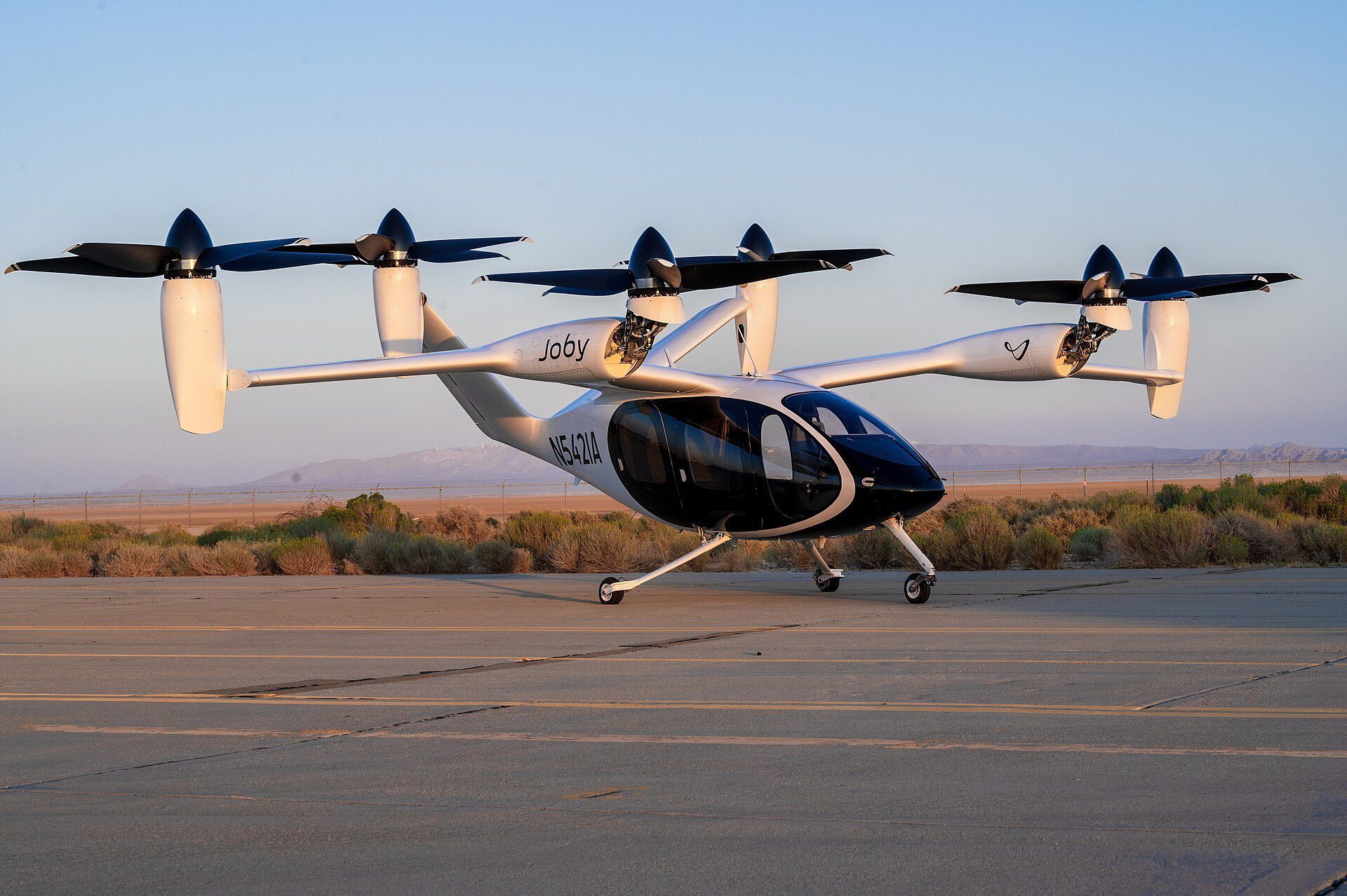
The Bharatiya Vayuyan Adhiniyam, 2024 replaced the Aircraft Act, 1934. Parliament passed it in August and December 2024; it received assent on 11 December 2024 and came into force on 1 January 2025. Under this framework the DGCA, India’s civil aviation regulator, handles type certification, the formal approval that an aircraft design meets safety standards. For electric vertical take-off and landing (eVTOL) aircraft, the DGCA issued guidance AEAC 01 of 2024 on 11 September 2024, covering piloted VTOL-capable aircraft up to 5,700 kg take-off weight. It is interim guidance: India has no binding eVTOL Civil Aviation Requirement yet. Separately, the Drone Rules, 2021 cover unmanned aircraft, not piloted air taxis.
4. Indian players and the global rulebook
Sarla Aviation‘s Shunya, a six-passenger-plus-pilot design, received DGCA Design Organisation Approval on 8 August 2026. ePlane Company, incubated at IIT Madras, is developing the e200X; its type-certification application was accepted by the DGCA in January 2025. Abroad, the US FAA issued its powered-lift rule in October 2024, the first new aircraft category in about 80 years. It does not cover unmanned or autonomous powered-lift aircraft.
Legal and institutional framework
- Bharatiya Vayuyan Adhiniyam, 2024: replaced the Aircraft Act, 1934; in force 1 January 2025.
- DGCA: type certification; guidance AEAC 01 of 2024 for VTOL-capable aircraft.
- Drone Rules, 2021: apply to unmanned aircraft, not piloted air taxis.
- FAA powered-lift rule (October 2024): a new US aircraft category.
CLAT angle
- GK: the statute that replaced the Aircraft Act, 1934, and the date it came into force.
- Trap: a prototype demo is not certification; read “unveiled” and “approved” as different words.
- Legal Reasoning: expect a principle such as “no aircraft carries passengers without a type certificate”, applied to a new vehicle.
- Passages: a passage on emerging technology may test whether regulation follows or leads innovation.
- Application: decide which regime fits, such as drone rules for an unmanned machine and DGCA guidance for a piloted one.
Key facts
| Fact | Detail |
|---|---|
| Event | Tesla Roadster unveiling, SpaceX test site, Texas, 15 Oct 2026 |
| What flew | An unoccupied, self-driving prototype, lifted by cold-gas thrusters |
| Jump figure | About 27 ft with a barrel roll (Tesla’s own figure) |
| Status | Prototype only; no price, no aviation approval; production due 2028 |
| Indian law | Bharatiya Vayuyan Adhiniyam, 2024; assent 11 Dec 2024; in force 1 Jan 2025 |
| Law replaced | Aircraft Act, 1934 |
| DGCA guidance | AEAC 01 of 2024, 11 Sep 2024, for VTOL-capable aircraft |
| Sarla Aviation Shunya | DGCA Design Organisation Approval, 8 Aug 2026 |
| ePlane e200X | IIT Madras incubated; DGCA type-certification application accepted, Jan 2025 |
| FAA powered-lift rule | Final rule, Oct 2024; first new aircraft category in about 80 years |
Mnemonic
“Jump is not flight; flight needs a certificate.” Remember 1-1-25: the Adhiniyam in force on 1 January 2025, and 8-8-26: Sarla’s DGCA design approval on 8 August 2026.
Sources
NBC News (16 October 2026), Not a Tesla App (16 October 2026), Fox Business and Tech-Insider reports on the Roadster event; Tesla’s own event livestream; Indian Infrastructure (6 April 2026) and Business Today (1 September 2026) on Sarla Aviation and ePlane; DGCA guidance AEAC 01 of 2024 as reported through ICAO A42-WP/166; FlyingMag, AvWeb and Reed Smith (October 2024) on the FAA powered-lift rule; Ministry of Civil Aviation Drone Rules, 2021.
Free in the CLAT Gurukul app
These notes (as a PDF lesson) and the 10-question CBT are in the app under Current Affairs → 17 Oct 2026. Get the app on Google Play or open app.clatgurukul.com.
Practice Quiz — 10 CLAT-Style Questions
Click an option to reveal the answer and explanation.