

CURRENT AFFAIRS | 11 OCTOBER 2026
India will be the fastest-growing major economy in 2026, with its GDP projected to expand by 7.3%, according to the Trade and Development Report 2026 released on Friday, 9 October 2026 by UN Trade and Development (UNCTAD). As reported by The Hindu and The Economic Times on 9 October, the report says that “a few large economies are driving global expansion, with India fastest among them at 7.3% in 2026”, and projects Indian growth of 6.8% in 2027.
The headline for India comes against a much weaker global picture. UNCTAD expects world economic growth to slow to 2.6% in 2026, down from 2.9% in 2025, as the energy shock linked to the conflict in the Middle East weighs on economies that import their fuel. For a CLAT aspirant, the report is a ready-made source of numbers, comparisons and policy arguments — exactly the material that current-affairs passages are built from.
What the report says about India
According to the report as quoted by The Hindu, India is “the fastest-growing major economy, with GDP projected to expand by 7.3% in 2026 and 6.8% in 2027 due to robust domestic demand, increasing manufacturing capacity and public infrastructure programmes.” UNCTAD adds that these three drivers are together sustaining growth despite India’s heavy reliance on oil imports.
The report is not uncritical. It notes that household consumption — the biggest engine of Indian demand — is estimated to grow at 6.9% this year and 5.6% next year, which UNCTAD describes as “a significant deceleration from previous years, as higher prices and input costs rein in expansion.” In other words, India is growing fast, but the cost of energy is beginning to squeeze the consumer.
Two further India-specific data points stand out, both reported by The Hindu from the report:
- Greenfield investment: India accounted for 5.7% of global greenfield investment during 2020–2025, followed by Malaysia (4%), Indonesia (3.8%) and China (2.8%). Greenfield investment means a company setting up a brand-new venture in another country, rather than buying an existing one.
- Industrial policy: India implemented 1,416 industrial policy measures during 2008–21, behind only China (4,201) and the United States (4,025). In the shorter period 2022–25 it implemented 707 measures, but slipped in the rankings as the US, China, Australia and Brazil all did more.
The global picture: trade, AI and strategic sectors
On trade, The Economic Times reported that UNCTAD expects global trade to grow by about 4% in 2026, slower than 4.4% in 2025 but “well above what was anticipated when the conflict in the Middle East began”. Part of the rise in trade value, the report says, reflects higher prices during the energy shock rather than higher volumes.
The report also flags a reshaping of trade routes. Trade between China and the US has fallen by more than 20% since 2024, while East Asia has expanded trade with both China and North America. Artificial intelligence products — advanced computing equipment deployed mainly in new data centres — have become the main driver of merchandise trade.
Strategic sectors (AI infrastructure, the semiconductor value chain, and energy-transition technologies) grew from 16% to 44% of global greenfield investment between 2020 and 2025. But that investment is concentrated: Europe captured 28.4% and North America 28%, and among developing economies the money flows mostly to developing Asia (26.5%). UNCTAD warns that this disparity “underscores the growing integration challenges for the global South, especially for the least developed countries.”
Finally, the report observes that governments increasingly use industrial, trade, financial and technology policies to pursue national-security objectives, and that the expiry of preference schemes and the rise of unilateral tariffs have raised the tariffs faced by vulnerable exporters.
Background & Framework
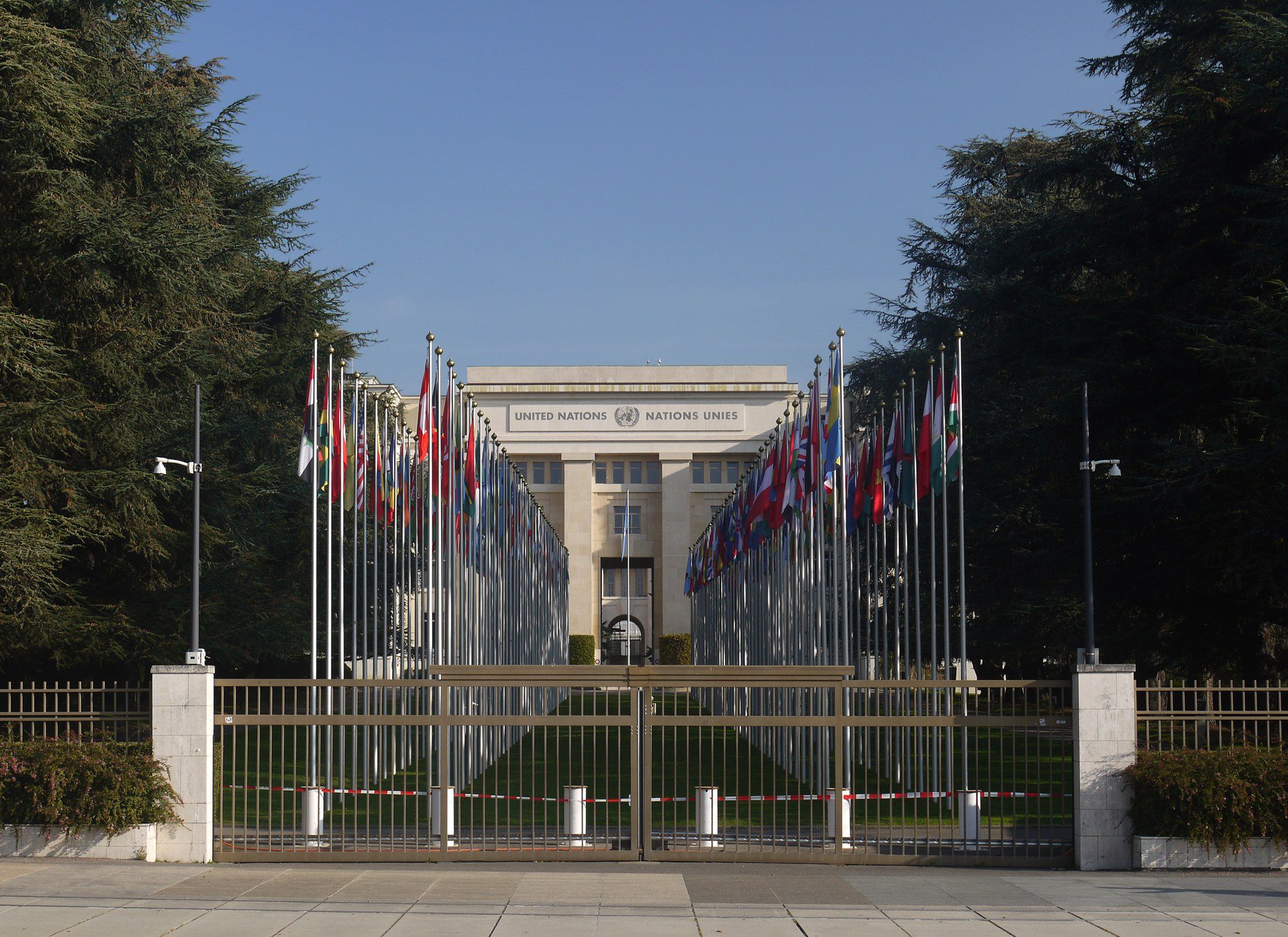
UNCTAD — the United Nations Conference on Trade and Development — was established in 1964 as a permanent intergovernmental body of the UN General Assembly, and is headquartered in Geneva, Switzerland. It now brands itself “UN Trade and Development”, while keeping the acronym. Its mandate is to help developing countries use trade, investment, finance and technology for inclusive development.
UNCTAD’s flagship publications include:
- Trade and Development Report — macroeconomic trends, growth and trade (the subject of this article).
- World Investment Report — global foreign direct investment (FDI) flows.
- Digital Economy Report, Technology and Innovation Report, The Least Developed Countries Report and the Economic Development in Africa Report.
Do not confuse UNCTAD with the World Trade Organization (also Geneva-based, which administers binding trade rules and settles disputes) or with the IMF, whose World Economic Outlook gives its own growth forecasts.
Analysis: why the 7.3% matters — and what it does not say
A forecast is not a guarantee. UNCTAD’s number is a projection made by an international body, and other institutions publish their own estimates for India. What gives the report weight is the comparison: in a year when global growth is expected to slow to 2.6% and developing economies face higher debt-servicing costs, India’s domestic demand, manufacturing and public infrastructure are sustaining momentum.
The report’s caveats are as exam-worthy as its headline. Dependence on imported oil is a vulnerability whenever energy prices spike; slowing household consumption suggests inflation is eroding purchasing power; and the concentration of strategic investment in rich economies means that developing countries risk being left out of the AI and semiconductor boom. A passage could easily present the 7.3% figure and then ask which statement weakens the claim that India’s growth is secure — the answer would lie in these caveats.
The CLAT Angle
- GK direct questions: which body released the Trade and Development Report 2026; India’s projected growth (7.3% in 2026, 6.8% in 2027); projected world growth (2.6%); UNCTAD’s founding year (1964) and headquarters (Geneva).
- Report-matching: CLAT loves “which organisation publishes which report” — World Investment Report and Trade and Development Report are UNCTAD; World Economic Outlook is IMF; World Development Report is the World Bank.
- Quantitative techniques: a data set like India 5.7%, Malaysia 4%, Indonesia 3.8%, China 2.8% of greenfield investment is perfect for ratio questions — India’s share is a little more than double China’s.
- Critical reasoning: distinguish a projection from an outcome, and a share of investment from its absolute value.
Static GK links
Greenfield vs brownfield: a greenfield investment builds a new facility from scratch; a brownfield investment acquires or leases an existing one. Both are forms of FDI. Industrial policy means targeted government measures — subsidies, tariffs, incentives — to promote particular sectors; India’s production-linked schemes are examples of the genre. Global South is the umbrella term for developing economies, largely in Asia, Africa and Latin America, and least developed countries (LDCs) are a UN-defined category of the poorest and most vulnerable economies.
Key Facts
- Report: Trade and Development Report 2026, released Friday, 9 October 2026.
- Publisher: UNCTAD (UN Trade and Development), established 1964, HQ Geneva.
- India: fastest-growing major economy — 7.3% in 2026, 6.8% in 2027.
- Drivers: robust domestic demand, rising manufacturing capacity, public infrastructure programmes.
- India household consumption growth: 6.9% (2026) and 5.6% (2027) — a deceleration.
- World growth: slows to 2.6% in 2026 from 2.9% in 2025.
- Global trade growth: about 4% in 2026 vs 4.4% in 2025.
- India’s share of global greenfield investment 2020–25: 5.7%; China 2.8%.
- Strategic sectors’ share of greenfield investment: 16% → 44% (2020–2025).
- Strategic investment concentrated in Europe (28.4%) and North America (28%).
- India: 1,416 industrial policy measures in 2008–21, third after China and the US.
Memory Hook / Mnemonic
“7-3 for India, 2-6 for the World, 4 for Trade — signed in Geneva since ’64.”
India 7.3% (2026) → 6.8% (2027) · World 2.6% · Trade ~4% · UNCTAD = Geneva, 1964. And for reports: “TDR and WIR wear UNCTAD’s badge; WEO wears the IMF’s.”
Practice Quiz — 10 CLAT-Style Questions
Click an option to reveal the answer and explanation.






