

CURRENT AFFAIRS | 11 OCTOBER 2026
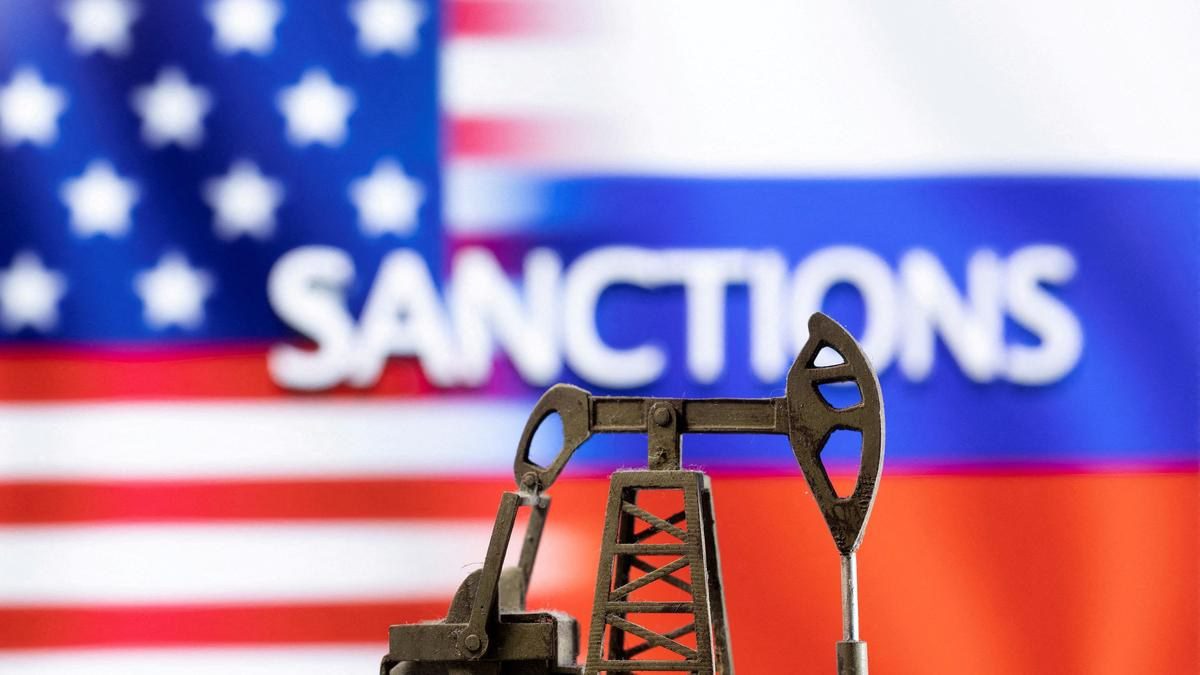
The United States has opened a time-bound window in its sanctions on Russia for one specific product: diesel. On Friday, 9 October 2026, the US Treasury’s Office of Foreign Assets Control (OFAC) issued Russia-related General License No. 135, titled “Authorizing Transactions Related to the Sale, Delivery, Offloading, and Importation of Diesel Fuel of Russian Federation Origin”. The licence permits such transactions through 12:01 a.m. eastern daylight time on 7 April 2027.
The Hindu, reporting on 10 October 2026, described the move as the United States lifting sanctions on the sale of Russian diesel in global markets until April next year. The same report gave the market context: diesel prices have surged around the world, it said, as attacks on Russian refineries led Moscow to ban diesel exports. That explanation rests on news reports and is best read as context, not as an official finding.
What General License 135 actually says
The text of the licence, signed by the Director of OFAC and dated 9 October 2026, is short and worth reading closely, because CLAT legal-reasoning passages are often built on exactly this kind of precise drafting.
Paragraph (a) authorises “all transactions prohibited by” two sets of US regulations — the Russian Harmful Foreign Activities Sanctions Regulations (31 CFR part 587) and the Ukraine-/Russia-Related Sanctions Regulations (31 CFR part 589) — that are “related to the sale, delivery, offloading, or importation, including importation into the United States, of diesel fuel of Russian Federation origin”. The authorisation runs until the stated cut-off on 7 April 2027.
Paragraph (b) is the carve-out. The licence does not authorise any debit to an account on the books of a US financial institution of the Central Bank of the Russian Federation, the National Wealth Fund of the Russian Federation, or the Ministry of Finance. In other words, diesel can move and be paid for, but the licence does not reopen access to Russia’s sovereign financial institutions held in the US banking system.
Three features stand out. First, the licence is product-specific: it covers diesel fuel, not crude oil or other refined products. Second, it is origin-based: what matters is that the diesel is of Russian Federation origin. Third, it is time-bound, with a precise expiry time stated in US eastern daylight time.
Background & Framework
OFAC is the office of the US Department of the Treasury that administers and enforces US economic and trade sanctions. Its best-known tool is the Specially Designated Nationals and Blocked Persons List (SDN List): property of listed persons within US jurisdiction is blocked, and US persons generally may not deal with them.
General licence vs specific licence. Sanctions regulations prohibit a wide range of transactions; OFAC then relaxes them through licences. A general licence is published and self-executing — anyone whose transaction falls within its terms may rely on it without applying. A specific licence is issued to a named applicant on a case-by-case basis after a written application. GL 135 is a general licence: any trader whose diesel transaction fits paragraph (a), and is not caught by paragraph (b), is covered until the expiry time.
Unilateral vs UN sanctions. Sanctions imposed by the UN Security Council under Article 41 of the UN Charter bind all UN members. Sanctions imposed by a single country, such as the US measures under 31 CFR parts 587 and 589, are unilateral: they bind that country’s own persons and transactions within its jurisdiction, though their reach through the dollar-based financial system often influences companies elsewhere.
Why a sanctioning state relaxes its own sanctions
A general licence of this kind is a policy valve. Sanctions are designed to reduce a target’s revenue, but a blanket restriction on a widely traded fuel can also raise prices for the sanctioning country and its partners. Diesel matters disproportionately to the real economy: it powers trucks, buses, farm machinery, ships, generators and much of the freight that moves goods. When supply tightens, the effect shows up quickly in transport costs and, through them, in the price of almost everything else.
The design of GL 135 shows how a state can try to manage that trade-off. It permits the physical trade in diesel while keeping the restriction on Russia’s central bank, sovereign wealth fund and finance ministry accounts in US institutions. The fixed expiry date in April 2027 also signals that the measure is temporary and can be reviewed.
What it means for importing economies
For fuel-importing countries, the price of diesel is a macroeconomic variable: it feeds into inflation, freight costs and the import bill. Any measure that adds supply to the global market can, in principle, ease prices. At the same time, traders and banks outside the US watch OFAC licences closely, because the scope of what is “authorised” determines whether they can deal in a cargo without risking US penalties. A narrowly drafted licence — diesel only, Russian origin only, until a fixed time, excluding certain sovereign accounts — tells market participants exactly where the line is.
For a student of international relations, the episode is a useful case study of how economic statecraft works in practice: sanctions are not a single on/off switch but a layered system of prohibitions, exemptions and licences that governments adjust as conditions change.
The CLAT Angle
Current affairs: Likely one-liners — “Which OFAC general licence authorised transactions in Russian-origin diesel on 9 October 2026?” (GL 135); “Until when?” (12:01 a.m. EDT, 7 April 2027).
Legal reasoning: GL 135 is a perfect model for a rule-application passage. Apply paragraph (a) and paragraph (b) to facts. A Russian-origin diesel cargo sold to a buyer in March 2027 — covered. A Russian-origin crude oil cargo — not covered, because the licence is limited to diesel. A payment requiring a debit from a US bank account of Russia’s Ministry of Finance — excluded by paragraph (b). A diesel delivery after 12:01 a.m. EDT on 7 April 2027 — outside the licence.
Economy: Link to inflation and freight costs; understand general vs specific licences and unilateral vs UN sanctions.
Key Facts
- 9 October 2026: OFAC issued Russia-related General License No. 135.
- Subject: sale, delivery, offloading and importation of diesel fuel of Russian Federation origin.
- Valid through 12:01 a.m. EDT, 7 April 2027.
- Covers importation, including importation into the United States.
- Relaxes prohibitions under 31 CFR part 587 (Russian Harmful Foreign Activities Sanctions Regulations).
- Also relaxes 31 CFR part 589 (Ukraine-/Russia-Related Sanctions Regulations).
- Excluded: debits to US-bank accounts of Russia’s Central Bank, National Wealth Fund and Ministry of Finance.
- OFAC is part of the US Department of the Treasury.
- General licence = published, no application; specific licence = case-by-case to a named applicant.
- Context (news reports): diesel prices rose worldwide after attacks on Russian refineries led Moscow to ban diesel exports.
Memory Hook / Mnemonic
“135 → 7-4-27” — General License 135, valid till 7 April 2027.
“Fuel flows, the Treasury vaults stay shut” — diesel trade allowed, but no debits to the Central Bank, National Wealth Fund or Ministry of Finance accounts.
“587 + 589” — the two CFR parts the licence relaxes.
General = for everyone; Specific = for someone.
Practice Quiz — 10 CLAT-Style Questions
Click an option to reveal the answer and explanation.






