

CURRENT AFFAIRS | 11 OCTOBER 2026
In an unprecedented step, the United States Department of the Treasury has placed the International Criminal Court (ICC) itself — not merely some of its judges or officials — on its sanctions list. According to the Office of Foreign Assets Control (OFAC) “Recent Actions” notice dated Friday, 9 October 2026, the entity “INTERNATIONAL CRIMINAL COURT”, with its address in The Hague, Netherlands, and an “Organization Established Date” of 1 July 2002, was added to OFAC’s Specially Designated Nationals and Blocked Persons List (SDN List) under the programme tag ICC-EO14203.
The Court responded the same day. As reported by The Hindu on 9 October 2026, the ICC said in a statement that the sanctions were “an assault on the rule of law and on the very foundations of the international legal order”, and warned that “history will judge this moment”. The statement called on the Court’s 125 member states to stand by the institution they had created.
What exactly did the United States do?
The OFAC notice of 9 October records three linked actions concerning the Court. First, the ICC was added to the SDN List. Second, OFAC issued four ICC-related General Licenses (Nos. 13, 14, 15 and 16). Their titles, as listed by OFAC, authorise certain transactions involving the Court; certain transactions related to telecommunications and enterprise software; transactions related to pension payments; and certain transactions related to certain ICC detainees. Third, the US Department of State, in a release linked from the OFAC page, described the legal effect of the designation.
According to that State Department release, the United States had already imposed sanctions on 17 persons under Executive Order 14203, titled “Imposing Sanctions on the International Criminal Court”. With the Court itself now designated, “all property and interests in property of the ICC” that are in the United States or in the possession or control of US persons are blocked and must be reported to OFAC. Transactions by US persons, or within or transiting the United States, involving such property are prohibited unless exempt or authorised by a general or specific licence issued by OFAC.
In practical terms, a blocking designation cuts the target off from the US financial system and from US companies. For an international court that pays salaries, buys software and services, and runs detention facilities, that is why OFAC issued the four general licences on the same day — they carve out narrow channels (such as pensions and detainee-related transactions) that remain permitted.
The Court’s response
The ICC statement, as quoted by The Hindu, said that such actions were aimed at intimidating ICC staff and disrupting the Court’s work, and that it would not be deterred. ICC President Judge Tomoko Akane said the Court would “continue to fully discharge its mandate, with independence and impartiality, acting only on the basis of the law and the evidence”. The statement added that the Court’s fate “now rests also in the hands of the states that created it” — a reminder that the ICC is a treaty body that depends on co-operation from its member states for arrests, funding and enforcement of its orders.
Constitutional / Legal Framework
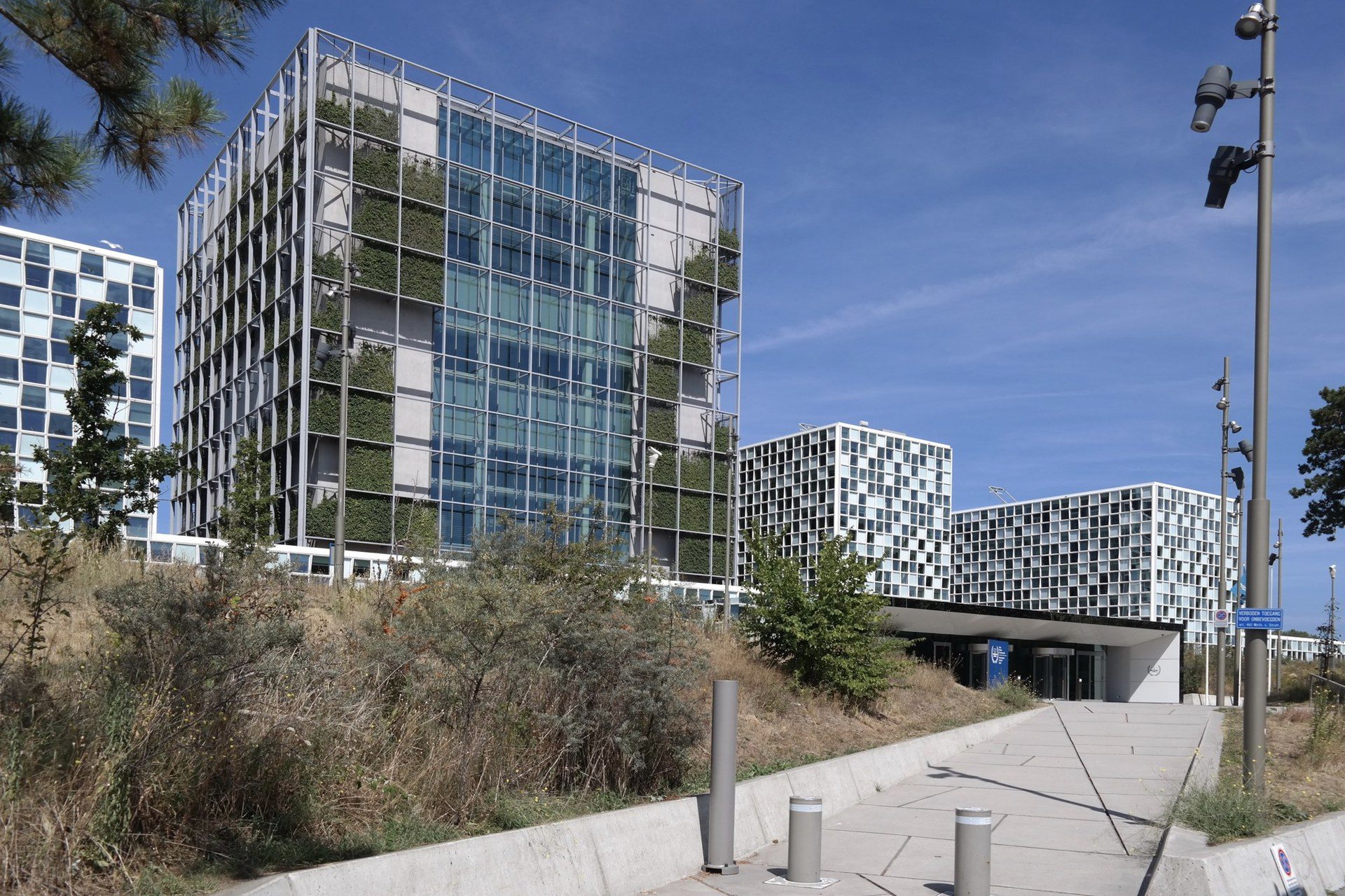
The Rome Statute. The ICC was created by the Rome Statute of the International Criminal Court, adopted at a diplomatic conference in Rome on 17 July 1998. The Statute entered into force on 1 July 2002 — the very date OFAC lists as the Court’s “establishment date”. The Court sits at The Hague in the Netherlands.
Jurisdiction. Under Article 5, the ICC tries individuals (not states) for four core crimes: genocide, crimes against humanity, war crimes and the crime of aggression. A case can reach the Court through a referral by a State Party, a referral by the UN Security Council, or an investigation opened by the Prosecutor on his or her own initiative (proprio motu) with judicial authorisation.
Complementarity. The ICC is a court of last resort. Under the principle of complementarity, a case is inadmissible if a State with jurisdiction is genuinely investigating or prosecuting it; the Court steps in only where national systems are unwilling or unable to do so.
OFAC and the SDN List. OFAC is the sanctions-administering office of the US Treasury. The SDN List names persons and entities whose property within US jurisdiction is blocked. A general licence authorises a category of otherwise-prohibited transactions for everyone who meets its terms; a specific licence is granted to a particular applicant on a case-by-case basis.
ICC vs ICJ: a distinction CLAT loves
Both courts sit in The Hague, which is why examiners use them as a trap. The International Court of Justice (ICJ) is the principal judicial organ of the United Nations, established under the UN Charter in 1945. It settles legal disputes between states and gives advisory opinions to UN organs; it has 15 judges and sits at the Peace Palace. The ICC, by contrast, is not a UN organ. It is an independent, treaty-based court that determines the criminal responsibility of individuals. Its jurisdiction rests on the consent of states that have ratified the Rome Statute, with the Security Council referral as the main exception.
Several major countries are not parties to the Rome Statute, including India, the United States, China and Russia. Because India has not ratified the Statute, it is not bound by the treaty’s obligations of co-operation with the Court. That background matters for analysis: a sanctions action by a non-party against the Court raises questions about how treaty-based international institutions can function when powerful non-members oppose them.
Analysis: why this matters
Earlier US actions under the same executive order had designated 17 persons. Designating the institution is a step change. Blocking sanctions work through the dominance of the US dollar and US technology: banks, insurers, cloud and software providers anywhere in the world often avoid dealing with an SDN-listed entity to protect their own access to the US market. The four general licences show that even the sanctioning state recognised that some activities — pensions, detainee matters, certain software and telecommunications — needed to continue.
For international law students, the episode illustrates a classic tension. On one side is the principle, quoted in the ICC statement, that “no one stands above the law”. On the other is the argument of state sovereignty, under which a country that has not consented to a treaty claims that the treaty body cannot exercise authority over its nationals. The Rome Statute itself tries to balance these through complementarity and through the requirement that the Court’s jurisdiction normally attaches through the territory or nationality of a State Party.
The CLAT Angle
Current affairs: Expect direct questions such as “Which US agency added the ICC to its SDN List on 9 October 2026?” (OFAC, US Treasury) or “Where is the ICC headquartered?” (The Hague).
Static GK: Rome Statute — adopted 1998, in force 1 July 2002; four core crimes; India not a party. Know the ICC/ICJ contrast cold: ICJ = UN organ, state-vs-state disputes, 15 judges; ICC = treaty court, individual criminal liability.
Legal reasoning: A passage could set out the principle of complementarity and ask whether the ICC may take up a case that a national court is genuinely trying. Apply the principle as stated: if the national process is genuine, the case is inadmissible. Another passage could define “general licence” and “specific licence” and ask you to classify a fact situation.
Key Facts
- 9 October 2026: OFAC added the International Criminal Court to its SDN List.
- Programme tag on the SDN entry: ICC-EO14203 (Executive Order 14203).
- SDN entry lists the ICC’s address in The Hague, Netherlands and establishment date 1 July 2002.
- OFAC issued ICC-related General Licenses 13, 14, 15 and 16 the same day.
- The licences cover certain transactions with the Court, telecom and enterprise software, pension payments and certain detainee matters.
- State Department: 17 persons had already been sanctioned under E.O. 14203.
- ICC statement: sanctions are “an assault on the rule of law”; “history will judge this moment”.
- The ICC statement addressed the Court’s 125 member states.
- Rome Statute adopted 17 July 1998; in force 1 July 2002.
- Four core crimes: genocide, crimes against humanity, war crimes, aggression.
- India is not a party to the Rome Statute.
- ICJ (UN organ, 1945) settles disputes between states; ICC tries individuals.
Memory Hook / Mnemonic
“ROME 98 → HAGUE 02” — signed in Rome in ’98, working in The Hague from 1 July 2002.
Core crimes = “G-CAW”: Genocide, Crimes against humanity, Aggression, War crimes.
ICJ vs ICC: “J for Jurisdictions (states) — C for Criminals (individuals).”
OFAC 13–16: “Court, Code, Cash, Custody” — the four ICC general licences (transactions, software/telecom, pensions, detainees).
Practice Quiz — 10 CLAT-Style Questions
Click an option to reveal the answer and explanation.






