Watch the video explainer · open on YouTube
VIDEO EXPLAINER | 5 NOVEMBER 2026
This note follows the video on the 2026 US midterm elections held on 3 November 2026. As of 4 November 2026, the Democratic Party was reported to have won 54 Senate seats and the Republican Party 44, which gives the Democrats control of the US Senate. Two races, in Alaska and Mississippi, were still pending, so the final figure may change. The video also hedges the House of Representatives count, because outlets reported different numbers; this note gives no House figure for the same reason. Please check the final count before relying on any number in an exam.
What happened
The Senate changed hands in a single election night. 7 seats moved from the Republican Party to the Democratic Party, in Texas, Iowa, Kansas, Ohio, Maine, North Carolina and South Carolina. The biggest highlight was Texas: according to the video, a Democrat won a statewide election there for the first time in 32 years.
US President Donald Trump was not on the ballot, yet the result is being read as a big verdict by voters on his performance. That is a political reading, reported as such, and not a legal fact.
Midterm election: why the name
A US President serves a 4-year term. The election that falls exactly in the middle of that term is called a midterm election.
Congress and its two chambers
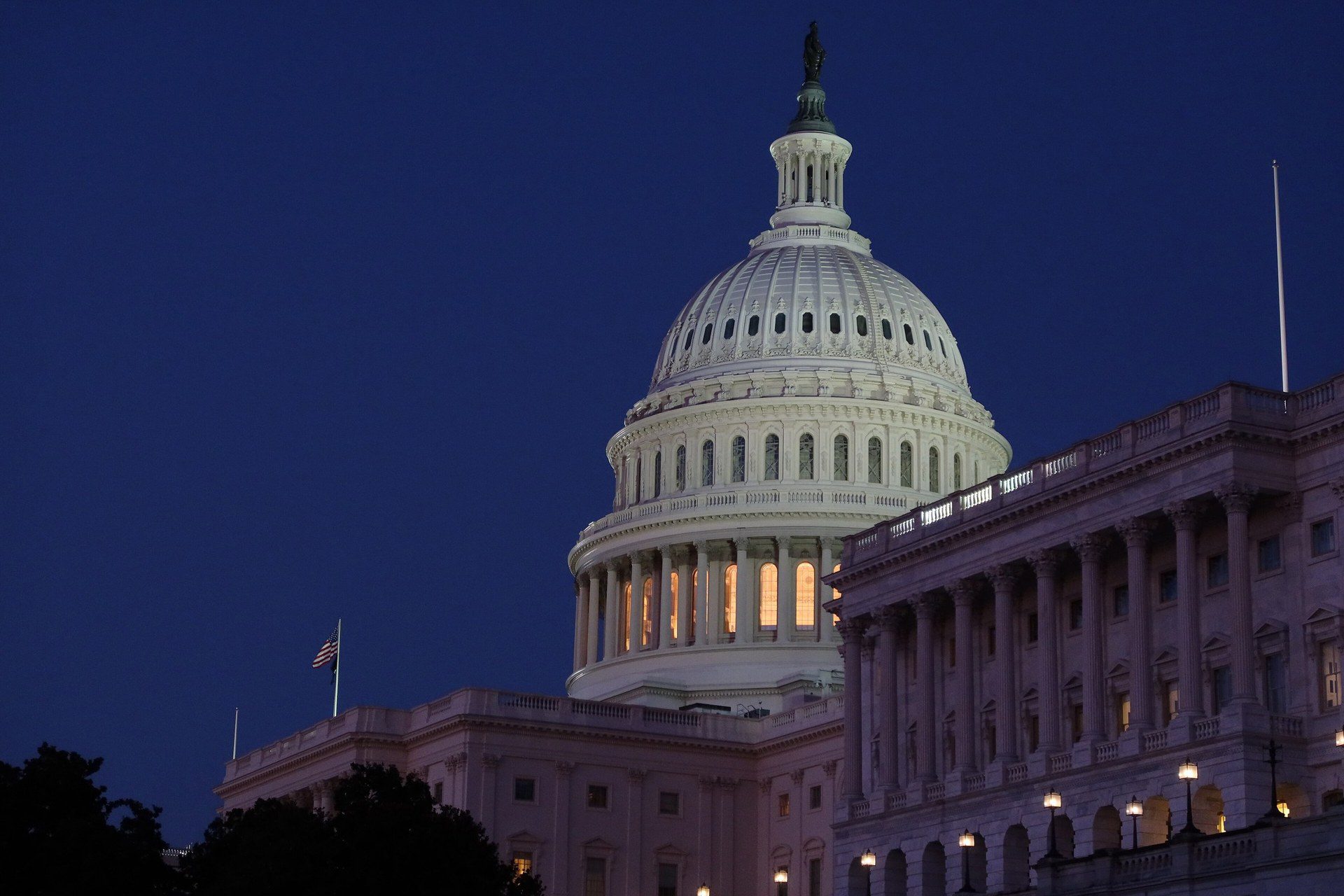
The Parliament of the United States is called Congress, and it has 2 chambers. The House of Representatives is comparable to India’s Lok Sabha, and the Senate is comparable to India’s Rajya Sabha.
The Senate has 2 senators from every state, so 100 in total, and a party needs 51 seats for a majority. All 435 House seats were also voted on in this election.
Why not all 100 seats?
Each senator serves a term of 6 years, and the Senate is divided into 3 classes. Every 2 years only one class, almost one third of the seats, is up for election.
India’s Rajya Sabha works on a similar rhythm: one third of its members retire every 2 years. The difference is in who elects them. Rajya Sabha members are elected by MLAs, while US senators are elected directly by voters. The US system of direct election was introduced by the 17th Amendment in 1913.
Filibuster and the 60-vote rule
To end debate on a bill in the Senate, 60 votes are needed. Because of this rule, a group can block a bill by speaking at length, which is called a filibuster. So even 54 seats are not enough to pass every bill easily.
What comes next
The new Congress begins on 3 January 2027; until then the old Congress keeps working. The next video in the series explains how the result may change the powers of the US President.
Constitutional / institutional framework
- Congress: the US legislature, with the House of Representatives (435 seats) and the Senate (100 seats).
- 17th Amendment (1913): senators are elected directly by voters.
- Senate classes: 6-year terms, 3 classes, about one third elected every 2 years.
- Cloture: 60 votes to end debate; the filibuster is long debate used to block a bill.
CLAT angle
- GK: US Congress vs India’s Parliament (House = Lok Sabha, Senate = Rajya Sabha).
- GK: 17th Amendment 1913; 100 senators; 51 for a majority; 60 to end debate.
- Passage-style: comparing direct election of senators with election of Rajya Sabha members by MLAs.
- Current affairs: 7 seats flipped; Texas statewide win after 32 years; Alaska and Mississippi pending.
Key facts
| Fact | Detail |
|---|---|
| Election date | 3 November 2026 (US midterms) |
| Senate result (as of 4 Nov 2026) | Democratic Party 54, Republican Party 44 |
| Seats pending | Alaska and Mississippi |
| Seats flipped | 7 (TX, IA, KS, OH, ME, NC, SC) |
| Texas | Democrat statewide win after 32 years |
| Senate size / majority | 100 senators / 51 |
| Senator term | 6 years, 3 classes, about 1/3 every 2 years |
| Direct election of senators | 17th Amendment, 1913 |
| Cloture | 60 votes to end debate |
| New Congress | 3 January 2027 |
Memory hook
“6-2-1/3”: 6-year terms, 2 senators per state, about one third up every 2 years. And 54 < 60, so a filibuster can still stop a bill.
Sources
NBC News Senate results tracker, PBS NewsHour, CNBC and CBS News election coverage (3-4 November 2026); Houston Public Media for the Texas statewide streak; US Senate and National Archives references for the constitutional background. Counts were still moving on 4 November 2026.
Free in the CLAT Gurukul app
These notes (as a PDF lesson) and the 10-question CBT are in the app under Current Affairs → 5 Nov 2026. Get the app on Google Play or open app.clatgurukul.com.
Practice Quiz — 10 CLAT-Style Questions
Click an option to reveal the answer and explanation.