Watch the video explainer · open on YouTube
VIDEO EXPLAINER | 7 OCTOBER 2026
Four proposals for a truce in the Black Sea between Russia and Ukraine are now on the table, from India, Türkiye, Egypt and the United States, and Ukraine says the broadest of them is India’s. In remarks reported on 4 October 2026, Ukraine’s Foreign Minister Andrii Sybiha said Kyiv was ready for an energy and Black Sea truce, “but only in this combination.” The same day, External Affairs Minister S. Jaishankar said India was talking to both Russia and Ukraine, “starting with the Black Sea safety of shipping issue.” Why is India in this room at all? This explainer covers the geography, India’s stake and the proposals.
1. The geography: a closed sea with one exit
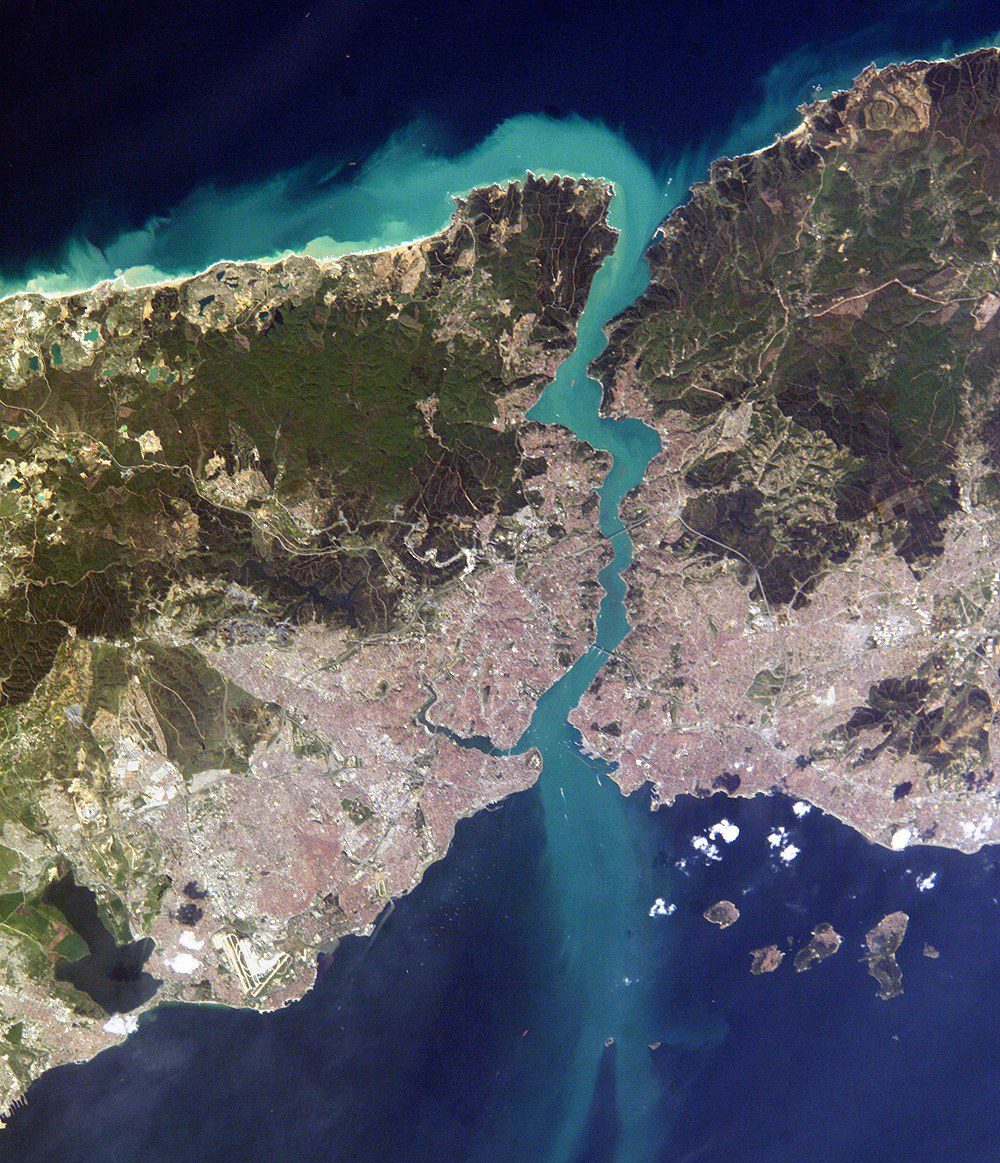
Six countries line the Black Sea: Türkiye, Bulgaria, Romania, Ukraine, Russia and Georgia. Its only outlet to the wider world is a narrow chain of waterways under Türkiye’s control. The Bosporus links the Black Sea to the Sea of Marmara, and the Dardanelles links Marmara to the Aegean Sea and on to the Mediterranean. The legal regime for these straits is set by the Montreux Convention, signed on 20 July 1936.
Trade makes the sea matter. Most of Ukraine’s grain exports leave from the ports around Odesa, and Russia and Ukraine are the world’s top two exporters of sunflower oil. India imports sunflower oil from both, so the Black Sea route reaches Indian kitchens.
2. India’s direct stake: its seafarers
Attacks on ships in the Black Sea rose from April 2026. By late July, five Indian seafarers had been killed. On 18 July, the ship MV Omorfi was struck by Ukraine in Russian waters and its Indian Chief Officer was killed. On 19 July, MV Golden Leo, leaving Odesa with a cargo of corn, was hit by Russian missiles: four Indians were killed and one was critically injured.
India responded to both sides. It summoned Russia’s chargé d’affaires after Golden Leo and Ukraine’s ambassador after Omorfi. On 26 July, the Ministry of External Affairs issued an advisory asking Indians taking jobs on ships in the region to “carefully assess the prevailing security risks before accepting such assignments.”
3. From advocacy to involvement
In September 2026, Jaishankar made the first standalone bilateral visit by an Indian External Affairs Minister to Ukraine, and met Sybiha again at the UN General Assembly at the end of the month. On 4 October he said India was trying to be helpful on shipping safety, grain exports, energy exports and “non-attack possibilities”, and was now “a little bit more involved beyond advocacy.”
4. The four proposals
The proposals differ in scope. India’s combines an energy truce (a halt to strikes on all energy facilities, including port infrastructure) with a Black Sea truce. Türkiye and Egypt propose a grain or agricultural truce that would revive the grain deal, and the United States proposes an energy truce. Kyiv calls India’s the broadest because it joins both elements, which is the combination Ukraine says it will accept.
The grain deal they refer to is the Black Sea Grain Initiative, signed on 22 July 2022 at Istanbul by Russia, Türkiye, Ukraine and the United Nations. It covered three Ukrainian ports, Odesa, Chornomorsk and Yuzhny (Pivdennyi), and was not renewed after it expired on 17 July 2023.
Legal and institutional framework
- Montreux Convention (1936): governs passage through the Bosporus and the Dardanelles, which are under Türkiye’s control.
- Black Sea Grain Initiative: signed 22 Jul 2022, Istanbul; parties Russia, Türkiye, Ukraine and the UN; expired 17 Jul 2023.
- Ministry of External Affairs advisory (26 Jul 2026): asked Indians to assess security risks before taking ship jobs in the region.
- Diplomatic summons: India summoned Russia’s chargé d’affaires and Ukraine’s ambassador after the July attacks.
- Littoral states: Türkiye, Bulgaria, Romania, Ukraine, Russia, Georgia.
The CLAT angle
- Map GK: Black Sea → Bosporus → Sea of Marmara → Dardanelles → Aegean Sea. Expect a sequencing question.
- Treaty dates: Montreux Convention 1936; Grain Initiative signed 22 Jul 2022, expired 17 Jul 2023.
- A reasoning item can turn on Kyiv’s condition: an energy truce and a sea truce accepted only together.
- Know the six littoral states and which country controls the straits (Türkiye).
- India’s stake in one line: the safety of its seafarers and its trade, including sunflower oil.
Key facts
| Fact | Detail |
|---|---|
| Proposals on the table | 4: India, Türkiye, Egypt, United States |
| India’s proposal | Energy truce + Black Sea truce, combined |
| Littoral states | 6 |
| Exit route | Bosporus → Sea of Marmara → Dardanelles → Aegean |
| Montreux Convention | Signed 20 Jul 1936 |
| Indian seafarers killed | 5 (by late July 2026) |
| MV Golden Leo | 19 Jul 2026, leaving Odesa; 4 Indians killed |
| MEA advisory | 26 Jul 2026 |
| Grain Initiative | Signed 22 Jul 2022; expired 17 Jul 2023 |
Memory hook
“Six shores, one door, four plans.” Six littoral states; one exit through the Turkish straits (Bosporus, then Dardanelles); four truce proposals, of which India’s, energy plus sea together, is the broadest.
Sources
ThePrint (4 Oct 2026, citing European Pravda) and The Week (5 Oct 2026) on the four proposals; Bloomberg via Spokesman-Review, The Wire and Kyiv Post (4–5 Oct 2026) on Jaishankar’s remarks; MEA statements reported by The Wire, The Tribune and ThePrint (26–27 Jul 2026) on the seafarer deaths and the advisory; the United Nations on the Black Sea Grain Initiative; Britannica on the Montreux Convention, the Bosporus and the Dardanelles.
Related: a later Black Sea incident, covered in our daily newspaper →
Free in the CLAT Gurukul app
These notes (as a PDF lesson) and the 10-question CBT are in the app under Current Affairs → 7 Oct 2026. Get the app on Google Play or open app.clatgurukul.com.
Practice Quiz — 10 CLAT-Style Questions
Click an option to reveal the answer and explanation.