CURRENT AFFAIRS | 09 OCTOBER 2026
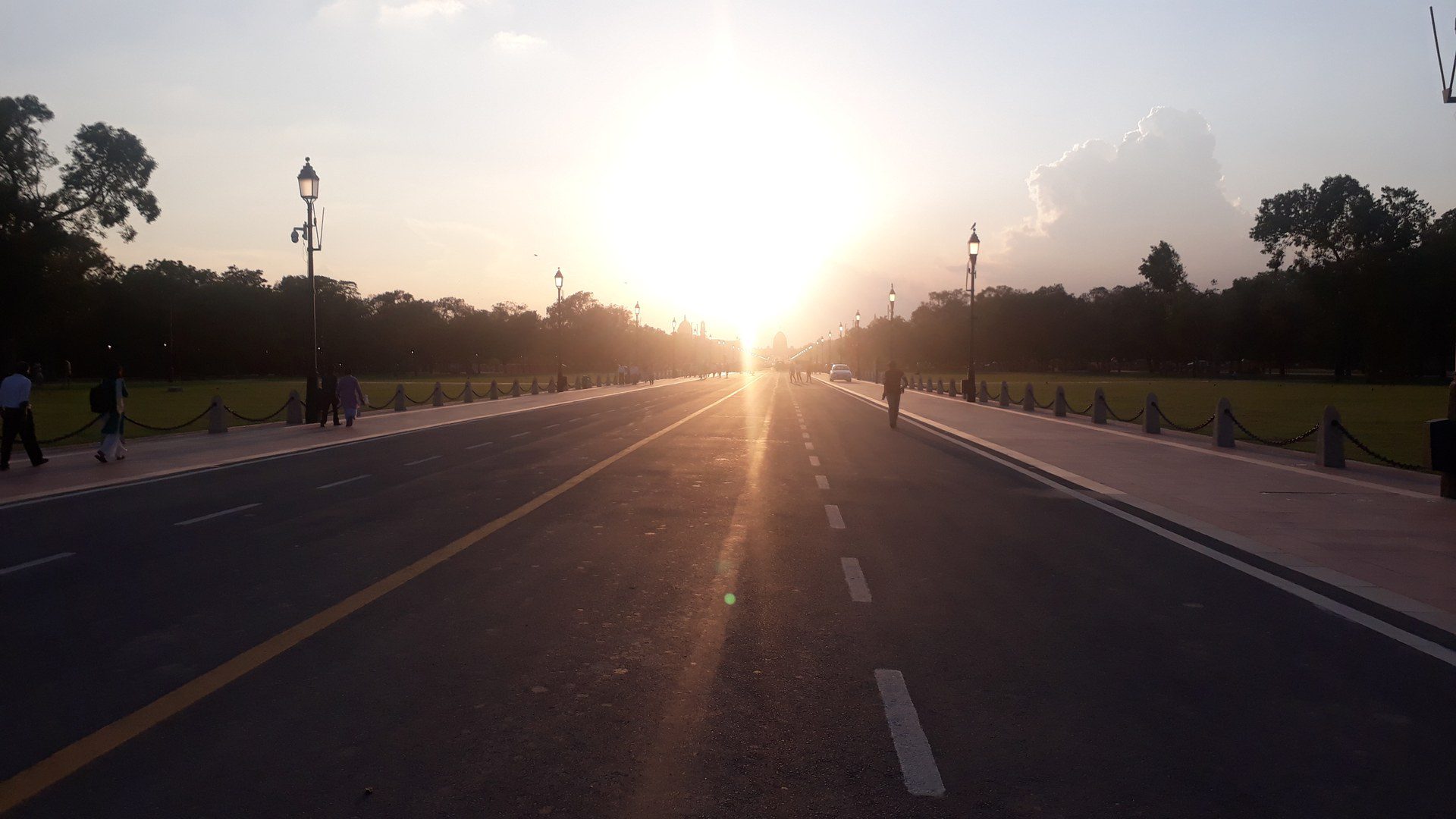
On Friday, 9 October 2026, the Delhi Police ordered a 24-hour suspension of mobile internet services within a 4-kilometre radius of the Janpath–Kartavya Path crossing in central New Delhi. According to Business Today (9 October, 7:27 pm IST), the suspension runs from 10 pm on 9 October to 10 pm on 10 October 2026 and covers all mobile internet technologies. The order was issued through a notification of the Delhi Police Special Cell, and the Ministry of Home Affairs (MHA) approved the temporary suspension. Telecom operators Airtel, Vodafone Idea, Reliance Jio and MTNL were directed to implement it.
The stated context is a planned protest at Jantar Mantar on Saturday, 10 October, with large gatherings expected in central Delhi and concerns over law and order. The restriction was imposed under the Telecommunications Act, 2023 and the Telecommunications (Temporary Suspension of Services) Rules, 2024. A second report, in the English edition of Gujarat Samachar (9 October), likewise described an MHA-approved Delhi Police order blocking mobile data around the Janpath–Kartavya Path intersection until 10 pm on 10 October.
For a CLAT aspirant, the event matters less for its politics than for its law. This internet suspension is a clean, current illustration of three questions that recur in Legal Reasoning passages: who may switch off the internet, on what grounds, and what limits the Constitution places on that power.
The legal basis: from the Telegraph Act to the Telecommunications Act
For more than a century, telecom suspensions in India rested on Section 5(2) of the Indian Telegraph Act, 1885, which allowed the government to act “on the occurrence of any public emergency, or in the interest of the public safety”. Detailed procedure came only in 2017 through the Temporary Suspension of Telecom Services Rules.
The Telecommunications Act, 2023 replaced the colonial-era Telegraph Act. Its Section 20(2) now carries the suspension power: on the occurrence of a public emergency or in the interest of public safety, the Central or State Government (or an officer specially authorised) may, among other measures, order the suspension of telecommunication services. The trigger words — “public emergency” and “public safety” — were carried over from the old law, so the jurisprudence built around them remains relevant.
The procedure is in the Telecommunications (Temporary Suspension of Services) Rules, 2024, notified on 22 November 2024. Under these Rules:
- the competent authority is the Union Home Secretary (for the Centre) or the Home Secretary of a State;
- a suspension order must be a reasoned, written order;
- a suspension can last no longer than 15 days; and
- the order must be forwarded to a Review Committee within 24 hours.
The Delhi order fits this design: it was approved by the MHA (Delhi being a Union Territory with police under the Centre), limited to a defined area and capped at 24 hours.
Constitutional / Legal Framework
Article 19(1)(a) guarantees freedom of speech and expression; Article 19(1)(g) guarantees the freedom to practise any profession or carry on any trade or business. Both may be curtailed only by reasonable restrictions under Article 19(2) (which includes “public order” and the “sovereignty and integrity of India”) and Article 19(6) (in the interests of the general public). The statutory power to suspend telecom services is now Section 20(2) of the Telecommunications Act, 2023, read with the Temporary Suspension of Services Rules, 2024. Distinct from a network shutdown, the blocking of specific websites or content falls under Section 69A of the Information Technology Act, 2000.
The landmark: Anuradha Bhasin v. Union of India (2020)
The constitutional limits on shutdowns were set by a three-judge Bench of the Supreme Court in Anuradha Bhasin v. Union of India, decided on 10 January 2020 and reported at (2020) 3 SCC 637. The case arose from the communication restrictions imposed in Jammu and Kashmir in August 2019. Its key holdings are standard CLAT material:
- Freedom of speech and expression and the freedom to carry on trade or business using the medium of the internet are constitutionally protected under Articles 19(1)(a) and 19(1)(g).
- Any restriction must satisfy the test of proportionality — a legitimate aim, a rational connection, the least restrictive effective measure, and a balance between the right and the restriction.
- An indefinite suspension of internet services is impermissible; a suspension can be only temporary.
- Suspension orders must be published so that they can be challenged, and they are subject to judicial review.
Note the precise wording the Court used. It did not declare internet access itself to be a fundamental right; it held that the exercise of Article 19 freedoms through the internet is protected. Examiners often build a wrong option on exactly this distinction. (The Kerala High Court, in Faheema Shirin v. State of Kerala (2019), had separately linked internet access to the rights to education and privacy under Article 21.)
Applying the tests to the Delhi order
A neutral legal analysis of an order like this one asks the questions the Bhasin framework and the 2024 Rules pose, without presuming the answer:
- Authority: Was the order approved by the competent authority? The reports say the MHA approved it.
- Ground: Does a planned public gathering amount to a “public emergency” or a threat to “public safety”? This is where most legal challenges focus.
- Proportionality: Was a geographically limited, time-bound order (4 km, 24 hours) the least restrictive effective option? Its narrow scope supports proportionality; critics usually argue that alternatives such as targeted policing are less intrusive.
- Duration: 24 hours is well within the 15-day cap in the Rules.
- Publication and review: Was the reasoned order made public and placed before the Review Committee within 24 hours?
Business Today noted that the notification speaks of mobile internet; it does not, by itself, establish that fixed-line broadband or voice calling would be discontinued. Precision about what is suspended is itself part of the proportionality inquiry.
The CLAT Angle
Expect a Legal Reasoning passage that sets out the principle — “a restriction on fundamental rights must be proportionate and temporary, and the order must be published” — and then a fact pattern: a district imposes an open-ended shutdown without publishing the order. The correct answer applies the principle (the order fails on indefiniteness and non-publication), not your opinion of the protest. Also watch for: (1) the shift from the Telegraph Act, 1885 to the Telecommunications Act, 2023; (2) the difference between a shutdown (s.20(2)) and content blocking (IT Act s.69A); (3) the trap that Bhasin made internet access itself a fundamental right. In GK, match the case to its year (2020) and the statute to its year (2023).
Why this keeps recurring
Internet suspensions are a recurring tool of law-and-order administration in India, used around examinations, protests and communal tension. Each new order raises the same tension between two public goods: the State’s duty to maintain public order and the citizen’s ability to speak, work, learn and transact online. Commerce, digital payments, education and emergency communication now depend on mobile data, which is why the courts insist that the power be used narrowly. The 2024 Rules, with their 15-day ceiling and 24-hour review referral, codify part of what the Supreme Court demanded in 2020; whether they go far enough is an active debate among lawyers and digital-rights groups.
The Delhi order is therefore a useful “live specimen”: limited in space and time, approved at the Home Ministry level and grounded in the new statute. Whether any particular order meets the proportionality standard is a question the courts decide case by case.
Key Facts
- Order date: 9 October 2026; issued by Delhi Police (Special Cell), approved by the MHA.
- Area: 4-km radius around the Janpath–Kartavya Path crossing, New Delhi.
- Window: 10 pm, 9 October to 10 pm, 10 October 2026 (24 hours).
- Scope: all mobile internet technologies; Airtel, Vodafone Idea, Jio and MTNL directed.
- Context: a planned protest at Jantar Mantar on 10 October; law-and-order concerns.
- Statute: Telecommunications Act, 2023, Section 20(2) — public emergency / public safety.
- Rules: Temporary Suspension of Services Rules, 2024, notified 22 November 2024.
- Competent authority: Union or State Home Secretary; maximum 15 days; Review Committee within 24 hours.
- Old law: Indian Telegraph Act, 1885, Section 5(2).
- Landmark: Anuradha Bhasin v. Union of India, 10 January 2020, (2020) 3 SCC 637.
- Content blocking: IT Act, 2000, Section 69A (not a shutdown power).
Memory Hook / Mnemonic
“20-24-15” — Section 20(2) is the power; the order goes to review within 24 hours; it can last at most 15 days. And for Bhasin, think “P-T-P”: Proportionate, Temporary, Published.
Practice Quiz — 10 CLAT-Style Questions
Click an option to reveal the answer and explanation.