CURRENT AFFAIRS | 13 OCTOBER 2026
The Royal Swedish Academy of Sciences on Monday, 12 October 2026 awarded the Sveriges Riksbank Prize in Economic Sciences in Memory of Alfred Nobel 2026 — popularly called the Economics Nobel — to Robert E. Hall of Stanford University, California, and Michael Woodford of Columbia University, New York. According to the Academy’s press release published on nobelprize.org, the two were honoured “for microeconomic foundations of macroeconomic stabilisation”. The prize amount is 12 million Swedish kronor, to be shared equally between the laureates.
In plain words, the laureates showed how economic models can be rebuilt so that governments and central banks can use well-timed fiscal and monetary policy to smooth out the economy’s peaks and troughs. Their work underpins the New Keynesian models that, as the Academy puts it, are “now used by central banks and governments around the world” — including the inflation-targeting framework that guides the Reserve Bank of India.
Who are the laureates?
According to the press release, Robert E. Hall was born in 1943 in Palo Alto, California, earned his PhD from the Massachusetts Institute of Technology (MIT) in 1967, and is a professor at Stanford University. Michael Woodford was born in 1955 in Chicopee, Massachusetts, earned his PhD from MIT in 1983, and is a professor at Columbia University. Both laureates are thus MIT-trained American macroeconomists, a detail that often surfaces as a one-line GK question.
The problem they solved
The Academy traces the story back to John Maynard Keynes, whose ideas, launched almost a century ago, made stabilisation policy central to economics: in a recession, governments cut interest rates and widen the budget deficit; in a boom, they do the opposite. Traditional Keynesian models relied on supposedly stable statistical links between big economic variables — for example, the Phillips curve, which suggested that inflation is low when unemployment is high and vice versa.
During the oil crises of the 1970s, those links broke down. Inflation rose even as unemployment increased, and stimulus applied at the wrong time produced, in the Academy’s words, “uncontrolled inflation instead”. The West went through a decade of low growth, high unemployment and high inflation, and many economists began to argue that stabilisation policy should be abandoned. The Academy notes that Robert E. Lucas, Jr. (the 1995 Economics laureate) argued that models needed microfoundations — they had to be built from the decisions of individual households and firms, not from historical averages.
Hall’s contribution: consumption and expectations
The Academy’s popular science background explains that economists believed consumption depends heavily on households’ expectations of future income, but expectations cannot be observed directly. Hall turned the question upside down. If consumption already reflects everything a household expects, it will change only when new information arrives — and new information, by definition, cannot be predicted. So changes in consumption should themselves be unpredictable.
Hall presented this result in a 1978 article, and the data supported it. A further paper with Frederic Mishkin in 1982, using household microdata, found that around 80 per cent of households behaved in line with the theory, while the rest lived “hand-to-mouth”. This split between forward-looking and hand-to-mouth households is now built into the models used by central banks and finance ministries.
Woodford’s contribution: the New Keynesian model
According to the Academy, Woodford in a 2003 book set out a complete New Keynesian macro model built on microfoundations. Its three equations became the prototype for the models that followed — a kind of laboratory where policymakers can ask what happens to output and inflation if interest rates change.
Three ideas from Woodford’s model are worth remembering:
- Interest rates, not money supply: drawing on the Swedish economist Knut Wicksell’s idea of a natural (neutral) rate of interest, Woodford showed that central banks can steer the economy by adjusting interest rates rather than the amount of money in circulation.
- Sticky, forward-looking prices: firms do not change prices every time costs move, so when they do, they look ahead. That makes credibility and transparent communication by central banks vital — expectations of future rates shape inflation today.
- The output gap: a concept Woodford introduced to measure demand pressure — the difference between actual output and “natural” output. A positive gap pushes inflation up; a negative gap pulls it down. Stabilisation policy tries to steer the gap towards zero.
The Academy highlights a practical payoff: after a negative supply shock such as an energy-price spike, Woodford’s model can recommend a cooling measure like higher interest rates to prevent runaway inflation — a response that allowed recent shocks to be handled better than the 1970s oil crises.
Background & Framework
The prize itself: The Economics prize is formally the Sveriges Riksbank Prize in Economic Sciences in Memory of Alfred Nobel. It was established by Sweden’s central bank, the Sveriges Riksbank, in 1968 and first awarded in 1969. It is not one of the five prizes named in Alfred Nobel’s 1895 will (Physics, Chemistry, Physiology or Medicine, Literature and Peace), but it is awarded alongside them.
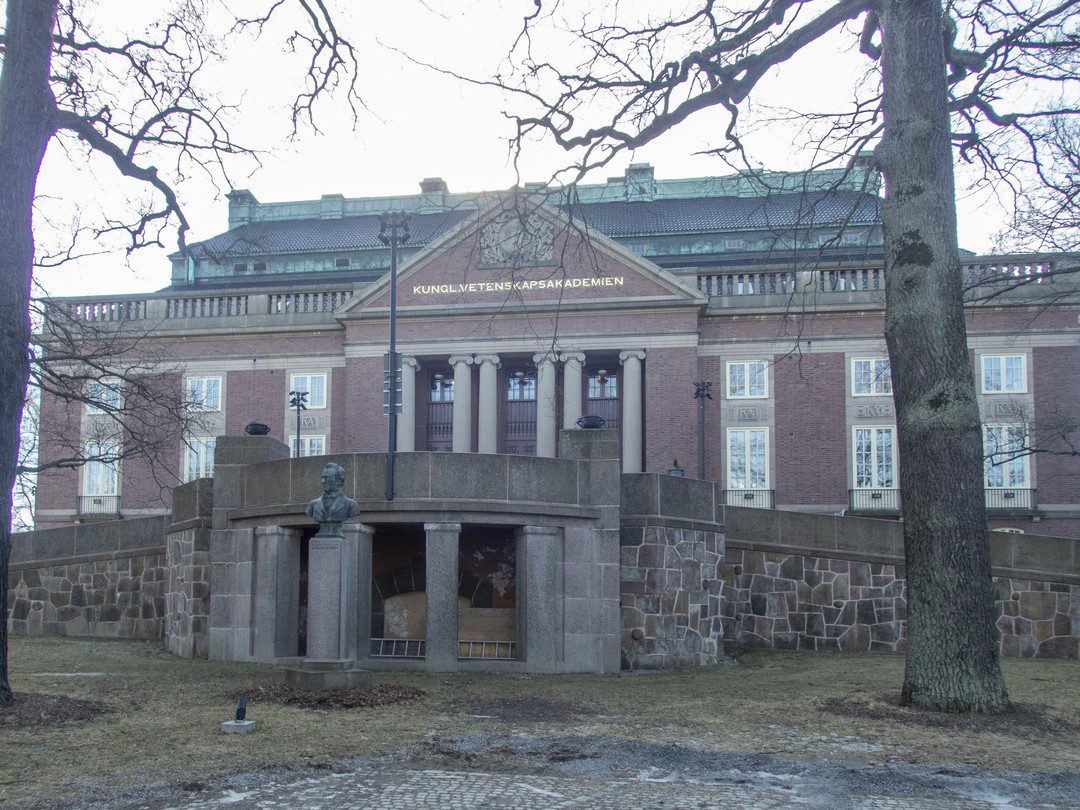
Who selects: The Royal Swedish Academy of Sciences, founded in 1739, chooses the Economics laureates (it also selects Physics and Chemistry). The Academy’s Committee for the Prize in Economic Sciences is chaired, per the 2026 release, by John Hassler.
Indian link: Amartya Sen received the prize in 1998 for his contributions to welfare economics, and Abhijit Banerjee shared it in 2019 with Esther Duflo and Michael Kremer for their experimental approach to alleviating global poverty.
Why it matters for India
India adopted a flexible inflation-targeting framework in 2016, when the Reserve Bank of India Act, 1934 was amended to provide for a statutory inflation target and a six-member Monetary Policy Committee (MPC). The MPC sets the policy repo rate to keep CPI inflation close to 4%, within a band of 2% to 6%. The logic — steer demand through the interest rate, anchor expectations through credible communication, watch the output gap — is the New Keynesian toolkit this year’s laureates helped build. When the RBI explains its stance in a policy statement or guides markets about future rates, it is acting on the insight that forward-looking households and firms respond to expected policy, not just current policy.
The prize is also timely for Indian readers because the same week brought fresh inflation data: CPI inflation for September 2026, released by MoSPI on 12 October, rose to 5.54%. How a central bank should react to a food-driven price rise — a supply-side shock — is exactly the kind of question Woodford’s framework is designed to answer.
The CLAT Angle
Nobel week is a CLAT GK staple. Expect direct one-liners: the names and universities (Hall – Stanford; Woodford – Columbia), the official name of the prize (Sveriges Riksbank Prize), the year it was first awarded (1969), and the fact that it is not among Nobel’s original five. Questions that pair a laureate with the wrong university or the wrong citation are common traps.
A passage-based GK question may also link the prize to Indian monetary policy: inflation targeting, the MPC, the 4% ± 2% band. Understanding the basic idea — that expectations drive consumption and pricing — helps you reason through such passages even when the facts are unfamiliar.
Analysis: from theory to the policy room
The 2026 prize rewards work that is decades old but sits at the heart of today’s policymaking. Hall’s 1978 insight gave economists a benchmark to measure how many households are forward-looking; Woodford’s 2003 synthesis gave central banks a workable model. Together they explain why modern central banks publish forecasts, hold press conferences and use “forward guidance”. The Academy’s committee chair summed it up by saying the laureates’ work has given a stable theoretical foundation to models now used worldwide, helping policymakers deal with shocks such as energy crises or sudden swings in household consumption.
For aspirants, the key is to separate the citation (what the Academy said) from commentary (how others interpret it) — CLAT questions are drawn from the former.
Key Facts
- Prize: Sveriges Riksbank Prize in Economic Sciences in Memory of Alfred Nobel 2026.
- Announced: Monday, 12 October 2026, by the Royal Swedish Academy of Sciences.
- Laureates: Robert E. Hall (Stanford University) and Michael Woodford (Columbia University).
- Citation: “for microeconomic foundations of macroeconomic stabilisation”.
- Prize money: 12 million Swedish kronor, shared equally.
- Hall: born 1943, Palo Alto; PhD MIT 1967; key 1978 article on consumption.
- Woodford: born 1955, Chicopee; PhD MIT 1983; 2003 book with the three-equation New Keynesian model.
- Key concepts: microfoundations, forward-looking expectations, sticky prices, natural rate of interest (Wicksell), output gap.
- Prize history: established 1968 by the Riksbank; first awarded 1969; not in Nobel’s 1895 will.
- Indian-origin laureates: Amartya Sen (1998), Abhijit Banerjee (2019, with Duflo and Kremer).
Memory Hook / Mnemonic
“HALL & WOOD build the house from the bricks up” — micro bricks (households and firms) build the macro house.
Hall = Households (consumption, 1978) · Woodford = Wicksell’s rate + the output gap (2003). Stanford and Columbia: “Smooth Cycles”. And the prize? 68 made, 69 paid — created 1968, first awarded 1969.
Practice Quiz — 10 CLAT-Style Questions
Click an option to reveal the answer and explanation.