DAILY NEWS WRAP | 17 OCTOBER 2026
ISRO has completed a series of Crew Module–Service Module (CM-SM) separation tests for the Gaganyaan human spaceflight programme, reported on 16 October 2026. The tests come ahead of the first uncrewed mission, G1, which is targeted this year.
What was tested
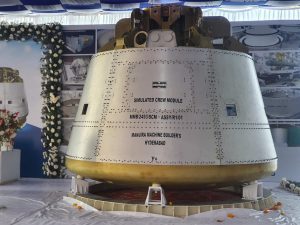
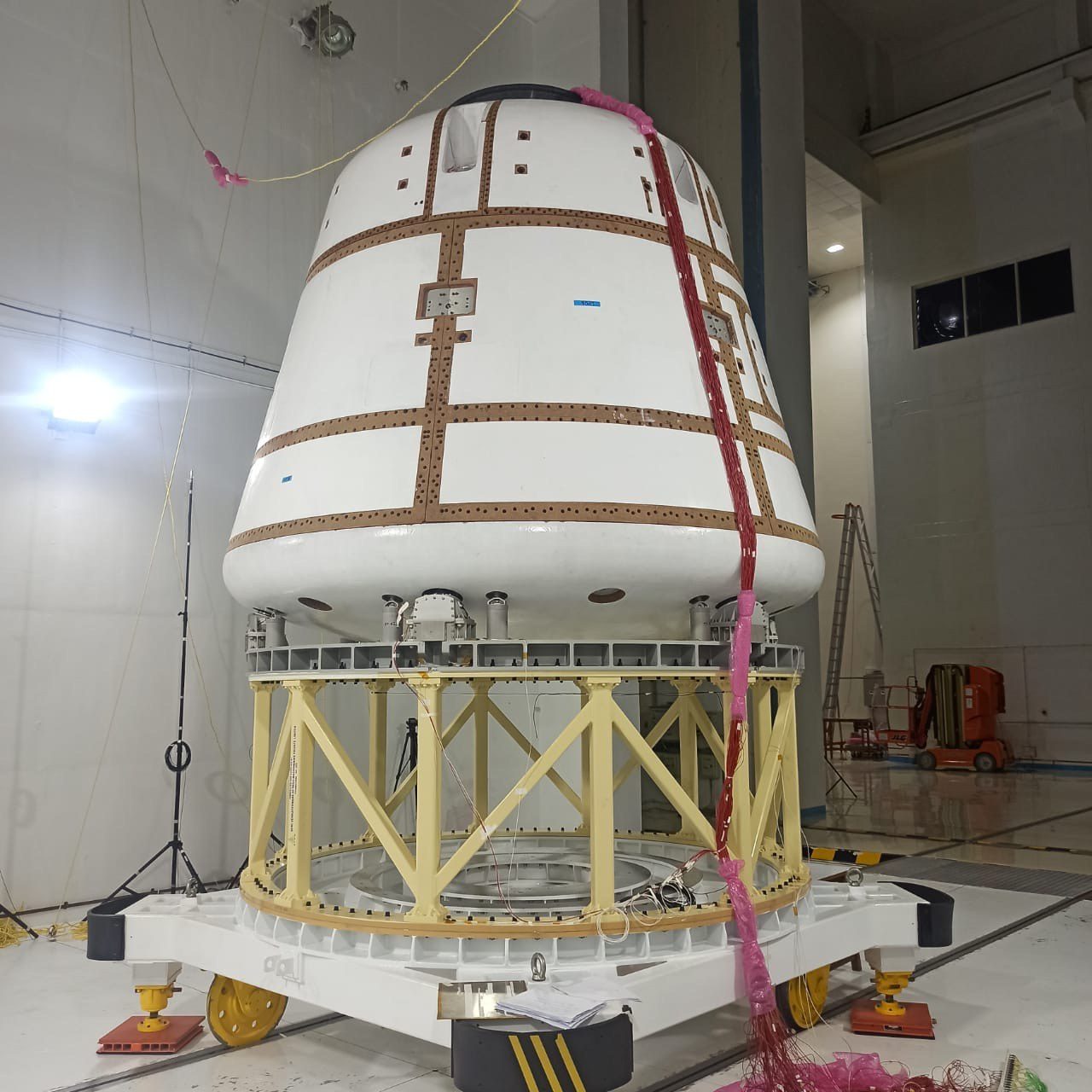
A Gaganyaan spacecraft has two main parts for the journey. The Crew Module is where the astronauts sit; the Service Module sits behind it and provides propulsion and supporting systems. Before the crew returns, the two must separate cleanly so that only the Crew Module comes back. ISRO has now completed a series of separation tests between the two. The test set-up was at VSSC, Thiruvananthapuram. The Hindu’s report of 16 October does not give the exact dates of the tests, only that they are complete.
A note on the source
This story rests on a single outlet’s report. It confirms that the tests are complete and that the first uncrewed mission is the next step; it does not give exact test dates or a launch date for G1 beyond “targeted this year”. For exam purposes, treat the completion of the tests, the name G1 and the mission profile as the settled facts, and do not add dates that the report does not give.
What comes next: G1
The next milestone is G1, the first uncrewed mission. A flight without astronauts lets the agency check how all the systems behave together before people are on board. Sub-system tests such as this separation series are the ground-based steps that come before such a flight.
The mission profile
The planned Gaganyaan mission has 3 astronauts, an orbit of 400 km, a duration of 3 days, and a splashdown in Indian waters. These four numbers are the core exam facts for the programme and are easy to remember as a single line: three, four hundred, three, then the sea.
How a CLAT passage might use this
Science and technology news is common in GK sections and in comprehension passages. Expect a matching question (which module carries the crew, which provides propulsion), a numbers question (crew, orbit, days), or a process question (why separation is tested before a flight). A passage might also ask what “uncrewed” means; the answer is simply a flight with no astronauts on board.
Constitutional, legal and institutional framework
- ISRO is India’s space agency and runs the Gaganyaan human spaceflight programme.
- The Crew Module (CM) carries the astronauts; the Service Module (SM) supplies propulsion and power on the way. They must separate cleanly before return.
- The separation tests were carried out at VSSC, Thiruvananthapuram, ahead of the first uncrewed mission, G1.
- Uncrewed first: G1 is a flight without astronauts, flown before any crewed mission.
CLAT angle
- GK: the mission profile of 3 astronauts, 400 km orbit, 3 days is a classic numbers question.
- Science passage: why a capsule and its supporting module must be separated, and why tests precede a flight.
- Match the pair: CM with astronauts, SM with propulsion; G1 with the uncrewed flight.
- Process logic: testing a sub-system on the ground before a flight is an application of risk reduction.
Key facts
| Fact | Detail |
|---|---|
| Tests completed | Crew Module to Service Module separation tests (reported 16 Oct 2026) |
| Test location | VSSC, Thiruvananthapuram |
| Next milestone | First uncrewed mission, G1 (targeted this year) |
| Crew | 3 astronauts |
| Orbit | 400 km |
| Duration | 3-day mission |
| Return | Splashdown in Indian waters |
| Programme | Gaganyaan, run by ISRO |
Memory hook
“Three, four hundred, three.” 3 astronauts, 400 km, 3 days: the Gaganyaan mission in six digits.
Sources
The Hindu (16 October 2026, Gaganyaan Crew Module–Service Module separation tests).
This is one story from today’s bulletin. Read the full wrap: Daily News Wrap, 17 October 2026.
Free in the CLAT Gurukul app
These notes (as a PDF lesson) and the 10-question CBT are in the app under Current Affairs → 17 Oct 2026. Get the app on Google Play or open app.clatgurukul.com.
Practice Quiz — 10 CLAT-Style Questions
Click an option to reveal the answer and explanation.