

CURRENT AFFAIRS | 09 OCTOBER 2026
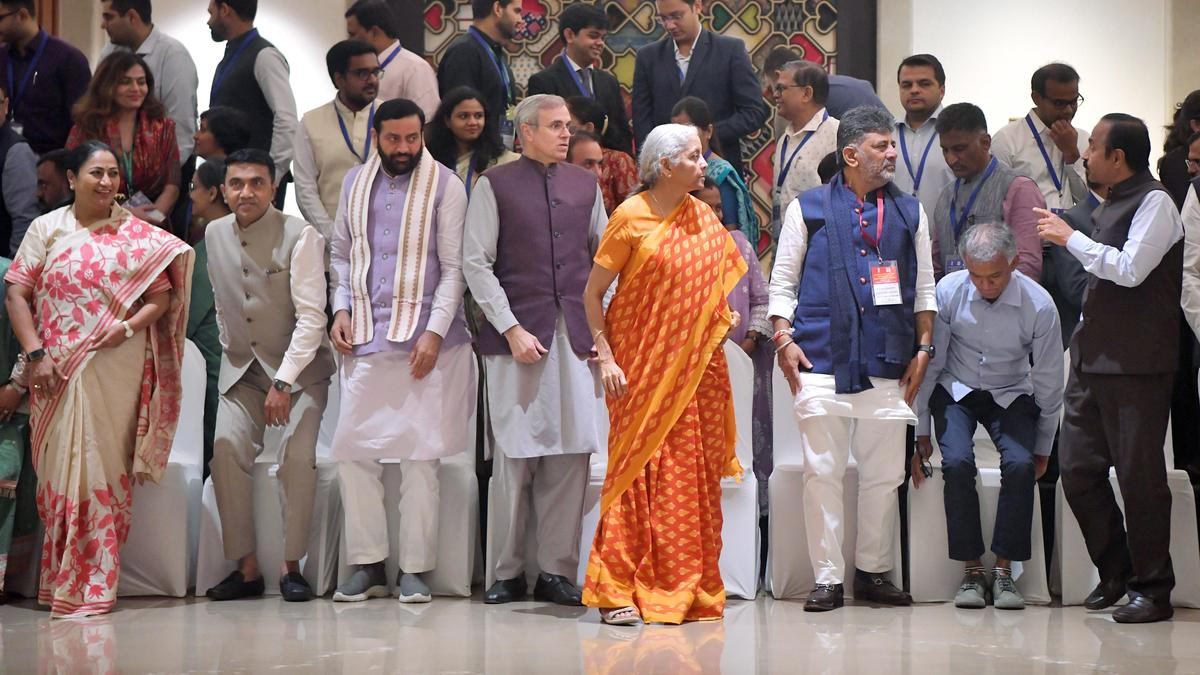
The GST Council, at its 57th meeting held in New Delhi on Thursday, 8 October 2026, has recommended the complete withdrawal of the power of GST officers to arrest taxpayers. According to the Press Information Bureau (PIB) release titled “Recommendations of the 57th Meeting of the GST Council” (Ministry of Finance, posted 8 October 2026), the Council “has recommended complete withdrawal of arrest powers under GST by omission of section 69 of CGST Act, 2017.” The meeting was chaired by Union Finance & Corporate Affairs Minister Nirmala Sitharaman.
In the same package, the Council recommended that “the monetary threshold for prosecution” be raised “from ₹1 crore to ₹5 crore”, and that the maximum general penalty under Section 125 of the CGST Act be cut from ₹25,000 to ₹10,000. The single most important word for an exam aspirant is “recommended”: none of this is law yet. The PIB release itself notes that the recommendations will be given effect through circulars, notifications and law amendments, “which alone shall have the force of law”.
What exactly did the Council recommend?
The arrest-and-prosecution changes sit under the heading “Ease of living and doing business” in the PIB release. Paragraph 11 lists them in two parts:
- Arrest (para 11.1): omit Section 69 of the Central Goods and Services Tax (CGST) Act, 2017 — the provision that allows a Commissioner to authorise the arrest of a person.
- Prosecution (para 11.2): raise the prosecution threshold from ₹1 crore to ₹5 crore; omit clause (i) of Section 132(1); delete the words “evades tax” from clause (e) and “or in any other manner deals with” from clause (h); restrict clause (c) to fraudulent availment of input tax credit (ITC) without receipt of goods or services, or without an invoice or bill; and rationalise the amount of punishment for offences under Section 132.
The stated aim, in the release’s words, is “a progressive and trust-based tax regime, while retaining effective deterrence against fraud and evasion”. Speaking at the post-meeting press conference, Ms. Sitharaman said the process reforms “have been driven by the principle of trust”, as reported by The Hindu.
The wider 57th Council package
The arrest decision was one item in a long list of process reforms. The Hindu noted that the Council met more than a year after its previous meeting in September 2025, which had rationalised rates and reduced the number of tax slabs. This time, the Finance Minister said, no GST rates were changed. Other recommendations in the PIB release include:
- a minimum threshold of ₹10,000 for issuing show-cause notices under Sections 73, 74 and 74A — no notice if the tax involved is below ₹10,000;
- faster, system-based refunds, with the time for acknowledgement cut from 15 days to 10 days;
- e-way bill reform: a vehicle may be intercepted only on specific intelligence and with authorisation from an officer not below the rank of Joint Commissioner, with no interception in transit States;
- in-principle approval of a concept note for an optional Annual Return Quarterly Payment (ARQP) scheme for B2C businesses with turnover up to ₹5 crore.
On timing, The Hindu reports that the Finance Minister said all the changes are expected to come into effect from 1 April 2027. The PIB release, however, fixes no commencement date for the arrest and prosecution items, which need amendments to the CGST Act.
Constitutional / Legal Framework
GST Council: a constitutional body under Article 279A, inserted by the Constitution (101st Amendment) Act, 2016. The same amendment inserted Article 246A, which gives Parliament and State legislatures simultaneous power to make laws on goods and services tax. GST itself came into force on 1 July 2017.
Composition (Art 279A): the Union Finance Minister is the Chairperson; members include the Union Minister of State in charge of Revenue or Finance and the Finance (or other nominated) Minister of each State. Quorum is one-half of the total members. A decision needs three-fourths of the weighted votes of members present and voting, with the Centre’s vote weighted at one-third and all States together at two-thirds — so neither side can carry a decision alone.
Section 69, CGST Act (current law): the Commissioner may authorise an officer to arrest a person if he has “reasons to believe” that the person has committed specified offences under Section 132; the arrested person must be informed of the grounds and produced before a Magistrate within 24 hours.
Section 132 (current law): punishment is tiered by the amount of tax involved — up to five years where it exceeds ₹5 crore, up to three years between ₹2 crore and ₹5 crore, and up to one year in the ₹1–2 crore band. Offences in the top tier involving the core clauses are cognisable and non-bailable (Section 132(5)); others are non-cognisable and bailable. The Finance Act, 2023 had already raised the general prosecution floor from ₹1 crore to ₹2 crore, keeping the ₹1 crore band only for fake invoicing — which is why the PIB release speaks of ₹1 crore as the starting point.
Why this needs Parliament, not just the Council
The GST Council is a recommendatory body. In Union of India v. Mohit Minerals (2022), the Supreme Court held that the Council’s recommendations have persuasive value and do not bind Parliament or State legislatures, because Article 246A confers simultaneous legislative power and Article 279A contains no non-obstante clause. Section 69 is a provision of the CGST Act, an Act of Parliament, so only Parliament can delete it. Each State would also have to amend its own State GST (SGST) Act for the change to apply uniformly.
The recommendation also has to be read alongside Radhika Agarwal v. Union of India, decided by a three-judge bench of the Supreme Court on 27 February 2025. The Court upheld the validity of the arrest and summons provisions (Sections 69 and 70) of the CGST Act, but laid down safeguards: arrest cannot rest on mere suspicion; the Commissioner’s “reasons to believe” must be recorded and based on material; the safeguards of the criminal procedure code apply; and anticipatory bail can be sought even before an FIR. The Court also held that GST officers are not “police officers”. In other words, the Supreme Court found the arrest power valid but subject to strict limits; the Council now proposes to remove it through legislation.
Analysis: what changes, and what does not
What changes: If Parliament acts, tax officers will no longer be able to authorise arrests under the GST law. The higher prosecution threshold would mean that criminal proceedings are reserved for larger cases, and smaller disputes are settled through tax, interest and penalty. This fits a broader trend of decriminalising economic and regulatory offences, where civil consequences replace jail terms for technical or minor defaults.
What does not change: Prosecution itself survives above the new threshold, and the release says deterrence against “fraud and evasion” is retained. Clause (c) of Section 132(1) is narrowed, not removed, so availing fake input tax credit without receiving goods or services remains an offence.
The debate: Supporters see a trust-based system that reduces harassment and litigation. Critics of decriminalisation in general argue that weaker penalties may embolden large-scale invoice frauds. The Council’s answer is the higher threshold paired with retained prosecution for serious fraud. For a CLAT reader, this is a balance between personal liberty (Article 21) and the State’s interest in collecting revenue.
The CLAT Angle
Legal Reasoning: a passage may state the principle that a recommendation of the GST Council is not binding on Parliament, then ask whether Section 69 stands repealed the day after the meeting. Correct answer: no — the law changes only when Parliament amends the CGST Act.
Polity GK: expect direct questions on Article 279A, the 101st Amendment (2016), the Finance Minister as chairperson, and the 3/4 voting rule with the 1/3 – 2/3 split between Centre and States.
Critical Reasoning: “Removing arrest powers will increase tax evasion” — identify the assumption (that fear of arrest, not prosecution or penalty, is the main deterrent) and what weakens it (prosecution and penalties remain for serious fraud).
Trap to avoid: do not write “GST arrest powers abolished” as a completed fact. As of 9 October 2026, it is a recommendation.
Key Facts
- Meeting: 57th GST Council, New Delhi, 8 October 2026.
- Chair: Union Finance Minister Nirmala Sitharaman.
- Arrest: recommended omission of Section 69, CGST Act, 2017.
- Prosecution threshold: recommended rise from ₹1 crore to ₹5 crore.
- General penalty (s.125): maximum cut from ₹25,000 to ₹10,000.
- Show-cause notices: none below ₹10,000 of tax.
- Status: recommendation only; needs amendment to the CGST Act by Parliament.
- Source: PIB release “Recommendations of the 57th Meeting of the GST Council”, 8 October 2026.
- GST Council: Article 279A, 101st Amendment Act, 2016.
- Voting: 3/4 of weighted votes; Centre 1/3, States 2/3.
- Key cases: Mohit Minerals (2022) — recommendations persuasive; Radhika Agarwal (27 Feb 2025) — arrest powers upheld with safeguards.
Memory Hook / Mnemonic
“57 says Sixty-Nine must go — but Parliament must say so.” The 57th Council recommends deleting Section 69; only Parliament can do it (Mohit Minerals). For the numbers, think “1 → 5, 25 → 10”: prosecution threshold ₹1 crore to ₹5 crore; general penalty ₹25,000 to ₹10,000. For the Council itself: 279A-101-1/3 — Article 279A, 101st Amendment, Centre holds one-third of the vote.
Practice Quiz — 10 CLAT-Style Questions
Click an option to reveal the answer and explanation.






