Watch the video explainer · open on YouTube
VIDEO EXPLAINER | 5 OCTOBER 2026
From 1 October 2026, India’s largest refiners, Indian Oil, Reliance, BPCL and HPCL-Mittal, began hiring tankers to sail into the Gulf and load crude. That means crossing the Strait of Hormuz, the same 34-kilometre passage that was shut eight months earlier, sending oil past US$100 a barrel. Why would refiners send ships back into a waterway where Indian sailors were killed only months ago? This explainer sets out the geography, the crisis, the three changes that reopened the route and what India keeps in reserve if it closes again.
1. Why Hormuz matters
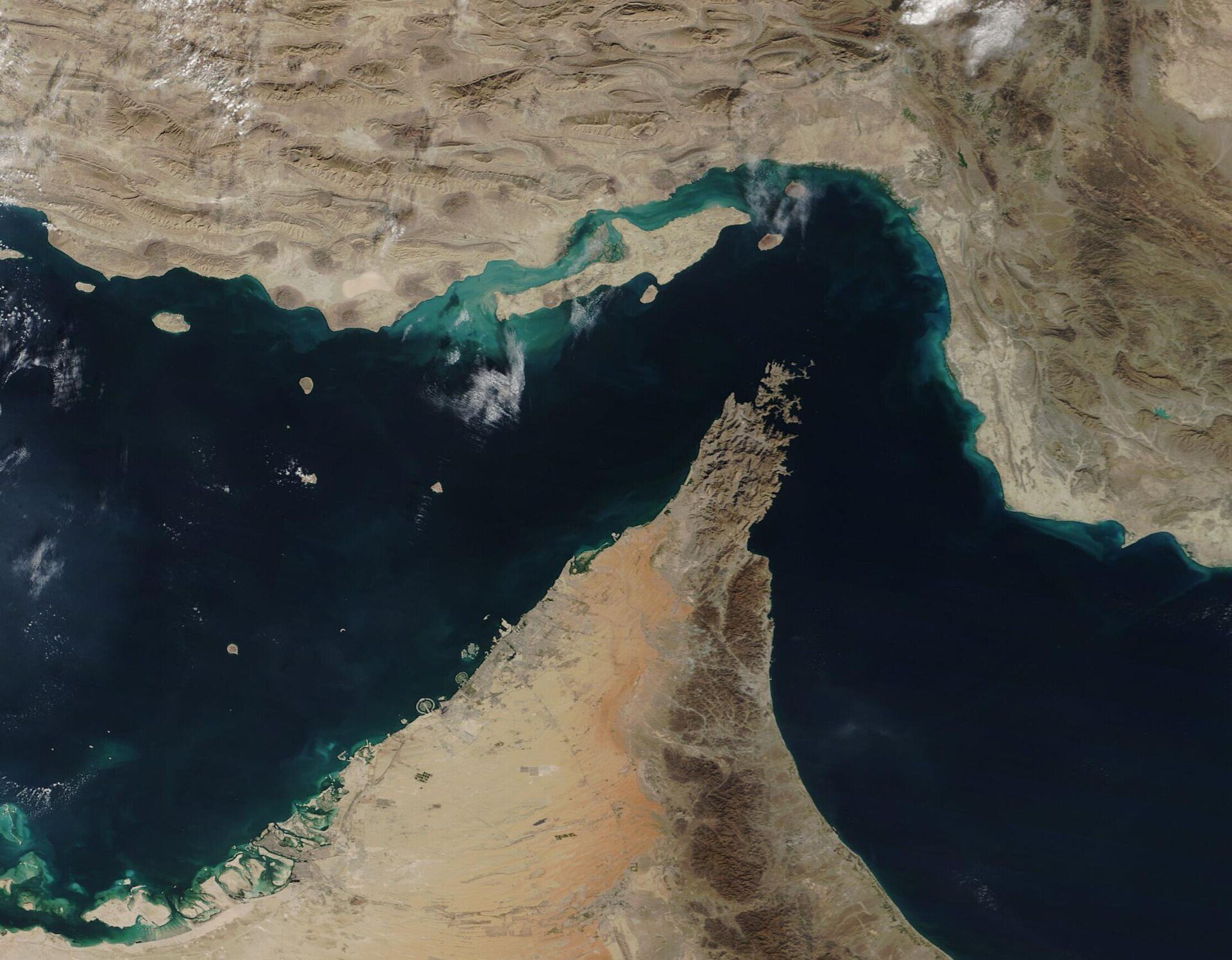
The Strait of Hormuz links the Persian Gulf to the Gulf of Oman and the open sea. It runs between Iran to the north and Oman’s Musandam peninsula to the south, and at its narrowest it is only about 34 km wide. On a normal day it carries about 20 million barrels of oil. The US Energy Information Administration puts the flow at 20.9 million barrels a day in the first half of 2025, roughly one-fifth of world petroleum liquids consumption and about a quarter of all seaborne oil.
For India the stake is direct. About 60% of the LPG India consumes is imported, and about 90% of those LPG imports pass through Hormuz. More than half of India’s LNG also comes through the strait, from Qatar. In plain terms, nearly nine of every ten imported LPG cylinders depend on this one passage.
2. The crisis of 2026
On 28 February 2026, the United States and Israel struck Iran. The same day, Iran’s Revolutionary Guards issued radio warnings to shipping. Attacks on tankers followed from 1–2 March, a closure was declared on 2 March, and sea mines were reported by 10 March. By March, traffic through the strait had fallen to almost zero. Brent crude crossed US$100 a barrel on 8 March for the first time in four years and peaked at about US$126.
The human cost reached India too. Indian seafarers were among those killed in attacks on merchant ships, including three in July, and by mid-July India had barred its seafarers from Hormuz voyages altogether.
3. Three things changed
One: the consent rule. A circular dated 5 August 2026 from India’s shipping regulator replaced the ban. Ship owners must now obtain each Indian seafarer’s consent before a Hormuz voyage and report the transit. An Indian sailor crosses only if he agrees to.
Two: the mines. On 25 August the US Navy confirmed it had cleared more than 100 suspected mines from the strait.
Three: the price. Iraq, through SOMO, offered discounts of up to US$37 a barrel below regional benchmarks for October supplies to buyers willing to collect the oil themselves.
Together these explain the turn of 1 October: Indian refiners began chartering tankers to go in and load, with tenders reported to shipowners such as Sinokor and Dynacom.
4. The effect, and the risk that remains
The shift is already visible. According to Kpler data, India’s crude imports in September 2026 reached 5.26 million barrels a day, the highest of the year, and imports from West Asia rose 74% in a single month, from 1.21 to 2.10 million barrels a day.
The danger has not passed: sporadic attacks continued into September and October. If Hormuz shuts again, India’s cushion is its strategic petroleum reserve, run by Indian Strategic Petroleum Reserves Ltd (ISPRL). It is stored in underground rock caverns at Visakhapatnam (1.33 MMT), Mangaluru (1.5 MMT) and Padur (2.5 MMT), a total of 5.33 million tonnes (36.92 million barrels), enough for about 9.5 days of consumption.
Institutional framework
- Strait of Hormuz: between Iran and Oman (Musandam); links the Persian Gulf to the Gulf of Oman; about 34 km wide at its narrowest.
- Seafarer consent circular (5 Aug 2026): issued by India’s shipping regulator; replaced the mid-July ban with a consent-and-reporting rule.
- ISPRL: manages India’s strategic petroleum reserve in rock caverns at Visakhapatnam, Mangaluru and Padur.
- SOMO (Iraq): offered discounts of up to US$37 a barrel for October supplies.
- US Energy Information Administration: the source of the standard estimate of oil flow through world chokepoints.
The CLAT angle
- GK staple: Hormuz lies between Iran and Oman and joins the Persian Gulf to the Gulf of Oman.
- Know the three strategic reserve sites: Visakhapatnam, Mangaluru, Padur; total 5.33 MMT, about 9.5 days.
- A passage can test cause and effect: closure of a chokepoint, then near-zero traffic, then Brent above US$100.
- A reasoning item can turn on the consent rule: a seafarer’s free consent as the condition for a risky voyage.
- Simple data interpretation: 1.21 to 2.10 million barrels a day is a rise of about 74%.
Key facts
| Fact | Detail |
|---|---|
| Width at narrowest | About 34 km |
| Normal oil flow | About 20 million barrels a day; roughly one-fifth of world consumption |
| India’s LPG via Hormuz | About 90% of LPG imports |
| Trigger | US–Israel strikes on Iran, 28 Feb 2026 |
| Brent peak | About US$126 a barrel |
| Consent circular | 5 Aug 2026 |
| Mines cleared | 100+ suspected mines (US Navy, 25 Aug) |
| Iraq’s discount | Up to US$37 a barrel |
| Sept 2026 crude imports | 5.26 million barrels a day, a 2026 high |
| Strategic reserve | 5.33 MMT, about 9.5 days |
Memory hook
“I-O gate, 20 a day, V-M-P to save.” Iran and Oman guard the gate; about 20 million barrels a day pass through it; and if it shuts, India falls back on Visakhapatnam, Mangaluru and Padur.
Sources
US Energy Information Administration, World Oil Transit Chokepoints; Wikipedia, “2026 Strait of Hormuz crisis”; India Briefing (2026) on India’s LPG and LNG imports; Gulf Business and The National (6 Aug 2026) on the seafarer ban and consent circular; Rigzone/Bloomberg and Business Standard (1 Oct 2026) on the refiners’ tanker hiring and Iraq’s discounts; Kpler data via Sunday Guardian on September imports; ISPRL on the strategic petroleum reserve.
Related: a later Hormuz incident, covered in our daily newspaper →
Free in the CLAT Gurukul app
These notes (as a PDF lesson) and the 10-question CBT are in the app under Current Affairs → 5 Oct 2026. Get the app on Google Play or open app.clatgurukul.com.
Practice Quiz — 10 CLAT-Style Questions
Click an option to reveal the answer and explanation.