

CURRENT AFFAIRS | 09 OCTOBER 2026
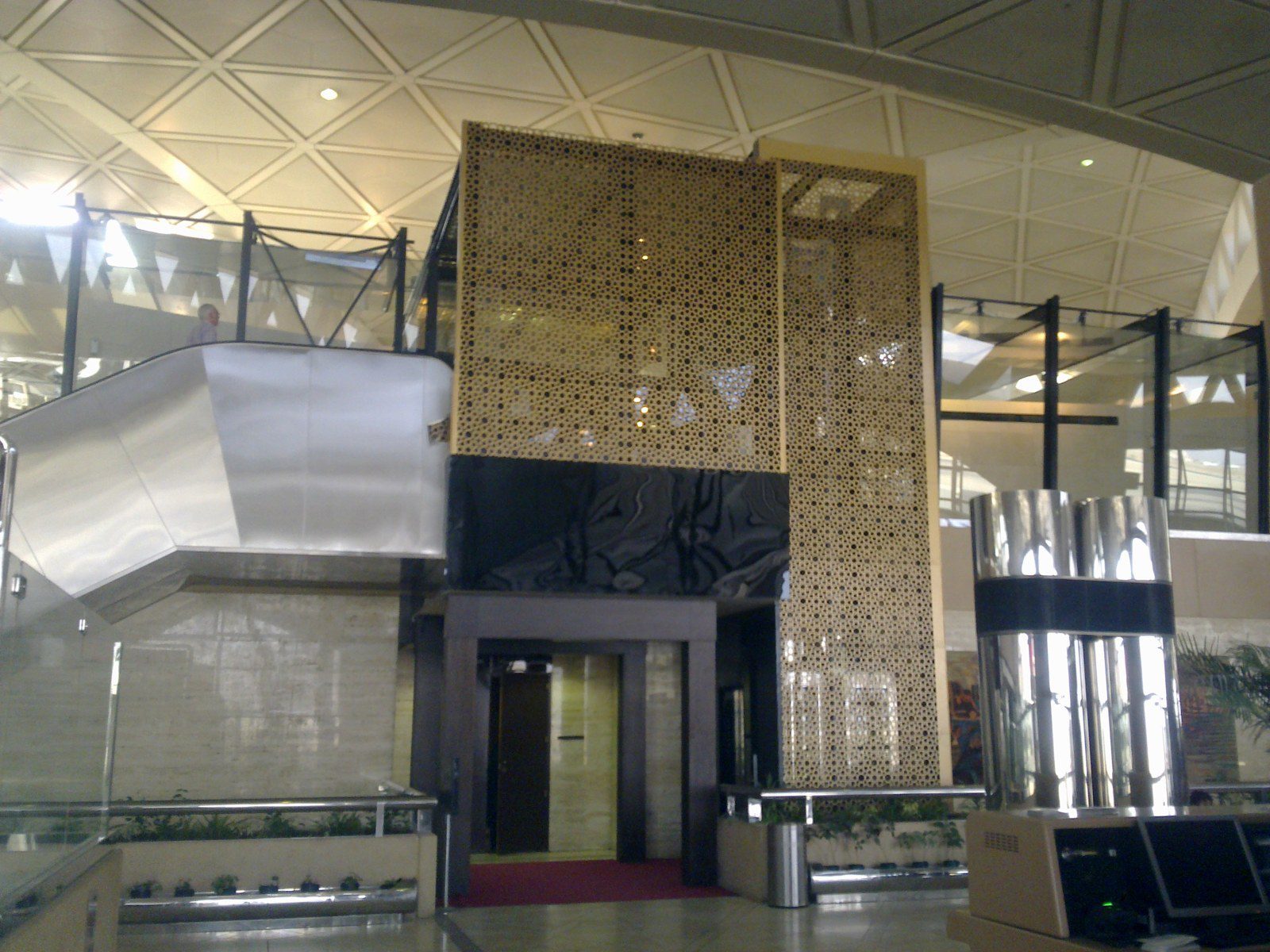
On Thursday, 8 October 2026, Yemen’s Houthi rebels claimed a fresh attack on King Khalid International Airport in Riyadh, the capital of Saudi Arabia. According to The Hindu, which carried an Associated Press report, several explosions were heard in Riyadh that day, including a large blast at the city’s international airport. The Iran-backed Houthis said a ballistic missile had caused damage, but gave no evidence, and the Saudi side had no immediate comment on the claim. The attack came a day after the kingdom said an earlier strike on the same airport had killed one person and wounded others — a figure carried by both The Hindu and The Times of India.
The fallout reached India within hours. An Air India flight, AI2243, from Delhi to Riyadh turned back mid-air and returned to Delhi. The Indian Express reported, citing flight-tracking data, that the aircraft left Delhi at about 2:40 pm, turned around after flying for about two hours and landed back in Delhi at about 6:45 pm. Air India said the flight returned “in the best interest of the safety of passengers and crew”; it was then cancelled and full refunds were offered.
What happened on 8 October
The Hindu’s report sets out the sequence on the Saudi side:
- The spokesperson for the Saudi-led coalition fighting the Houthis, Maj. Gen. Turki al-Malki, said the coalition intercepted and destroyed two ballistic missiles fired towards Riyadh, and one fired towards Khamis Mushait in the south-west, near the Yemen border.
- Saudi Arabia’s civil defence agency said fragments of an intercepted missile fell in Riyadh and damaged a kindergarten and a medical clinic complex, without saying whether anyone was hurt.
- The airport asked passengers to contact their airlines and check their flight status before travelling to the airport.
- Early that day, the Houthis warned global airlines “for the last time” about operating in Saudi airspace, which the group called a theatre for its military operations.
The Houthis have repeatedly claimed attacks on Saudi airports, military sites and oil facilities in recent days. Reports quoted the group’s military spokesperson, Yahya Saree, as saying it had used ballistic missiles and drones against Saudi airports. The latest strikes come amid renewed fighting in Yemen between the Saudi-backed government forces and the Houthis.
Indian airlines suspend Riyadh flights
According to The Indian Express, three Indian carriers suspended Riyadh operations on 8 October:
- Air India and Air India Express cancelled flights to and from Riyadh until 10 October, offering refunds or free rescheduling.
- IndiGo cancelled all flights to and from Riyadh until 9 October, citing the security situation in the region.
- Akasa Air cancelled its two Kochi–Riyadh flights scheduled for 8 October.
News18 separately confirmed the Air India turn-back and the suspension of Air India and Air India Express services until 10 October. The Times of India also reported that India’s Ministry of External Affairs condemned the attacks on Abha and King Khalid International Airports, calling the targeting of civilian infrastructure “completely unacceptable” and expressing solidarity with the people and government of Saudi Arabia.
Background & Framework
Who are the Houthis? The Houthis, officially known as Ansar Allah (“supporters of God”), are an armed political movement that emerged in Yemen in the 1990s and take their name from the al-Houthi family that leads them. They are backed by Iran. Since 2015 they have fought a Saudi-led military coalition that backs Yemen’s internationally recognised government.
Geography. Yemen sits at the south-western tip of the Arabian Peninsula and borders Saudi Arabia to the north and Oman to the east. Its western coast faces the Red Sea, and its south-western corner overlooks the Bab-el-Mandeb strait, which links the Red Sea to the Gulf of Aden and the Arabian Sea. Ships between the Suez Canal and the Indian Ocean must pass through this narrow strait.
Red Sea shipping and the UN. Houthi attacks on merchant ships in the Red Sea led the UN Security Council to adopt Resolution 2722 on 10 January 2024, which called on the Houthis to stop attacking merchant and commercial vessels at once and to release the captured ship Galaxy Leader and its crew. Four members — Algeria, China, Mozambique and Russia — abstained.
Why it matters for India
The episode shows how quickly a conflict in West Asia can reach Indian citizens. The Gulf is home to a large Indian community, and Riyadh is a busy route for Indian airlines; a single missile claim was enough to send one flight back and suspend services by three Indian carriers. For policymakers, the key concerns are the safety of Indian nationals, the security of air and sea routes, and the stability of energy supplies from the Gulf.
India’s response, as reported, follows a familiar pattern: it condemned attacks on civilian infrastructure and expressed solidarity with Saudi Arabia, without taking a side in Yemen’s internal war. That balance reflects India’s close ties with both Saudi Arabia and Iran. A student should note the distinction: India condemns the act (targeting civilians and airports) in the language of international humanitarian law, rather than naming a party to the conflict as an enemy.
The CLAT Angle
West Asia appears regularly in the Current Affairs including General Knowledge section. A passage built on this story could test:
- Map-based GK: Bab-el-Mandeb links the Red Sea and the Gulf of Aden; Yemen borders Saudi Arabia and Oman; Riyadh is the Saudi capital.
- Actors: the Houthis = Ansar Allah, Iran-backed; the Saudi-led coalition backs Yemen’s recognised government.
- UN law: UNSC Resolution 2722 (2024) on Houthi attacks on merchant shipping, and the idea that civilian objects such as airports are protected in armed conflict.
- Reasoning: a claim by one side (“the missile caused damage”) is not the same as a verified fact — a passage may ask which statement is supported and which is only alleged.
Watch for the trap of treating a claim of responsibility as proof. The Hindu’s report notes that the Houthis gave no evidence and the Saudis made no immediate comment — an inference question could turn on exactly that point.
The larger picture
The Houthis first drew wide global attention for attacks on Red Sea shipping, which forced many vessels to avoid the Suez route. The October strikes shift the focus to civil aviation inside Saudi Arabia. A warning to “all global airlines” turns a regional war into a direct risk for commercial travel, and airlines respond by cancelling flights rather than taking chances. For India, whose workers, pilgrims and businesses depend on Gulf air links, the immediate cost is disrupted travel; the longer-term concern is whether the region’s air and sea lanes stay open.
Key Facts
- Date: Thursday, 8 October 2026 — Houthis claimed a new attack on Riyadh’s airport.
- Target: King Khalid International Airport, Riyadh, Saudi Arabia.
- Weapon claimed: a ballistic missile; no evidence offered by the Houthis.
- Interceptions: two ballistic missiles towards Riyadh and one towards Khamis Mushait, per coalition spokesperson Maj. Gen. Turki al-Malki.
- Damage: missile fragments hit a kindergarten and a medical clinic complex in Riyadh.
- Earlier strike: one person killed at the same airport, per the kingdom’s statement a day earlier.
- Air India: flight AI2243 (Delhi–Riyadh) turned back to Delhi; Air India and Air India Express suspended Riyadh flights until 10 October.
- IndiGo: Riyadh flights cancelled until 9 October; Akasa Air cancelled two Kochi–Riyadh flights.
- Houthis: officially Ansar Allah; Iran-backed; fighting a Saudi-led coalition since 2015.
- Bab-el-Mandeb: strait linking the Red Sea and the Gulf of Aden.
- UNSC Resolution 2722: adopted 10 January 2024 on Houthi attacks on merchant ships.
Memory Hook / Mnemonic
“HOUTHI” — Hit claimed on Riyadh airport (8 Oct), Officially Ansar Allah, UN Resolution 2722 (2024), Turned back: AI2243 to Delhi, Houthi–Saudi coalition war since 2015, Iran-backed.
Map hook: “Bab = the gate” — Bab-el-Mandeb is the gate between the Red Sea and the Gulf of Aden.
Practice Quiz — 10 CLAT-Style Questions
Click an option to reveal the answer and explanation.






