CURRENT AFFAIRS | 14 OCTOBER 2026
India is building a dedicated research institution to study what thin air, extreme cold and isolation do to the human body. On Monday, 12 October 2026, the Union Ministry of Health and Family Welfare laid the foundation stone of the ICMR Centre for High Altitude Medicine and Public Health Research at Keylong, in the Lahaul and Spiti district of Himachal Pradesh. A Press Information Bureau (PIB) release posted at 4:03 PM on 12 October 2026 reported the event.
The Centre is a joint effort of the Indian Council of Medical Research (ICMR) and the Armed Forces Medical Services (AFMS), with AIIMS Bilaspur also taking part. It will serve two groups who share the same harsh environment: the tribal and Himalayan communities who live at altitude, and the soldiers posted in some of the world’s most demanding high-altitude terrain. For CLAT, the story links science and technology GK with the constitutional idea of a right to health and the State’s duty to reach remote and border populations.
What was announced
According to the PIB release, the Centre will build on the field station ICMR set up at Keylong nearly a decade ago. It will become a permanent, year-round institution with state-of-the-art laboratories and specialised staff. Its central mandate is to “generate evidence on the health effects of high altitude, low oxygen levels, extreme cold and changing climatic conditions”.
The release lists the main research areas:
- altitude-related health risks and acclimatisation;
- maternal and newborn health;
- child growth and nutrition;
- disease patterns in Himalayan communities;
- how drone-enabled medicine delivery, digital health and artificial intelligence can improve healthcare in remote, hard-to-reach areas.
The evidence is meant to inform healthcare practice for personnel deployed at high altitude, and to improve health services for communities in India’s Himalayan and border regions. The release names Himachal Pradesh, Ladakh, Jammu & Kashmir, Uttarakhand, Sikkim and Arunachal Pradesh.
Outlining the Centre’s vision, Dr Rajiv Bahl, Secretary of the Department of Health Research and Director General of ICMR, said Keylong would be “a place where the laboratory and the community meet”, with local people as partners in research and the goal of “better health, not just research papers”. The Armed Forces Medical Services, the release adds, expect the research to turn findings into practical protocols for acclimatisation, early detection and treatment.
Other steps were also taken at the ceremony. Native Himalayan saplings were planted under the Green ICMR Campus Initiative. A scientific exhibition for school students was opened, and the Centre’s website and institutional video were launched. A commemorative postal special cover was also released.
The science: why altitude is a health problem
As one climbs, air pressure falls, so each breath carries less oxygen. This state is called hypoxia. The body responds through acclimatisation: faster breathing, a higher heart rate and, over weeks, more red blood cells. When the ascent is too fast, the response can fail. The best-known altitude illnesses are acute mountain sickness (AMS), and two rarer, life-threatening conditions: high-altitude pulmonary oedema (HAPE), which is fluid in the lungs, and high-altitude cerebral oedema (HACE), which is swelling of the brain. Add severe cold, strong ultraviolet light, and months of isolation when passes close in winter, and ordinary health issues — pregnancy, childbirth, child nutrition — take on a different risk profile.
The PIB release stresses that India needs its own scientific evidence on Himalayan health. Much of the existing research on altitude physiology comes from other mountain populations and settings. A year-round centre at Keylong, close to the communities and deployments it studies, is meant to fill that gap.
Background & Framework
ICMR: India’s apex body for biomedical research. According to ICMR’s own history page, its forerunner, the Indian Research Fund Association (IRFA), was set up by Sir Harcourt Butler on 15 November 1911. It was renamed the Indian Council of Medical Research in 1949. Its headquarters is at Ansari Nagar, New Delhi. ICMR works under the Department of Health Research (DHR), which was created in the Ministry of Health and Family Welfare in 2007. The Secretary of DHR is also the Director General of ICMR.
Constitution: the Supreme Court has read the right to health into the right to life under Article 21, for example in Paschim Banga Khet Mazdoor Samity v State of West Bengal (1996). Article 47 (a Directive Principle) makes improving public health one of the State’s primary duties. “Public health and sanitation; hospitals and dispensaries” is a State List subject, while Union institutions such as ICMR fund and coordinate research across the country.
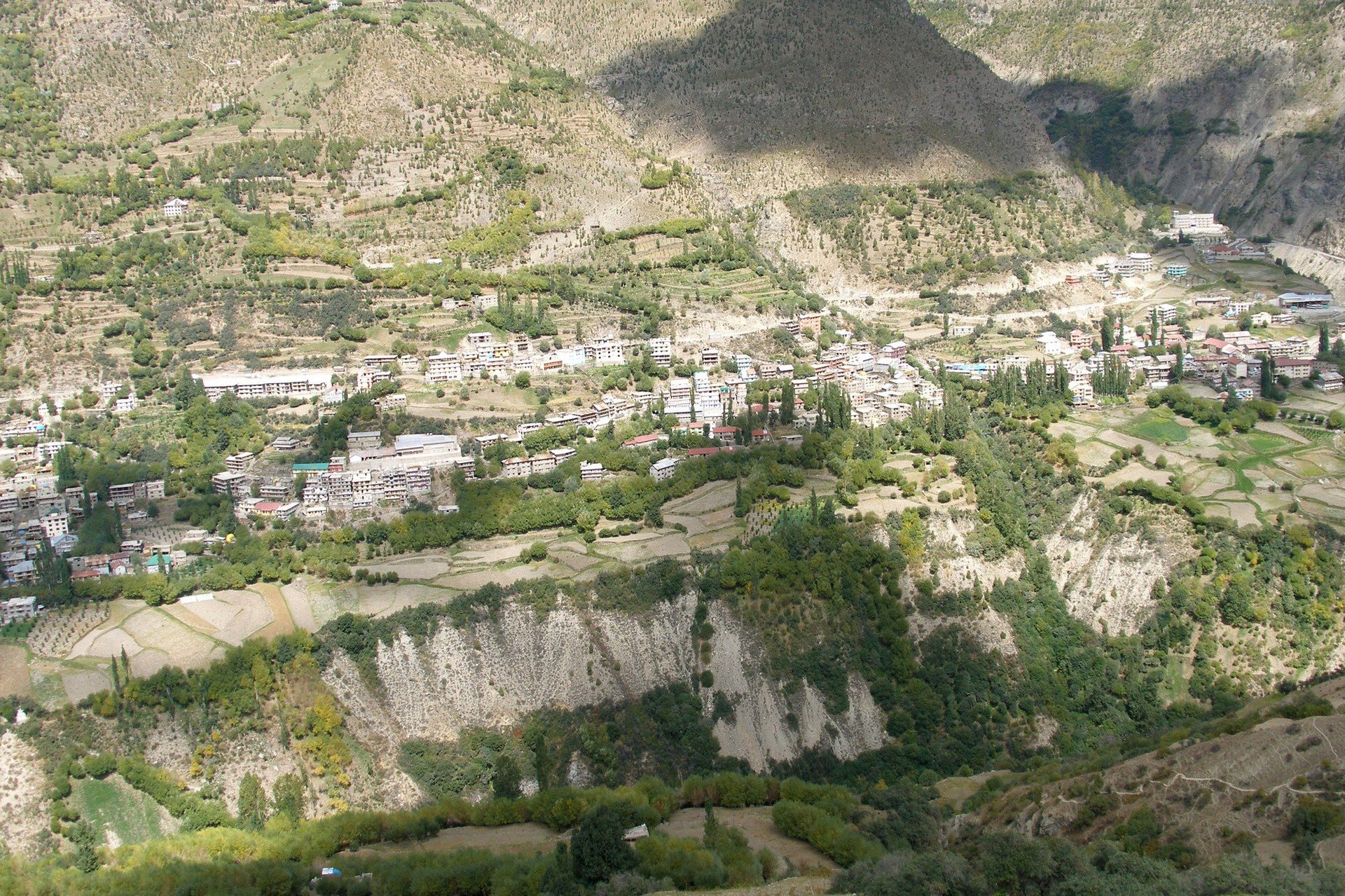
Region: Keylong is the headquarters of the Lahaul and Spiti district, in the Bhaga valley. Lahaul and Spiti is a tribal district and is notified as a Scheduled Area under the Fifth Schedule.
Analysis: civil–military research as public policy
The most interesting feature of the Keylong Centre is its dual constituency. Armed forces doctors have long, hard-won experience of altitude illness among troops. Civilian researchers bring epidemiology, mother-and-child health and community studies. Putting both in one institution, with AIIMS Bilaspur adding clinical data from patients, can shorten the path from findings to practice. A protocol tested on soldiers can help a trekker or a herder, and a nutrition study of village children can shape how rations are planned.
There are open questions too. A centre in a district cut off for long stretches of winter must keep scientists and equipment working all year; the release’s stress on a “year-round” institution shows this is the core challenge. Research on tribal communities also brings ethical duties: informed consent, data protection and benefit-sharing. Dr Bahl’s description of local people as “partners in research” points the right way. Finally, the promise of drones and AI for last-mile health delivery has to be tested against cost, weather and regulation — exactly the kind of evidence such a centre should produce.
The CLAT Angle
GK: expect questions on the location (Keylong, Lahaul and Spiti, Himachal Pradesh), the partners (ICMR, Armed Forces Medical Services, AIIMS Bilaspur), the parent body (ICMR under the Department of Health Research) and ICMR’s origin (IRFA, 1911; renamed 1949).
Science basics: hypoxia, acclimatisation, AMS / HAPE / HACE — useful for science-based reading passages.
Legal reasoning: a passage on whether the State owes a positive duty to provide healthcare in remote areas can draw on Article 21 (right to health), Article 47, and the special protection of Scheduled Areas. It can also raise questions of research ethics and informed consent for tribal participants.
Key Facts
- Event: foundation stone of the ICMR Centre for High Altitude Medicine and Public Health Research laid on 12 October 2026.
- Location: Keylong, Lahaul and Spiti district, Himachal Pradesh.
- Source: PIB (Ministry of Health and Family Welfare), posted 12 October 2026, 4:03 PM.
- Partners: ICMR and the Armed Forces Medical Services, with AIIMS Bilaspur.
- Origin: builds on an ICMR field station set up at Keylong nearly a decade ago.
- Nature: a permanent, year-round institution with state-of-the-art laboratories.
- Research focus: altitude risks, acclimatisation, maternal and newborn health, child growth and nutrition, disease patterns.
- Technology: drone-enabled medicine delivery, digital health, AI for remote areas.
- Regions to benefit: HP, Ladakh, J&K, Uttarakhand, Sikkim, Arunachal Pradesh.
- ICMR chief: Dr Rajiv Bahl, Secretary DHR and DG ICMR.
- Also at the ceremony: Green ICMR Campus Initiative saplings; a commemorative postal special cover.
- ICMR origin: IRFA, 15 November 1911; renamed ICMR in 1949.
Memory Hook / Mnemonic
“KEY-LONG life at altitude”: the KEY to a LONG life in thin air is research done where the air is thin.
Partners = “I-A-A”: ICMR + Armed Forces Medical Services + AIIMS Bilaspur.
Illnesses = “A-H-H”: AMS (mild), HAPE (lungs), HACE (brain). ICMR timeline: 1911 IRFA → 1949 ICMR → 2007 DHR.
Practice Quiz — 10 CLAT-Style Questions
Click an option to reveal the answer and explanation.