
CURRENT AFFAIRS | 26 SEPTEMBER 2026
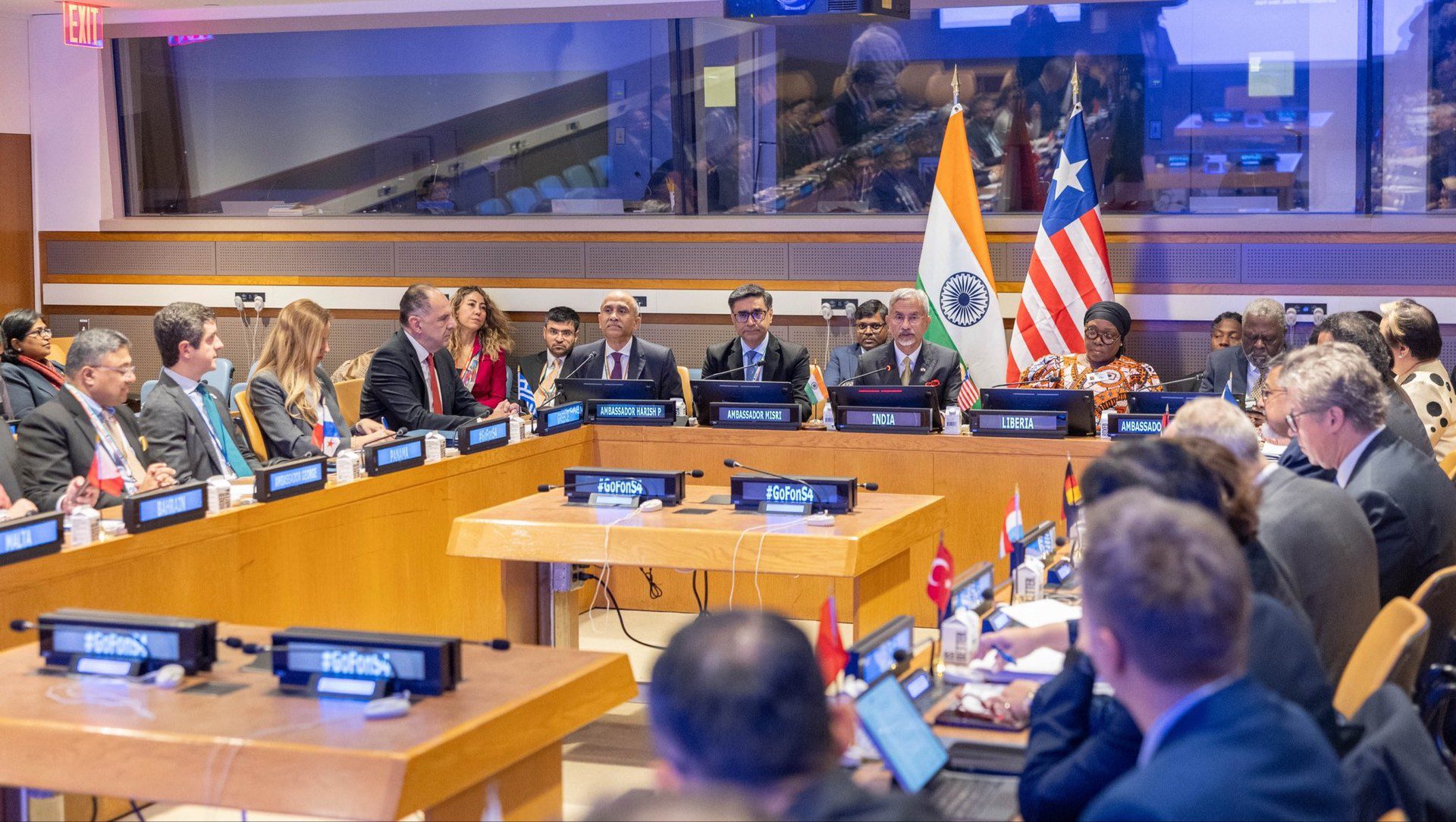
On 25 September 2026, India and Liberia launched the “Group of Friends on Safety & Security of Shipping & Seafarers” — abbreviated by the Ministry of External Affairs as GoF on S4 — at the United Nations headquarters in New York, on the margins of the high-level week of the 81st session of the UN General Assembly. External Affairs Minister S Jaishankar and Liberia’s Minister for Foreign Affairs Sara Beysolow Nyanti launched the group, and the two countries will serve as its co-chairs. According to ANI, the inaugural ministerial meeting was attended by about 25 countries.
Addressing the inaugural meeting, Jaishankar described recent attacks on commercial shipping and merchant mariners as “legally and morally indefensible”, adding: “Put simply, these attacks must stop.” As reported by PTI in The Indian Express, he said: “From the Black Sea to the Red Sea to the Gulf, attacks on civilian shipping have become a growing cause of concern.” The initiative is India’s attempt to turn a sharply felt national concern — the safety of Indian seafarers on ships of every flag — into a standing multilateral conversation at the UN.
Why India and Liberia
The pairing is deliberate. Jaishankar explained that India is taking the initiative with Liberia because India is a major source country for seafarers, while Liberia hosts the world’s largest shipping registry by tonnage. In other words, the group brings together the country that supplies the people who crew ships and the country under whose flag a very large share of the world’s tonnage sails. According to PTI, the group’s membership draws on three categories of states: major ship-owning member states, countries with the largest ship registries, and countries that provide the largest numbers of seafarers. A photograph of the meeting published by Akashvani (All India Radio) shows delegations including Greece, Panama, Malta, Bahrain and Türkiye seated at the table.
Jaishankar placed the scale of the issue in numbers. He said nearly two million seafarers operate the world’s merchant fleet, and that maritime shipping accounts for four-fifths of global trade, which was worth about USD 35 trillion last year (PTI).
The attacks that prompted it
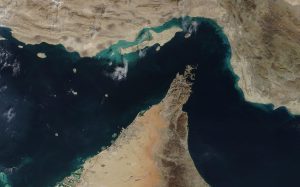
The Minister listed recent incidents in which Indian seafarers were killed or went missing. According to PTI and Akashvani, just two days before the launch the Antigua and Barbuda-flagged bulk carrier MV Cape Dao was attacked in the Gulf of Oman, and an Indian sailor lost his life. Earlier, the Panama-flagged oil tanker El Gaia was struck while transiting the Strait of Hormuz, and an Indian crew member went missing. Akashvani also named incidents in the Black Sea involving the vessels MV Omorfi and MV Golden Leo. “These, regrettably, are no longer exceptional occurrences,” Jaishankar said. Reports listed the risk zones as the Strait of Hormuz, the Gulf of Oman, the Red Sea, the Gulf of Aden and the Bab-el-Mandeb, the Black Sea and the waters off Somalia.
A notable feature of these incidents is that the vessels flew the flags of other countries, yet the casualties were Indian. This is the structural problem the group is designed to address: in modern shipping, the flag state, the ship owner and the crew’s nationality are frequently three different countries, so no single government automatically carries the full burden of protecting the people on board.
Constitutional / Legal Framework
The law of the sea is anchored in the UN Convention on the Law of the Sea (UNCLOS), 1982, which entered into force in 1994; India ratified it in 1995. Under UNCLOS, every ship has the nationality of the state whose flag it flies (Article 91), and the flag state must effectively exercise jurisdiction and control over ships flying its flag in administrative, technical and social matters (Article 94). Piracy is defined in Article 101 and, on the high seas, is subject to universal jurisdiction. Technical safety standards are set through the International Maritime Organization (IMO), a UN specialised agency headquartered in London, established by a convention adopted in 1948; its best-known treaty is SOLAS (Safety of Life at Sea). Seafarers’ labour rights are codified in the Maritime Labour Convention, 2006 (MLC) of the International Labour Organization (ILO), often called the “seafarers’ bill of rights”, which entered into force in 2013. Reports said the new group will engage with the UN, the IMO and the ILO.
What the group will do
According to ANI and Akashvani reports, the group has three priorities, which Jaishankar described as “non-negotiable goals”:
- Safety and standards — demanding uncompromising technical standards, stringent vessel compliance and coordinated environmental stewardship;
- Security of sea lanes — defending commercial sea lanes against piracy, armed attacks, regional instability and asymmetric threats;
- Seafarer welfare — centring the human beings who keep global trade running, including problems such as prolonged confinement on board, delays in crew changes and repatriation, separation from families and psychological distress.
Jaishankar described the group as an “inclusive, voluntary, and action-oriented platform” that will “complement and strengthen the existing international frameworks, mandates, and instruments” rather than replace them (PTI). Reports said members will meet regularly to finalise the group’s structure.
What a “Group of Friends” is
A Group of Friends is an informal coalition of UN member states that come together around a specific theme. It has no treaty basis, no binding powers and no separate budget; its value lies in agenda-setting — keeping an issue before the General Assembly, coordinating statements and building support for resolutions or for work in specialised agencies. India has used this format before: in December 2022, during its term on the UN Security Council, it launched a Group of Friends to promote accountability for crimes against UN peacekeepers. The shipping group follows the same logic — raising the political profile of an issue that is technically handled by the IMO and the ILO.
The CLAT Angle
Expect GK questions on the co-chairs (India and Liberia), the venue (UNGA-81, New York), the date (25 September 2026), and the reason for the pairing (seafarer supply versus flag registry). Static links are rich: UNCLOS 1982 and its Articles 91, 94 and 101; the IMO (London, 1948 convention); the MLC 2006 (ILO); and the concept of open registries or “flags of convenience”. In Legal Reasoning, a passage could set out the flag-state principle and ask whose jurisdiction applies when an Indian crew member is harmed on a Panama-flagged tanker in a strait — the answer turns on applying the stated rule (flag state jurisdiction) rather than intuition about nationality. In Critical Reasoning, the argument “the group has no binding powers, so it will achieve nothing” is a classic flawed inference: it ignores agenda-setting as a real outcome.
Liberia and the idea of the open registry
Liberia, on the west coast of Africa with its capital at Monrovia, declared independence in 1847 and is Africa’s oldest republic. It is also serving as a non-permanent member of the UN Security Council for 2026–27. Its maritime weight comes from its open registry: ship owners from anywhere may register vessels under the Liberian flag. Open registries, along with those of Panama and the Marshall Islands, carry a large share of world tonnage. Critics call them “flags of convenience” because the link between the ship and the flag state can be thin, which is why UNCLOS insists on a “genuine link” and effective flag-state control. Bringing the largest registry into a group focused on seafarer protection gives the initiative credibility with the shipping industry.
Analysis: India’s maritime diplomacy
The launch fits a longer arc in India’s foreign policy that treats the oceans as a strategic priority — from the SAGAR vision (Security and Growth for All in the Region, 2015) to its expanded successor MAHASAGAR, announced in 2025. It also reflects domestic reality: Indian seafarers serve on ships of many flags, so attacks anywhere on major sea lanes quickly become an Indian consular and humanitarian issue. The group’s strength is that it speaks for the human dimension of shipping, which traditional security arrangements often overlook. Its limitation is that it cannot itself deter attacks; that depends on naval deployments, sanctions and diplomacy by states with influence over the attackers. Its success will be measured by whether it shapes decisions in the IMO and ILO, and whether crew-change and repatriation problems receive faster multilateral responses.
Key Facts
- Launched on 25 September 2026 at UN headquarters, New York, on the margins of UNGA-81.
- Full name: Group of Friends on Safety & Security of Shipping & Seafarers (GoF on S4).
- Co-chairs: India and Liberia.
- Launched by EAM S Jaishankar and Liberian Foreign Minister Sara Beysolow Nyanti.
- About 25 countries attended the inaugural meeting.
- India: major source of seafarers; Liberia: world’s largest shipping registry by tonnage.
- Nearly 2 million seafarers crew the world’s merchant fleet.
- Shipping carries four-fifths of global trade, worth about USD 35 trillion last year.
- Incidents cited: MV Cape Dao (Gulf of Oman, Indian sailor killed), El Gaia (Strait of Hormuz, Indian crew member missing).
- Three priorities: vessel safety and standards, security of sea lanes, seafarer welfare.
- Engagement with the UN, IMO and ILO; described as “inclusive, voluntary, and action-oriented”.
Memory Hook / Mnemonic
“Crew + Flag = S4” — India supplies the crew, Liberia supplies the flag; together they chair the group on Safety, Security, Shipping and Seafarers. Law chain: “91-94-101” — UNCLOS Art. 91 (ship’s nationality), Art. 94 (flag-state duties), Art. 101 (piracy). Agencies: IMO sets the ship rules, ILO sets the crew rules (MLC 2006).
Practice Quiz — 10 CLAT-Style Questions
Click an option to reveal the answer and explanation.