

CURRENT AFFAIRS | 09 OCTOBER 2026
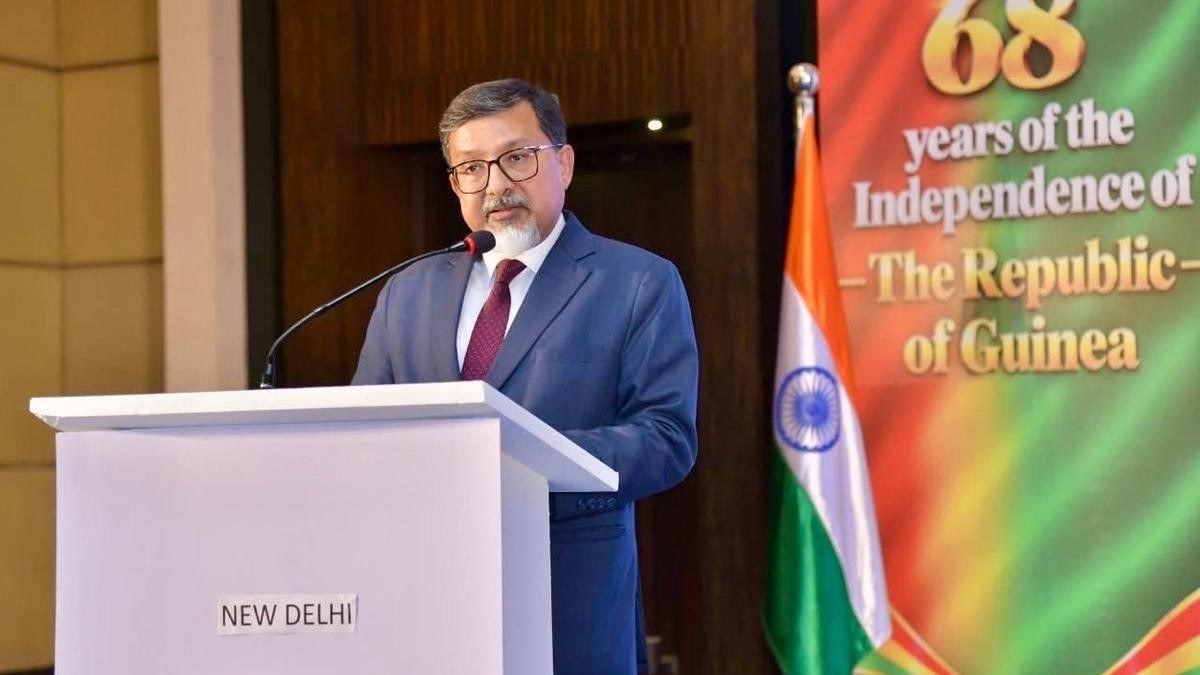
India has chosen a senior career diplomat, not a political appointee, as its next Ambassador to Nepal. According to The Hindu (8 October 2026), the government has forwarded the name of Sudhakar Dalela, currently Secretary (Economic Relations) in the Ministry of External Affairs (MEA), to Kathmandu. Sources confirmed to the paper that the request for Nepal’s approval was sent on Tuesday, 6 October 2026, and that approval from the Nepal government led by Prime Minister Balen Shah is expected soon.
The Kathmandu Post independently reported on 7 October 2026 that India had formally proposed Mr. Dalela’s name to Nepal’s Ministry of Foreign Affairs “for agreement” on Tuesday, and that he would arrive in Kathmandu once the Nepal government’s approval came through. That formal approval is known in diplomatic law as agrément. Until it is given, the appointment is a proposal, not a completed posting.
For exam purposes, the story combines three things that CLAT passages like to test: how an ambassador is actually appointed under international law, the special legal framework of India–Nepal relations, and the policy choice between career diplomats and political appointees in sensitive postings.
Who is the proposed envoy?
According to The Hindu, Mr. Dalela is a 1993-batch Indian Foreign Service (IFS) officer who has served as Secretary (Economic Relations) since September 2025. In that role he also acted as India’s Sherpa for the BRICS Summit. His neighbourhood experience is unusually deep:
- He served as Ambassador to Bhutan in Thimphu (2022–2025), where, The Hindu notes, he worked on Bhutan’s Gelephu Mindfulness City project and on issues such as hydropower pricing.
- At the MEA’s ‘North’ desk, which handles Nepal and Bhutan, he was Director (North) in 2006–07 and Joint Secretary (North) in 2016–19. The Kathmandu Post reported the same dates.
- He has also served in the United States (including as Consul General in Chicago and Deputy Chief of Mission in Washington), at India’s mission to the World Trade Organization, and on the trade policy desk of the Commerce Ministry.
The Hindu also points out that he holds a higher rank than earlier ambassadors to Kathmandu, who were of Additional Secretary rank. The outgoing Ambassador is Naveen Srivastava, whose term has ended.
Why the choice matters
The Hindu reads the decision as a sign of both the importance and the delicacy of the India–Nepal relationship at present. There had been speculation that a political figure might be sent to Kathmandu. The newspaper links the final choice to a stated preference for “Anubhavi” (experienced) diplomats in the neighbourhood, expressed at the 11th Heads of Missions conference in April 2026. Former Ambassador Vivek Katju, quoted in the report, observed that for about three decades India has generally posted professional diplomats as heads of mission in its neighbouring countries, because such posts need quiet and careful handling.
The report also notes that New Delhi hopes to host Nepal’s Prime Minister later in 2026. A senior envoy who already knows the Nepal and Bhutan desks is expected to help manage that calendar.
Constitutional / Legal Framework
Agrément under the Vienna Convention. The Vienna Convention on Diplomatic Relations, 1961 (VCDR) codifies the law of permanent diplomatic missions. Article 2 says diplomatic relations and permanent missions are established by mutual consent. Article 4(1) requires the sending State to make certain that the agrément of the receiving State has been given for the person it proposes to accredit as head of mission. Article 4(2) says the receiving State is not obliged to give reasons for refusing agrément. Requests are therefore usually sent quietly and announced only after consent.
Persona non grata. Under Article 9, the receiving State may at any time, without explaining its decision, declare a diplomat persona non grata. Agrément is consent before arrival; persona non grata is withdrawal of acceptance after it.
Ambassador or High Commissioner? India sends High Commissioners to Commonwealth countries and Ambassadors to others. Nepal and Bhutan are not Commonwealth members, so India’s envoys in Kathmandu and Thimphu are Ambassadors.
India–Nepal Treaty of Peace and Friendship, 1950. Signed at Kathmandu on 31 July 1950, it is the foundation of the bilateral relationship. It provides for perpetual peace and friendship, and its Articles 6 and 7 give each country’s nationals treatment on a reciprocal basis in matters such as residence, property, trade and movement. This is the legal basis of the open border between the two countries.
India–Nepal ties: the static GK you need
Nepal is a landlocked Himalayan country that shares an open border with five Indian States: Uttarakhand, Uttar Pradesh, Bihar, West Bengal and Sikkim. Citizens of the two countries do not need a passport or visa to cross that border, which reflects the spirit of the 1950 Treaty. Large numbers of Nepali nationals live and work in India, and Gorkha soldiers from Nepal serve in the Indian Army.
The two countries are members of regional groupings such as SAARC (South Asian Association for Regional Cooperation, whose Secretariat is in Kathmandu) and BIMSTEC (Bay of Bengal Initiative for Multi-Sectoral Technical and Economic Cooperation). Connectivity, hydropower and trade are recurring themes in the relationship, and Nepal’s domestic politics directly affect how quickly bilateral projects move.
The CLAT Angle
Legal Reasoning. A passage could set out the VCDR rule that a head of mission needs the receiving State’s agrément, and that refusal needs no reasons. A question might then ask: if Country X refuses agrément without giving reasons, has it breached the Convention? Applying the stated rule, the answer is no, because Article 4(2) expressly relieves it of any duty to explain.
Distinguish the stages. Proposal → agrément → formal appointment → arrival → presentation of credentials. On 9 October 2026, Mr. Dalela’s case was at the agrément stage. An option saying he “has taken charge in Kathmandu” would be wrong.
Current Affairs. Expect direct questions such as: Which officer has India proposed as Ambassador to Nepal? What post does he hold in the MEA? Which treaty governs India–Nepal relations, and in which year was it signed?
Critical Reasoning. “Sending a career diplomat signals the importance of the relationship.” Identify the assumption: that seniority and professional experience are what the receiving government values most. A strengthener would be evidence that career envoys have resolved disputes faster in the past.
Analysis: career diplomats versus political appointees
Many countries mix career and political ambassadors. A political appointee may bring direct access to the leadership at home. A career diplomat brings institutional memory, familiarity with protocol and long working ties with the foreign ministry. In a neighbourhood relationship where one misstep can become a public controversy, governments often value the second set of qualities more. That is the logic The Hindu draws out from this choice.
The appointment is also a reminder that diplomacy rests on consent. Even a highly qualified envoy cannot take up the post without Nepal’s agrément. That is why both The Hindu and the Kathmandu Post describe the move as a proposal awaiting approval. For aspirants, the safest framing is the factual one: India has proposed; Nepal is expected to approve.
Key Facts
- Proposed Ambassador to Nepal: Sudhakar Dalela, career IFS officer (1993 batch).
- Current post: Secretary (Economic Relations), MEA, since September 2025.
- Request for Nepal’s approval (agrément) sent: Tuesday, 6 October 2026.
- Reported by The Hindu on 8 October 2026; also by the Kathmandu Post on 7 October 2026.
- Previous postings: Ambassador to Bhutan (2022–2025); Director (North) 2006–07; Joint Secretary (North) 2016–19.
- Outgoing Ambassador to Nepal: Naveen Srivastava.
- Nepal’s Prime Minister (per The Hindu): Balen Shah.
- Agrément: Article 4, Vienna Convention on Diplomatic Relations, 1961; no reasons needed for refusal.
- Persona non grata: Article 9, VCDR.
- India–Nepal Treaty of Peace and Friendship: signed 31 July 1950 at Kathmandu; Articles 6 and 7 give reciprocal national treatment.
- Nepal borders five Indian States: Uttarakhand, Uttar Pradesh, Bihar, West Bengal, Sikkim.
- SAARC Secretariat: Kathmandu.
Memory Hook / Mnemonic
“Ask Four, Exit Nine, Fifty Friends.”
- Ask Four: you must ask for agrément under Article 4 VCDR before sending a head of mission.
- Exit Nine: a diplomat can be shown the exit as persona non grata under Article 9.
- Fifty Friends: India and Nepal’s Treaty of Peace and Friendship dates from 1950.
And for the news: D for Dalela, D for Diplomat, not a politician.
Practice Quiz — 10 CLAT-Style Questions
Click an option to reveal the answer and explanation.






