CURRENT AFFAIRS | 09 OCTOBER 2026
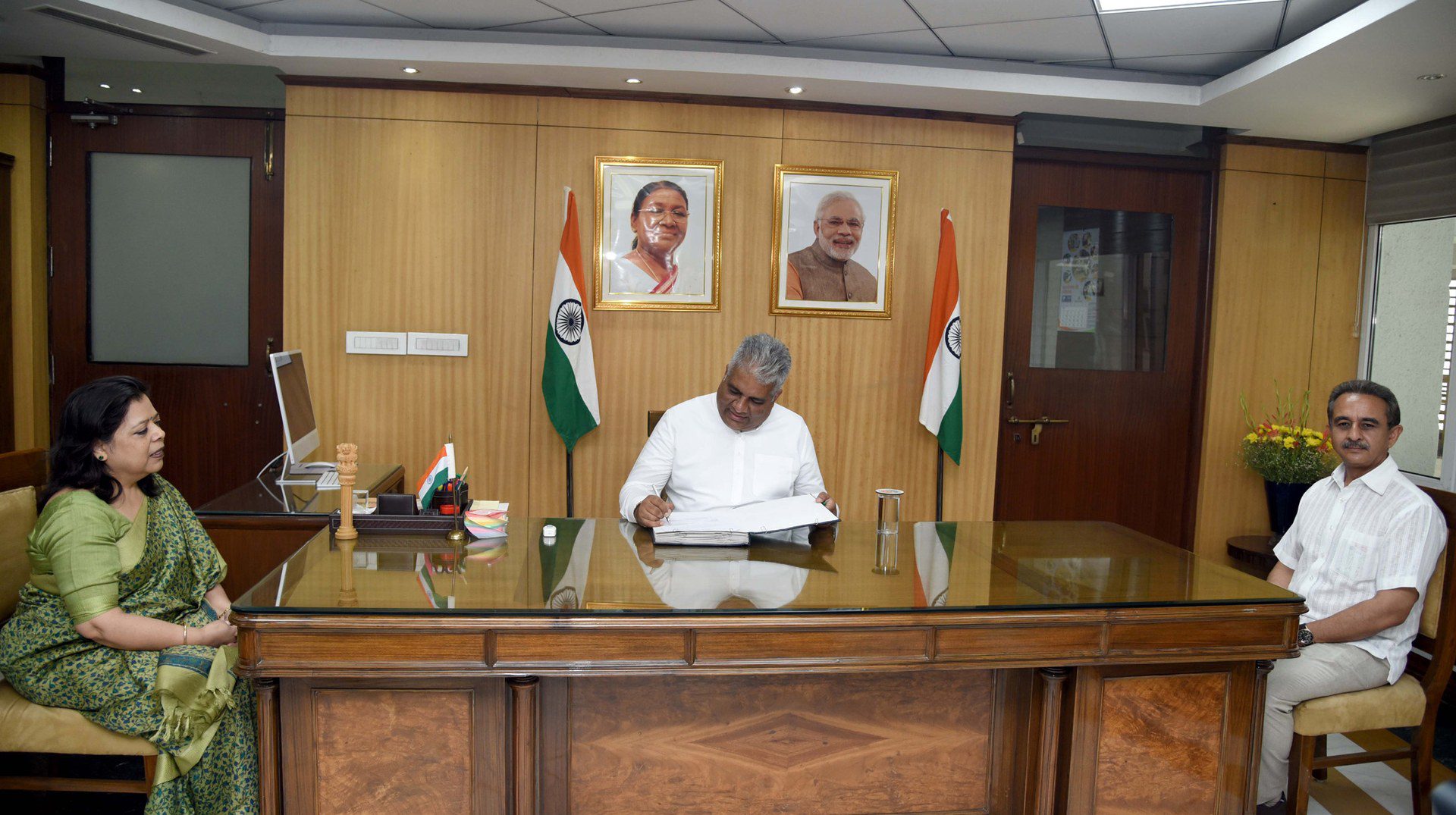
India has called for “greater flexibility, pragmatism and mutual respect” among Parties to bridge their remaining differences and secure ambitious and balanced outcomes at COP31, the next UN climate summit. According to a release of the Ministry of Environment, Forest and Climate Change issued through the Press Information Bureau on Thursday, 8 October 2026, Union Environment Minister Bhupender Yadav made the call at the Plenary Discussion on Political Landing Zones and Outcomes at the Pre-COP31 meeting in Nadi, Fiji. He said the intensifying impacts of climate change demand “moving beyond rhetoric towards implementation and convergence”.
The PIB release notes that COP31 will be held in Antalya, Türkiye, in November 2026. Yadav closed India’s intervention with a clear signal of intent: “As we leave Fiji, our objective should be clear: to carry the constructive elements of these discussions into Antalya.”
Earlier in the same Pre-COP, India had stressed equal attention to adaptation, mitigation and means of implementation. The 8 October statement moves the conversation to the next stage: identifying a “landing zone” — the compromise outcome that all Parties can accept at the summit.
What India said: the five takeaways
1. More common ground than division. Reflecting on the Pre-COP discussions, Yadav said the shared ground among Parties was “far greater than our divisions”. He listed three areas of broad convergence: remaining collectively anchored to the aspirational goal of limiting global warming to 1.5°C; recognising that higher ambition requires proportionally higher commitments, particularly through scaled-up climate finance, technology transfer and capacity-building; and shifting the collective focus decisively towards implementation.
2. Nationally determined pathways. India, he said, firmly believes that implementation must respect nationally determined pathways, allowing each country to transition according to its unique national circumstances and development imperatives. This is India’s long-standing position that climate action cannot be one template imposed on all.
3. Flexibility on all sides. “The time has come to demonstrate flexibility on all sides,” Yadav said, calling for optimisation of the tools already available under the Convention and the Paris Agreement, rather than new layers of obligation.
4. Article 9.1 and Article 6. He highlighted the inclusion of Article 9.1 (of the Paris Agreement) on the provisional agenda as a vital formal opportunity to address the matching of finance to country needs. He also emphasised the strategic use of Article 6 cooperative approaches to plug critical gaps in finance and other means of implementation and to unlock market-driven resources for sustainable development.
5. Consensus-based multilateralism. India expects COP31 to chart a definitive way forward on engagement, technical cooperation and targeted support for building capabilities. Climate multilateralism, he said, can be strengthened through an inclusive, consultative and consensus-based approach, and India seeks “a balanced, equitable, and historic outcome”, particularly for the most vulnerable. The landing zone, in his words, should advance mitigation and adaptation while delivering the means of implementation that developing countries need.
The Minister thanked Chris Bowen, described in the release as President of Negotiations, for ensuring open discussions during Pre-COP31, and extended best wishes to the COP31 President.
Background & Framework
The United Nations Framework Convention on Climate Change (UNFCCC) was adopted in 1992 and opened for signature at the Rio Earth Summit; it entered into force in 1994. Its supreme body, the Conference of the Parties (COP), meets annually. Article 3.1 of the Convention sets out “common but differentiated responsibilities and respective capabilities” (CBDR-RC). The Paris Agreement was adopted at COP21 (2015). Its Article 2 sets the goal of holding warming “well below 2°C” while pursuing efforts to limit it to 1.5°C; Article 4 requires each Party to prepare Nationally Determined Contributions (NDCs); Article 6 covers voluntary cooperative approaches, including carbon markets; and Article 9.1 provides that developed country Parties shall provide financial resources to assist developing country Parties. At COP29 in Baku (2024), Parties agreed a New Collective Quantified Goal (NCQG) on finance of at least USD 300 billion a year by 2035.
Decoding the jargon
Pre-COP: As the PIB release explains, a Pre-COP is a preparatory meeting held a few weeks before the annual UN Climate Change Conference. It takes no binding decisions, but ministers use it to test positions and narrow differences.
Landing zone: Negotiators’ shorthand for the range of outcomes on which consensus is achievable. When India says the landing zone should be “ambitious and balanced”, it means no single pillar — mitigation, adaptation or finance — should advance at the cost of the others.
Means of implementation: The trio of finance, technology transfer and capacity-building. Developing countries argue that ambition without these is unfunded ambition.
Why Article 9.1 matters: Article 9.1 is the Paris Agreement’s clearest statement of a developed-country obligation on finance. Developing countries, including India, have pressed for it to be discussed as a distinct agenda item, so that finance is not diluted into a voluntary, all-Parties responsibility. Its inclusion on the provisional agenda, which India welcomed, gives that debate a formal place at COP31.
Why Article 6: Cooperative approaches allow countries to transfer mitigation outcomes (carbon credits) between them. India’s framing is that these market mechanisms can supplement, not replace, public finance.
Analysis: India’s negotiating line
The statement shows a consistent Indian position, framed in a conciliatory register. On substance, India restates its three anchors: equity (CBDR-RC and nationally determined pathways), finance (Article 9.1 and matching finance to needs) and implementation over new targets. On tone, the stress on “flexibility”, “pragmatism” and “mutual respect” positions India as a bridge-builder seeking consensus rather than a blocker. India’s own NDC, updated in 2022, commits to reducing the emissions intensity of GDP by 45% by 2030 from 2005 levels and to about 50% of installed electric power capacity from non-fossil sources by 2030; its net-zero target is 2070. The insistence on nationally determined pathways protects that model of self-set, development-sensitive targets.
COP31 also has an unusual structure: the summit is in Türkiye, while the Pre-COP was hosted in the Pacific and the negotiations are led by a separate “President of Negotiations”. For aspirants, the key is to keep the venue (Antalya), the Pre-COP location (Fiji) and the previous summits (COP29 Baku, COP30 Belém) distinct.
The CLAT Angle
A GK passage on this story would likely ask: the venue of COP31 (Antalya, Türkiye); where the Pre-COP was held (Nadi, Fiji); which Paris Agreement article concerns developed-country finance (Article 9.1) or cooperative approaches/carbon markets (Article 6); what NDCs are (Article 4); and the temperature goals (well below 2°C, pursuing 1.5°C, Article 2). In Legal Reasoning, CBDR-RC can be framed as a principle (“obligations should be proportionate to historical responsibility and capacity”) applied to a fact pattern on burden-sharing. In Critical Reasoning, an argument that “higher ambition requires proportionally higher finance” invites questions on assumptions and strengtheners.
Key Facts
- PIB (MoEFCC) release: 8 October 2026, Release ID 2320552.
- Speaker: Union Environment Minister Bhupender Yadav.
- Forum: Plenary on Political Landing Zones and Outcomes, Pre-COP31, Nadi, Fiji.
- India’s call: flexibility, pragmatism and mutual respect for ambitious and balanced outcomes.
- COP31 venue: Antalya, Türkiye, November 2026.
- Convergence noted: 1.5°C goal; higher ambition needs higher finance; focus on implementation.
- India welcomed Article 9.1 on the provisional agenda; backed strategic use of Article 6.
- “President of Negotiations” thanked: Chris Bowen.
- UNFCCC: adopted 1992, in force 1994; CBDR-RC in Article 3.1.
- Paris Agreement: COP21, 2015; NDCs under Article 4.
- NCQG (COP29 Baku, 2024): at least USD 300 billion a year by 2035.
- India’s net-zero target: 2070.
Memory Hook / Mnemonic
“F-P-R to Antalya” — Flexibility, Pragmatism, mutual Respect, carried from Fiji to Antalya. For the Paris articles: 2 = the goal, 4 = NDCs, 6 = markets, 9.1 = rich countries pay.
Practice Quiz — 10 CLAT-Style Questions
Click an option to reveal the answer and explanation.