CURRENT AFFAIRS | 14 OCTOBER 2026
The International Big Cat Alliance (IBCA) — the treaty-based inter-governmental organisation set up to conserve the world’s seven big cats — now has a permanent new address in India. On Monday, 12 October 2026, the Union Ministry of Environment, Forest and Climate Change (MoEFCC) inaugurated the new office premises of the IBCA headquarters at 55 Lodhi Estate, New Delhi, according to a Press Information Bureau (PIB) release posted at 6:29 PM on 12 October 2026.
The release describes the IBCA as “a treaty based inter-governmental international organisation” with its headquarters in India, set up for the conservation of the lion, tiger, leopard, snow leopard, cheetah, jaguar and puma. It also gives the alliance’s latest membership figures: 29 member countries (including India), 5 observer countries, and 11 more countries that have consented to become members. For a CLAT aspirant, the story ties together three exam favourites — India-led international organisations, wildlife conservation law, and the treaty process by which a political initiative becomes an international legal person.
What happened on 12 October
According to the PIB release, the inauguration was led by the Union Environment Ministry. The Director General of the IBCA, Dr S.P. Yadav, welcomed the dignitaries and gave an overview of the alliance’s activities and programmes. Senior MoEFCC officers, including the Director General (Forest) and Special Secretary, attended.
The guest list is itself a useful revision sheet of India-hosted and India-led bodies. The release records the presence of the Directors General of the Global Biofuels Alliance (GBA), the Coalition for Disaster Resilient Infrastructure (CDRI) and the International Solar Alliance (ISA), along with heads or representatives of the UN, UNDP, the World Bank, UNICEF, ADB, WWF, IUCN, UNEP, FAO and UNDSS. The Union Ministry of External Affairs was also represented.
The IBCA in numbers
The PIB release sets out the alliance’s key figures and milestones:
- Funding: the Government of India has pledged an initial contribution of ₹150 crore for five years, covering 2023-24 to 2027-28.
- Membership: 29 member countries, 5 observers, and 11 countries that have consented to join.
- Capacity building: two capacity-building programmes for foreign participants under the ITEC (Indian Technical and Economic Cooperation) programme of the Ministry of External Affairs.
- Veterinary training: a PRIME cat health programme for veterinary doctors from 20 countries.
- Global forums: participation in the CITES Conference of the Parties, the CITES Standing Committee and the UNFCCC COP.
- Outreach: international webinars and global photography competitions.
The release describes all this as achieved in “two and half years” since the IBCA was established.
From launch to treaty organisation
The IBCA’s own Framework Agreement, published on the alliance’s website, records that the alliance was launched by the Prime Minister of India on 9 April 2023. Its stated aim is to lower the cost of financing and technology and to mobilise resources for the protection and conservation of the seven big cats. The launch year matters for exams: 2023 was the 50th year of Project Tiger, which India began in 1973.
A launch is a political act; an international organisation needs a treaty. The Framework Agreement is that treaty. The IBCA’s official FAQ states that the Framework Agreement came into force with effect from 23 January 2025, and that the IBCA is a “Treaty Based Inter-Governmental International Organisation with headquarters in India”. The agreement also refers to an International Steering Committee set up by a Republic of India Declaration dated 12 March 2024, whose decisions go to the IBCA Assembly for adoption at its first meeting. The agreement defines a “Host Country” as the country where the headquarters is located — here, India. The FAQ adds that the IBCA’s corpus will be built up with support from the public and private sectors, bilateral and multilateral organisations and non-profits, on top of India’s ₹150 crore.
Background & Framework
Constitution: Article 48A (a Directive Principle) directs the State to protect and improve the environment and to safeguard forests and wildlife. Article 51A(g) makes it a fundamental duty of every citizen to protect the natural environment, including wildlife, and to have compassion for living creatures. Both were inserted by the 42nd Constitutional Amendment, 1976.
Statute: the Wildlife (Protection) Act, 1972 is India’s main wildlife law. The 2006 amendment created the National Tiger Conservation Authority (NTCA) as a statutory body. The 2022 amendment brought the Act in line with India’s obligations under CITES.
Treaty law: CITES (the Convention on International Trade in Endangered Species of Wild Fauna and Flora) was signed in Washington in 1973, and India is a party. The IBCA’s presence at CITES meetings links a new alliance to this older trade-control treaty.
India-led alliances: the IBCA joins the International Solar Alliance (launched at COP21, Paris, 2015), the CDRI (2019) and the Global Biofuels Alliance (2023) as India-led international platforms.
Why the seven big cats — and why India
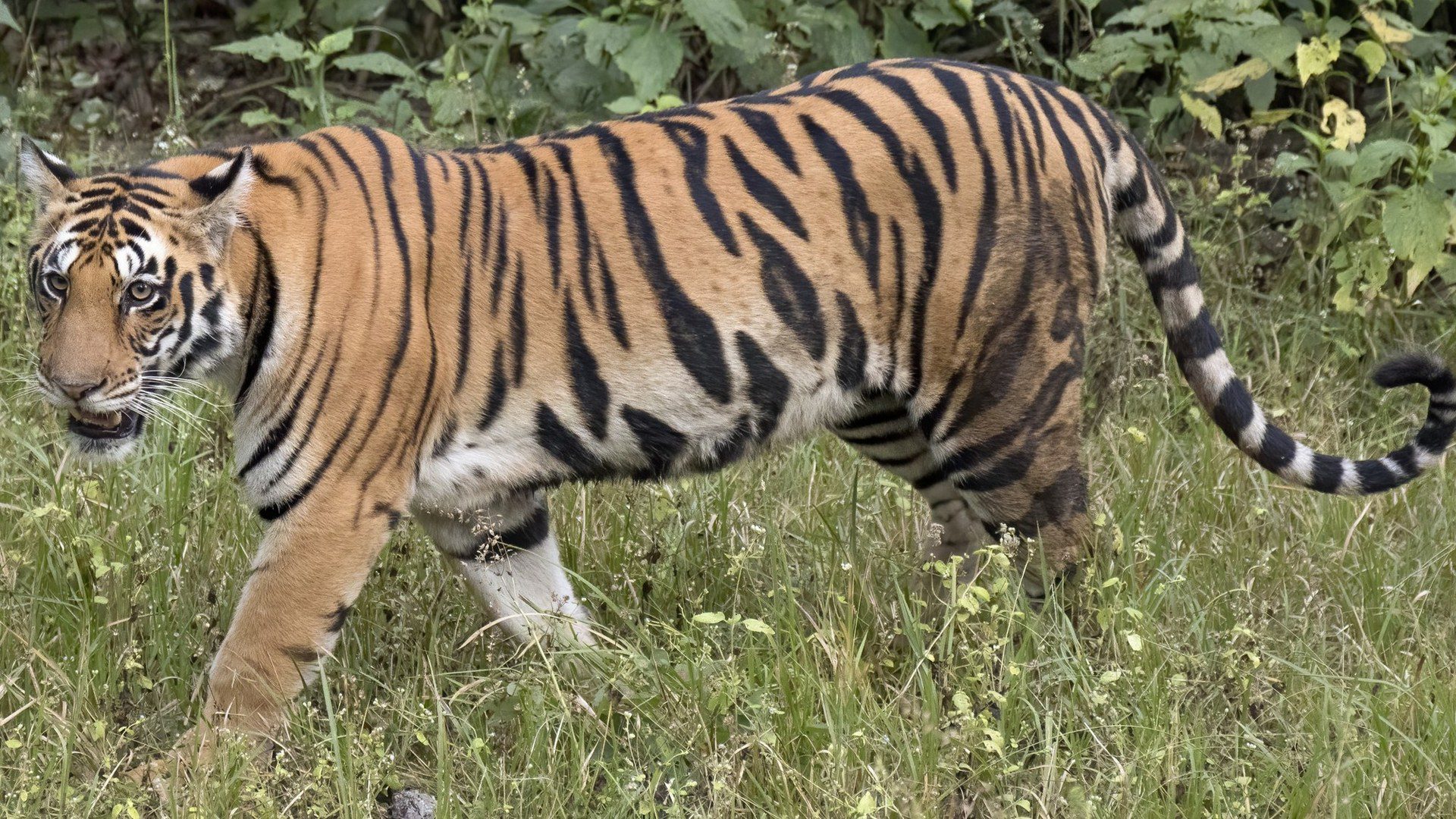
The alliance’s list covers species from three continents. Five of the seven — the tiger, lion, leopard, snow leopard and cheetah — are found in India. The Asiatic lion survives in the wild only in Gujarat’s Gir landscape. The cheetah, declared extinct in India in 1952, was reintroduced at Kuno National Park under Project Cheetah in 2022. The jaguar and puma are found only in the Americas. Bringing range countries from Asia, Africa and Latin America onto one platform is the alliance’s central idea: big cats are apex predators, and protecting them protects whole ecosystems, from mangroves and grasslands to high-altitude mountains.
India’s claim to host the body rests on its record with tigers. Project Tiger, begun in 1973, grew into a network of tiger reserves managed under the NTCA. A dedicated headquarters building gives the IBCA something every international organisation needs: a fixed seat where the Assembly’s secretariat can work, where diplomats can engage, and where host-country arrangements apply.
Analysis: soft power through institution-building
The IBCA follows a clear pattern in Indian diplomacy: India proposes a global public-good platform, funds its early years, hosts its secretariat, and gathers members from the Global South. The ISA, the CDRI and the GBA follow the same model, and the PIB release notes that all three were represented at the IBCA inauguration.
The difficulties are familiar too. A treaty body depends on members ratifying the treaty and paying in money, not just signing up. The gap between 29 members and the 11 countries that have only “consented” shows how long the ratification pipeline can be. The real test of the IBCA will be whether it can turn training programmes and conference appearances into field results: shared veterinary protocols (the PRIME cat health programme is a start), joint action against illegal wildlife trade, and finance for conservation in range countries that cannot fund it alone.
The CLAT Angle
GK: expect direct questions such as “Which of the following is NOT among the seven big cats covered by the IBCA?” (distractors: clouded leopard, lynx, caracal), “Where is the IBCA headquartered?”, “When did the Framework Agreement enter into force?” or “How much has India committed?”.
Legal reasoning: a passage might ask when a body acquires international legal personality. The answer here is entry into force of a treaty, not a political launch. Pair it with Article 51(c) (respect for international law and treaty obligations), Article 253 (Parliament’s power to legislate to implement treaties) and Articles 48A / 51A(g).
Static links: Project Tiger (1973), NTCA (2006 amendment), CITES (1973), Project Cheetah (Kuno, 2022), ISA, CDRI, GBA.
Key Facts
- Event: new IBCA headquarters office inaugurated on 12 October 2026 by MoEFCC.
- Address: 55 Lodhi Estate, New Delhi.
- Source: PIB release, posted 12 October 2026, 6:29 PM.
- Status: treaty-based inter-governmental international organisation with headquarters in India.
- Seven big cats: lion, tiger, leopard, snow leopard, cheetah, jaguar, puma.
- Launched: 9 April 2023, by the Prime Minister of India.
- Framework Agreement in force: from 23 January 2025.
- India’s pledge: ₹150 crore for five years (2023-24 to 2027-28).
- Membership (Oct 2026): 29 members, 5 observers, 11 more consented.
- Director General: Dr S.P. Yadav.
- Programmes: two ITEC capacity-building courses; PRIME cat health programme for vets from 20 countries.
Memory Hook / Mnemonic
“LTL-SC-JP”: Lion, Tiger, Leopard — Snow leopard, Cheetah — Jaguar, Puma. Five are Indian; the last two (J, P) are American.
Dates: launched on 9-4-23, in force on 23-1-25. “23 launched, 23 in force”: the year 2023 for the launch, the 23rd of January for the treaty. Money: 150 for 5 (₹150 crore, five years). Members: 29-5-11.
Practice Quiz — 10 CLAT-Style Questions
Click an option to reveal the answer and explanation.