CURRENT AFFAIRS | 15 OCTOBER 2026
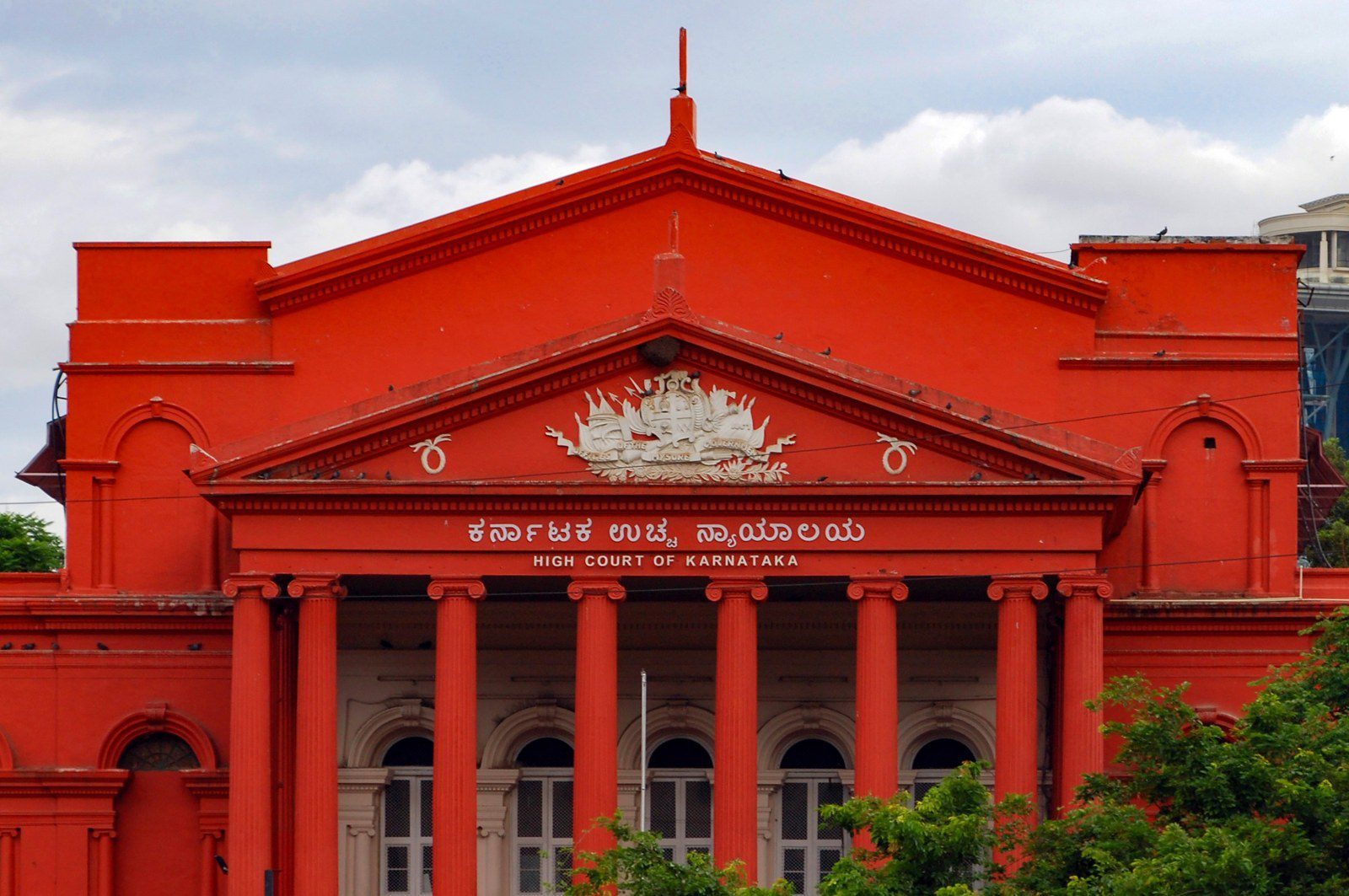
The Karnataka High Court has struck down the core of the State’s 2022 law that raised reservation for Scheduled Castes (SCs) from 15 to 17 per cent and for Scheduled Tribes (STs) from 3 to 7 per cent, because the increase took total reservation in the State to 56 per cent — above the 50 per cent ceiling laid down by the Supreme Court in Indra Sawhney v Union of India (1992). The judgment in Mahendra Kumar Mitra & Others v Union of India & Others (WP No. 200448 of 2025, connected with WP No. 25515 of 2025) is dated Monday, 12 October 2026, and was reported by Bar & Bench and LawChakra the same day.
According to the judgment, a Division Bench of Chief Justice Vibhu Bakhru and Justice K.S. Hemalekha held that Section 3 of the Karnataka Scheduled Castes and Scheduled Tribes (Reservation of Seats in Educational Institutions and of Appointments or Posts in the Services under the State) Act, 2022, “insofar as it takes the aggregate reservation beyond the ceiling of 50%”, violates Articles 14 and 15. It struck down Section 4 in full as violating Articles 14 and 16. The 32 per cent reservation for Other Backward Classes (OBCs) was not part of the challenge and remains untouched.
What the 2022 law did
The judgment records the legislative history. On 23 October 2022, the Governor of Karnataka promulgated an Ordinance (Karnataka Ordinance No. 07 of 2022) with effect from 1 November 2022. A Government Order of 28 December 2022 fixed roster points for direct recruitment, reserving 56 per cent of posts and leaving 44 per cent for the general category. The Ordinance was replaced by the Act, which received the Governor’s assent on 11 January 2023, was published in the Karnataka Gazette on 12 January 2023, and was deemed to be in force from 1 November 2022.
Section 3 applied the enhanced shares (SC 17 per cent, ST 7 per cent) to admissions in educational institutions; Section 4 applied them to appointments and posts in State services. With OBC reservation unchanged at 32 per cent, the aggregate rose from 50 to 56 per cent.
Two petitions challenged the law. One was filed by the State President of the Dr Ambedkar Scheduled Castes Federation; the other by civil engineering graduates who had applied for the post of Assistant Engineer (Civil) in the Bruhat Bengaluru Mahanagara Palike (BBMP). By an interim order dated 19 November 2025, the High Court had restrained the implementation of the increase; a modified order of 27 November 2025 barred fresh recruitment notifications on the enhanced basis, while letting processes already begun continue on the condition that any appointment would be subject to the final outcome and that candidates could not claim equities if the increase was struck down.
Why the Court said no
The State, according to Bar & Bench, relied on reports of the Nagamohan Das Commission, the Subhash B. Adi Committee and a further committee to argue that SCs and STs remained under-represented and that their population share had grown. The judgment notes that, as per the 2011 Census figures cited in those reports, SCs and STs formed 17.15 per cent and 6.95 per cent of the State’s population. The State also argued that more than 90 per cent of Karnataka’s population belongs to SCs, STs and backward classes.
The Bench rejected these submissions on three grounds:
- The ceiling is a rule of equality. The Court held that the 50 per cent limit circumscribes the State’s power “notwithstanding the numerical strength of the backward classes”. Accepting a population-proportion argument, Bar & Bench quotes the Court as saying, would be “destructive of the principle of equality”.
- “Extraordinary situations” were not shown. Indra Sawhney allows the ceiling to be crossed only in extraordinary situations. Under-representation or population growth, the Court held, may justify reservation within the limit (including internal reservation among sub-groups) but does not by itself justify breaching it.
- EWS does not dissolve the ceiling. The State argued that the 10 per cent Economically Weaker Sections (EWS) quota had shrunk the pool and so set the 50 per cent rule at large. Relying on Janhit Abhiyan v Union of India (2022), the Court held that the 50 per cent ceiling applies to reservations under Articles 15(4), 15(5) and 16(4), and cannot be stretched to the EWS class.
The Court also found that the State was required to consult the National Commission for Scheduled Castes and the National Commission for Scheduled Tribes under Article 338(9) and Article 338A(9) before a major policy decision. Letters dated 10 December 2025 and 20 January 2026, written after the Act and after the challenge, did not count: “Consultation, to be meaningful and effective, must precede the decision.”
Constitutional / Legal Framework
Article 15(4) permits special provisions for socially and educationally backward classes, SCs and STs; Article 15(5) extends this to admissions in educational institutions. Article 16(4) allows reservation in appointments for backward classes not adequately represented in State services, and Article 16(4A) covers reservation in promotion for SCs and STs. Articles 15(6) and 16(6), inserted by the 103rd Amendment (in force 14 January 2019), allow up to 10 per cent EWS reservation.
Indra Sawhney (1992 Supp (3) SCC 217) was decided by a nine-judge Bench; as the High Court noted, seven of the nine judges agreed on an outer limit of 50 per cent, which may be exceeded only in extraordinary situations. The Constitution Bench in Dr Jaishri Laxmanrao Patil v Chief Minister (2021) 8 SCC 1 struck down Maharashtra’s Maratha reservation law and declined to revisit the ceiling. In Janhit Abhiyan (2023) 5 SCC 1, decided on 7 November 2022 by a 3:2 majority, the Supreme Court upheld the EWS quota.
The Ninth Schedule question
The judgment records that one of the State’s commissions had suggested the enhanced quota could be protected by placing the law in the Ninth Schedule, and had noted that States including Tamil Nadu had reservation above 50 per cent. Tamil Nadu’s 69 per cent law (Tamil Nadu Act 45 of 1994) was placed in the Ninth Schedule by the Constitution (Seventy-sixth Amendment) Act, 1994. But Ninth Schedule cover is not absolute: in I.R. Coelho v State of Tamil Nadu (2007) 2 SCC 1, a nine-judge Bench held that laws placed in the Ninth Schedule remain open to judicial review on the touchstone of the basic structure, including the equality code.
The CLAT Angle
CLAT Legal Reasoning passages on reservation usually test one principle: a 50 per cent outer limit on caste-based (backward class) reservation, crossable only in extraordinary situations backed by data. If a State cites only population share or under-representation, that alone is not enough.
Watch two traps. First, EWS sits outside the 50 per cent computation (per Janhit Abhiyan), so 50 + 10 is not a breach; but EWS cannot be used to argue the ceiling no longer exists. Second, a court may strike down a provision only “insofar as” it exceeds a limit — partial invalidity (severability), not the whole law.
For GK: Article 338 = NCSC, Article 338A = NCST, Article 338B = NCBC. Each requires consultation on major policy matters affecting the group.
Analysis
Since Indra Sawhney, courts have treated the 50 per cent figure as a balance between the equality guarantee in Articles 14 and 16(1) and the enabling provisions in Articles 15(4) and 16(4). The High Court’s distinction is useful: data on backwardness can justify having reservation and distributing it better within groups, but a separate and higher justification is needed to cross the ceiling.
The consultation finding is also notable. The Court treated Articles 338(9) and 338A(9) as mandatory for all major policy matters affecting SCs and STs, not just those that harm them, and held that consultation after enactment is no substitute. For appointments made during the litigation, the interim orders had already made them subject to the result; the final judgment’s conclusion does not separately address them.
Key Facts
- Case: Mahendra Kumar Mitra & Others v Union of India & Others, WP 200448/2025 c/w WP 25515/2025.
- Court and date: Karnataka High Court, judgment dated 12 October 2026 (reserved 9 September 2026).
- Bench: Chief Justice Vibhu Bakhru and Justice K.S. Hemalekha.
- Law: Karnataka SC and ST (Reservation of Seats … and of Appointments or Posts) Act, 2022.
- Change: SC 15→17 per cent; ST 3→7 per cent; OBC unchanged at 32 per cent; total 50→56 per cent.
- Outcome: Section 3 struck down insofar as it crosses 50 per cent; Section 4 struck down in full.
- Articles violated: 14 and 15 (Section 3); 14 and 16 (Section 4).
- Act timeline: Ordinance 23 Oct 2022; assent 11 Jan 2023; deemed in force 1 Nov 2022.
- Interim orders: 19 and 27 November 2025; appointments made subject to the final outcome.
- Consultation: NCSC and NCST consultation under Arts 338(9) and 338A(9) held mandatory.
Memory Hook / Mnemonic
“17 + 7 + 32 = 56 — six too many.” Remember the math, then the rule: “Nine judges, fifty per cent; only the extraordinary may exceed.” For the commissions: 338 = SC, 338A = ST (A for Adivasi), 338B = Backward classes — consult before, not after.
Practice Quiz — 10 CLAT-Style Questions
Click an option to reveal the answer and explanation.