CURRENT AFFAIRS | 14 OCTOBER 2026
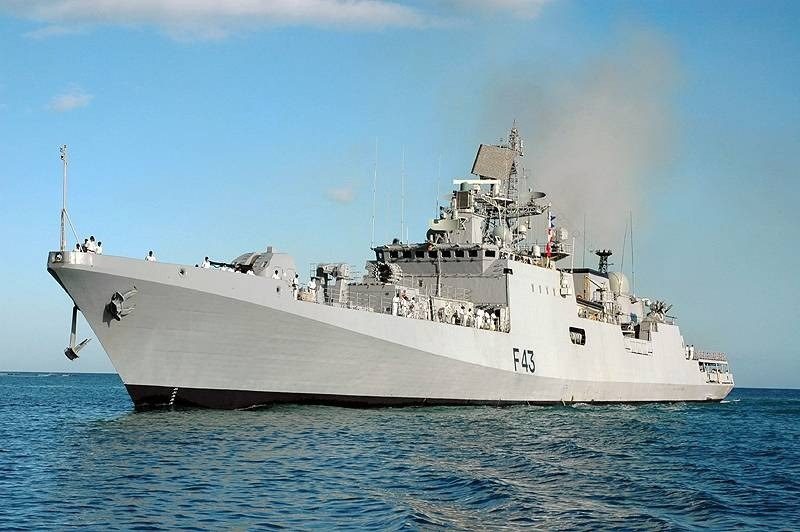
The Indian Navy’s guided-missile stealth frigate INS Trishul is at Plymouth, United Kingdom, for KONKAN-26, the bilateral maritime exercise between the Indian Navy and the British Royal Navy. According to the Ministry of Defence, as reported by News On AIR on Sunday, 11 October 2026, the exercise is being conducted off Plymouth in two phases — a harbour phase and a sea phase — from 8 to 15 October 2026.
The Ministry said the exercise aims to strengthen maritime cooperation, improve operational coordination and deepen mutual understanding between the two navies. It described KONKAN as reflecting both countries’ commitment to “secure, open and free seas” and placed it within the India–UK Comprehensive Strategic Partnership and the India–UK Vision 2035. The Ministry also noted that KONKAN has grown considerably in scale and complexity over the past two decades.
What the exercise involves
As set out in the Ministry’s statement, the two phases are designed to build both familiarity and combat-ready interoperability:
- Harbour phase: professional interactions and knowledge-sharing, cross-deck visits between crews, sports fixtures, cultural engagements and the ship being opened to visitors.
- Sea phase: complex maritime drills across all three domains — air, surface and sub-surface. These include flying operations with cross-deck helicopter landings, firing serials, air defence exercises, complex seamanship evolutions and anti-submarine exercises.
“Cross-deck” operations — where a helicopter from one navy lands on and operates from the other navy’s ship — are a standard test of interoperability, since they require common procedures for communication, deck handling and safety. Anti-submarine exercises are among the most demanding serials because they need close coordination of sensors on ships, aircraft and, at times, submarines.
Background & Framework
KONKAN: the bilateral naval exercise between India and the United Kingdom, held since 2004. The suffix denotes the year (KONKAN-26 for 2026).
Other India–UK military exercises: Ajeya Warrior (Army) and Indradhanush (Air Force). Together with KONKAN, they cover all three services.
INS Trishul (F43): a Talwar-class guided-missile stealth frigate (Project 1135.6), built in Russia and commissioned into the Indian Navy in 2003. It serves with the Navy’s Western Fleet, headquartered at Mumbai. Its name means the trident, the weapon of Lord Shiva.
Plymouth: a port city in south-west England and home to HMNB Devonport, one of the Royal Navy’s principal naval bases.
Strategic framework: India and the UK upgraded ties to a Comprehensive Strategic Partnership in 2021, with a Roadmap 2030; the Ministry of Defence now frames defence cooperation under the India–UK Vision 2035.
Why naval exercises matter
Bilateral naval exercises serve three purposes. First, they build interoperability — the ability of two forces to operate together using shared signals, procedures and tactics, which matters in joint patrols, humanitarian assistance and disaster relief, and the protection of sea lanes. Second, they let each navy learn from the other’s practices, in this case the Royal Navy’s long experience of anti-submarine warfare in the Atlantic. Third, they act as maritime diplomacy: a ship far from home, opened to the public and hosting cross-deck visits, signals a stable and growing relationship.
For India, deployments like this one extend the Navy’s reach well beyond the Indian Ocean. India describes its maritime outlook through SAGAR (Security and Growth for All in the Region), announced in 2015. The phrase “secure, open and free seas” in the Ministry’s statement echoes the principle of freedom of navigation under the UN Convention on the Law of the Sea (UNCLOS), 1982, to which both India and the UK are parties.
The CLAT Angle
Defence GK pairs: CLAT GK often tests “exercise – partner country” matching. Learn the UK set as a trio: KONKAN (Navy), Ajeya Warrior (Army), Indradhanush (Air Force). Do not confuse KONKAN with VARUNA (India–France, Navy), MALABAR (multilateral naval exercise with the US, Japan and Australia) or SIMBEX (India–Singapore).
Current Affairs passage: a passage on KONKAN-26 could ask about the venue (Plymouth), the ship (INS Trishul, Talwar-class), the dates (8–15 October 2026), the two phases, or the strategic framework (Comprehensive Strategic Partnership, Vision 2035).
Legal link: freedom of navigation and the regime of the high seas come from UNCLOS 1982 — a common static-GK hook in international law questions.
Analysis: what KONKAN-26 signals
Holding the exercise off Plymouth, with an Indian frontline frigate on a long-range deployment, shows two things. The Indian Navy is building the logistics and endurance to operate for weeks in distant waters and to slot into exercises with European navies on the way. And the India–UK defence relationship, which the Ministry links to Vision 2035, is being given a regular, practical form rather than remaining a set of joint statements.
The content of the sea phase is also telling. Air defence and anti-submarine drills are “high-end” serials rather than basic manoeuvres; including them suggests a level of trust and procedural alignment that has grown across successive editions. The harbour phase, with its public visits and cultural events, keeps the people-to-people dimension that both governments emphasise.
It is also worth separating exercises from alliances. India is not a member of any military alliance and conducts exercises with a wide range of partners; an exercise builds familiarity and trust but does not create any treaty obligation of mutual defence. This distinction often appears in reasoning-based passages on foreign policy, where a statement such as “the two navies exercised together, therefore the two states are allies” is an unwarranted conclusion. KONKAN-26 is best read as one more step in a partnership built on regular, practical cooperation at sea.
For aspirants, the takeaway is to link the event to a framework: exercise → partner → service → venue → ship → strategic partnership. Questions rarely ask for the drills themselves; they ask you to match names correctly.
Key Facts
- Exercise: KONKAN-26, India–UK bilateral naval exercise.
- Navies: Indian Navy and the Royal Navy.
- Venue: off Plymouth, United Kingdom.
- Dates: 8–15 October 2026, in a harbour phase and a sea phase.
- Indian ship: INS Trishul, guided-missile stealth frigate (Talwar-class).
- Sea phase: drills across air, surface and sub-surface domains — cross-deck landings, firing, air defence, anti-submarine exercises.
- Source: Ministry of Defence, reported by News On AIR on 11 October 2026.
- Framework: India–UK Comprehensive Strategic Partnership (2021) and India–UK Vision 2035.
- KONKAN since: 2004.
- Other India–UK exercises: Ajeya Warrior (Army), Indradhanush (Air Force).
- INS Trishul: commissioned 2003; part of the Western Fleet.
Memory Hook / Mnemonic
“KAI with the UK” — KONKAN (Navy), Ajeya Warrior (Army), Indradhanush (Air Force).
“The Trident sails to Plymouth” — Trishul (trident) + Plymouth + 8–15 October = KONKAN-26.
Practice Quiz — 10 CLAT-Style Questions
Click an option to reveal the answer and explanation.