CURRENT AFFAIRS | 14 OCTOBER 2026
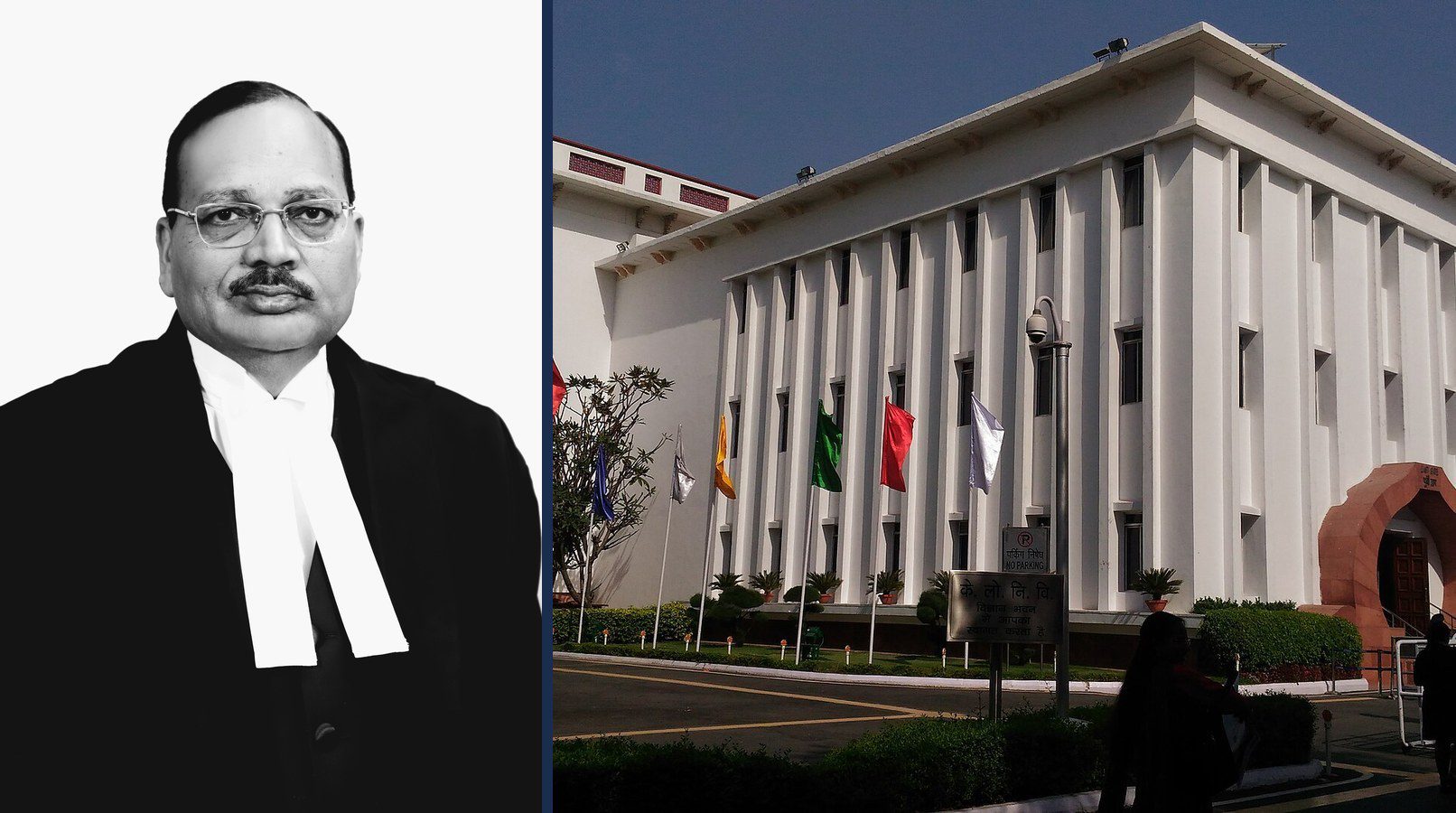
The National Human Rights Commission (NHRC), India marked its 33rd Foundation Day on Monday, 12 October 2026 with a function at Vigyan Bhawan, New Delhi. Chief Justice of India Justice Surya Kant addressed the gathering as the Chief Guest, in the presence of NHRC Chairperson Justice V. Ramasubramanian (former Supreme Court judge), the Commission’s Members and its Secretary General. The Commission was set up on 12 October 1993 under the Protection of Human Rights Act, 1993.
According to the NHRC’s own press release dated 12 October 2026, the celebration was paired with a National Conference on the theme ‘Water as the Elixir of Life: Advancing Human Dignity through the Right to Water’. A curtain-raiser release issued by the Commission on 9 October 2026 set out its 33-year record: more than 24 lakh cases handled, including about 3,100 suo motu cognisances, and monetary relief of more than ₹274 crore recommended in 9,085 cases.
What happened at the Foundation Day
The NHRC release records that the CJI described the Constitution’s promises of dignity, equality, liberty and justice as words that must be observed “in the field, in the lockup, in the hospital ward and in the village at the end of the road”. Addressing the common criticism that the Commission “can only recommend and cannot command”, he offered the image of a lighthouse that casts a guiding light for those adrift, rather than one that stops the waves itself.
Three themes stood out in the CJI’s address, as reported by the Commission:
- Role of State Human Rights Commissions (SHRCs): the NHRC can set standards and spot national patterns, but SHRCs are closer to the ground, can hear a complaint in the language in which it is made and can reach the place of the violation.
- Right to water: the right to water must be understood not only as a right of the present but as a responsibility towards the future; the next question after expanding access is whether water is safe, reliable and available.
- Access and digitisation: he appreciated the launch of the NHRC, India mobile application and the move to digitise the Commission’s records, which make it more accessible to those who find formal institutions hard to approach.
The Chairperson, Justice V. Ramasubramanian, said human rights institutions worldwide need to “reinvent themselves” to stay relevant. He noted that the older, two-dimensional view of human rights as citizen versus State no longer holds, because non-State actors — especially in the digital world — can now influence opinions and monitor activity.
The Commission’s record: the numbers to remember
The 9 October curtain-raiser gives the most exam-friendly data. Over 33 years, the Commission has handled 24,33,716 cases, including 3,100 taken up suo motu, and has recommended more than ₹274 crore as relief in 9,085 cases. In the last year (1 October 2025 to 30 September 2026) it registered 54,673 complaints and 119 suo motu cases, disposed of 53,733 cases, conducted 80 spot enquiries and recommended more than ₹9.7 crore in relief in 157 cases.
The release also says the NHRC has issued 35 advisories so far — on subjects such as the welfare of transgender persons, child sexual abuse material, the rights of widows, the right to food, health and mental health, informal workers and the dignity of the dead — and has recommended amendments to 97 laws that discriminate against persons affected by Hansen’s disease (leprosy). It works through 18 Special Rapporteurs, 15 Special Monitors and 12 Core Groups, and held open hearings and camp sittings in Gujarat and Bihar during the year.
Constitutional / Legal Framework
Statutory, not constitutional: The NHRC is a statutory body. It was first constituted on 12 October 1993 under the Protection of Human Rights Ordinance of 28 September 1993, which was replaced by the Protection of Human Rights Act, 1993 (PHRA).
“Human rights” (Section 2(1)(d)): rights relating to life, liberty, equality and dignity of the individual guaranteed by the Constitution or embodied in the International Covenants and enforceable by courts in India.
Composition (Section 3, as amended in 2019): a Chairperson who has been the Chief Justice of India or a Judge of the Supreme Court; one Member who is or has been a Supreme Court judge; one who is or has been Chief Justice of a High Court; and three Members with knowledge of human rights, of whom at least one must be a woman. The chairpersons of the National Commissions for SCs, STs, Women, Minorities, Backward Classes and Protection of Child Rights, and the Chief Commissioner for Persons with Disabilities, are deemed (ex officio) members — seven in all.
Appointment (Section 4): by the President on the recommendation of a committee chaired by the Prime Minister, with the Speaker of the Lok Sabha, the Union Home Minister, the Leaders of the Opposition in both Houses and the Deputy Chairman of the Rajya Sabha.
Limits on jurisdiction: under Section 36(2), the Commission cannot inquire into a matter after one year from the date of the alleged act; under Section 36(1) it cannot take up a matter already pending before a State Commission or another commission constituted under law. Its findings are recommendatory — the core of the “recommend, not command” debate.
Constitutional anchors: Article 21 (life and personal liberty — read by the Supreme Court to include the right to clean water and a healthy environment), Article 14 (equality) and Article 32 (remedy before the Supreme Court).
Why this matters: the international design behind the NHRC
National human rights institutions (NHRIs) like the NHRC are measured against the Paris Principles — minimum standards on independence, pluralism, a broad mandate and adequate resources. They were endorsed by the UN General Assembly in 1993 (resolution 48/134), the same year India enacted the PHRA. This is why the Act defines human rights by reference to both the Constitution and the International Covenants (the ICCPR and ICESCR of 1966).
The Foundation Day speeches show the policy debate that follows from this design. A commission with recommendatory powers depends on persuasion, public reporting and the follow-through of governments; its reach also depends on SHRCs, which the Act allows each State to set up. The Chairperson’s point about non-State actors is significant: the PHRA was framed mainly around violations by public servants, while digital platforms and private actors now shape many rights questions. Linking the celebration with the right to water also shows how the Commission treats socio-economic rights as part of the dignity guaranteed by Article 21.
The CLAT Angle
Current Affairs & GK: Expect direct questions on the founding date (12 October 1993), the parent statute (PHRA, 1993), the current Chairperson (Justice V. Ramasubramanian), the chief guest (CJI Surya Kant) and the 33-year figures (24 lakh+ cases; ₹274 crore+ relief in 9,085 cases).
Legal Reasoning: A passage on the NHRC could test whether a complaint is time-barred under the one-year rule in Section 36(2), whether the Commission can bar a matter already before an SHRC, or whether its recommendation is binding. Apply the principle given in the passage strictly — do not import outside knowledge.
Polity link: Know the difference between statutory bodies (NHRC, NCPCR, CVC) and constitutional bodies (NCSC under Article 338, NCST under Article 338A, NCBC under Article 338B).
Analysis: an institution at 33
The figures released by the NHRC show both scale and limits. More than 24 lakh cases in 33 years averages well over 70,000 a year, and in the latest year the Commission disposed of almost as many cases (53,733) as it received (54,673). Yet relief of ₹274 crore across 9,085 cases over three decades is modest when set against that volume — reflecting that many complaints are closed, transferred to SHRCs or found outside the Commission’s jurisdiction.
The CJI’s emphasis on SHRCs points to the same structural fact: complaints arise far from the capital, and a single national body cannot reach every police station, prison or village. The new mobile app and digitisation of records aim at the access problem; the advisories and the 97 recommended legal amendments aim at systemic change rather than case-by-case relief.
Key Facts
- Event: NHRC 33rd Foundation Day, Monday 12 October 2026, Vigyan Bhawan, New Delhi.
- Chief Guest: Chief Justice of India Justice Surya Kant.
- NHRC Chairperson: Justice V. Ramasubramanian (former Supreme Court judge).
- Founded: 12 October 1993 (Ordinance of 28 September 1993; then the PHRA, 1993).
- Conference theme: ‘Water as the Elixir of Life: Advancing Human Dignity through the Right to Water’.
- 33-year record: 24,33,716 cases handled, including 3,100 suo motu.
- Relief: more than ₹274 crore recommended in 9,085 cases.
- Last year (Oct 2025–Sep 2026): 54,673 complaints, 119 suo motu, 53,733 disposed, 80 spot enquiries.
- Advisories: 35 issued so far; amendments recommended to 97 laws discriminating against persons with Hansen’s disease.
- Composition: Chairperson + 5 Members (at least one woman) + 7 deemed members.
- Time bar: no inquiry after one year from the alleged act — Section 36(2), PHRA.
- Global benchmark: Paris Principles, endorsed by UNGA resolution 48/134 (1993).
Memory Hook / Mnemonic
“12-10-93, 33 years, 36 bars at one” — born on 12 October 1993, turned 33 in 2026, and Section 36 bars complaints older than one year.
LLED = the four pillars of “human rights” under PHRA: Life, Liberty, Equality, Dignity.
“Lighthouse, not lawgiver” — the NHRC recommends, it does not command.
Practice Quiz — 10 CLAT-Style Questions
Click an option to reveal the answer and explanation.