

CURRENT AFFAIRS | 09 OCTOBER 2026
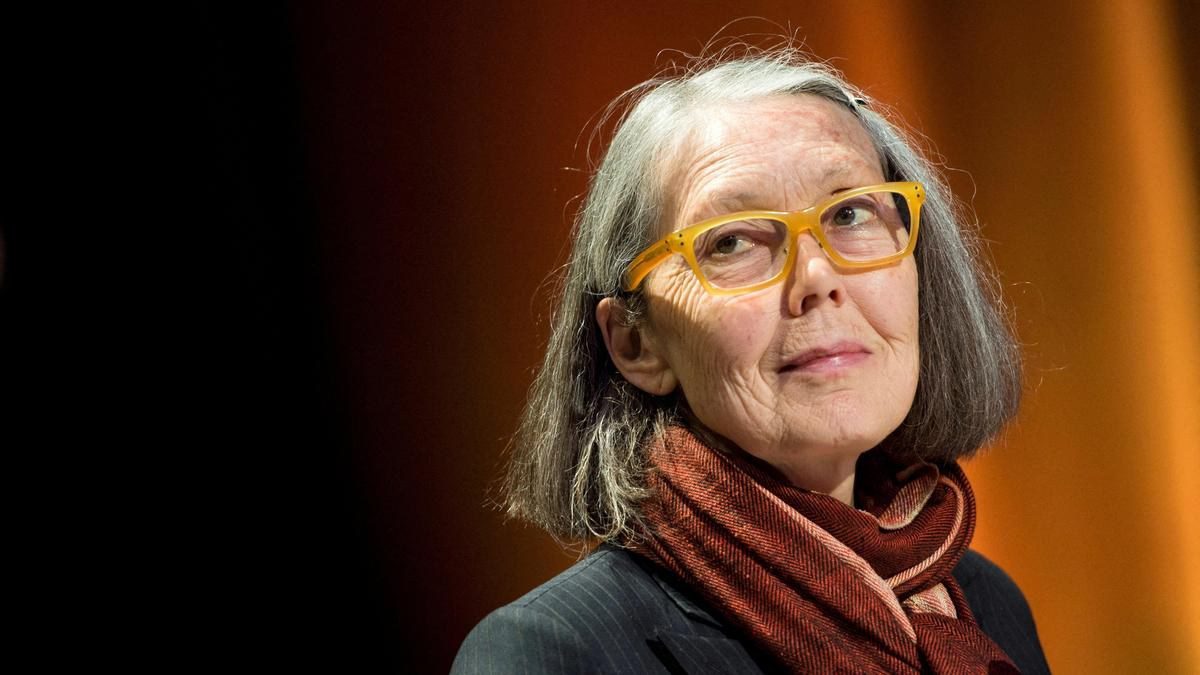
On Thursday, 8 October 2026, the Swedish Academy in Stockholm announced that the Nobel Prize in Literature 2026 is awarded to the Canadian author Anne Carson. According to the official press release of the Academy’s Permanent Secretary, published on nobelprize.org, the prize goes to Carson “for her bold and inventive oeuvre that, in playful dialogue with the classical tradition, has created new forms for contemporary literature”. She receives the prize alone — the official facts page records a prize share of 1/1.
Carson, a poet, essayist, translator and classicist, was born on 21 June 1950 in Toronto, Canada, and writes in English. The Nobel facts page and The Hindu’s report agree on both points. The Hindu also reported that the Academy’s Permanent Secretary, Ingrid Carlberg, had only a short conversation with the new laureate, who was in Iceland at the time, “listening to the wind”, and was surprised but very happy. Carson’s name had been mentioned as a possible laureate for years.
Who is Anne Carson? The Academy’s own reading
The Academy’s bio-bibliography, written by Anders Olsson, Chair of the Nobel Committee, gives the clearest map of her work. In 1981 she published her doctoral thesis in Classics, Odi et Amo Ergo Sum, at the University of Toronto. Throughout her career she has combined writing poetry with translation and university teaching. Olsson describes her work as sitting at the meeting point of “the philologist’s obsession with words and the poet’s desire for new meaning”, and notes that she has named the etymology of words as the starting point of everything she writes.
Her long essay Eros the Bittersweet (1986) is described as the foundation of all that followed. It takes a compound adjective from the Greek poet Sappho that defines Eros as pain and sweetness combined. From there, Carson developed a habit of putting very different voices side by side: in Economy of the Unlost (1999) she sets the Greek poet Simonides of Keos against Paul Celan, and in Men in the Off Hours (2000) she pairs the historian Thucydides with Virginia Woolf.
The 1990s produced the works most often cited. ‘The Glass Essay’, in Glass, Irony and God (1995), is a long poem about grief and abandonment that is also a reading of Emily Brontë. Autobiography of Red: A Novel in Verse (1998) — which the Academy says is “often heralded as Carson’s greatest” work — starts from fragments by the Greek poet Stesichoros about the winged red monster Geryon, killed by Heracles in one of his labours, and recasts the monster as a tender young hero in a modern coming-of-age story.
Later works continue the experiment with form. The Beauty of the Husband: A Fictional Essay in 29 Tangos (2001) opens each of its 29 episodes with lines by the Romantic poet John Keats. Nox (2010), written in memory of her brother Michael, is described by the Academy as “an unforgettable work” — an epitaph in the form of a box holding an accordion fold-out of pictures, letters and texts, woven together with the Roman poet Catullus’s elegy 101 for his own brother. Float (2016) is a set of twenty-two chapbooks that can be read in any order, and Wrong Norma (2024) is her most recent title named in the citation material.
The translator as author
A distinctive feature of the 2026 award is the weight the Academy gives to translation. Olsson writes that Carson’s translations from Classical Greek “may be regarded as independent works in their own right”. He names her version of Sappho’s fragments, If Not, Winter (2002), and her translations of Sophocles’s Electra (2001) and Antigone (2015) and Euripides’s Bakkhai (2015). This is the “playful dialogue with the classical tradition” the citation refers to: ancient Greek and Latin texts are not quoted as decoration but rewritten, argued with and placed beside modern lives.
The citation’s other key phrase — “new forms” — points to how freely Carson mixes genres. A poem becomes an essay, a verse book becomes a novel, a translation becomes a stage work, and an elegy becomes an object in a box. Olsson also notes her collaborations with visual artists, choreographers and opera and theatre directors.
Background & Framework
The Nobel Prizes were set up under the will of the Swedish inventor Alfred Nobel, which asked that his estate fund prizes for those who “during the preceding year, have conferred the greatest benefit to humankind”. Each prize is chosen by an independent institution. The Nobel Prize in Literature is awarded by the Swedish Academy, Stockholm; its Nobel Committee prepares the shortlist, and the decision is announced by the Academy’s Permanent Secretary. The prizes are presented on 10 December, the anniversary of Alfred Nobel’s death; The Hindu reported the 2026 prize money as 12 million Swedish kronor per prize.
The 2026 Literature prize was the fourth of the season. The Hindu’s report lists the earlier awards: Physiology or Medicine to Karl Deisseroth, Peter Hegemann and Georg Nagel for discoveries leading to optogenetics; Physics to Francis Halzen for work linked to the IceCube neutrino observatory at the South Pole; and Chemistry to Henri Kagan and Kenso Soai. The Peace Prize was due on 9 October and the Economic Sciences prize on 12 October. The 2025 Literature laureate was the Hungarian writer László Krasznahorkai.
India’s link to this prize is Rabindranath Tagore, the first Indian Nobel laureate, who won the Literature prize in 1913. His official prize motivation praises his “profoundly sensitive, fresh and beautiful verse”, made “in his own English words, a part of the literature of the West”. His languages are listed as Bengali and English.
Why this award matters
The choice says something about how the Swedish Academy reads literature now. Carson is not a novelist in the usual sense, and much of her most praised writing is hard to label — essay, poem, translation, scholarship and performance at once. By rewarding an author whose method is to place an ancient fragment beside a modern feeling, the Academy is endorsing hybrid, cross-genre writing and treating translation as original creation.
For readers in India, the award is also a reminder that a work need not be written in one’s first language, or in one fixed genre, to matter. Tagore himself reached a world audience through his own English renderings of his Bengali poems — the very feature singled out in his 1913 motivation. Carson’s career, built on carrying Greek and Latin into contemporary English, belongs to the same tradition of literature that travels between languages.
The CLAT Angle
Nobel Prizes are a fixture of the Current Affairs including General Knowledge section. A CLAT passage on this award could quote the citation and then ask:
- Who and where: the laureate (Anne Carson), her nationality (Canadian), and the awarding body (Swedish Academy, Stockholm) — a common distractor swaps in the Norwegian Nobel Committee, which awards only the Peace Prize.
- Book–author pairs: Autobiography of Red, Nox, Eros the Bittersweet, Glass, Irony and God and If Not, Winter.
- Classical links: Sappho, Stesichoros and Geryon, Catullus — tested as “which ancient poet inspired which work”.
- Static GK: Tagore 1913; Nobel prizes presented on 10 December; the 2025 laureate Krasznahorkai.
In English / reading comprehension, the citation itself is a good vocabulary exercise: “oeuvre” means an author’s whole body of work, and a question may ask what “in playful dialogue with the classical tradition” implies about her method.
Reading the citation closely
Each part of the citation does a job. “Bold and inventive” praises risk-taking in form. “Oeuvre” makes clear the prize honours a lifetime of work rather than a single book. “Playful dialogue with the classical tradition” describes her method of treating ancient texts as partners in a conversation. And “new forms for contemporary literature” names the result — books that do not fit the old categories. A student who can explain those four phrases can answer most questions a paper is likely to frame on this award.
Key Facts
- Prize: Nobel Prize in Literature 2026, announced on 8 October 2026.
- Laureate: Anne Carson, Canadian poet, essayist, translator and classicist; prize share 1/1.
- Born: 21 June 1950, Toronto, Canada; writes in English.
- Citation: “for her bold and inventive oeuvre that, in playful dialogue with the classical tradition, has created new forms for contemporary literature”.
- Awarding body: Swedish Academy, Stockholm; Permanent Secretary Ingrid Carlberg; Nobel Committee chair Anders Olsson.
- Doctoral thesis: Odi et Amo Ergo Sum (1981), in Classics.
- Foundational essay: Eros the Bittersweet (1986), built on a phrase from Sappho.
- Verse novel: Autobiography of Red (1998), on the monster Geryon from Stesichoros.
- Elegy in a box: Nox (2010), for her brother Michael, with Catullus’s poem 101.
- Translations: Sappho’s fragments as If Not, Winter (2002); Sophocles and Euripides.
- Previous laureate: László Krasznahorkai (Hungary), 2025.
- First Indian laureate: Rabindranath Tagore, Literature, 1913.
Memory Hook / Mnemonic
“CARSON reads RED” — Canadian, Academy of Sweden, Reworks the classics, Sappho (Eros the Bittersweet, If Not, Winter), Oeuvre that is “bold and inventive”, Nox for her brother. And RED = Autobiography of Red, the winged red monster Geryon.
Static anchor: “Tagore 13, Carson 26” — Literature prize, 1913 and 2026, both poets who carried one language into another.
Practice Quiz — 10 CLAT-Style Questions
Click an option to reveal the answer and explanation.






