
CURRENT AFFAIRS | 21 SEPTEMBER 2026
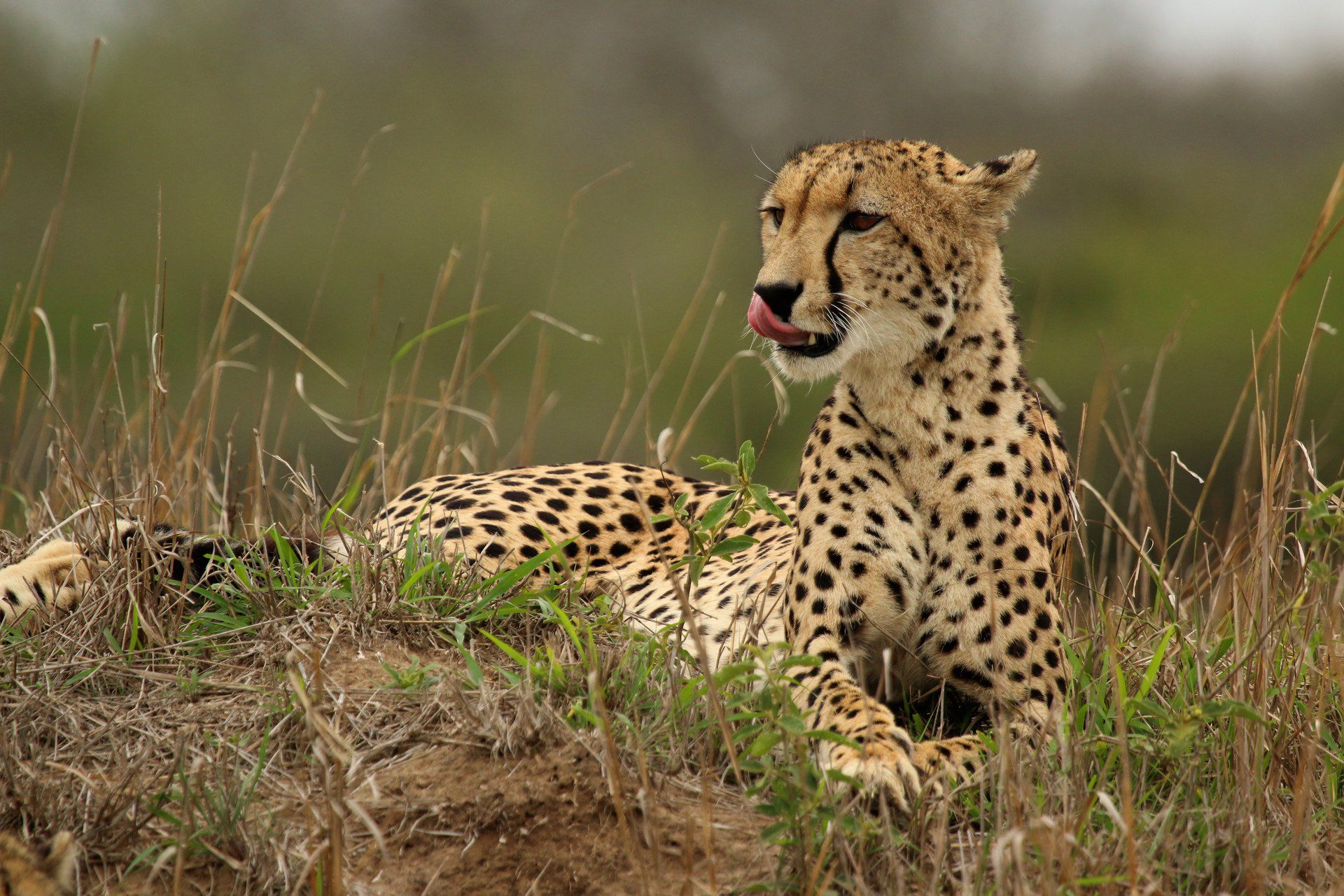
On Sunday, 20 September 2026, Madhya Pradesh Chief Minister Mohan Yadav released CCB-2, a female cheetah brought to India from Botswana, into the Gandhi Sagar Wildlife Sanctuary in the Mandsaur–Neemuch region of Madhya Pradesh, and named her “Radha”. As reported by the news agency ANI and The Indian Express, CCB-2 was moved from Kuno National Park, where the Botswana batch had been held since its arrival. Her release takes the number of cheetahs at Gandhi Sagar to four — two males and two females.
The move is designed to solve a specific problem. According to The Indian Express, the female already at Gandhi Sagar had so far failed to mate with the two males there, and wildlife officials hope CCB-2 will help start a new cheetah family at India’s second cheetah site. Deccan Chronicle reported that she was preferred over an older Botswana female because of her younger age and the value of adding a new bloodline to the gene pool. The release comes two days after another milestone: on 18 September 2026, KGP12, a female born in India, gave birth to four cubs at Kuno — a second generation born on Indian soil — taking the population under Project Cheetah to 56, according to reports citing forest officials and the Union Environment Ministry.
Who is CCB-2?
The code is literal: CCB stands for Cheetah Conservation Botswana. Reports on the release say she was born in Ghanzi in Botswana and arrived in India on 28 February 2026, at about two-and-a-half years old; she is now around three. She was part of the third contingent of African cheetahs brought to India — nine animals, six females and three males, which reached Kuno on 28 February 2026, as reported by All India Radio (News On AIR). After quarantine at Kuno, the Botswana animals were moved into soft enclosures (bomas) before any release into the wild.
Speaking at the release, the Chief Minister described Project Cheetah as significant “not only for Madhya Pradesh but for Asia”, pointing out that the cheetah had become extinct in India. According to the reports, the Centre’s long-term goal is a metapopulation of 60–70 cheetahs across the Kuno–Gandhi Sagar landscape — that is, separate but connected sub-populations that can exchange animals and genes.
Project Cheetah: four years in brief
India’s cheetah reintroduction began on 17 September 2022, when eight cheetahs from Namibia were released into enclosures at Kuno National Park in Sheopur district, Madhya Pradesh. A second batch of 12 cheetahs from South Africa arrived in February 2023. The Botswana group of nine in February 2026 is the third. The project has had setbacks — several adult deaths and cub mortality, including the loss of an earlier litter of KGP12 in the wild — but also a steadily rising number of India-born cubs. The September 2026 reports record 36 India-born cheetahs in the total of 56.
Kuno was the first site. Gandhi Sagar became the second when two male cheetahs, Pawak and Prabhas, were moved there from Kuno in April 2025. The sanctuary lies along the Madhya Pradesh–Rajasthan border around the Gandhi Sagar reservoir on the Chambal river. Spreading the population across two sites is basic conservation insurance: a disease outbreak, fire or prey crash at one site cannot wipe out the whole founder population.
Background & Framework
Extinction and return. The cheetah (Acinonyx jubatus) is the only large carnivore to have been driven extinct in independent India; it was declared extinct in India in 1952. The Indian animal was the Asiatic subspecies; Project Cheetah uses African cheetahs. Globally the species is listed as Vulnerable on the IUCN Red List.
Legal protection. The cheetah is listed in Schedule I of the Wild Life (Protection) Act, 1972, which gives the highest level of protection against hunting. Constitutionally, Article 48A (a Directive Principle, added by the 42nd Amendment, 1976) directs the State to protect and improve the environment and safeguard forests and wildlife, and Article 51A(g) makes it a fundamental duty of every citizen to protect the natural environment including wildlife and to have compassion for living creatures. “Forests” and “protection of wild animals and birds” are in the Concurrent List (entries 17A and 17B), moved there from the State List by the same amendment.
Institutions. Project Cheetah is run by the National Tiger Conservation Authority (NTCA), a statutory body under the Wild Life (Protection) Act created by the 2006 amendment, under the Ministry of Environment, Forest and Climate Change, with the Madhya Pradesh Forest Department. It follows the Action Plan for Introduction of Cheetah in India, released in January 2022, with technical support from the Wildlife Institute of India.
Why the cheetah, and why these sites?
The official case for reintroduction rests on the idea of a flagship species for grasslands and open forests. India’s conservation effort has long centred on the tiger, a forest predator. Savannah-type grasslands and scrub — often wrongly classified as “wasteland” — have received less protection. A top predator that needs such landscapes can, in principle, drive restoration of the whole ecosystem, from prey herbivores to grasses. Kuno was chosen partly because it had prepared for lion reintroduction (the Asiatic lion translocation from Gujarat that did not take place), and villages had been relocated out of the park. Gandhi Sagar offers a second, larger landscape with space for expansion.
The critics’ case deserves equal attention in an exam essay. Scientists have questioned whether Kuno has enough area and prey for a free-ranging population, pointing to the need for fenced enclosures, repeated recapture of animals that strayed out of the park, and deaths linked to infections, heat and conflict with other animals. Cheetahs range widely, and a metapopulation across Kuno and Gandhi Sagar will require corridors or regular human-managed translocations between sites. There is also a debate about priorities: whether the resources would be better spent on critically endangered native species such as the Great Indian Bustard, which shares the same grassland habitat.
The CLAT Angle
This is a high-probability GK topic because it combines a fresh event with static facts CLAT likes to test. Expect questions such as: which country CCB-2 came from (Botswana); where she was released (Gandhi Sagar Wildlife Sanctuary, Madhya Pradesh); the first source country of Project Cheetah (Namibia, 2022) and the second (South Africa, 2023); the year the cheetah was declared extinct in India (1952); its IUCN status (Vulnerable); and the implementing agency (NTCA). In Legal Reasoning, the constitutional pair of Article 48A and Article 51A(g), or the rule that a Schedule I animal cannot be hunted except in narrow statutory circumstances, can anchor a principle–facts question. A trap to watch: Gandhi Sagar is a wildlife sanctuary, not a national park or tiger reserve; Kuno is a national park.
Analysis: what the release tells us
The CCB-2 release shows how Project Cheetah is moving from import to management. For four years the headline has been the arrival of animals from Africa. Now the emphasis is on genetics, sex ratios and breeding across two sites. A population founded by a few dozen animals is vulnerable to inbreeding; mixing Namibian, South African and Botswanan bloodlines, and placing breeding-age females where males are already established, are the tools managers use to avoid it. The KGP12 litter matters for the same reason: a second generation born in India is the first real evidence that the population can sustain itself rather than depend on imports.
The test, however, is long-term. A self-sustaining wild population needs survival rates for cubs and adults high enough to outpace deaths, enough prey, and enough space for animals to disperse without constant intervention. The 60–70 metapopulation target across the Kuno–Gandhi Sagar landscape is modest by global standards but ambitious for a species that vanished from India over seventy years ago. Aspirants writing on this in an essay should present both the scientific achievement and the scientific scepticism — that balance is what examiners reward.
Key Facts
- Event: Female cheetah CCB-2 (“Radha”) released into Gandhi Sagar Wildlife Sanctuary on 20 September 2026 by CM Mohan Yadav.
- Origin: Botswana (CCB = Cheetah Conservation Botswana); arrived in India on 28 February 2026; relocated from Kuno National Park.
- Gandhi Sagar count: four cheetahs — two males, two females.
- Botswana batch: nine cheetahs (six females, three males) — the third contingent.
- Kuno births: India-born KGP12 gave birth to four cubs on 18 September 2026; total under Project Cheetah reported at 56.
- Project start: 17 September 2022, eight cheetahs from Namibia at Kuno; 12 from South Africa followed in February 2023.
- Second site: Gandhi Sagar since April 2025 (males Pawak and Prabhas).
- Extinct in India: declared in 1952.
- IUCN status: Vulnerable; protected under Schedule I, Wild Life (Protection) Act, 1972.
- Implementing agency: NTCA under MoEFCC; Action Plan for Introduction of Cheetah in India (January 2022).
- Target: a long-term metapopulation of 60–70 cheetahs across the Kuno–Gandhi Sagar landscape.
Memory Hook / Mnemonic
Remember the three source countries in order as “N-S-B: Namibia Sends, South Africa Supports, Botswana Breeds” — 2022, 2023, 2026. For the two sites: “K before G” — Kuno National Park first, Gandhi Sagar Sanctuary second. And the numbers that bookend the story: “Gone in ’52, back in ’22.”
Practice Quiz — 10 CLAT-Style Questions
Click an option to reveal the answer and explanation.