

CURRENT AFFAIRS | 12 OCTOBER 2026
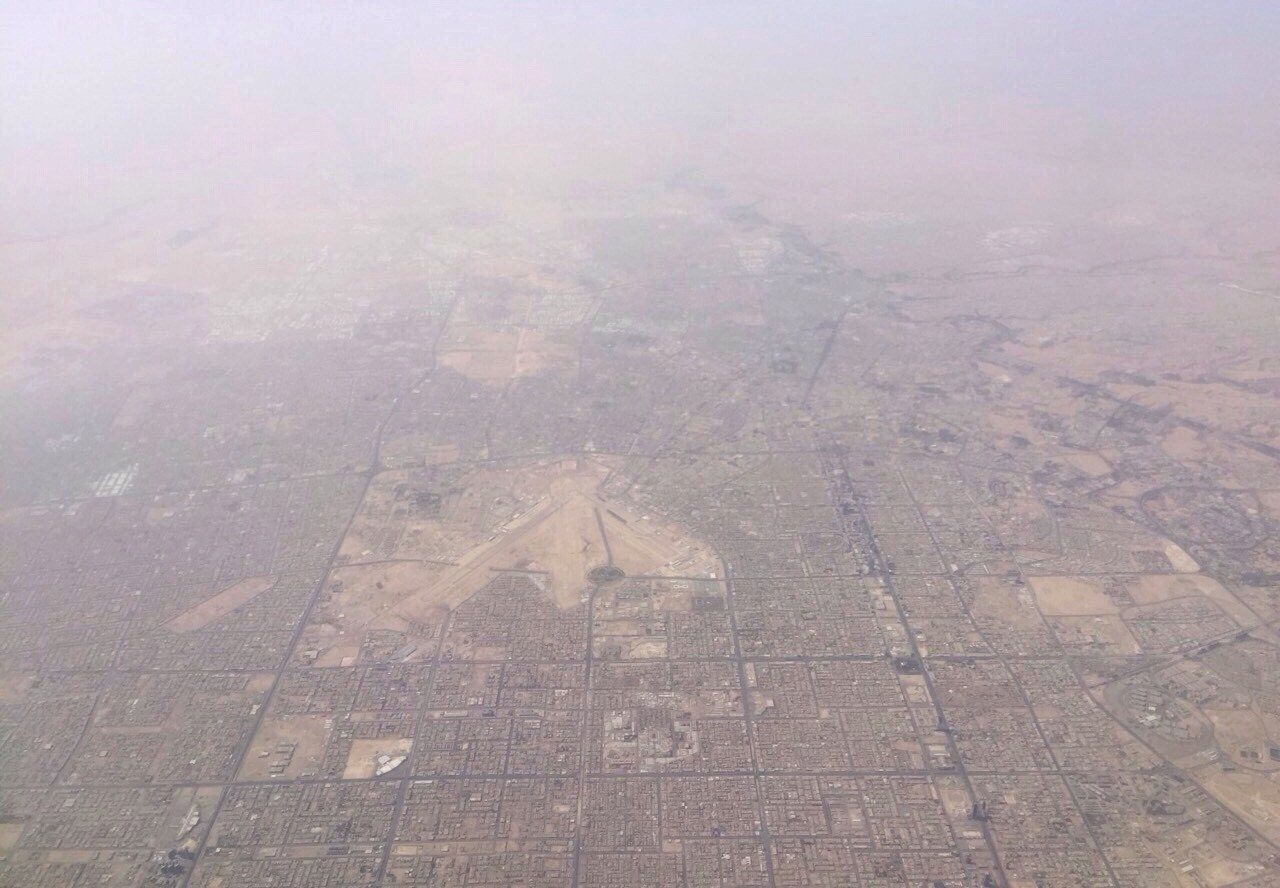
An attack on King Khalid International Airport in Riyadh, the capital of Saudi Arabia, on Saturday, 10 October 2026 killed 12 people and injured more than 300, according to figures from Saudi authorities reported by The Hindu and Al Jazeera. Saudi Arabia has blamed Yemen’s Houthi group for the attack. It was, as Al Jazeera reported, the deadliest attack on the kingdom in more than a decade.
On Sunday, 11 October 2026, India’s Ministry of External Affairs (MEA) issued a statement strongly condemning the attack. “We strongly condemn the repeated attacks on Riyadh’s King Khalid International Airport over the past few days, including the dastardly attack on October 10, which have led to loss of lives, injuries and damage to property,” the MEA said, as quoted by The Hindu. It called attacks on civilians and civilian infrastructure “completely unacceptable” and said they “must cease immediately”.
This is a fresh event. On 9 October we covered an earlier Houthi attack on the same airport; the 10 October strike is a separate and far deadlier incident.
What happened
According to Al Jazeera’s report of 10 October, Saudi Arabia’s General Authority of Civil Aviation (GACA) said the attack killed at least four Saudi citizens and two Bangladeshis, and one person each from the United States, Jordan, Palestine, Syria, Sudan and Egypt. At the latest count, at least 309 people were wounded, some of them critically. Operations at the airport were temporarily suspended while officials assessed the damage.
The report added that this was the third Houthi attack on the airport that week. An attack on Thursday, 8 October, had killed at least three Saudi citizens, including a pilot, according to GACA. The Houthis had earlier declared Saudi airspace a zone of military operations after the Yemeni government launched an offensive against them on Monday, 5 October.
Condemnation came from many capitals and from the United Nations. Al Jazeera reported that the UN Secretary-General said attacks on civilians and civilian infrastructure violate international law and must cease immediately, while the UN special envoy for Yemen described strikes on civilian airports as “a grave escalation”.
India’s response
The MEA statement had three parts. First, condemnation of the repeated attacks, including the “dastardly” one on 10 October. Second, condolences: “We express our condolences to the families of the deceased and wish speedy recovery to the injured persons.” Third, solidarity: “We stand in solidarity with the people and the government of the Kingdom of Saudi Arabia in defence of their sovereignty, and hope that peace and normalcy return to the region at the earliest.”
India’s stake is large. According to the Embassy of India in Riyadh, the Indian community in Saudi Arabia numbers about 2.74 million, a figure the MEA has also used. The Embassy’s bilateral brief notes that India imported 33.14 million metric tonnes of crude oil from Saudi Arabia in FY 2024-25, about 13.58% of its total crude imports, and that Saudi Arabia is India’s fifth-largest trading partner. Any threat to Saudi civil aviation or energy infrastructure therefore touches Indian workers, travellers and energy security directly.
Background & Framework
The Yemen conflict: as Al Jazeera describes it, forces loyal to Yemen’s internationally recognised government are fighting the Houthis (described as Iran-backed) for control of the country. The Houthis hold the capital, Sanaa. Saudi Arabia wages an air campaign in support of the government’s ground war, and a Saudi-led coalition is fighting in Yemen.
Geography: Yemen lies on the south-west of the Arabian Peninsula, bordering Saudi Arabia to the north. The Bab-el-Mandeb strait, at Yemen’s south-western tip, links the Red Sea with the Gulf of Aden and is one of the world’s key shipping chokepoints.
Law: international humanitarian law requires parties to a conflict to distinguish between military objectives and civilians or civilian objects. That principle is why statements by India and the UN focus on attacks on “civilians and civilian infrastructure”. Civil aviation itself is governed internationally through the Chicago Convention (1944), which created the International Civil Aviation Organization (ICAO).
The regional security picture
The attack came during an intensified phase of the Yemen war. Two defence arrangements around Saudi Arabia are worth knowing for current-affairs questions:
- Saudi–Pakistan Strategic Mutual Defence Agreement, signed in Riyadh on 17 September 2025, under which aggression against either country is to be treated as aggression against both.
- Makkah Joint Defence Agreement, signed in Mecca on 7 August 2026 by Saudi Arabia, Turkey and Pakistan, treating an armed attack on any one as an attack on all three.
On 5 October 2026, at an emergency meeting in Riyadh, the three countries agreed to move to implement these collective defence commitments, including the rapid deployment of agreed forces in Saudi Arabia, according to a joint statement reported by the Khaleej Times. Whether foreign troops are engaged in combat has not been confirmed in the sources we read, and this article makes no such claim.
The CLAT Angle
GK questions are likely to test: the airport (King Khalid International, Riyadh); the date (10 October 2026); the toll (12 killed, 300+ injured); the group blamed (Yemen’s Houthis); and India’s response (MEA condemnation, 11 October).
Static links: Yemen’s capital Sanaa; Bab-el-Mandeb linking the Red Sea and Gulf of Aden; the Chicago Convention and ICAO; India’s diaspora and energy ties with Saudi Arabia.
Reasoning passages: a passage on international humanitarian law could ask whether an airport used by civilians is a lawful target, testing the principle of distinction. A diplomacy passage could ask why India pairs condemnation with “solidarity” and a call for “peace and normalcy” — balancing a strategic partner’s sovereignty with de-escalation.
Analysis: why this matters beyond the Gulf
First, aviation security. King Khalid International is a major hub; an attack that suspends its operations disrupts travel for millions, including Indian workers and pilgrims who use Saudi airports. Al Jazeera reported that the Houthis warned airliners away from Saudi airspace, except over the holy cities of Mecca and Medina — a warning that directly affects airline route planning.
Second, energy security. Saudi Arabia supplies roughly one-seventh of India’s crude imports, according to the Embassy’s FY 2024-25 figures. Escalation in the Arabian Peninsula raises risk premiums on oil and on shipping through the Red Sea.
Third, diplomatic balance. India maintains close relations across the Gulf. Its statement is carefully worded: it condemns attacks on civilians, offers condolences, affirms Saudi sovereignty and calls for peace, without taking positions beyond that. This is consistent with India’s long-standing approach of condemning terrorism and attacks on civilians while urging restraint and dialogue.
Key Facts
- Target: King Khalid International Airport, Riyadh, Saudi Arabia.
- Date: Saturday, 10 October 2026.
- Toll (Saudi authorities): 12 killed, 300+ injured (latest GACA count 309).
- Saudi Arabia blamed Yemen’s Houthis; third attack on the airport that week.
- MEA statement on 11 October: “strongly condemn”, called the 10 October attack “dastardly”.
- MEA: attacks on civilians and civilian infrastructure “completely unacceptable”.
- Indian community in Saudi Arabia: about 2.74 million (Embassy of India).
- Saudi crude: 13.58% of India’s crude imports in FY 2024-25; Saudi Arabia is India’s 5th-largest trading partner.
- Yemen’s capital Sanaa is held by the Houthis.
- Bab-el-Mandeb links the Red Sea and the Gulf of Aden.
- Makkah Joint Defence Agreement (Saudi Arabia, Turkey, Pakistan): 7 August 2026.
Memory Hook / Mnemonic
“Ten-Ten, Twelve dead, Three hundred hurt.” — 10 October, 12 killed, 300+ injured.
“K-K in R” — King Khalid in Riyadh. “MEA on Eleven” — India condemned on 11 October.
Bab-el-Mandeb = “Red to Aden” — links the Red Sea to the Gulf of Aden.
Practice Quiz — 10 CLAT-Style Questions
Click an option to reveal the answer and explanation.






