Watch the video explainer · open on YouTube
VIDEO EXPLAINER | 14 OCTOBER 2026
On Sunday, 11 October 2026, the United States announced on social media that Russia and Ukraine had agreed to an “energy ceasefire”, effective immediately. No written text of the arrangement was published, and its scope was not made public. Within days the claim was disputed on the ground: according to Ukraine, Russian attacks on the night of 13–14 October left about 600,000 people (roughly 6 lakh) without electricity, mainly in the Kyiv and Kharkiv regions. For a CLAT aspirant the episode is a compact lesson in three things at once: how ceasefires work, what the law of war says about civilian infrastructure, and why a war far away reaches India’s fuel prices.
1. What is an “energy ceasefire”?
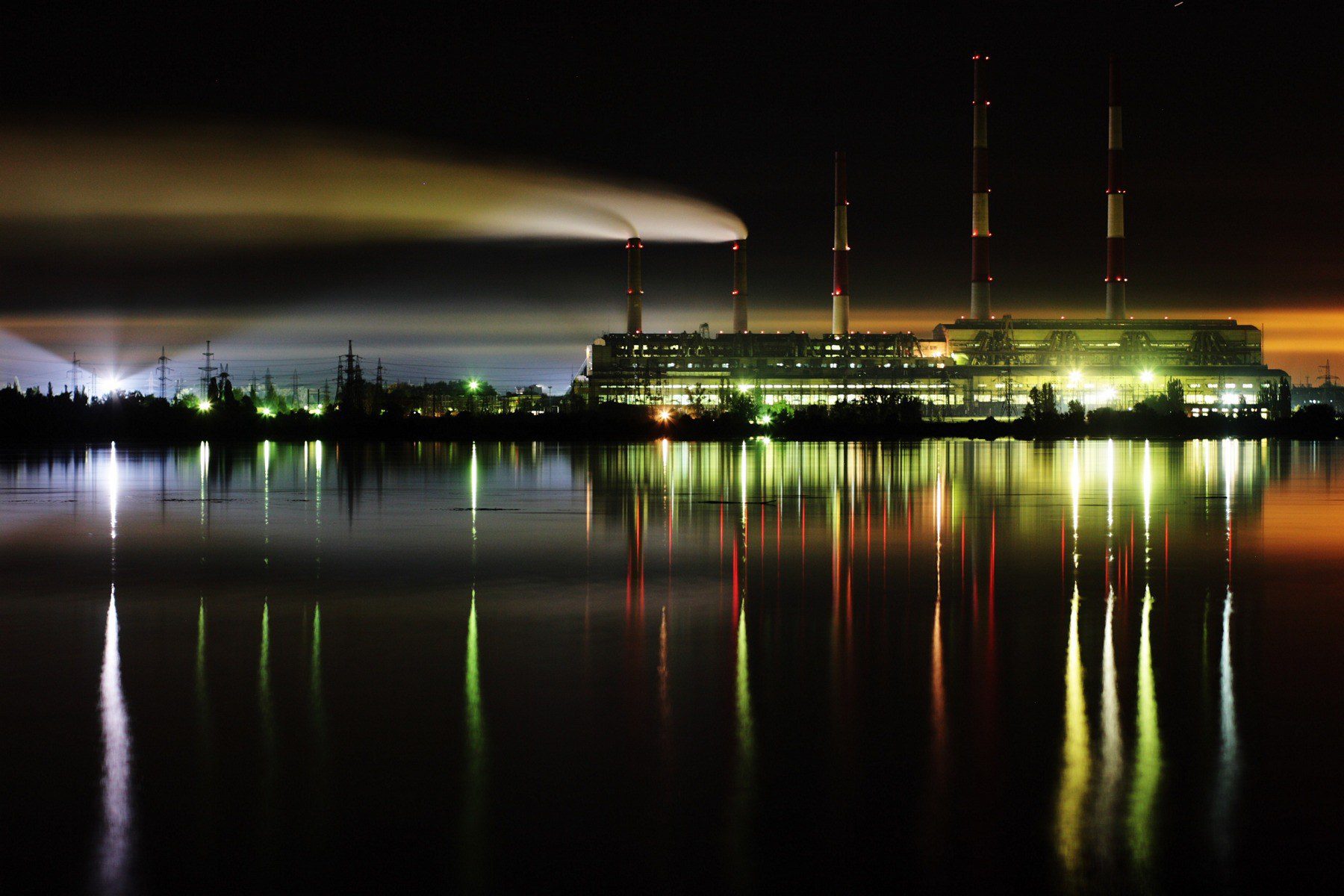
An energy ceasefire is a partial truce. The war itself continues, but both sides agree not to strike each other’s power, oil and gas infrastructure: power plants, transmission lines, refineries and pipelines. It is narrower than a general ceasefire and is usually meant as a first step that builds trust for wider talks. The US said the aim was to help bring down the cost of oil and diesel.
2. The announcement and the two positions
The US announcement of 11 October said “both parties have agreed”, but gave no details. Ukraine said yes with conditions: it would agree if Russia complied, and was ready to halt strikes on Russian refineries if Russia stopped attacking Ukrainian energy. Russia, through its foreign ministry on 12 October, said only that talks are ongoing, without confirming an agreement. A similar US announcement on 14 September 2026 had also come to nothing.
3. Strikes of 13–14 October and the winter problem
On the night of 13–14 October, Ukraine reported damage at 26 power-system facilities and 4 oil-and-gas facilities, and about 600,000 people without power. Ukraine’s Prime Minister said all three of Kyiv’s combined heat-and-power stations were attacked. These figures are Ukraine’s own and have not been independently verified. The timing matters: in winter, a power cut is not only darkness. Heating and running water depend on electricity, so energy strikes hit civilians directly.
4. The precedent: March–April 2025
This is not the first such pause. After a US–Russia call on 18 March 2025, the parties were to refrain from strikes on energy infrastructure for 30 days. On 18 April 2025, the Kremlin said the 30-day period had ended. Each side claimed to have honoured the deal while accusing the other of repeated violations.
5. What international law says
The rules of war are called International Humanitarian Law (IHL). Its core treaties are the four Geneva Conventions of 1949 and their Additional Protocols of 1977. Additional Protocol I (8 June 1977) sets out the protection most relevant here:
- Article 52: “Civilian objects shall not be the object of attack or of reprisals.” Only military objectives, objects that make “an effective contribution to military action”, may be attacked.
- Article 54: protects objects indispensable to the survival of the civilian population, such as foodstuffs and drinking-water installations and supplies. It does not name power plants.
- Article 56: works and installations containing dangerous forces (dams, dykes and nuclear electrical generating stations) get special protection.
Whether a particular power station is a civilian object or a military objective is exactly the kind of fact-based legal question the law leaves to be judged case by case, which is why an agreed energy ceasefire matters.
6. Why it matters to India
India imports about 88% of its crude oil (88.7% in FY 2025–26, provisional PPAC data, as reported). After February 2022, Russia offered steep discounts to attract buyers, and Indian refiners turned Russia into India’s largest source of crude oil. So every attack on energy infrastructure, by moving global oil prices, can reach Indian consumers. India’s stated position, repeated by the Ministry of External Affairs spokesperson on 7 October 2026, is that “dialogue and diplomacy are the way forward”.
Legal and institutional framework
- Geneva Conventions I–IV (1949): the core treaties of International Humanitarian Law.
- Additional Protocols I and II (1977): added to the Conventions; AP I dated 8 June 1977.
- AP I, Article 52: civilian objects shall not be attacked; military objectives defined.
- AP I, Article 54: objects indispensable to civilian survival (food, drinking water).
- AP I, Article 56: dams, dykes, nuclear electrical generating stations.
- ICRC: the guardian body that publishes the treaty texts and commentaries.
CLAT angle
- Legal reasoning: apply Article 52’s test: is a power plant a civilian object or a military objective on given facts?
- GK: number and year of the Geneva Conventions (4, 1949); year of the Additional Protocols (1977).
- Passage inference: a partial ceasefire with no written text is hard to verify; announcements differ from agreements.
- Economy link: India’s import dependence (~88%) and Russia as its largest crude source since 2022.
Key facts
| Fact | Detail |
|---|---|
| US announcement | 11 October 2026, on social media; no written text |
| Ukraine’s position | Yes, if Russia complies |
| Russia’s position | Talks are ongoing (12 October) |
| Strikes, 13–14 Oct | About 600,000 without power (Ukraine’s figure) |
| 2025 precedent | 30-day pause from 18 March; ended 18 April 2025 |
| Geneva Conventions | 4, all of 1949 |
| Additional Protocols | 1977 |
| AP I Art 52 / 56 | Civilian objects / dams and nuclear power stations |
| India crude imports | About 88% of requirement |
| India’s position | Dialogue and diplomacy are the way forward |
Memory hook
“4 · 49 · 77 · 52 · 56”: 4 Conventions, 1949; Protocols 1977; Article 52 protects civilian objects; Article 56 guards dams and nuclear stations (“56 = dangerous forces”).
Sources
AP via PBS NewsHour and Al Jazeera (11 October 2026); CNBC (14 October 2026); Kyiv Independent (13–14 October 2026); Kremlin readout (18 March 2025); Meduza and Ukrainska Pravda (18 April 2025); ICRC, The Geneva Conventions of 12 August 1949 and their Additional Protocols; KNN India citing PPAC; Outlook Business (Kpler data); IANS report of the MEA weekly briefing (7 October 2026).
Free in the CLAT Gurukul app
These notes (as a PDF lesson) and the 10-question CBT are in the app under Current Affairs → 14 Oct 2026. Get the app on Google Play or open app.clatgurukul.com.
Practice Quiz — 10 CLAT-Style Questions
Click an option to reveal the answer and explanation.