Watch the video explainer · open on YouTube
VIDEO EXPLAINER | 31 OCTOBER 2026
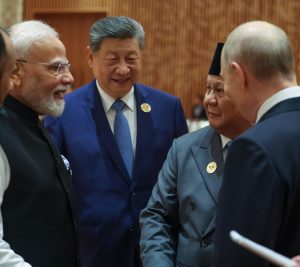
At the end of August 2026 Prime Minister Narendra Modi made a two-day state visit to Uzbekistan (29-30 August, Tashkent), where India and Uzbekistan raised their ties to a Comprehensive Strategic Partnership, signed 11 agreements and agreed to work towards a long-term uranium supply arrangement. He then flew to Bishkek for the 26th SCO summit (31 August – 1 September 2026), which marked the organisation’s 25th year, adopted the Bishkek Declaration and 27 other documents, and handed the chairmanship to Pakistan. The previous summit, the 25th, had been held in Tianjin, China, in 2025 and produced the Tianjin Declaration, which condemned the Pahalgam terror attack by name – a diplomatic win for India.
What happened
The Tianjin Declaration strongly condemned the Pahalgam terrorist attack of 22 April 2025, in which 26 civilians were killed, and said the perpetrators, organisers and sponsors must be brought to justice.
PM Narendra Modi made a state visit to Uzbekistan from 29 to 30 August 2026, holding talks with President Shavkat Mirziyoyev in Tashkent.
India and Uzbekistan elevated their relationship to a Comprehensive Strategic Partnership.
Eleven agreements and MoUs were signed during the visit, covering culture, education, tourism, mining, traditional medicine, environment, finance and scientific research.
India and Uzbekistan set a bilateral trade target of USD 5 billion by 2030; trade in 2025-26 was close to USD 1 billion, and India is among Uzbekistan’s top 10 trading partners.
Modi was conferred the ‘Oliy Darajali Do’stlik’ Order, Uzbekistan’s highest state honour for foreign leaders.
India announced a grant of USD 1 million for afforestation in the Aral Sea region.
India also announced 100 Lal Bahadur Shastri Scholarships for Hindi language and an ICCR Sanskrit Chair at Tashkent State University of Oriental Studies.
The ‘SCO Plus’ meeting at Bishkek was themed ‘The UN as a Key Element of a Just World Order’ and included observer Mongolia, dialogue partners such as Azerbaijan, Armenia, Egypt, Laos and Turkey, and guests Vietnam and Togo.
Background and the rules behind it
The Shanghai Cooperation Organisation was formally established on 15 June 2001 in Shanghai, China.
The SCO now has 10 full members. India and Pakistan joined in 2017, Iran in 2023 and Belarus in 2024.
SCO members together cover about 24% of the world’s land area and 42% of its population.
Uzbekistan’s capital is Tashkent and its president since 14 December 2016 is Shavkat Mirziyoyev; the currency is the Uzbek sum.
Uzbekistan is one of only two doubly landlocked countries in the world; the other is Liechtenstein.
Uzbekistan lies between the Amu Darya and Syr Darya rivers. The Aral Sea, once the world’s fourth-largest inland water body, has shrunk to roughly a tenth of its old area because their water was diverted for cotton.
Uzbekistan became independent from the Soviet Union on 31 August 1991 and marks 1 September as Independence Day.
Key terms
- Comprehensive Strategic Partnership: The highest tier India uses for a bilateral relationship, covering security, trade, technology and people-to-people links.
- Council of Heads of State: The SCO’s annual leaders’ summit and its supreme decision-making body.
- Dialogue partner: A country that cooperates with the SCO in chosen areas without the rights of a member or an observer.
- Doubly landlocked: A country surrounded only by other landlocked countries, so you must cross two borders to reach a sea.
- RATS: The SCO’s Regional Anti-Terrorist Structure at Tashkent, which shares intelligence on terrorism, separatism and extremism.
- Declaration (summit): A political document agreed by leaders at the end of a summit; it states shared positions but is not a binding treaty.
Constitutional / Legal / Institutional framework
- SCO Charter, 2002: The founding treaty setting the SCO’s aims, organs and the consensus rule; amended by a Protocol approved at Bishkek in 2026.
- Shanghai Convention on Combating Terrorism, Separatism and Extremism, 2001: The SCO’s core counter-terrorism treaty, signed alongside the organisation’s founding; it defines the ‘three evils’ and underpins RATS.
- Bishkek Declaration, 1 September 2026: Political declaration of the 26th SCO summit on security, connectivity, energy and drug control; not a binding treaty.
CLAT angle
- Summit-to-city matching: Tianjin Declaration = 2025 summit in China; Bishkek Declaration = 2026 summit in Kyrgyzstan; the chair passes to Pakistan for 2026-27.
- Institution questions: SCO founded 2001 in Shanghai, Secretariat in Beijing, RATS in Tashkent, India a member since 2017. These three seats are frequently confused.
- A passage on terrorism diplomacy – how India got the Pahalgam attack named in a consensus declaration after it had been left out of a ministers’ statement.
- Energy and resources: why uranium from a doubly landlocked Central Asian state matters to India’s nuclear programme; connectivity through Chabahar and the INSTC.
- Distinguish a DECLARATION (political, non-binding) from a TREATY or CHARTER (binding). Useful for a legal-reasoning principle on international obligations.
Key facts
| Fact | Detail |
|---|---|
| 1996 | Shanghai Five formed by China, Kazakhstan, Kyrgyzstan, Russia and Tajikistan |
| 2001-06-15 | SCO founded in Shanghai with Uzbekistan as the sixth member |
| 2017 | India and Pakistan become full SCO members |
| 2023 | Iran joins the SCO |
| 2024 | Belarus joins the SCO as the tenth member |
| 2025-09-01 | Tianjin summit adopts the Tianjin Declaration condemning the Pahalgam attack |
| 2026-08-30 | India and Uzbekistan agree a Comprehensive Strategic Partnership in Tashkent |
| 2026-09-01 | Bishkek summit adopts the Bishkek Declaration; Pakistan takes the chair |
Mnemonic / memory hook
Remember the trap.
(1) Two summits, two years: Tianjin (25th, 2025, China) and Bishkek (26th, 2026, Kyrgyzstan). The August 2026 news is BISHKEK; Tianjin is background. (2) Uzbekistan’s ties were raised to a COMPREHENSIVE Strategic Partnership – not merely a ‘strategic partnership’. (3) English is not yet an official SCO language; India’s proposal was written into the Bishkek Declaration.
Sources
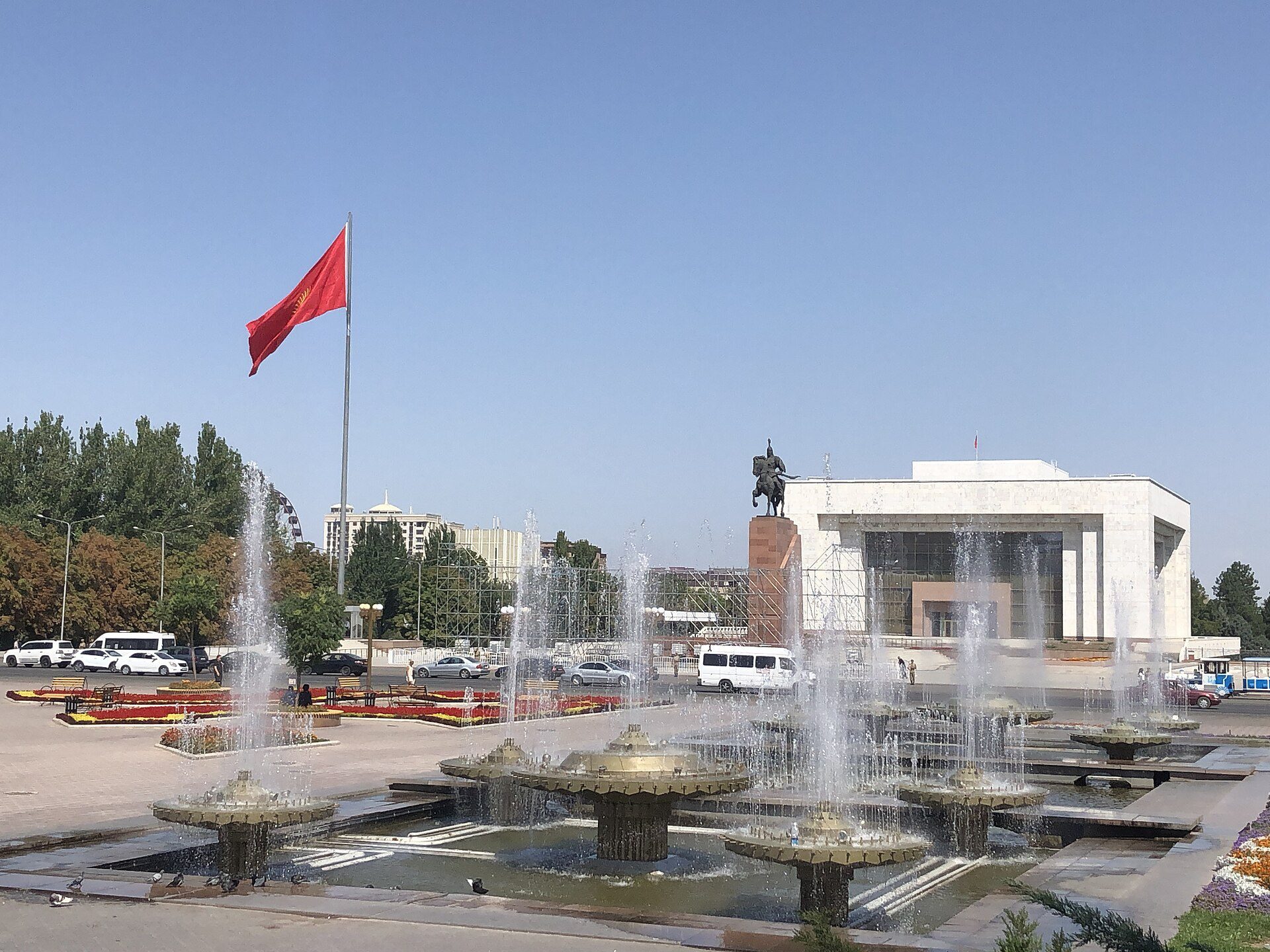
Primary documents and reporting listed in the fact base: pib.gov.in, outlookindia.com, asianmirror.us, UE Sep 2026 p.101, eng.sectsco.org, ddnews.gov.in, en.wikipedia.org. Lead image: Photo: Emil.akhmatbekov, CC BY-SA 4.0, via Wikimedia Commons.
Free in the CLAT Gurukul app
These notes (as a PDF lesson) and the 10-question CBT are in the app under Current Affairs → 31 Oct 2026. Get the app on Google Play or open app.clatgurukul.com.
Practice Quiz — 10 CLAT-Style Questions
Click an option to reveal the answer and explanation.