CURRENT AFFAIRS | 13 OCTOBER 2026
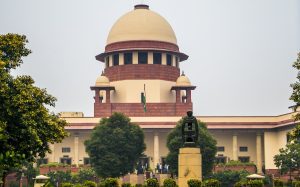
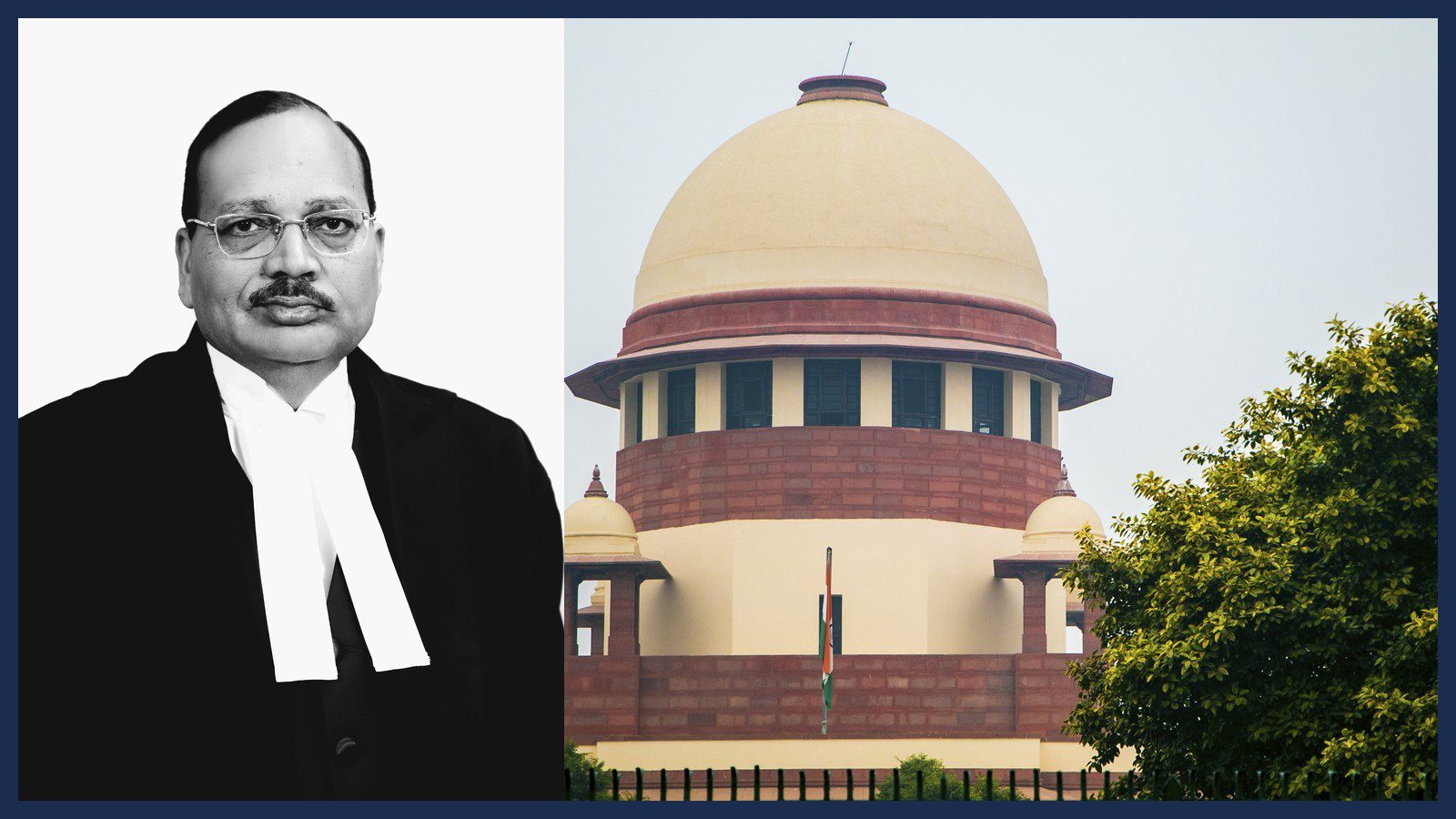
The Supreme Court on Monday, 12 October 2026 asked the Union government to place before it the Standing Operating Procedure (SOP) being followed for data collection in the 2027 Census. The direction came while the Court was hearing a public interest petition which says that caste data in the Census is being recorded only on the basis of self-declaration in a form, without any verification. According to a report by LiveLaw posted the same evening, the Bench of Chief Justice of India Surya Kant, Justice Joymalya Bagchi and Justice V Mohana asked the Solicitor General to place a note before the Court.
Importantly, the Court did not issue notice on the petition. It instead asked the government to explain how the process works: how a person declares themselves as belonging to an OBC or ST category, whether a caste certificate must be attached, who issues such a certificate, and how its genuineness is checked. The case is titled Aakash Goel v Union of India and Anr., W.P.(C) No. 1249 of 2026.
What happened in Court
According to the LiveLaw report, the Chief Justice initially observed that government authorities do not collect information “merely on form basis”. Later in the hearing, however, the Bench conveyed to the Solicitor General the petitioner’s concern that only an application form for self-disclosure is being supplied to collect caste data. The Chief Justice also underlined the problem of fake caste certificates, observing that verification is important so that genuine people are not adversely affected. The petitioner was directed to hand over a copy of the petition to the Solicitor General.
Counsel for the petitioner argued that caste data was being collected solely through a questionnaire, and that errors could creep into data on which welfare schemes and budget allocations would later rest. The petition, as reported, seeks disclosure of the methodology and safeguards for recording and verifying caste particulars under Item 10 of the Census notification S.O. 4505(E) dated 14 August 2026, including the Household Schedule and instructions, while preserving confidentiality of individual information. It also asks that Census caste data not be used as the sole basis for reservation policies or caste-based welfare allocation unless a transparent, verifiable protocol to check government-issued caste certificates is in place and placed on affidavit.
Census 2027 in context
The 2027 Census will be India’s 16th Census (the eighth since Independence), its first fully digital Census, and the first since 1931 to enumerate caste comprehensively. Earlier Censuses after Independence counted only Scheduled Castes and Scheduled Tribes; caste data on others was last collected in full in 1931. The decision to include caste enumeration was taken by the Cabinet Committee on Political Affairs on 30 April 2025. The Census is being conducted in two phases — house-listing and then population enumeration — with the caste question asked in the population enumeration phase. The general reference date notified in June 2025 is 00:00 hours of 1 March 2027, with an earlier reference date of 1 October 2026 for Ladakh and snow-bound areas.
The 2027 Census also offers self-enumeration, letting households enter their own details online before enumerators visit. That design choice is precisely what raises the question in this case: in any Census, answers are generally recorded as reported by the respondent. The petition argues that for caste — where the data may drive reservation and welfare policy — some verification is needed.
Constitutional / Legal Framework
Entry 69, Union List (Seventh Schedule): “Census” is a Union subject, so only Parliament can legislate on it, read with Article 246, which distributes legislative power between the Union and the States.
Census Act, 1948: the statute under which every Census since 1951 has been held. The Central Government notifies its intention to take a Census under Section 3. The Census is run by the Registrar General and Census Commissioner, India, an office under the Ministry of Home Affairs. Individual information collected in the Census is confidential under the Act.
Article 340: the President may appoint a Commission to investigate the conditions of socially and educationally backward classes. Article 341 and Article 342: the President specifies, by public notification, the Scheduled Castes and Scheduled Tribes for each State/UT, and only Parliament can amend those lists. Article 342A, inserted by the 102nd Amendment (2018) and amended by the 105th Amendment (2021), deals with the central list of socially and educationally backward classes and restores the States’ power to keep their own lists.
Analysis: self-declaration versus verification
The hearing raises a classic tension in public administration. A Census is a head count: it records what people report about themselves, at scale, under a duty of confidentiality. A caste certificate, by contrast, is an individual legal status document, issued after verification by a competent authority and used to claim reservation benefits. Asking enumerators to verify certificates for every household would turn a statistical exercise into a quasi-adjudicatory one, with obvious costs in time and privacy. Not verifying, the petition says, risks inaccurate data being used for policy.
The Court’s order is modest. By seeking the SOP without issuing notice, the Bench has asked first for facts about procedure before deciding whether there is any legal question to answer. This is a common judicial technique in public interest litigation: the Court tests whether a claim has substance before formally calling on the State to respond. The outcome will depend on what the SOP says and on whether any statutory or constitutional right is actually affected.
There is also a separation-of-powers dimension. How to design a Census questionnaire is a policy choice of the executive under a parliamentary law. Courts generally intervene in such matters only where a process is arbitrary or violates a legal requirement — the familiar Article 14 test of non-arbitrariness. The question in this case is whether recording caste on self-declaration crosses that line, or simply reflects how Censuses work everywhere.
The CLAT Angle
Legal Reasoning: a passage could set out a principle — “data collected for statistical purposes is recorded as declared by the respondent and is confidential” — and ask whether such data can be used to decide an individual’s eligibility for reservation. The answer turns on the difference between aggregate statistics and an individual legal status.
GK / Polity: expect one-liners on Entry 69 of the Union List, the Census Act, 1948, the 16th Census, 1931 as the last full caste count, and the role of the Registrar General of India under the MHA. Also note the procedural point: the Court sought the SOP but did not issue notice — a distinction CLAT questions like to test.
What comes next
The Solicitor General is to place a note before the Court explaining the procedure. Depending on that note, the Bench may close the matter, issue notice, or give directions. Meanwhile, the Census continues as notified. For aspirants, the case is a useful lens on how courts handle challenges to large administrative exercises: they ask for the government’s procedure first, and decide on the law afterwards.
Key Facts
- Date of hearing: Monday, 12 October 2026.
- Bench: CJI Surya Kant, Justice Joymalya Bagchi, Justice V Mohana.
- Case: Aakash Goel v Union of India and Anr., W.P.(C) No. 1249 of 2026.
- Direction: Union to place the Standing Operating Procedure for 2027 Census data collection.
- Notice: not issued; the Solicitor General to place a note.
- Petition’s claim: caste recorded on self-declaration without verification.
- Notification cited: S.O. 4505(E) dated 14 August 2026, Item 10.
- Census 2027: 16th Census; first fully digital; first full caste count since 1931.
- Reference date: 1 March 2027 (1 October 2026 for Ladakh and snow-bound areas).
- Legal base: Census Act, 1948; Entry 69, Union List; Registrar General & Census Commissioner (MHA).
Memory Hook / Mnemonic
“69 counts, 48 rules, 31 last caste” — Entry 69 (Census, Union List), Census Act 1948, last full caste count 1931.
And the order itself: S-O-P, no N — the Court sought the SOP, but issued No Notice.
Practice Quiz — 10 CLAT-Style Questions
Click an option to reveal the answer and explanation.