
DAILY NEWS WRAP | 5 NOVEMBER 2026
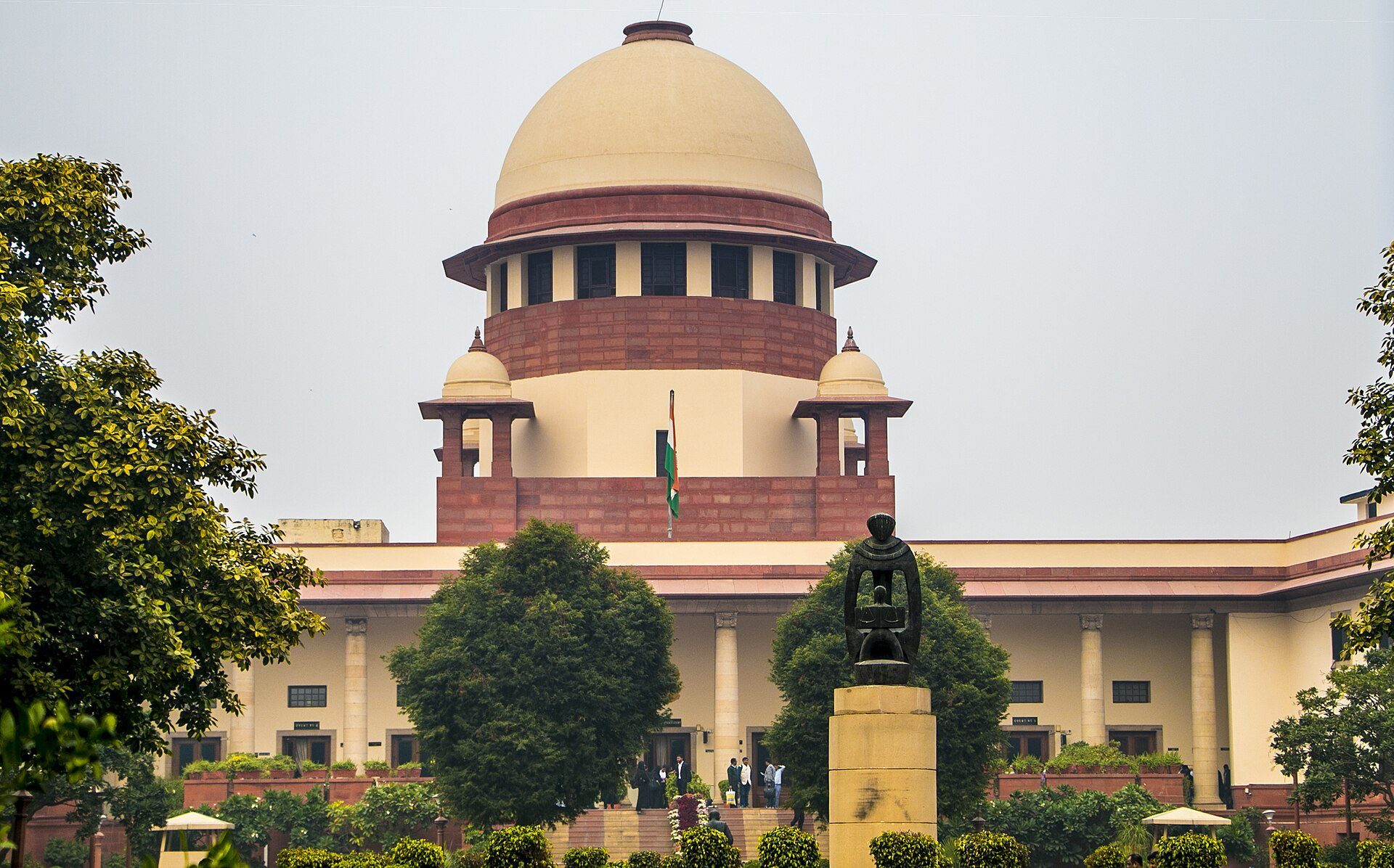
On 4 November 2026 a seven-judge Constitution Bench of the Supreme Court held that a 1974 Constitution Bench ruling upholding States’ power to impose additional sales tax continues to hold the field, and that the reference on the issue had become academic. This is a useful case for Constitutional law and for the Seventh Schedule.
What the Court held
The bench was headed by Chief Justice of India Surya Kant and decided unanimously. The legal question had been referred to a larger bench nearly 27 years ago. The Court said the question was of no practical significance and was now academic, because the statutory provisions under challenge had been replaced or amended and the Goods and Services Tax (GST) law had come into force. The Chief Justice wrote the judgment on behalf of himself and five other judges, and Justice K V Viswanathan wrote a separate concurring verdict. The detailed judgment is awaited.
While declining to decide the question afresh, the Court clarified that the five-judge Constitution Bench ruling in S Kodar vs State of Kerala (1974) continues to hold the field. That earlier judgment had upheld additional sales tax, rejecting the argument that such a levy was a tax on the income of dealers.
The legal issue
The reference arose from a challenge to Section 5A of the Orissa Sales Tax Act, 1947. It provided for an additional tax at 10% on dealers with an annual turnover between Rs 10 lakh and Rs 1 crore, and 15% on dealers whose turnover exceeded Rs 1 crore. The appellants asked whether a State legislature was competent to impose such a levy under Entry 54 of List II of the Seventh Schedule, which empowers States to tax the sale or purchase of goods, or whether it was really a tax on income. Taxes on income other than agricultural income fall within Parliament’s domain under Entry 82 of List I.
The Court said Kodar had clearly held that an additional tax or surcharge computed as a percentage of the sales tax payable is an enhancement of the rate of sales tax, and a tax on the sale or purchase of goods within Entry 54 of List II as it then stood. It also held that the question of the legislative competence of State legislatures to impose such a surcharge is governed by the law laid down in Kodar.
Where GST fits
During the hearing the Solicitor General, Tushar Mehta, submitted that the controversy had largely become academic after the introduction of the GST regime in 2017, with relatively few disputes still pending. The Court accepted that the reference no longer needed adjudication by a seven-judge bench, which is why the decision turns on the effect of GST rather than on a new rule of law.
Constitutional / Legal / Institutional framework
The Seventh Schedule divides legislative subjects between Parliament and the State legislatures. List I is the Union List and List II is the State List. Before GST, Entry 54 of List II was the basis of a State’s power over sales tax, while Entry 82 of List I covers taxes on income. A larger Constitution Bench is formed when a question of law of general importance needs authoritative settlement, and a reference can be disposed of as academic when the law under challenge has changed so that the answer no longer matters in practice.
CLAT angle
- Bench: 7-judge Constitution Bench headed by CJI Surya Kant; unanimous decision on 4 November 2026.
- Kodar (1974) was a 5-judge Constitution Bench ruling; it continues to hold the field.
- Additional tax or surcharge as a percentage of sales tax = enhancement of the sales tax rate (Entry 54, List II).
- Appellants relied on Entry 82, List I (income tax) to argue the levy was a tax on income.
- Reference made nearly 27 years ago; academic after GST came into force (introduced in 2017).
Key facts
| Fact | Detail |
|---|---|
| Case in focus | S Kodar vs State of Kerala (1974) |
| Bench in 2026 | 7-judge Constitution Bench, headed by CJI Surya Kant |
| Bench in 1974 | 5-judge Constitution Bench |
| Law challenged | Section 5A, Orissa Sales Tax Act, 1947 (10% and 15% additional tax) |
| State power | Entry 54, List II (sale or purchase of goods) |
| Income tax power | Entry 82, List I (Parliament) |
| Why reference was academic | GST law came into force |
Mnemonic / memory hook
‘Kodar 5, now 7: the old rule stays.’ The 1974 bench had five judges, the 2026 bench seven, and the old Kodar rule still stands.
Sources
The Hindu, Hindustan Times and Mint, all dated 4 November 2026.
Free in the CLAT Gurukul app
These notes (as a PDF lesson) and the 10-question CBT are in the app under Current Affairs → 5 Nov 2026. Get the app on Google Play or open app.clatgurukul.com.
Practice Quiz — 10 CLAT-Style Questions
Click an option to reveal the answer and explanation.