Watch the video explainer · open on YouTube
VIDEO EXPLAINER | 30 OCTOBER 2026
No woman has ever served as UN Secretary-General in the organisation’s 80-year history. In 2026 that could change. Antonio Guterres, the ninth Secretary-General, completes his second term on 31 December 2026, and his successor is due to take office on 1 January 2027. The Security Council has been running secret straw polls since 30 July 2026 to test the candidates. This explainer covers how the race works, who is leading, and the exam trap hidden in the process.
How the 2026 selection began
The selection was formally launched by a joint letter of 25 November 2025 from the President of the General Assembly, Annalena Baerbock, and the President of the Security Council, Michael Imran Kanu, inviting States to nominate candidates. The process is governed by General Assembly resolution 79/327, adopted on 5 September 2025. Under it, every candidate must be nominated by a member State and must file a vision statement, a CV and a disclosure of campaign financing. Rafael Grossi of Argentina became the first nominee on 26 November 2025, the day after nominations opened. Webcast interactive dialogues between candidates and the General Assembly followed in April, June and August 2026.
What is a straw poll?
A straw poll is a secret, non-binding test. Each Security Council member marks every candidate as encourage, discourage or no opinion. The Council does not publish the results; candidates are told through the permanent representatives of the States that nominated them. The Council has used secret straw polls to test candidates since 1981.
The three polls so far
In the first poll on 30 July 2026, Rebeca Grynspan of Costa Rica, who is Secretary-General of UNCTAD, came first with 10 encourage, 1 discourage and 4 no opinion votes. Carolyn Rodrigues Birkett of Guyana was second, and Rafael Grossi of Argentina, the Director General of the IAEA, was third.
In the second poll on 21 August 2026, Carolyn Rodrigues Birkett moved to the top. In the same poll, Ivonne A-Baki of Ecuador, who had entered the race after the first poll, received 0 encourage and 8 discourage votes.
In the third poll on 18 September 2026, Rebeca Grynspan led again, with 9 encourage votes. Michelle Bachelet of Chile, who received 1 encourage, 11 discourage and 3 no opinion votes in that poll, withdrew from the race on 19 September 2026. By the end of September, seven candidates remained.
The legal mechanism: who appoints?
Article 97 of the UN Charter says the Secretary-General is appointed by the General Assembly upon the recommendation of the Security Council. The Council’s recommendation is a substantive decision under Article 27(3), so it needs nine affirmative votes including the concurring votes of the five permanent members. That means any P5 member can veto a candidate. The straw polls are only a test of support; they are not the recommendation and do not appoint anyone.
Why Latin America features in the story
Only one Secretary-General so far has come from Latin America: Javier Perez de Cuellar of Peru, who served from 1982 to 1991. Regional rotation, an unwritten practice, has made a candidate from the Latin American and Caribbean Group the strong favourite in 2026, and five of the eight registered candidates in August were from that group.
Constitutional / Legal / Institutional framework
- Article 97: the General Assembly appoints the Secretary-General on the Security Council’s recommendation; the Secretary-General is the chief administrative officer.
- Article 27(3): nine votes including the concurring votes of the permanent members.
- Article 99: the Secretary-General may bring any threat to international peace and security to the Security Council.
- Article 100: the Secretary-General and staff must not seek or receive instructions from any government.
- General Assembly resolution 79/327 (5 September 2025): the 2026 selection procedure.
CLAT angle
- A news passage on the straw polls followed by a direct question on which organ appoints and which only recommends. The classic trap is to say the Security Council appoints.
- A statement question mixing Articles 97, 99 and 27(3): does a P5 veto apply to the recommendation? Yes, it is a substantive decision.
- A chronology question ordering the milestones: joint letter (November 2025), first straw poll (July 2026), Bachelet’s exit (September 2026), new term (January 2027).
- A match-the-following of Secretaries-General with countries, such as Perez de Cuellar with Peru and Guterres with Portugal.
- Do not write that the new Secretary-General takes over in December; the term begins on 1 January 2027.
Key facts
| Fact | Detail |
|---|---|
| Current Secretary-General | Antonio Guterres of Portugal, the ninth Secretary-General; in office since 1 January 2017 |
| End of Guterres’s term | 31 December 2026 |
| Next Secretary-General takes office | 1 January 2027 |
| Process launched | Joint letter of 25 November 2025 from the General Assembly and Security Council Presidents |
| Governing resolution | General Assembly resolution 79/327, adopted 5 September 2025 |
| First straw poll | 30 July 2026: Rebeca Grynspan led with 10 encourage, 1 discourage, 4 no opinion |
| Second straw poll | 21 August 2026: Carolyn Rodrigues Birkett topped the poll |
| Third straw poll | 18 September 2026: Rebeca Grynspan led with 9 encourage votes |
| Bachelet exit | 19 September 2026, leaving seven candidates |
| Women Secretaries-General so far | None in the UN’s 80-year history |
Mnemonic / memory hook
“Council Recommends, Assembly Appoints” (CRAA).
The Security Council only recommends one name; the General Assembly makes the appointment. Straw polls are just a test, not the appointment.
Sources
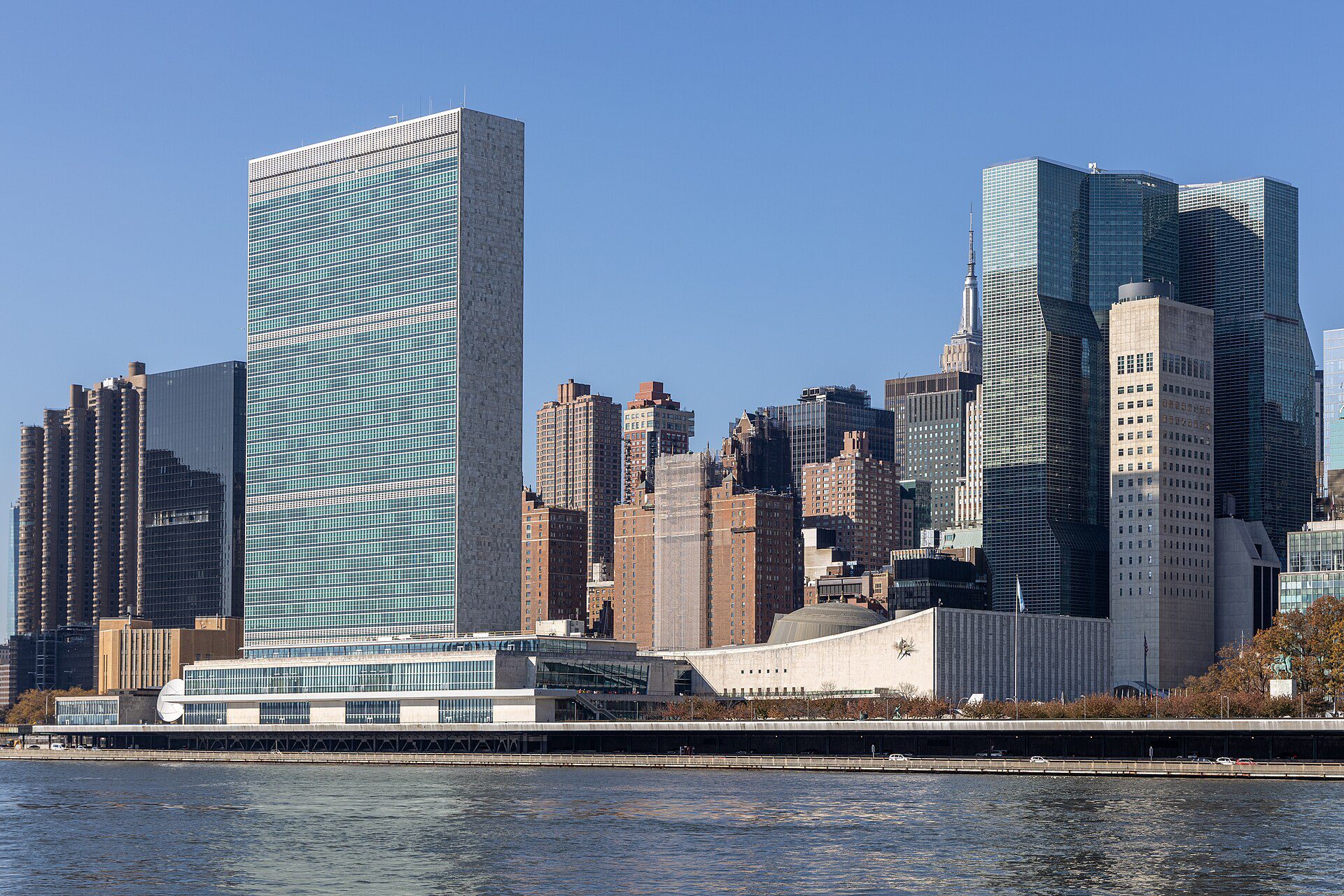
UN Charter (Chapters V and XV); UN page on Secretary-General selection and appointment (un.org); General Assembly resolution 79/327; Security Council Report; PassBlue; Al Jazeera reporting on Michelle Bachelet’s exit. Lead image: United Nations Headquarters, New York, photo by Superbass, CC BY-SA 4.0, via Wikimedia Commons.
Free in the CLAT Gurukul app
These notes (as a PDF lesson) and the 10-question CBT are in the app under Current Affairs → 30 Oct 2026. Get the app on Google Play or open app.clatgurukul.com.
Practice Quiz — 10 CLAT-Style Questions
Click an option to reveal the answer and explanation.