CURRENT AFFAIRS | 14 OCTOBER 2026
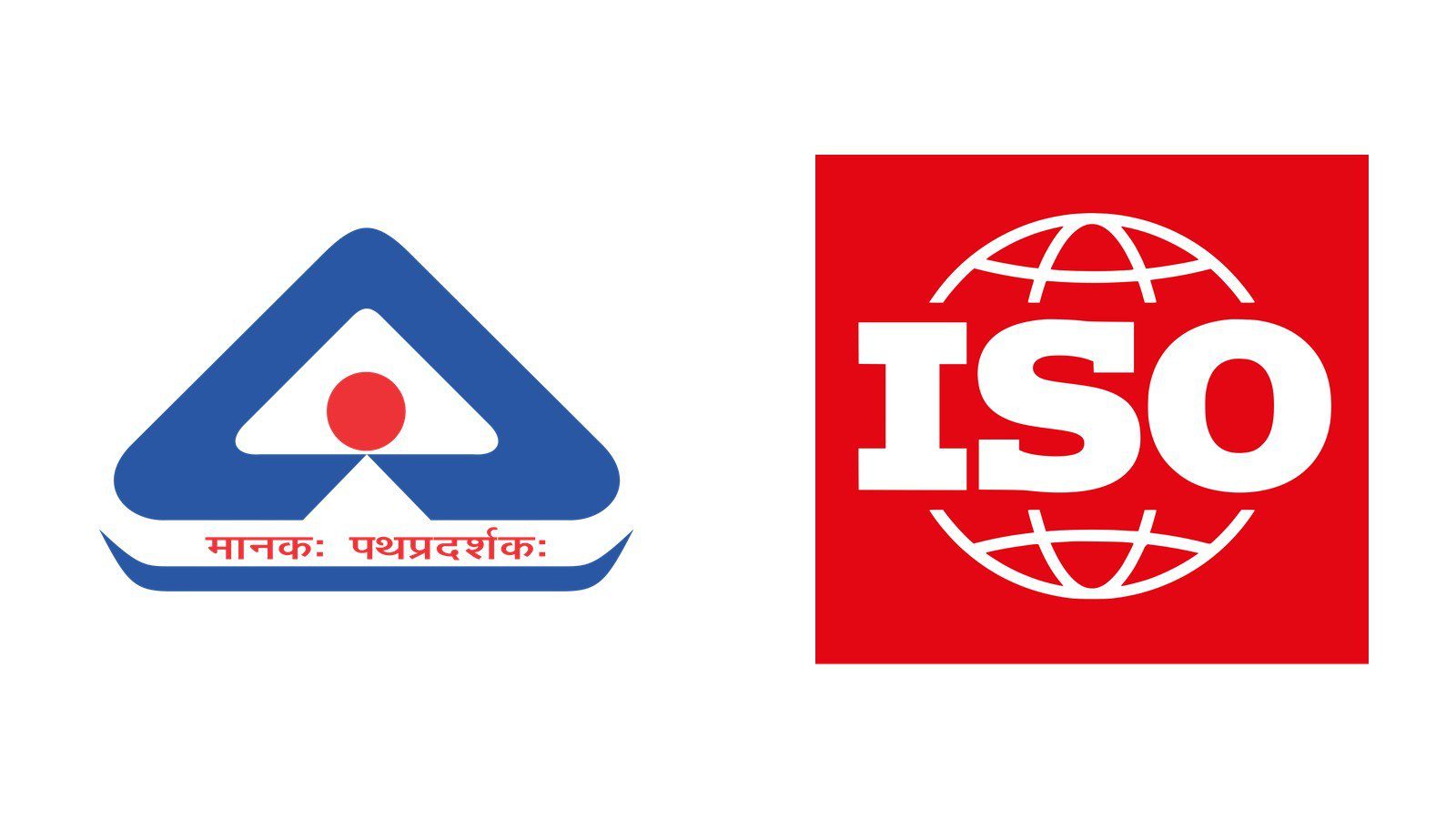
World Standards Day is observed every year on 14 October to honour the people and organisations that write the technical standards on which modern trade, safety and technology depend. For 2026, the Bureau of Indian Standards (BIS) — India’s National Standards Body — is marking the day with the theme ‘Shared Vision for a Better World’, according to a release of the Ministry of Consumer Affairs, Food & Public Distribution issued through the Press Information Bureau (PIB), Raipur, on Monday, 12 October 2026.
The release says the BIS Raipur Branch Office will hold a special programme in Raipur on 14 October, with a focus on Sustainable Development Goal 7 (SDG 7) — affordable and clean energy — and on energy efficiency, the importance of quality standards and the role of standardisation in promoting sustainable development.
What the release says
According to the PIB release, the programme aims to highlight the significance of quality standards in the clean-energy sector and to raise awareness about standardisation. It will underline the importance of standards in promoting “safe, quality-assured and sustainable products and services”, while encouraging the effective and responsible use of energy among industries, consumers and other stakeholders.
The theme itself is part of a longer series. The World Standards Cooperation (WSC) — the partnership of the three global standards bodies, the International Electrotechnical Commission (IEC), the International Organization for Standardization (ISO) and the International Telecommunication Union (ITU) — describes ‘Shared vision for a better world’ on its World Standards Day page as a multi-year journey that showcases how international standards contribute to the success of the UN Sustainable Development Goals and the 2030 Agenda. The WSC page notes that reaching the SDGs will require cooperation among public and private partners and the use of every available tool, including international standards and conformity assessment.
Why 14 October?
The date recalls a meeting in London on 14 October 1946, when delegates from 25 countries gathered to create an international organisation to facilitate standardisation. That organisation, ISO, came into being the following year — it was founded on 23 February 1947. The first World Standards Day was celebrated in 1970.
Today ISO is an independent, non-governmental body whose members are the national standards organisations of their countries. It is headquartered in Vernier, near Geneva, Switzerland, has published over 25,000 international standards, and works in three official languages — English, French and Russian. Electrical and electronic standards are handled by the IEC, which held its inaugural meeting on 26 June 1906, with Lord Kelvin as its first President. The ITU, the UN specialised agency for information and communication technologies, sets telecommunication standards.
Background & Framework
Bureau of Indian Standards (BIS): India’s National Standards Body, under the Department of Consumer Affairs, Ministry of Consumer Affairs, Food & Public Distribution. It is a statutory body under the Bureau of Indian Standards Act, 2016, which was notified on 22 March 2016 and came into force on 12 October 2017.
Origins: BIS traces its roots to the Indian Standards Institution (ISI), set up as a registered society in January 1947. BIS superseded the ISI on 1 April 1987 under the Bureau of Indian Standards Act, 1986. The ISI name lives on in the familiar ISI mark on certified products.
Functions: BIS formulates Indian Standards, runs product, system and service certification (including the ISI mark and the Compulsory Registration Scheme for electronics), administers hallmarking of gold and silver jewellery, and enforces the mandatory standards the Central Government imposes through Quality Control Orders (QCOs).
International role: BIS represents India in ISO and the IEC, and serves as India’s enquiry point under the WTO Agreement on Technical Barriers to Trade (TBT).
Standards and SDG 7
SDG 7 aims to ensure access to affordable, reliable, sustainable and modern energy for all. Standards connect to this goal in very practical ways. A common test method lets a buyer compare the efficiency of two appliances; a safety standard for solar panels, batteries or wiring protects users; and an agreed specification allows equipment made in one country to work in another. Without such shared rules, clean-energy markets would fragment, costs would rise and quality would be hard to verify.
This is why the Raipur programme links standardisation with energy efficiency and responsible energy use. For consumers, the visible signs are certification marks; for industry, it is the confidence that a product built to a recognised standard will be accepted by buyers and regulators.
Standards, law and trade
Standards are usually voluntary: a manufacturer chooses to follow them and to seek certification. They become mandatory when the State makes them so. Under the BIS Act, 2016, the Central Government can require conformity to Indian Standards for notified goods, which it does through Quality Control Orders. Once a QCO applies, a product that does not carry the required certification cannot lawfully be sold, imported or stored for sale.
This creates an interesting legal and economic tension that is worth understanding. On one side, mandatory standards protect consumers and keep sub-standard goods out of the market. On the other, they can act as non-tariff barriers if they are applied in a way that unfairly favours domestic producers or causes long certification delays. The WTO TBT Agreement exists precisely to balance these goals: it permits technical regulations for legitimate objectives such as safety, health and environmental protection, but expects them to be transparent and not more trade-restrictive than necessary, and it encourages members to base their regulations on international standards. BIS’s role as India’s TBT enquiry point reflects this international obligation.
Standards also matter for consumer protection law. A product that fails to meet the standard it claims, or that is required by law, may be treated as defective or as a case of unfair trade practice. For a law student, standards are therefore not merely technical documents — they are benchmarks that courts, regulators and consumer commissions use to decide whether goods or services were fit for purpose.
The CLAT Angle
GK / Days: expect direct questions on the date (14 October), the 2026 theme as stated by BIS (‘Shared Vision for a Better World’), the SDG in focus at the BIS programme (SDG 7), and the three WSC bodies (IEC, ISO, ITU).
Static GK: ISO founded 23 February 1947, headquartered near Geneva; the 1946 London meeting of 25 countries; the first World Standards Day in 1970; BIS Act 2016 in force from 12 October 2017; ISI set up in 1947; BIS formed on 1 April 1987 under the 1986 Act.
Legal Reasoning: a passage could ask whether a seller is liable for selling an uncertified product covered by a Quality Control Order, or whether a mandatory standard amounts to an unjustified trade barrier under the TBT principle of being “not more trade-restrictive than necessary”.
Key Facts
- World Standards Day: observed every year on 14 October.
- 2026 theme (as stated by BIS/PIB): ‘Shared Vision for a Better World’.
- BIS programme focus: SDG 7 — affordable and clean energy — and energy efficiency.
- Venue: Raipur, organised by the BIS Raipur Branch Office on 14 October 2026.
- Release: PIB Raipur, 12 October 2026 (Ministry of Consumer Affairs, Food & Public Distribution).
- Why 14 October: delegates of 25 countries met in London on 14 October 1946 to create a standards body.
- ISO: founded 23 February 1947; headquartered in Vernier, Geneva; official languages English, French, Russian.
- First World Standards Day: 1970.
- World Standards Cooperation: IEC + ISO + ITU.
- IEC: inaugural meeting 26 June 1906; Lord Kelvin its first President.
- BIS Act, 2016: in force from 12 October 2017; BIS superseded the ISI (est. 1947) on 1 April 1987.
- BIS: India’s enquiry point under the WTO TBT Agreement.
Analysis
World Standards Day can look like a ceremonial occasion, but the subject behind it is central to how economies work. Every time a consumer buys a helmet, a pressure cooker, a phone charger or a piece of gold jewellery, an invisible set of standards determines whether that product is safe, interoperable and honestly described. As India expands mandatory certification, debates over quality, cost and trade will only grow — and a law aspirant who understands how standards become law will read such passages with an advantage.
The 2026 emphasis on clean energy is timely. Energy-transition technologies such as solar modules, batteries and efficient appliances are spreading fast, and the trust that buyers place in them rests heavily on standards and certification. Linking the day to SDG 7 is a reminder that sustainable development is built not only through policy targets but also through the technical rules that make products reliable.
Memory Hook / Mnemonic
“14-10-46, ISO in ’47, Day in ’70” — London meeting on 14 October 1946, ISO founded in 1947, first World Standards Day in 1970.
WSC = “I-I-I”: IEC, ISO, ITU. And BIS’s own birthday echoes the day: the BIS Act, 2016 came into force on 12 October 2017.
Practice Quiz — 10 CLAT-Style Questions
Click an option to reveal the answer and explanation.