CURRENT AFFAIRS | 23 SEPTEMBER 2026
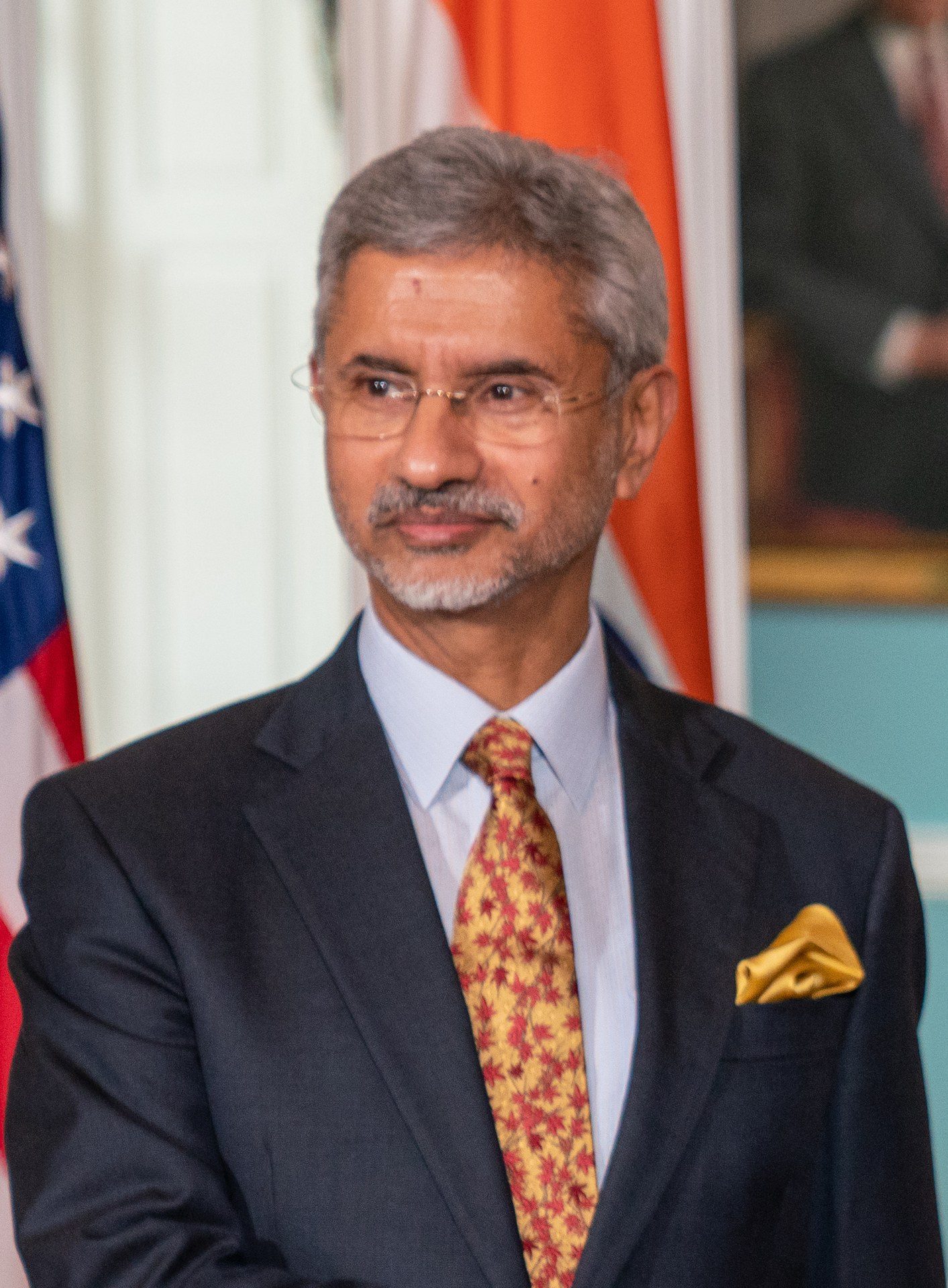
External Affairs Minister S Jaishankar has told a gathering on the margins of the 81st session of the United Nations General Assembly that the global order is “under stress” from extreme competition and geopolitical tension, and has called for “reformed multilateralism”. His most quotable line is a compact acronym: the “4F” crisis of fuel, food, fertiliser and finance “cannot be left to itself” and needs “frameworks and guardrails”. The Indian Express carried the remarks on 23 September 2026 in a report by Divya A, datelined New Delhi, 22 September.
The setting matters as much as the speech. Jaishankar was addressing the first-ever “Partners for Multilateralism, International Law, Peace & Prosperity” Summit — abbreviated P4M — held in New York on Monday, 21 September 2026, on the sidelines of UNGA-81. India is a founding co-sponsor, alongside Australia, Barbados, Brazil, Canada, the European Union and Kenya, and Jaishankar co-chaired the session with European Council President António Costa. Kenyan President William Ruto, Australian Prime Minister Anthony Albanese and Barbados Prime Minister Mia Mottley were among the leaders present.
What he actually said
The argument has three moves, and each is worth holding separately. The first is diagnostic. “India is glad to join as a co-sponsor. We meet at a time when the global order is under stress,” he said, noting that the world has for some decades seen a steady rebalancing that was a long-expected structural evolution. “However, extreme competition, geopolitical tensions and actual conflicts have given this an entirely different character. If left unchecked, it would call into question the very spirit of international cooperation, and that is why it is so essential that multilateralism asserts itself strongly at this juncture.”
The second move is the prescription, and this is where the 4F formula arrives: “The ‘4F’ crisis of fuel, food, fertiliser and finance cannot be left to itself. When new capabilities and concerns arise, there is a very powerful case for frameworks and guardrails. Where there is a threat of chokepoint dominance and disruption, de-risking and diversifying must be encouraged… And where there is a compelling cause or a powerful case, the like-minded must have the confidence to come together.” The third move is institutional: “For multilateralism to forge ahead, its advocacy and its practice must both be strengthened. Reformed multilateralism is thus essential. More participative deliberations and more transparent decision-making are both overdue.” He listed what is at stake as “very real issues” — the future of peace and international security, climate justice, countering terrorism and strengthening supply chains — all of which, he said, depend on a “will to cooperate”.
Background & Framework
The UN General Assembly is the plenary organ in which all 193 member states sit with one vote each; a new session opens each September and the High-Level Week, with its General Debate, is the annual set-piece at which heads of state, heads of government or foreign ministers deliver national statements. The Security Council is governed by Chapter V of the UN Charter (Articles 23 to 32). It has 15 members: five permanent, veto-wielding members — China, France, Russia, the United Kingdom and the United States — and ten non-permanent members elected for two-year terms. India’s long-standing position is that this composition reflects 1945, not the present, and it has campaigned for a permanent seat through the G4 (India, Brazil, Germany and Japan), which back one another’s candidatures. The principal countervailing bloc is Uniting for Consensus, often called the Coffee Club, which opposes new permanent seats and favours expanding only the non-permanent category. Africa’s common position is the Ezulwini Consensus, endorsed by the African Union Executive Council at its seventh extraordinary session on 7–8 March 2005 and named after a valley in Eswatini, then Swaziland: it demands two permanent seats with the veto and five non-permanent seats for Africa. “Reformed multilateralism” is India’s settled diplomatic vocabulary for all of this; Jaishankar used the same framing in India’s national statement to the 78th UNGA, and India began the Voice of the Global South Summit series during its G20 presidency.
Why the timing is the story
The Indian Express places the speech in a specific economic context: it came days after the US President signed the Russia sanctions Bill, giving himself the authority to impose tariffs of up to 100 per cent on countries — India and China among them — that continue to buy Russian oil and gas. Read against that backdrop, the phrase “frameworks and guardrails” is doing careful diplomatic work. It is an argument that decisions with global spillovers — on energy pricing, food and fertiliser flows, and the cost of capital for developing economies — should be taken inside agreed multilateral rules rather than imposed unilaterally.
The phrase “chokepoint dominance” is worth unpacking, because it recurs across Indian statements on supply-chain security. A chokepoint is any narrow link through which a disproportionate share of a flow must pass — a strait, a dominant supplier of a critical mineral, a clearing system, a chip fabrication node. Whoever controls it can convert an economic relationship into leverage. “De-risking and diversifying” is the remedy: not decoupling from trade, but reducing single-point dependence. 4F is precisely a list of chokepoint-prone flows, and fertiliser is the entry students forget, though for an agricultural economy it may be the most consequential of the four.
The CLAT Angle
General knowledge on CLAT increasingly arrives as a passage followed by questions that require one external fact each. A passage on this story would state the 4F formula and the call for reformed multilateralism, then test whether you know that the Security Council has fifteen members and five permanent ones, that the veto belongs to those five, that the G4 is India, Brazil, Germany and Japan, and that Uniting for Consensus opposes new permanent seats. Expect the classic distractor pairs: General Assembly versus Security Council (193 members and no veto, against 15 and a veto); General Debate versus High-Level Week (the debate sits inside the week); and permanent versus non-permanent membership. A second, subtler line of questioning is about inference: a passage may report a minister calling for reform and ask what may properly be concluded. The safe answer is that a call is advocacy, not an institutional change — Charter amendment requires ratification by two-thirds of members including all five permanent members, which is why Security Council reform has been discussed for decades without result. Learn 4F as a list you can reproduce cold: fuel, food, fertiliser, finance.
The rest of the week’s diplomacy
The P4M speech was one item in a dense schedule. The Indian Express reports that Jaishankar also took part in India’s first foreign ministers’ meeting with the Visegrad Group, calling it a “new historic occasion”; the V4 is the cultural and political grouping of the Czech Republic, Hungary, Poland and Slovakia. Separately, The Tribune reported on 23 September 2026 that India, France and the UAE held a trilateral ministerial meeting on the UNGA margins, with Jaishankar joined by French Minister for Europe and Foreign Affairs Jean-Noël Barrot and UAE Deputy Prime Minister and Foreign Minister Sheikh Abdullah bin Zayed Al Nahyan. They reviewed cooperation in space, artificial intelligence, energy, health sciences, and culture and heritage, discussed West Asia, and agreed to meet at regular intervals. Jaishankar is also reported to have chaired a high-level meeting of like-minded Global South countries on the sidelines, pressing the case for closer coordination among developing economies amid supply-chain disruption and tightening finance.
India’s national statement in the General Debate is reported to be scheduled for 26 September 2026. Treat that as a diary entry rather than an accomplished fact: as of 23 September the address had not yet been delivered, and a scheduled speaking slot at the UNGA can move.
Key Facts
- Who and what: EAM S Jaishankar called for “reformed multilateralism”, saying the global order is “under stress”.
- The formula: the “4F” crisis of fuel, food, fertiliser and finance, which needs “frameworks and guardrails”.
- Occasion: the inaugural Partners for Multilateralism, International Law, Peace & Prosperity (P4M) Summit, New York, Monday 21 September 2026.
- Co-sponsors: India, Australia, Barbados, Brazil, Canada, the European Union and Kenya.
- Co-chair: European Council President António Costa; leaders present included William Ruto, Anthony Albanese and Mia Mottley.
- Session: the 81st UN General Assembly; the General Assembly has 193 members, one vote each.
- Security Council: 15 members, 5 permanent with the veto — China, France, Russia, the UK and the US; governed by Chapter V of the Charter.
- Context: the US President had signed a Russia sanctions Bill authorising tariffs of up to 100 per cent on countries, including India and China, that keep buying Russian oil and gas.
- Also on the margins: India’s first foreign ministers’ meeting with the Visegrad Group (Czech Republic, Hungary, Poland, Slovakia).
- Trilateral: India–France–UAE ministerial on space, AI, energy, health sciences and culture, reported 23 September 2026.
- Reform blocs: G4 — India, Brazil, Germany, Japan; Uniting for Consensus opposes new permanent seats; the Ezulwini Consensus (AU, 7–8 March 2005) seeks two permanent seats with veto and five non-permanent for Africa.
- Scheduled: India’s national statement in the General Debate is reported for 26 September 2026 — not yet delivered.
Reading it critically
It is worth noticing what “reformed multilateralism” asks for and what it does not. It is not a rejection of the UN system; it is a claim that the system’s legitimacy depends on whose voice is counted in it. The Indian Express notes in an explainer that the fifteen-nation Security Council remains deeply polarised among its five veto-wielding permanent members, and that New Delhi has been pitching for a seat that reflects today’s realities rather than 1945’s. That argument has two halves: a representation claim, that an order built by the victors of the Second World War no longer maps onto economic and demographic weight, and an effectiveness claim, that a Council paralysed by rival vetoes cannot deliver the mandate the Charter gives it.
The honest counterpoint, which a well-set passage will include, is that P4M is a coalition of the willing, not an amendment to the Charter. Declarations by co-sponsoring states shift the diplomatic conversation; they do not alter voting rules. The discipline is to hold both facts at once — the rhetoric is significant, the institutional position unchanged — and to say precisely which is which.
Memory Hook / Mnemonic
The four Fs are easiest as a sentence: “Fuel fires the Food, Fertiliser feeds it, Finance funds it.” For the summit, note that P4M has four Ps too — Partners, Peace, Prosperity, plus international law — and seven founding co-sponsors. For the Council, use “15 sit, 5 veto, 193 vote”: fifteen in the Security Council, five with the veto, one hundred and ninety-three in the General Assembly. And for the reform blocs, remember “G4 wants in, UfC says no, Ezulwini wants two”.
Practice Quiz — 10 CLAT-Style Questions
Click an option to reveal the answer and explanation.