CURRENT AFFAIRS | 23 SEPTEMBER 2026
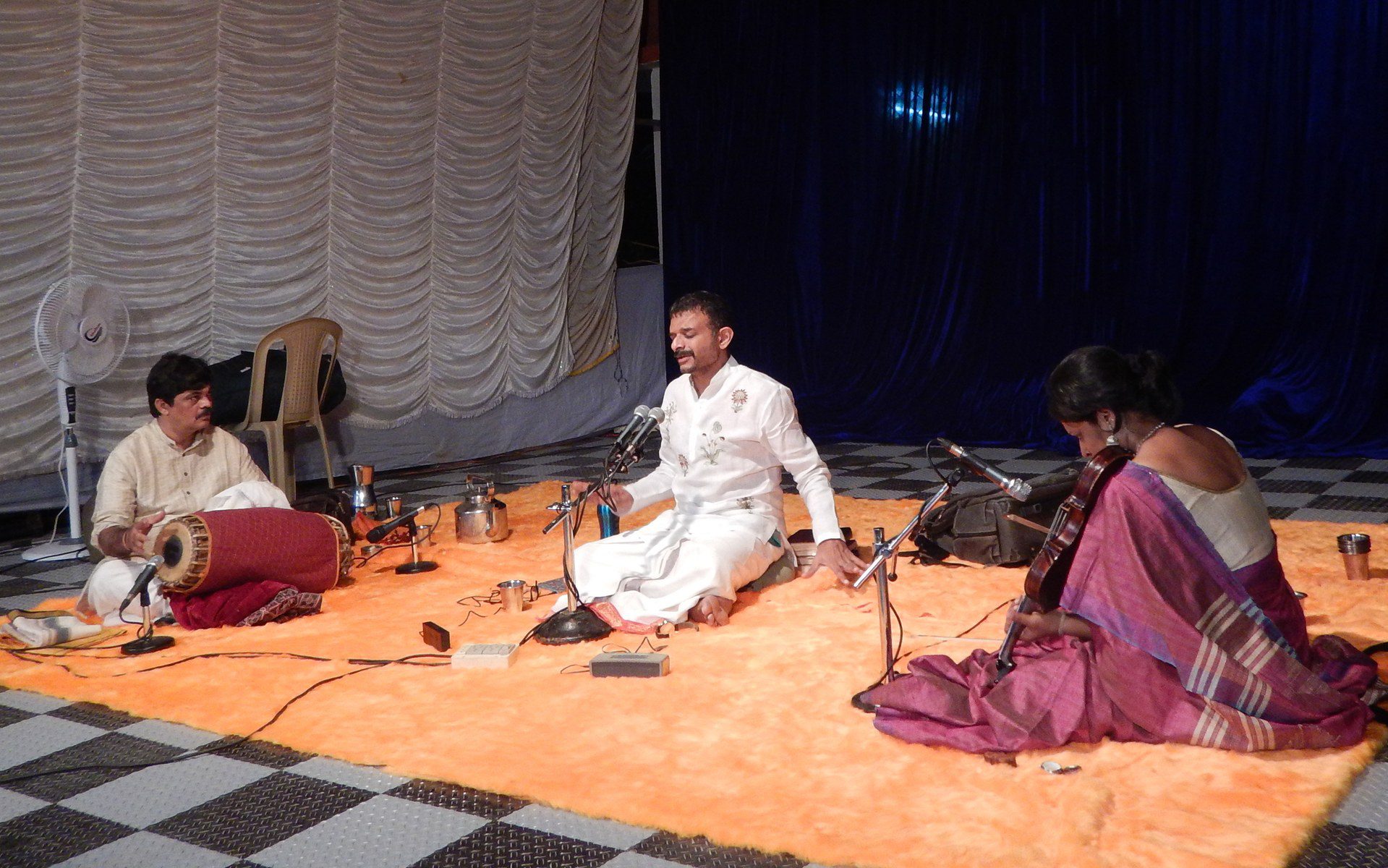
On Tuesday, 22 September 2026, hearing a writ petition filed by the Carnatic vocalist T M Krishna, the Supreme Court told the Centre that it expects no criminal consequences for a person who declines to sing Vande Mataram out of conscience or religious belief. The Bench — CJI Surya Kant with Justice Joymalya Bagchi and Justice V Mohana — pointed the Solicitor General to the Court’s own 1986 ruling in Bijoe Emmanuel v State of Kerala, and said it would examine whether refusal to sing can attract penal consequences at all. The case is T M Krishna v Union of India, W.P.(C) No. 1183 of 2026, reported by LiveLaw on 22 September and by The Indian Express on 23 September.
Get the posture right first, because this is exactly the trap a CLAT legal-reasoning passage is built to spring. The Supreme Court did not rule, hold or decide anything. This was a hearing at the notice stage: the Court asked the Union to respond and recorded an expectation — an oral observation made from the Bench during argument. An oral observation is not a judgment. It has no ratio decidendi, it binds no High Court, and it can be departed from when the judgment is finally written. To write “the Supreme Court held that you cannot be punished for not singing” would be factually wrong.
What is actually under challenge
The petition attacks the Prevention of Insults to National Honour Act, 1971 as amended by the Prevention of Insults to National Honour (Amendment) Act, 2026. According to The Indian Express, the amendment altered Section 3 of the 1971 Act to extend to Vande Mataram the same legal protection that the statute already gave to Jana Gana Mana. The petitioner also challenges two Ministry of Home Affairs orders, dated 28 January 2026 and 9 July 2026, requiring the rendition of all six stanzas. The rights pleaded are Articles 14, 15, 19(1)(a), 21, 25 and 26, read against the fundamental duty in Article 51A(a).
Two arguments run through the plea. The first is about secularism: the guideline requiring all six stanzas at official functions is said to offend secular principle because the later stanzas carry explicit devotional references. The second is about vagueness in a penal statute. Dr S Muralidhar, Senior Advocate and a former judge, argued for the petitioner that the amendment introduced the expression “national song” without defining it, and that the six-stanza requirement rests on an office memorandum that is not even gazetted and cites no enabling provision. His proposition, quoted by The Indian Express, is crisp: “A penal statute cannot be in the realm of vagueness.” Solicitor General Tushar Mehta appeared for the Union and opposed the challenge, submitting that “secularism will never be this narrow”.
Constitutional / Legal Framework
Article 19(1)(a) guarantees freedom of speech and expression, and the Supreme Court has read into it the right not to speak — the freedom to remain silent is part of the freedom to speak. Article 25(1) guarantees, subject to public order, morality, health and the other provisions of Part III, the freedom of conscience and the right freely to profess, practise and propagate religion; the word “conscience” is doing independent work there, and is not confined to organised religion. Article 26 protects the rights of religious denominations. Article 51A(a) places a fundamental duty on every citizen to abide by the Constitution and respect its ideals and institutions, the National Flag and the National Anthem — note that the text of Article 51A(a) names the Anthem, not the national song. Fundamental duties, inserted by the 42nd Amendment, 1976 on the recommendation of the Swaran Singh Committee, are not directly enforceable, though they may inform how a statute is read. The penal statute in play is the Prevention of Insults to National Honour Act, 1971, whose Section 3 punishes intentionally preventing the singing of the National Anthem or causing disturbance to an assembly engaged in such singing.
Why Bijoe Emmanuel is the governing authority
The Bench did not treat the question as open. Bijoe Emmanuel and Others v State of Kerala and Others, (1986) 3 SCC 615, was decided on 11 August 1986 by Justice O Chinnappa Reddy and Justice M M Dutt. Three schoolchildren in Kerala — Bijoe, Binu Mol and Bindu Emmanuel, members of the Jehovah’s Witnesses — stood up respectfully each morning when Jana Gana Mana was sung at assembly but did not sing it, the tenets of their faith forbidding the singing. They were expelled, and the Kerala High Court upheld the expulsion. The Supreme Court set it aside, holding that it violated Article 19(1)(a) and Article 25(1).
The Court also construed Section 3 of the 1971 Act, and the sentence is worth carrying into the examination hall: “Standing up respectfully when the National Anthem is sung but not singing oneself clearly does not either prevent the singing of the National Anthem or cause disturbance.” That is a reading of the actus reus. The offence is preventing or disturbing; silence is neither. On 22 September 2026, Justice Bagchi put the point to the Union in almost the same terms: “We would expect that the law of the land, as declared by this Court in Bijoe Emmanuel, will govern the Act. What is the national song is not in dispute. The declaration of law in Bijoe Emmanuel is not yet questioned.” He added that “by custom and usage, the national song has always been understood as Vande Mataram”, and separated the two limbs of the challenge: a song expressing homage to a particular deity would not perhaps by itself impact secularism, but whether a conscientious objector can face penal consequences “may require examination”.
The CLAT Angle
Three testable ideas sit here, and the first is procedural. A passage can describe a Bench issuing notice and expressing an expectation, and then offer options such as “the Court held…”, “the Court observed…”, “the Court struck down…” and “the Court stayed…”. Only the observation option is correct. Learn the ladder: observation (no binding force) → interim order (binding but provisional) → judgment (the ratio binds under Article 141). The second is the right not to speak: given a rule compelling an utterance, the violated right is Article 19(1)(a) read with Article 25(1), not merely one of them. The third is the relation between a fundamental duty and a fundamental right. Article 51A is not enforceable by itself and cannot cut down Part III; a duty may colour how a statute is read, but cannot supply a power to punish the statute does not create. Expect a passage that states the Bijoe Emmanuel rule and varies the facts — one person sits through the song, another walks out, a third shouts it down. Only conduct that prevents or disturbs falls within Section 3.
National song and National Anthem: not the same thing
The distinction the dispute turns on is one students routinely blur. Jana Gana Mana is the National Anthem; Vande Mataram is the National Song, written by Bankim Chandra Chattopadhyay and carried in his 1882 novel Anandamath. Their relative status was settled not by statute but by a statement Dr Rajendra Prasad made in the Constituent Assembly on 24 January 1950: Jana Gana Mana would be the National Anthem, while Vande Mataram, which had played a historic part in the freedom struggle, shall be honoured equally with Jana Gana Mana and shall have equal status with it. Equal honour is an Assembly convention, not a provision of the Constitution — which is why extending a penal protection to the song raises a question the 1971 Act did not previously pose.
Key Facts
- Hearing: Tuesday, 22 September 2026, at the notice stage — no ruling, only an oral observation.
- Case: T M Krishna v Union of India, W.P.(C) No. 1183 of 2026.
- Bench: CJI Surya Kant, Justice Joymalya Bagchi and Justice V Mohana.
- Counsel: Dr S Muralidhar, Senior Advocate, for the petitioner; Solicitor General Tushar Mehta for the Union.
- Challenged: Section 3 of the Prevention of Insults to National Honour Act, 1971 as amended by the Amendment Act of 2026, plus MHA orders of 28 January 2026 and 9 July 2026 requiring all six stanzas.
- Articles pleaded: 14, 15, 19(1)(a), 21, 25 and 26, against the duty in Article 51A(a).
- Court’s expectation: a conscientious objector who declines to recite one or all stanzas should not face criminal consequences; the Court will examine whether penal consequences can follow at all.
- Governing precedent: Bijoe Emmanuel v State of Kerala, (1986) 3 SCC 615, decided 11 August 1986 by Chinnappa Reddy and M M Dutt JJ.
- Its facts: three Jehovah’s Witness children, Bijoe, Binu Mol and Bindu Emmanuel, expelled in Kerala for standing respectfully but not singing the Anthem; held to violate Articles 19(1)(a) and 25(1).
- National Anthem: Jana Gana Mana. National Song: Vande Mataram, by Bankim Chandra Chattopadhyay, in Anandamath (1882).
- Equal status: from Dr Rajendra Prasad’s Constituent Assembly statement of 24 January 1950, not from the constitutional text.
- Cinema-hall line of cases: Shyam Narayan Chouksey v Union of India — interim order of 30 November 2016 made playing the Anthem in cinemas mandatory; modified on 9 January 2018 to make it optional.
The cinema-hall precedent, and what it teaches
The nearest analogue is Shyam Narayan Chouksey v Union of India. By an interim order dated 30 November 2016 the Supreme Court directed that the National Anthem be played in all cinema halls before the feature film and that everyone present stand to show respect. On 9 January 2018 the Court modified its own order, making the playing optional and leaving the final decision to the executive on a committee’s recommendations. The doctrinal lesson is that compelled patriotic display is constitutionally fragile, because coercion is the point at which expression stops being expression.
That is the structural question this petition asks. Nobody disputes the standing of Vande Mataram. What is disputed is whether the State may attach a criminal consequence to a person’s silence, and whether a penal provision resting on an undefined term can satisfy the requirement that criminal law be certain enough for a citizen to know in advance what is forbidden. The Union’s response is awaited. Until the Court decides, the accurate statement of the law is simple: Bijoe Emmanuel stands, and the Bench has said it expects that declaration to govern the amended Act.
Memory Hook / Mnemonic
For the two songs, use “Jana Gana = Anthem, Vande Mataram = Song, 1950 = equal” — Dr Rajendra Prasad’s statement of 24 January 1950 gave them equal honour, not the Constitution. For the 1986 rule, remember “Stand, don’t sing”: standing respectfully without singing neither prevents nor disturbs, so Section 3 is not attracted. And for the posture of this hearing, keep one line in mind — “Expectation, not a holding.”
Practice Quiz — 10 CLAT-Style Questions
Click an option to reveal the answer and explanation.