CURRENT AFFAIRS | 15 OCTOBER 2026
The “energy ceasefire” between Russia and Ukraine, announced by the United States only on Sunday, 11 October 2026, is now in question. According to Ukraine, Russian strikes on its energy infrastructure on the night of 13–14 October 2026 left about 600,000 people (6 lakh) without power in the Kyiv and Kharkiv regions. CNBC reported on Wednesday, 14 October 2026 that the attack was “raising further questions” about the ceasefire, and the Kyiv Independent reported that energy facilities in and around Kyiv were among the targets.
For CLAT aspirants, the story is a live example of a core rule of International Humanitarian Law (IHL): Article 52 of Additional Protocol I (1977) to the Geneva Conventions, which says that civilian objects “shall not be the object of attack or of reprisals”. This article explains what happened, what an energy ceasefire is, and how the law of armed conflict treats power stations, water supply and other civilian infrastructure.
What happened
According to the Associated Press (via PBS, 11 October 2026), the United States announced on social media that Russia and Ukraine had agreed to an “energy ceasefire” that took effect immediately. No written text or detailed terms were published. CNBC described the proposal as one under which the two sides would stop attacking each other’s energy facilities “to help bring down the cost of oil and diesel”.
The responses were cautious. CNBC reported that both Russian and Ukrainian authorities initially said they knew of no such agreement. Ukraine later welcomed the idea and said it was ready to refrain from striking Russian energy infrastructure if Russia did the same. Russia’s foreign ministry, on Monday, 12 October, said that talks were ongoing, without confirming that an agreement had been reached.
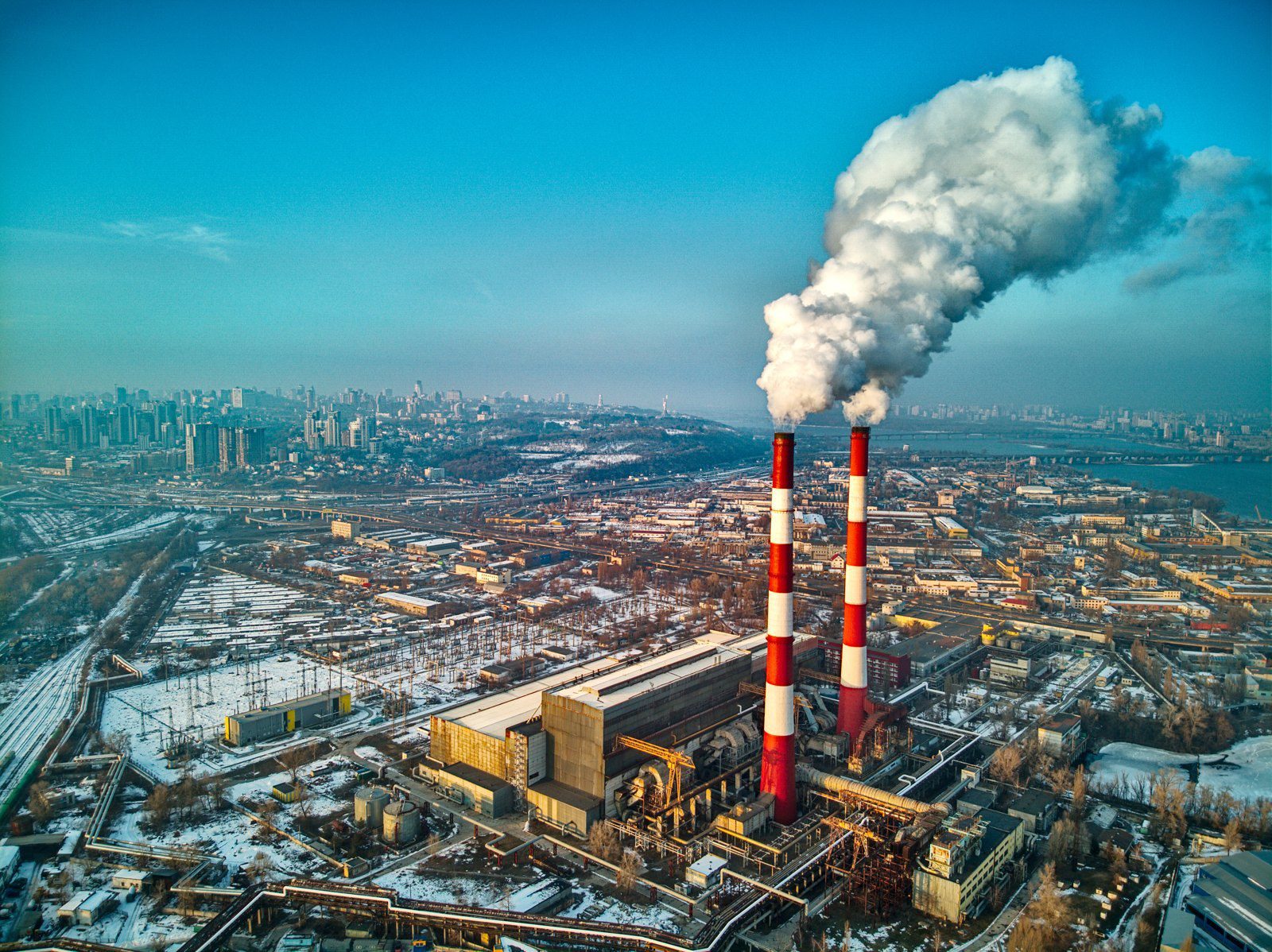
Then came the strikes of 13–14 October. According to the Kyiv Independent, Ukrainian authorities said that all three of Kyiv’s combined heat and power (CHP) stations were attacked, along with critical infrastructure in the Kyiv region that supplies power to the capital and central Ukraine. Ukraine’s presidency reported “significant damage” at 26 facilities of the power system and four facilities in the oil and gas sector, CNBC reported. The Kyiv city administration said one of the capital’s water pumping stations was cut off, reducing water pressure in one district, and the city’s metro lines temporarily stopped working.
Ukraine said the strike targeted exactly the sector the ceasefire was meant to protect. These are claims by the parties; the sources reviewed carry no independent damage assessment.
What is an “energy ceasefire”?
An energy ceasefire is a partial ceasefire: the parties agree to stop attacking one category of targets — power plants, the electricity grid, refineries, oil and gas facilities — while hostilities may continue elsewhere. It is narrower than a general ceasefire or an armistice. Because the 2026 announcement had no published text, its exact scope (which facilities, which weapons, what monitoring) was never made public. Without agreed terms, each side can call the other’s strikes violations.
There is a precedent. According to a Kremlin readout of a US–Russia call in early 2025, the parties discussed a proposal to “mutually refrain from strikes on energy infrastructure for 30 days”; by April 2025 Russia said the pause had ended. AP also noted that a similar US announcement on 14 September 2026 came to nothing.
Constitutional / Legal Framework
Geneva Conventions, 1949: four treaties (wounded and sick on land; at sea; prisoners of war; civilians). The ICRC calls them, with their Protocols, the treaties containing “the most important rules limiting the barbarity of war”.
Additional Protocols: Protocol I (8 June 1977, international armed conflicts), Protocol II (8 June 1977, non-international armed conflicts) and Protocol III (8 December 2005, an additional distinctive emblem).
Article 48 (Basic rule — distinction): parties must “at all times distinguish” between civilians and combatants, and between civilian objects and military objectives.
Article 52 (General protection of civilian objects): (1) civilian objects shall not be the object of attack or of reprisals; (2) attacks shall be limited strictly to military objectives — objects that by their “nature, location, purpose or use” make “an effective contribution to military action” and whose destruction offers “a definite military advantage”; (3) in case of doubt, an object normally used for civilian purposes is presumed not to be used for military action.
Article 54: protects objects “indispensable to the survival of the civilian population”, such as foodstuffs, crops, livestock, drinking water installations and irrigation works.
Article 56: works or installations containing dangerous forces — dams, dykes and nuclear electrical generating stations — shall not be attacked, even if they are military objectives, if the attack may release dangerous forces and cause severe civilian losses.
Analysis: is a power station a civilian object?
This is the central legal question, and the answer under Article 52 is a two-part test, not a label. Article 52(2) asks whether the object, by its nature, location, purpose or use, makes an effective contribution to military action, and whether destroying it offers a definite military advantage “in the circumstances ruling at the time”. An object that fails the test is a civilian object and is protected by Article 52(1).
Power grids are a classic “dual-use” problem: the same electricity can light homes and hospitals and also run factories or communications. That is why IHL does not end with Article 52. Even where an object qualifies as a military objective, the Protocol’s rules on precautions in attack (Article 57) and the prohibition on attacks expected to cause excessive civilian harm still apply. Article 54 adds specific protection for drinking water installations, and Article 56 gives special protection to nuclear power stations and dams because of the catastrophic consequences of an attack.
The timing matters too. AP reported that Russia has sought to deny Ukrainian civilians “power, heat and running water” during the conflict, and that Ukrainian officials call this “weaponizing winter”. In October, the loss of a CHP plant affects not only electricity but district heating and water pumping, which is why civilian infrastructure is at the centre of both the legal and the diplomatic debate.
An important caution for exam reasoning: this article does not decide whether any specific strike was lawful. That requires facts about each target and each attack that the parties dispute. What the law gives you is the framework — distinction, military objective, precautions, special protection — through which such claims are judged.
The CLAT Angle
Expect a legal-reasoning passage built on Article 52(2): a principle defining “military objective” and a fact pattern about a bridge, a power station or a radio tower. The answer will turn on both limbs — effective contribution to military action and definite military advantage. A common trap is to treat any object useful to the military as a lawful target; the second limb and the presumption in Article 52(3) cut against that.
In the GK section, likely questions are factual: the number of Geneva Conventions (four, all of 1949), the year of the Additional Protocols (1977), which Article protects dams and nuclear stations (Article 56), and the role of the ICRC as the guardian of IHL. In the Current Affairs section, remember the dates: announcement on 11 October 2026, strikes on 13–14 October 2026, about 6 lakh without power according to Ukraine.
Why it matters beyond Europe
Energy is where this conflict meets the world economy. The stated aim of the ceasefire, according to CNBC, was to lower oil and diesel prices. India imports most of the crude oil it uses, so prolonged attacks on energy assets — whether power grids or refineries — can travel to Indian consumers through global fuel prices. India’s Ministry of External Affairs has consistently said that dialogue and diplomacy are the way forward in the Russia–Ukraine conflict.
The episode also shows the limits of informal diplomacy: a ceasefire with no text, no defined scope and no monitoring mechanism is hard to verify and easy to dispute.
Watch our detailed video explainer and take its quiz: Russia–Ukraine Energy Ceasefire: What It Means and the Law of War.
Key Facts
- Announcement: the United States announced an “energy ceasefire” on Sunday, 11 October 2026 (AP).
- Strikes: night of 13–14 October 2026, on energy infrastructure in Kyiv, Kyiv region and Kharkiv.
- Outages: about 600,000 (6 lakh) people without power, according to Ukraine (CNBC, 14 October).
- Damage claimed: 26 power-system facilities and 4 oil-and-gas facilities, according to Ukraine.
- Kyiv: all three combined heat and power stations attacked, Ukrainian authorities said (Kyiv Independent).
- Russia: its foreign ministry said on 12 October that talks were ongoing, without confirming a deal.
- Precedent: a 30-day pause on energy strikes was discussed in early 2025; Russia said it ended in April 2025.
- Geneva Conventions: four, all of 1949; Additional Protocols I and II of 8 June 1977; Protocol III of 2005.
- AP I Article 52: civilian objects shall not be the object of attack or of reprisals.
- AP I Article 54: protects objects indispensable to civilian survival, incl. drinking water installations.
- AP I Article 56: protects dams, dykes and nuclear electrical generating stations.
Memory Hook / Mnemonic
“48 Divides, 52 Defends, 54 Feeds, 56 Holds back the flood.” Article 48 = distinction; Article 52 = civilian objects; Article 54 = food and water for survival; Article 56 = dams, dykes and nuclear stations. And for the dates: “4 Conventions in ’49, 2 Protocols in ’77.”
Practice Quiz — 10 CLAT-Style Questions
Click an option to reveal the answer and explanation.