CURRENT AFFAIRS | 23 SEPTEMBER 2026
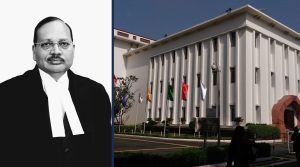
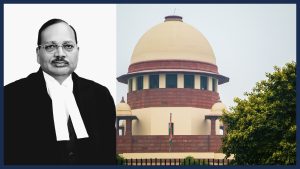
On 23 September 2026 a two-judge Bench of the Supreme Court delivered a split verdict on a narrow but consequential question: should the challenge to the Chief Election Commissioner and Other Election Commissioners (Appointment, Conditions of Service and Term of Office) Act, 2023 — the CEC Act 2023, for short — be sent to a larger Bench? Justice Dipankar Datta said no. Justice Satish Chandra Sharma said yes, holding that the validity of the Act raised an issue requiring authoritative determination by a Constitution Bench under Article 145(3). Because the two judges differed, the papers now go to the Chief Justice of India. Bar & Bench, reporting the pronouncement, records that judgment had been reserved on 30 July 2026 after hearings spread over five days.
Read that sequence carefully: it is the most examinable thing about this story. The Court did not refer the petitions to a Constitution Bench — a split verdict is not a reference. What the judges agreed on was that the matter be placed before the CJI to consider constituting a Bench of appropriate strength, adding that routing the question through a three-judge Bench first would only add delay. Whether a five-judge Bench is actually constituted is now for CJI Surya Kant to decide.
The petitions and the law under challenge
The lead matter is Jaya Thakur v Union of India, Writ Petition (Civil) No. 14 of 2024, filed on 2 January 2024, with connected petitions including one by the Association for Democratic Reforms. The statute they attack was enacted on 29 December 2023. Its most contested feature is the composition of the Selection Committee that recommends the CEC and the other Election Commissioners to the President. Under the 2023 Act that committee is the Prime Minister, a Union Cabinet Minister nominated by the Prime Minister, and the Leader of the Opposition in the Lok Sabha.
That composition displaced what the Supreme Court itself had prescribed ten months earlier. In Anoop Baranwal v Union of India, decided on 2 March 2023 by a five-judge Constitution Bench led by Justice K M Joseph, the Court held that until Parliament legislated, appointments would be made by the President on the advice of a committee of the Prime Minister, the Leader of the Opposition in the Lok Sabha and the Chief Justice of India. The 2023 Act took up that invitation to legislate — and swapped the CJI out for a Union Cabinet Minister. The petitioners say that converts a balanced panel into one where the executive holds two of three votes.
Constitutional / Legal Framework
Article 324(1) vests the superintendence, direction and control of the preparation of electoral rolls and the conduct of elections to Parliament, State legislatures, and the offices of President and Vice-President in the Election Commission of India. Article 324(2) says the Commission shall consist of the Chief Election Commissioner and such number of other Election Commissioners as the President may from time to time fix, and that the appointment shall be made by the President “subject to the provisions of any law made in that behalf by Parliament”. That clause is the hinge: it contemplated a parliamentary law, and for decades none existed — the gap Anoop Baranwal filled on an interim basis and the 2023 Act now occupies. Article 324(5) supplies the tenure protection: the CEC shall not be removed from his office except in like manner and on the like grounds as a Judge of the Supreme Court, and the other Election Commissioners shall not be removed except on the recommendation of the CEC. Article 145(3) governs the present dispute: the minimum number of judges who shall sit to decide any case involving a substantial question of law as to the interpretation of the Constitution is five. Note also the basic structure doctrine, under which free and fair elections have been treated as part of the Constitution’s essential design.
What each judge said
Justice Datta declined to accept the Union’s submission that the petitions raised seminal questions of constitutional importance warranting a larger Bench, and recorded a prima facie view on the merits. He questioned whether the 2023 Act’s mechanism genuinely secures an independent selection process, observing that on the committee as constituted the executive appears to hold a veto, and asking whether a Minister who is the Prime Minister’s own nominee could realistically vote against the Prime Minister. In a formulation worth memorising, he said: “Free and fair elections depend on a truly independent ECI. It is not enough for the ECI to be independent; it must appear to be independent.” That is the appearance-of-independence principle, the same idea behind judicial recusal and the rule against bias.
Justice Sharma took the opposite view on the threshold question. In his opinion the constitutional validity of the 2023 Act raised a substantial question of law as to the interpretation of the Constitution, and Article 145(3) therefore required it to be settled authoritatively by a Bench of at least five judges rather than by two. On the shared direction, Bar & Bench reports Justice Datta acknowledging the discomfort of a divided Bench: “We heard these petitions for over 5 days, speaking in one voice would have served the voice of institutional cohesion. Unfortunately, we are divided in our opinion.”
The CLAT Angle
Two distinct question types live here. The first is procedural vocabulary. A passage can define a reference (a Bench sends a question up to a larger Bench), a split verdict (judges on the same Bench disagree, so nothing is decided and the matter goes to the Chief Justice), and a prima facie observation (a preliminary view that binds nobody), then ask which one occurred here. The answer is a split verdict, not a reference — a distinction several headlines blurred. The second is institutional independence. Given the Article 324(2) phrase “subject to any law made by Parliament”, may Parliament legislate a committee the Court did not design? In principle yes, because the Constitution expressly reserved the field for Parliament; the contested question is whether this composition offends the independence the same Article presupposes. Test, too, the standard in Justice Datta’s line: independence must not only exist, it must be seen to exist.
Reference, split verdict and Article 145(3)
Hold the three concepts apart. A Bench refers a matter when it decides, unanimously, that the question should be answered by a larger Bench — typically because it involves a substantial question of constitutional interpretation, or because it doubts an earlier decision. A split verdict is a failure to produce a majority: on a two-judge Bench, one judge for and one against leaves no operative decision at all, and the papers go to the Chief Justice, who as master of the roster assigns the case to a Bench that can resolve it. Article 145(3) supplies the numerical floor of five, but it does not itself constitute the Bench; that administrative act belongs to the Chief Justice.
The second strand: a standing Constitution Bench
The same Bench, on the same day, used the occasion to make a wider institutional request. Taking note of the petitioners’ argument that references to larger Benches remain undecided for years — an argument the judges found justified — the order records: “Self-introspection indeed is required. We request CJI to consider appointment a permanent 5 judge bench for deciding constitutional cases.” The point is structural. Under Article 145(3) any substantial question of constitutional interpretation must go to five judges, yet the Supreme Court sits mostly in two- and three-judge Benches, so a Constitution Bench has to be assembled case by case from judges already carrying regular rosters. A permanent five-judge Bench would make constitutional adjudication a standing function rather than an occasional one — a single compact fact connecting pendency, Article 145(3) and the Chief Justice’s roster power.
Key Facts
- Date of the order: 23 September 2026; judgment had been reserved on 30 July 2026.
- Bench: Justice Dipankar Datta and Justice Satish Chandra Sharma (two judges).
- Lead case: Jaya Thakur v Union of India, W.P.(C) No. 14 of 2024, filed 2 January 2024, with connected petitions including one by the Association for Democratic Reforms.
- Statute challenged: the Chief Election Commissioner and Other Election Commissioners (Appointment, Conditions of Service and Term of Office) Act, 2023, enacted 29 December 2023.
- Selection Committee under the 2023 Act: Prime Minister; a Union Cabinet Minister nominated by the Prime Minister; Leader of the Opposition in the Lok Sabha.
- Committee under Anoop Baranwal (2023): Prime Minister; Leader of the Opposition in the Lok Sabha; Chief Justice of India.
- Anoop Baranwal v Union of India: five-judge Constitution Bench led by Justice K M Joseph, decided 2 March 2023.
- Datta J: refused a larger-Bench reference; observed the executive appears to hold a veto on the committee.
- Sharma J: held the validity of the Act needs authoritative determination by a Constitution Bench under Article 145(3).
- Common direction: place the matter before the CJI for a Bench of appropriate strength; a three-judge Bench first would only delay matters.
- Separate request: both judges urged the CJI to consider a permanent five-judge Constitution Bench for constitutional cases.
- Constitutional hooks: Articles 324(1), 324(2), 324(5) and 145(3).
Why the outcome matters beyond this case
The dispute is not really about three names on a committee. It is about who controls the appointing power to a constitutional body whose neutrality every election depends on. The Constitution deliberately protects the CEC’s exit — Article 324(5) makes removal as difficult as removing a Supreme Court judge — but says almost nothing about the entry. Anoop Baranwal filled that silence with a judicial formula and expressly invited Parliament to legislate; Parliament did, on its own terms. The petitions ask whether a power the Constitution gave Parliament can be exercised in a way that hollows out the independence the same Article presupposes — a first-principles separation-of-powers question, which is precisely why Justice Sharma thought five judges should answer it.
For an aspirant, keep the chronology and the procedural posture straight: a 2023 Constitution Bench formula, a December 2023 statute displacing it, petitions from January 2024, Division Bench arguments from May 2026, judgment reserved in July, and a split verdict in September that decides nothing on the merits and hands the file to the Chief Justice. Nothing has been struck down; nothing has been upheld. The Act remains in force while the question of who will judge it is still being settled.
Memory Hook / Mnemonic
For the two committees, remember “Judge out, Minister in” — Anoop Baranwal said PM + LoP + CJI; the 2023 Act says PM + LoP + Cabinet Minister. For the numbers, use “324 runs it, 145(3) needs five” — Article 324 runs the Election Commission, Article 145(3) sets the five-judge floor for constitutional interpretation. And for the posture, hold on to “Split, not sent”: the judges split, so the file was sent to the CJI, not referred to a Constitution Bench.
Practice Quiz — 10 CLAT-Style Questions
Click an option to reveal the answer and explanation.