
CURRENT AFFAIRS | MAY 14, 2026
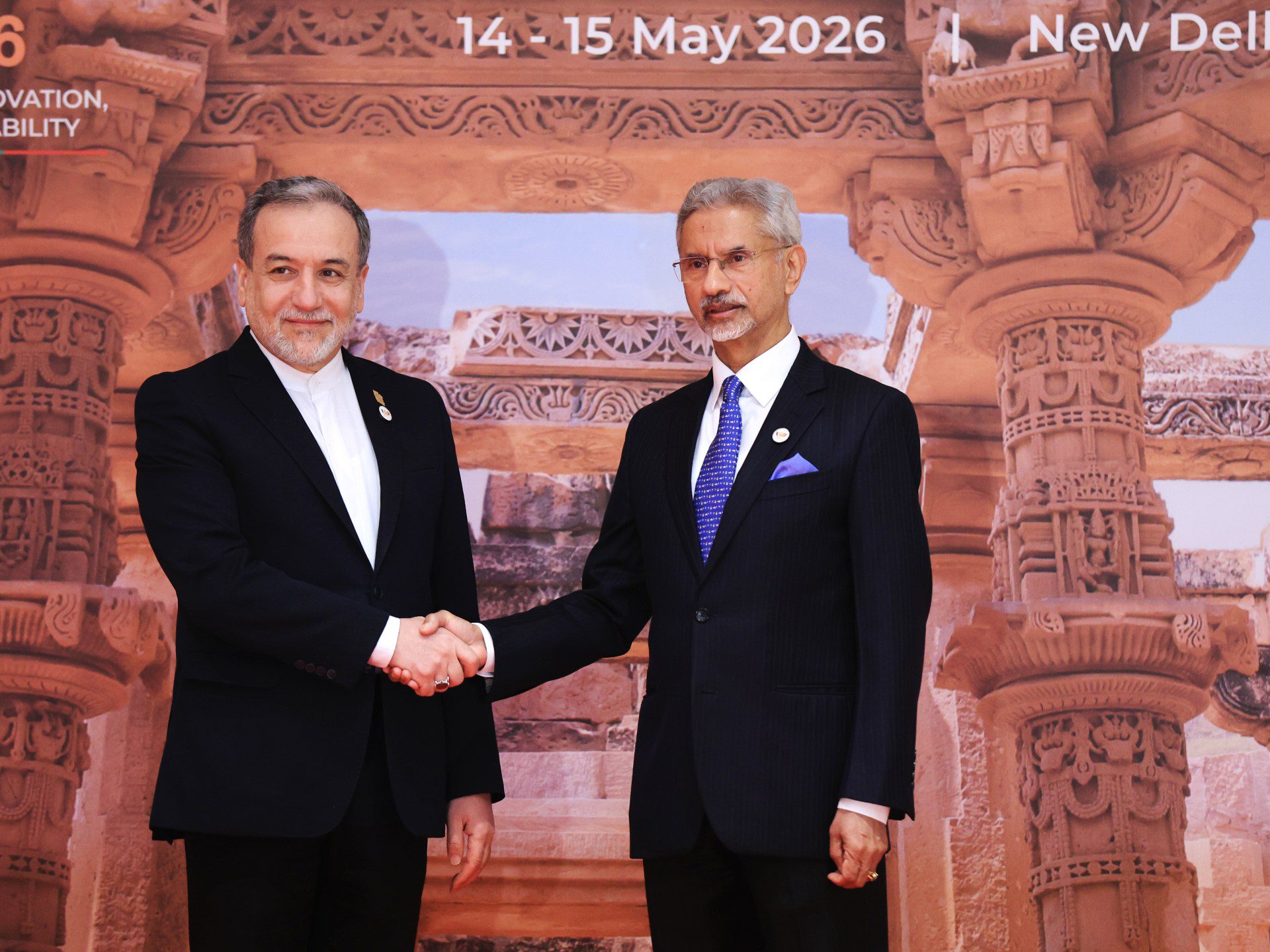
India, as the 2026 BRICS Chair, kicks off the two-day BRICS Foreign Ministers’ Meeting on May 14-15 at Bharat Mandapam, New Delhi — the most senior in-person ministerial gathering of its chair year. The expanded 11-member bloc — Brazil, Russia, India, China, South Africa, Egypt, Ethiopia, Iran, UAE (2024 entrants) and Indonesia (Jan 2025) — convenes in the shadow of the West Asia war, an oil-price spike, and a fast-weakening rupee. Iranian Foreign Minister Abbas Araghchi has signalled Tehran will welcome a diplomatic initiative by India, putting New Delhi in an unusual mediator-of-first-resort position.
India’s hosting of BRICS engages the treaty-making power under Article 73 read with Entry 14 of the Union List (Seventh Schedule). Joint statements and ministerial declarations are not “treaties” per se but bind India through state practice and good-faith obligations under customary international law. The Vienna Convention on the Law of Treaties (1969), to which India is a signatory but not yet a State Party, provides the interpretive framework.
BRICS expanded on January 1, 2024 with Egypt, Ethiopia, Iran and UAE; Saudi Arabia was invited but has not formally joined. Indonesia became the newest member on January 1, 2025 — bringing the bloc’s combined GDP to roughly 36% of world output and 45% of world population. Foreign Ministers gathered include Russia’s Sergey Lavrov, Iran’s Abbas Araghchi, Brazil’s Mauro Vieira, South Africa’s Ozzy Lamola, Egypt’s Badr Abdelatty and Indonesia’s Sugiono — alongside host EAM Jaishankar. The Iranian FM travelled on a state plane named “Minab168”, marking the 168 schoolgirls killed in the US-Israel strikes on Iran.
Compulsory CLAT 2027 IR reading: BRICS expansion sequence (2024 + 2025), India’s 4 prior BRICS presidencies (2012 / 2016 / 2021 / 2026), the Goa Declaration, the New Development Bank (Shanghai HQ since 2014), the Contingent Reserve Arrangement, and the bloc’s principle of rotating chairship with no permanent secretariat. Pair this with India’s strategic-autonomy and multi-alignment doctrines.
The agenda spans three priority areas of India’s chair year: reform of multilateral institutions (UNSC reform, WTO appellate body), counter-terrorism (echoing the 2016 Goa Declaration language), and resilient supply chains for critical minerals, semiconductors and pharmaceuticals. Side-bilaterals include Jaishankar’s meetings with Lavrov (May 13), Vieira, Lamola and Abdelatty. The dominant subtext, however, is West Asia: Araghchi urged BRICS to formally condemn US-Israel “unlawful aggression” against Iran — a position India is unlikely to underwrite, given its careful balance with both Israel and the Gulf monarchies.
| Dates | May 14-15, 2026 |
| Venue | Bharat Mandapam, New Delhi |
| BRICS members | 11 (BRICS + Egypt, Iran, UAE, Ethiopia, Indonesia) |
| India BRICS chair | Jan 1 – Dec 31, 2026 (4th time) |
| NDB HQ | Shanghai (est. 2014) |
Brazil · Russia · India · China · South Africa + Egypt · Iran · UAE · Ethiopia · Indonesia (joined Jan 2025).
Practice Quiz — 10 CLAT-Style Questions
Click an option to reveal the answer and explanation.